About PiVi

This author has not yet filled in any details.
So far PiVi has created 1404 blog entries.

Closing the gap in roof insulation at the wall plate

The wall plate marks where the roof meets the wall, and that is where insulation continuity is easily broken. A cold strip can then form along the slope, heat loss increases and condensation becomes a risk. Simply filling gaps with foam without a plan is not enough. Roof and wall insulation must be connected, airtight layers maintained and ventilation under the covering kept open. The tight space brings together the wall plate, rafters, ring beam, façade layers, fixings and eaves components. Once the covering is laid, access is limited, so a gap at the lower edge of the slope stays hidden behind the lining.

By |2026-11-15T00:22:35+01:002025-01-21|Building academy|Comments Off on Closing the gap in roof insulation at the wall plate

How to maintain a sandwich panel roof without damaging the covering

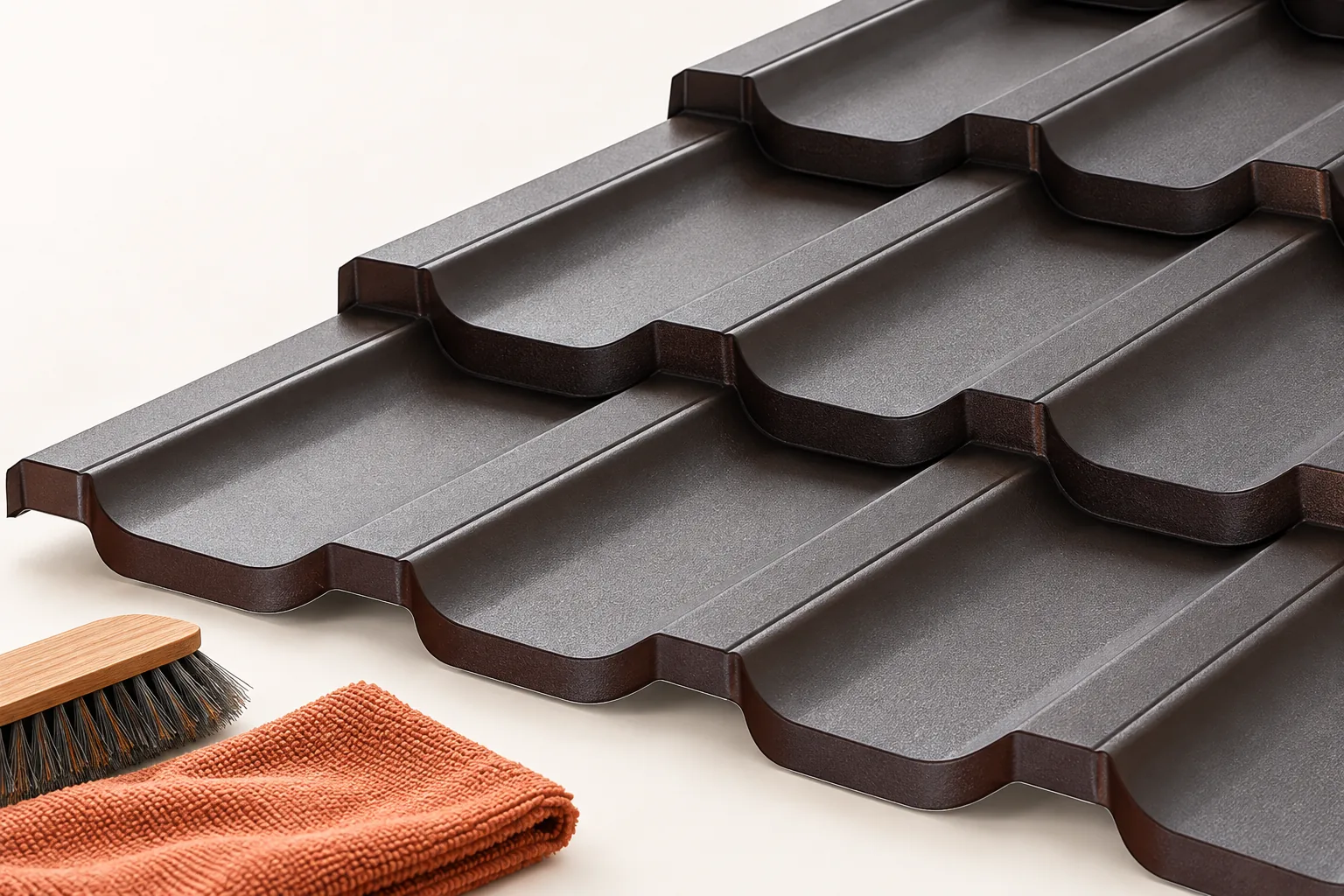
Servicing a sandwich panel roof requires prepared access and protection of the facings. It must not be assumed that every panel can be walked on freely. The pressure of a foot, a toolbox or the base of a device acts locally. A planned route, proper support and inspection after work help limit damage. The sheet coating protects it from environmental exposure. During servicing it can be scratched by a tool, a metal filing or a small stone. Visible damage does not necessarily cause a leak immediately, but it requires assessment and proper handling. Denting the facing is also not neutral. It can change the local geometry and hinder water drainage.

By |2026-11-14T17:08:32+01:002025-01-17|Building academy|Comments Off on How to maintain a sandwich panel roof without damaging the covering

Rust on sheet metal flashings: material, installation or maintenance?

A rusty spot on a coloured flashing does not always mean that its steel core is corroding. Leftover metal filings can rust on the surface. Elsewhere, the damage really does affect the coating and the metal. Recognising the difference matters for repair. Galvanised, aluzinc and coated steel sheets should not be assessed by appearance alone. Material data and an inspection of the conditions in which they work are needed. In galvanised sheet, the steel core is protected by a zinc layer. Aluzinc sheet also has a steel core, but its metallic coating contains aluminium and zinc. It is therefore not a type of aluminium sheet. This distinction helps to read the specification of ordered flashings correctly.

By |2026-11-15T04:22:27+01:002025-01-16|Building academy|Comments Off on Rust on sheet metal flashings: material, installation or maintenance?

Insulated sandwich roof panels and single-skin sheets: what is the difference?

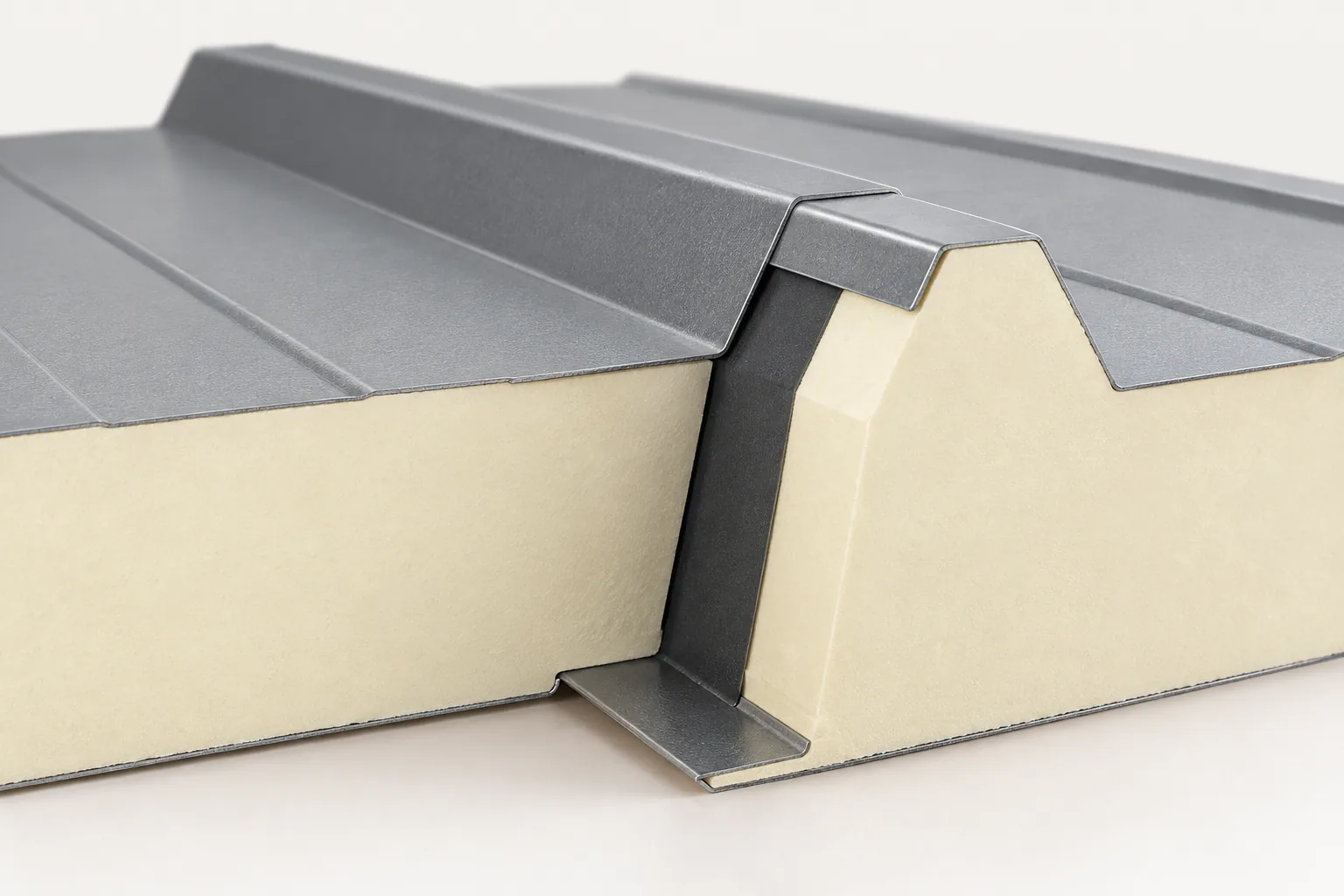
A sandwich roof panel combines facings and an insulating core in one element, whereas plain sheet metal covers the roof without replacing insulation. When choosing a variant for a specific building, compare thermal performance, support, connections and the full cost of execution. Also check fire requirements, acoustics and how the interior will be used. Do not assume that panel thickness alone guarantees greater load capacity than any sheet metal system, because parameters depend on the core type, facing thickness and geometry. Compare solutions that meet the same requirements, using specific technical data sheets.

By |2026-11-14T20:37:59+01:002025-01-08|Building academy|Comments Off on Insulated sandwich roof panels and single-skin sheets: what is the difference?

How should roof sandwich panels be laid so that the joints remain sealed?

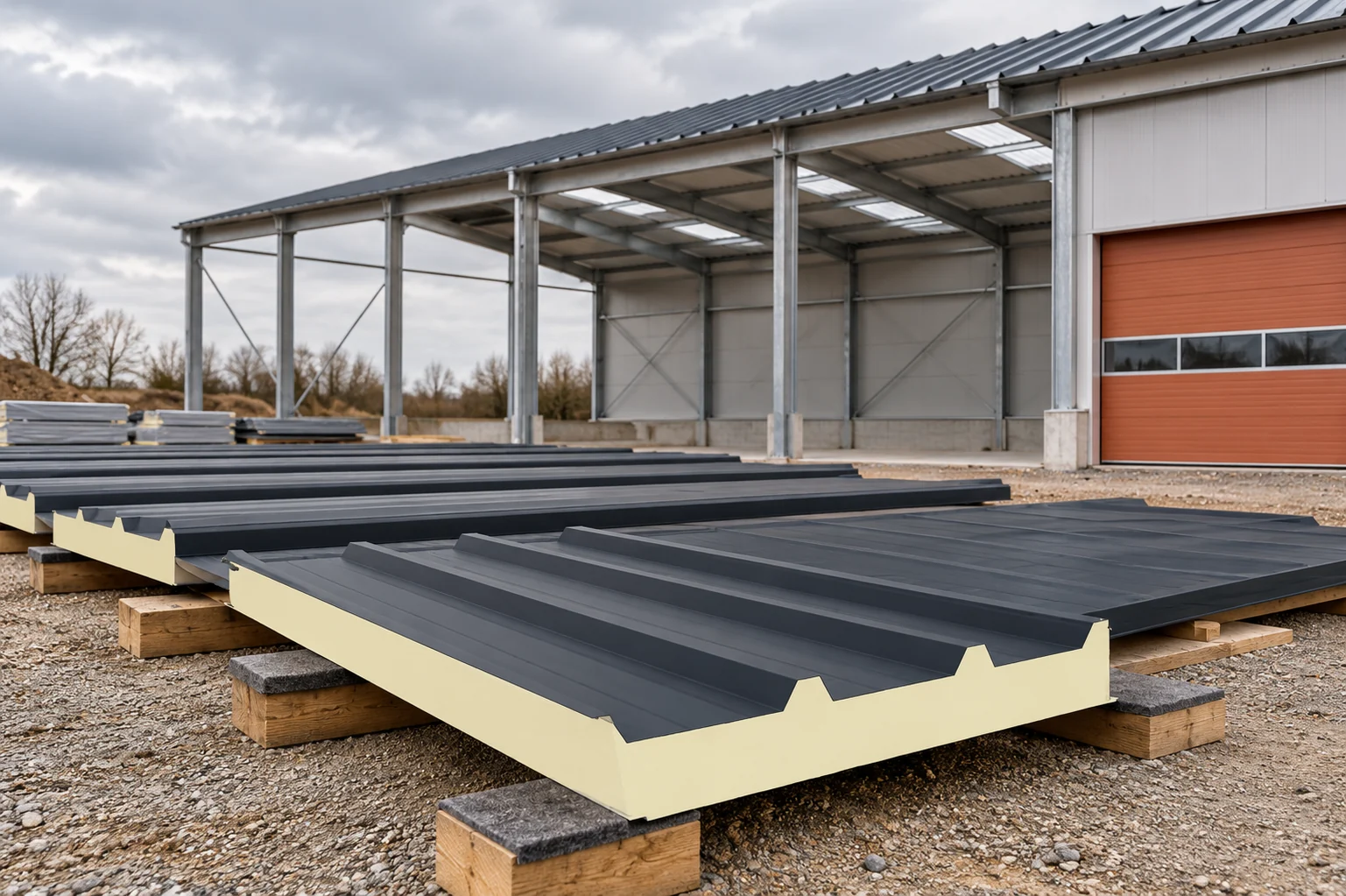
A roof made of sandwich panels goes up quickly when the details have been worked out in advance. Supports, overlaps and flashings at the edges require the most attention. Laying the panels alone does not complete the installation. Drainage still has to be checked and the surface cleaned. The sequence below helps to prepare the work but does not replace the instructions for the selected system. Compare the delivery marking with the design. The core, thickness, facings, profile and length of each element matter. A panel in a similar colour may have different permissible loads. Also assess damage from transport. A dent at the interlock is more important than a minor mark on the film.

By |2026-11-14T13:13:48+01:002025-01-04|Building academy|Comments Off on How should roof sandwich panels be laid so that the joints remain sealed?

How often should a metal roof be inspected and maintained?

A metal roof needs regular checks to catch small scratches, loose flashings or blocked gutters before they turn into bigger damage. How often you inspect should follow the covering instructions and the building’s surroundings. Many recommendations suggest at least one inspection a year, plus extra checks after strong wind or other events that may have harmed the roof. A leak is usually a late sign – coating damage, accumulated leaves and leaky joints can appear first. Spotting these early keeps repairs small. Once moisture reaches the insulation and timber, the work may go beyond the covering itself. An inspection is not just a look at the roof from street level.

By |2026-11-14T20:37:39+01:002024-12-20|Building academy|Comments Off on How often should a metal roof be inspected and maintained?

Choosing trapezoidal roofing sheet: when to consider T18 or T35

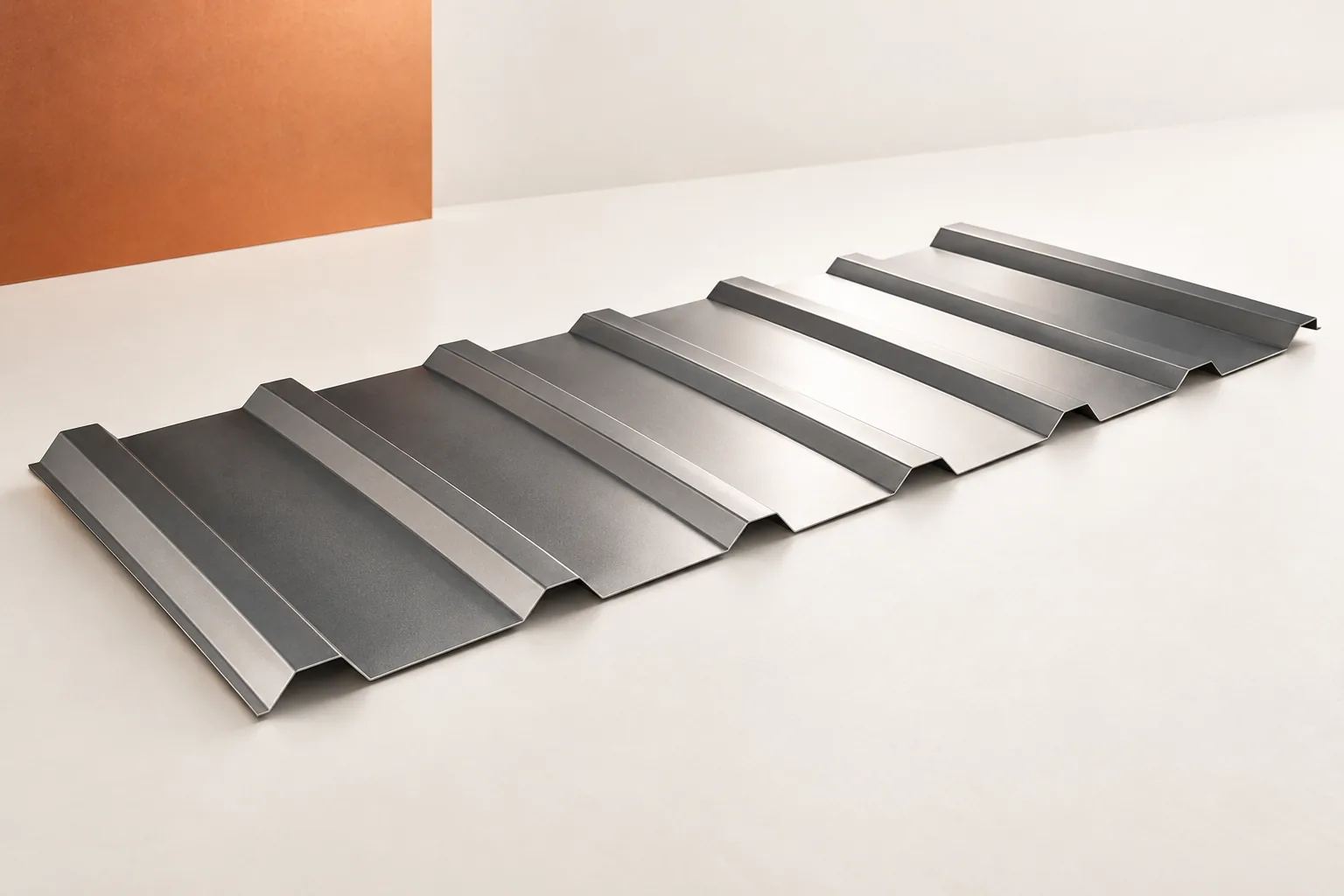
Start choosing trapezoidal roofing sheet by checking whether it suits the structure, roof pitch and service conditions. The names T18 and T35 indicate profile height, but they do not tell you everything about the sheet's parameters. Before buying, establish the steel thickness, coverage width, coating type, permissible loads and fixing method. The detailed geometry comes from the manufacturer's drawing, so similarly named sheets may differ in coverage width and load capacity. Also remember to distinguish the roof version from the façade version.

By |2026-11-15T00:23:54+01:002024-12-19|Building academy|Comments Off on Choosing trapezoidal roofing sheet: when to consider T18 or T35

Stock steel frames for farm buildings: checking the fit before ordering

When a farm needs a new covered space, the time needed to prepare the components matters. Our standard steel structures can be selected from available batches, without ordering every profile from scratch. The availability of a specific variant and the collection date are confirmed at the time of order. A steel hall still requires a prepared plot and a design matched to its function. A ready-made frame makes planning easier when it is known what it is to accommodate. Our duo-pitch structures cover widths of 8, 10, 12, 14, 16, 18 and 20 metres. A small variant may suit the storage of tools and selected machinery. A wider steel hall offers different options for arranging workstations and circulation. The choice should be driven by a layout with the actual equipment, not by the pursuit of the largest floor area alone.

By |2026-11-15T04:22:06+01:002024-12-17|Building academy|Comments Off on Stock steel frames for farm buildings: checking the fit before ordering

Roof flashings from eaves to ridge: choosing each component for its location

Metal flashings close the edges and junctions of a roof that cannot be finished with the covering alone. Rather than a generic recommendation, check the completeness of the order: whether every edge, valley, chimney and wall junction has a specific detail assigned. Take into account the roof geometry and the sheet profile. Bear in mind that flashings are not an optional extra to be omitted to reduce cost. Their role is to direct water and protect vulnerable points, especially where the roof slope changes direction and at elements projecting above the roof.

By |2026-11-14T20:36:44+01:002024-12-02|Building academy|Comments Off on Roof flashings from eaves to ridge: choosing each component for its location

Getting gutters ready for winter: what to check after cleaning

Vacuuming gutters removes leaves and sediment, but it does not replace an inspection of the whole drainage system. The owner should check whether, after cleaning, water flows freely from the roof surface through outlets, bends and downpipes to the receiver at ground level. A clean gutter does not guarantee flow if the fall is wrong or a joint is damaged. It is worth establishing which sections were actually checked rather than relying on outward appearance. The final assessment of how the system works is best made after the first heavy rain, watching for backflow or overflow.

By |2026-11-15T04:21:01+01:002024-11-28|Building academy|Comments Off on Getting gutters ready for winter: what to check after cleaning
Back to top