Renovation and maintenance
How often should a metal roof be inspected and maintained?
In brief
A metal roof needs regular checks to catch small scratches, loose flashings or blocked gutters before they turn into bigger damage. How often you inspect should follow the covering instructions and the building’s surroundings. Many recommendations suggest at least one inspection a year, plus extra checks after strong wind or other events that may have harmed the roof. A leak is usually a late sign – coating damage, accumulated leaves and leaky joints can appear first. Spotting these early keeps repairs small. Once moisture reaches the insulation and timber, the work may go beyond the covering itself. An inspection is not just a look at the roof from street level.
Why is it not enough to wait for a leak?
A leak is often a late symptom of a problem. Coating damage, accumulated leaves and loose connections may occur first. If they are spotted quickly, the repair is often minor. Once moisture gets into the insulation and timber, the scope of work may extend beyond the covering itself.
An inspection is not just about assessing the surface from street level. Details, drainage outlets and hard-to-reach areas need to be checked. The areas around chimneys, windows and service penetrations are particularly important. It is also worth looking at the loft, because traces on the underside can reveal a problem that is invisible on the roof slope.
How to establish a schedule
The starting point is the recommendations for the specific material and the warranty conditions. It is sensible to tie the inspection to the season in which the effects of winter can be assessed and the drainage outlets cleared. For a building under trees, additional leaf removal may be needed in autumn. A single fixed date does not suit every location.
After a strong gale, hail or work by other crews, an additional inspection is worthwhile. Installing an antenna or a system can leave metal filings and damage behind. Do not assume the roof is intact just because it was not the subject of major works. Minor traces should be checked before they start to grow.
What does the covering inspection cover?
The coating, edges, laps and fixings are checked. Attention is paid to scratches, deformation and signs of corrosion. Screws should be assessed for the condition of the washers and correct seating. This does not mean every fastener must be routinely retightened. Excessive pressure can impair tightness.
It is worth comparing the current condition with photos from the previous inspection. This makes it easier to assess whether a minor change is stable or progressing. If localised waviness is present, its cause must be established. It may be related to the substrate, thermal movement or earlier damage.

Why do gutters and roof valleys require separate attention?
Debris restricts drainage, and water can then overflow into places not intended for permanent damp. Roof valleys collect runoff from two roof slopes, so keeping them clear is particularly important. Leaves lying on the steel sheet also trap moisture and make it harder to assess the coating.
The rainwater outlets and the accessible sections of the downpipes are also cleaned. Check the connections and fixings, not just the visible gutter. A symptom at the eaves may result from a blockage further down. Where a rainwater harvesting system is installed, the inspection should cover the filters and the overflow arrangement, in line with the adopted solution.
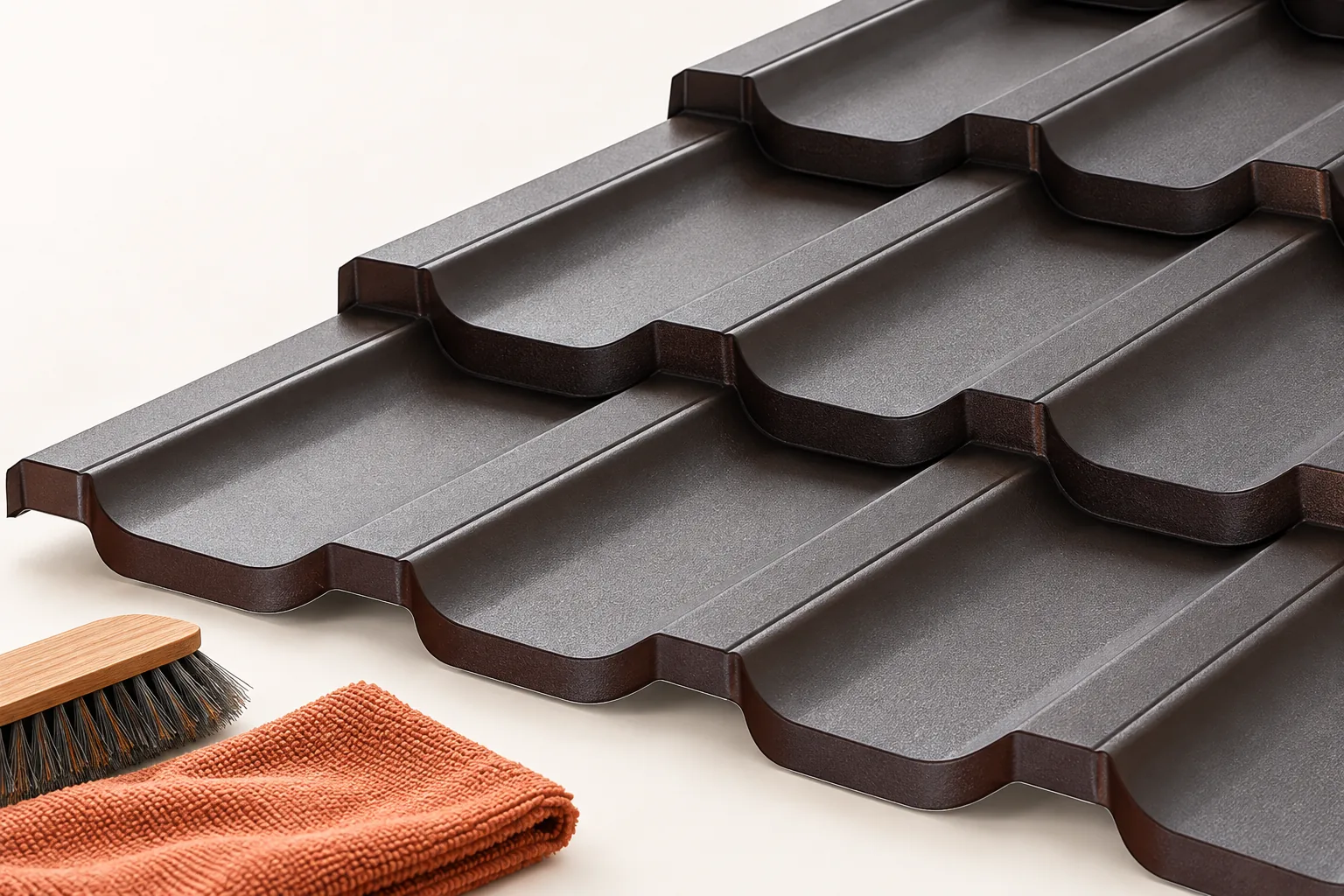
How should you wash a roof without damaging the surface?
Use a method permitted for the coating. Soft tools and a suitable agent are a safer starting point than aggressive scrubbing. It is worth carrying out a test before using the preparation. An older surface may react differently from new material and require more careful handling.
Do not direct water under the laps or upwards into the details. Excessive washing pressure can force water under the covering. After the work, residues of the agent and dirt must be removed. Cleaning the surface should not end with a blocked drain or chemical deposits left on the gutters.
What should you do about minor damage?
Minor scratches and coating damage are repaired with a material recommended for the given product. The substrate must be prepared first. Repair compound applied over dirt or loose corrosion will not achieve the expected result. For larger damage, assess whether renovation is sufficient or whether the component needs to be replaced.
Do not use a single preparation on all parts of the roof without checking compatibility. The covering, flashings and seal may require different methods. The repair should preserve the possibility of thermal movement and water drainage. Sealing the entire gap may create a new problem alongside the old one.
How should you document maintenance and ensure safety?
Record the date, scope of inspection and repairs carried out. Keep photos and information on the materials used. Such a simple record helps plan further work and assess recurring faults. It may also be needed when clarifying warranty conditions.
Assign work at height to a person with appropriate training and equipment. Many problems can be spotted initially from the ground, but there is no need to climb onto the roof slope yourself. Well-planned service access makes regular inspections easier. Maintenance should protect the roof and the people carrying it out.
7 branches. Materials closer to your project.

- SEROCK — Dzierżenin 34 E
- BŁONIE — ul. Sochaczewska 138A
- RADOM — ul. Grobickiego 8
- ŁÓDŹ — Natolin 8
- OLSZTYN — Barczewo, ul. Prosta 9
- WROCŁAW — ul. Jerzmanowska 10C
- GORZÓW WLKP. — ul. Zielona 33/34