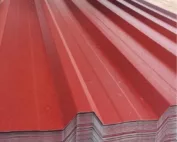
Trapezoidal and structural steel sheets
Choosing trapezoidal roofing sheet: when to consider T18 or T35
In brief
Start choosing trapezoidal roofing sheet by checking whether it suits the structure, roof pitch and service conditions. The names T18 and T35 indicate profile height, but they do not tell you everything about the sheet’s parameters. Before buying, establish the steel thickness, coverage width, coating type, permissible loads and fixing method. The detailed geometry comes from the manufacturer’s drawing, so similarly named sheets may differ in coverage width and load capacity. Also remember to distinguish the roof version from the façade version.
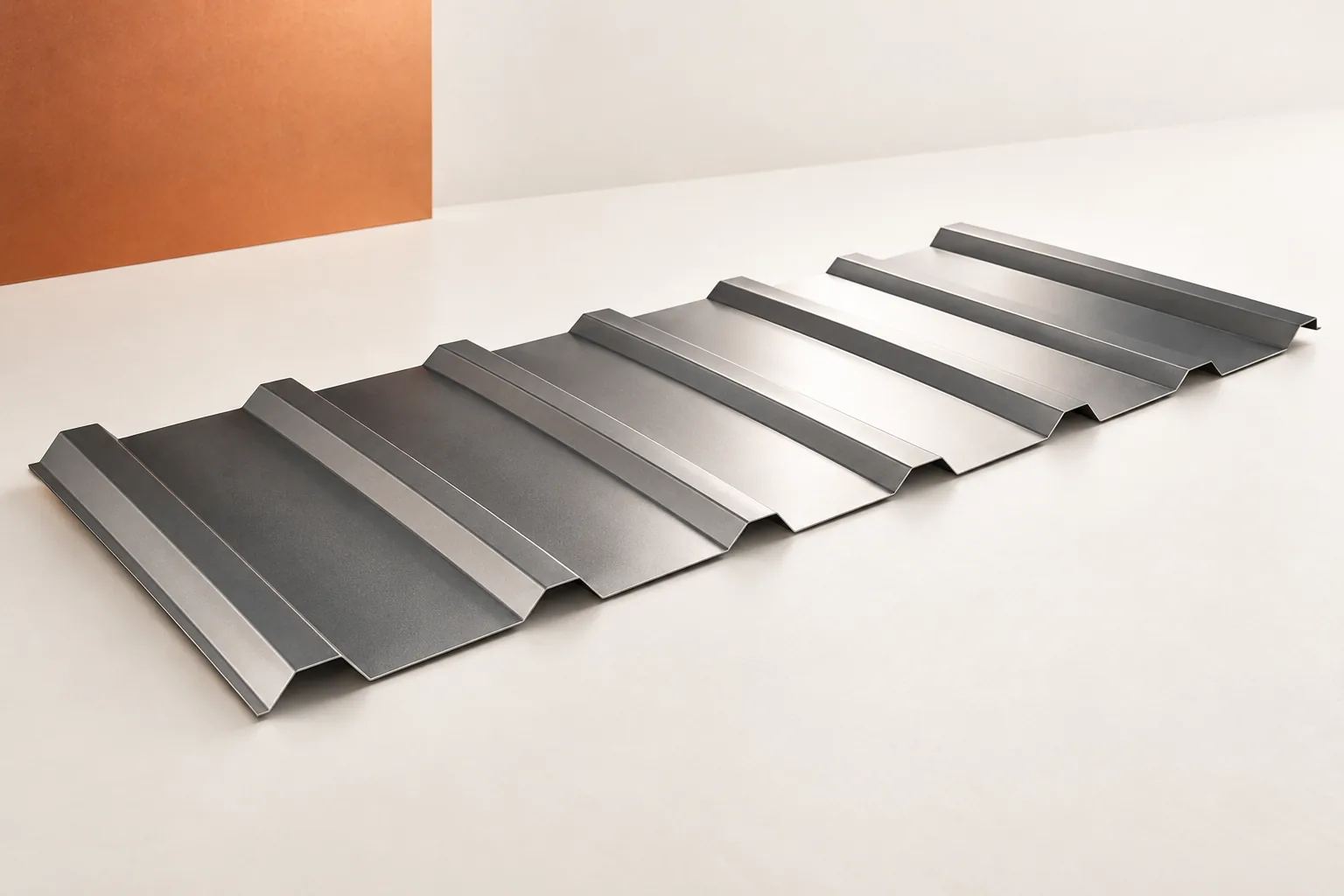
What can be read from the profile name?
The profile designation refers to its height, but the exact geometry is determined by the manufacturer’s drawing. Differences may relate to the rib pattern, flange widths and edge design. Therefore, sheets described by a similar name need not have the same cover width or load-bearing capacity.
A distinction must also be made between the roof and façade versions. They may differ in the coated side, the profile orientation or the water drainage detail. The order should include the full symbol, thickness, coating and colour. The entry ‘trapezoidal T18’ alone leaves too much room for error, particularly when ordering additional material for an existing covering.
When is it worth comparing T18 with T35?
A lower profile may meet the needs of a small roof with appropriately spaced supports. A deeper profile is often chosen where greater rigidity is required. This does not mean that every T35 has the same advantage over every T18. The result also depends on the thickness and grade of steel.
The selection should be based on the loads and the load table for the specific product. The support spacing must be checked for both variants. Sometimes a more expensive profile allows the substructure to be changed, and sometimes the difference brings no benefit. The cost assessment is carried out for the entire system. The span must not be increased on one’s own initiative simply because the sheet has a higher rib.
What is the significance of the roof pitch?
The minimum pitch depends on the profile, the method of joining and the design of the entire roof. At a low pitch, the laps, seals and the length of the water drainage path become particularly important. A continuous sheet from eaves to ridge reduces the number of transverse joints but requires proper transport and installation.
Degrees must not be confused with percentages. A pitch expressed as a percentage is the ratio of height to horizontal length multiplied by one hundred. The same number written in degrees describes a different pitch. In the roof and covering documentation, values must be compared in the same unit, and in case of doubt technical confirmation must be obtained.

How to choose a protective coating?
The coating affects the durability and appearance of the sheet. Its selection should take into account the external conditions and the environment beneath the roof. A different corrosive load will occur above an open shelter than in a humid agricultural building. The colour name alone does not indicate which protection system has been used.
It is worth checking the declared resistance to corrosion and solar radiation, the scope of the warranty and the maintenance requirements. A longer warranty does not replace good installation. A damaged coating, left-over swarf or prolonged dampness of the pack can also harm a higher-end sheet. The choice should therefore not be limited to the thickness of the paint.
Is an anti-condensation layer needed?
In unheated buildings, vapour can condense on the underside of cold sheet metal. An anti-condensation layer can temporarily absorb some of the moisture, but it must have conditions in which to dry out. It does not replace ventilation, thermal insulation or a sealed roof assembly above a residential room.
Its use should be assessed together with the internal humidity and the way the building is used. In a workshop with intermittent heating, conditions can change quickly. Details at the eaves and at the laps are executed in accordance with the instructions. Incorrect termination of the material can facilitate capillary action rather than limit dripping of condensate.
How should two quotes be compared?
The comparison should cover the same thickness, coating class and effective covering area. The lengths of the sheets, the amount of waste, flashings and screws must be taken into account. A low price per total square metre may look favourable, even though once the lap is taken into account the cost per square metre of the finished roof will be higher.
Before purchase, ask for the profile drawing and the installation instructions. Establish whether matching flashings and seals are available. A well-chosen sheet should meet the roof’s requirements without improvised modifications. T18 and T35 are reasonable candidates for comparison, but the final choice should result from the parameters, not from the popularity of the designation.
For renovations, check whether the new sheet can be joined to the old one. Even a small change in the rib spacing can prevent the profiles from being laid correctly. In that case, a sample or an accurate measurement of the cross-section is more valuable than a similar photograph in a catalogue.
7 branches. Materials closer to your project.

- SEROCK — Dzierżenin 34 E
- BŁONIE — ul. Sochaczewska 138A
- RADOM — ul. Grobickiego 8
- ŁÓDŹ — Natolin 8
- OLSZTYN — Barczewo, ul. Prosta 9
- WROCŁAW — ul. Jerzmanowska 10C
- GORZÓW WLKP. — ul. Zielona 33/34