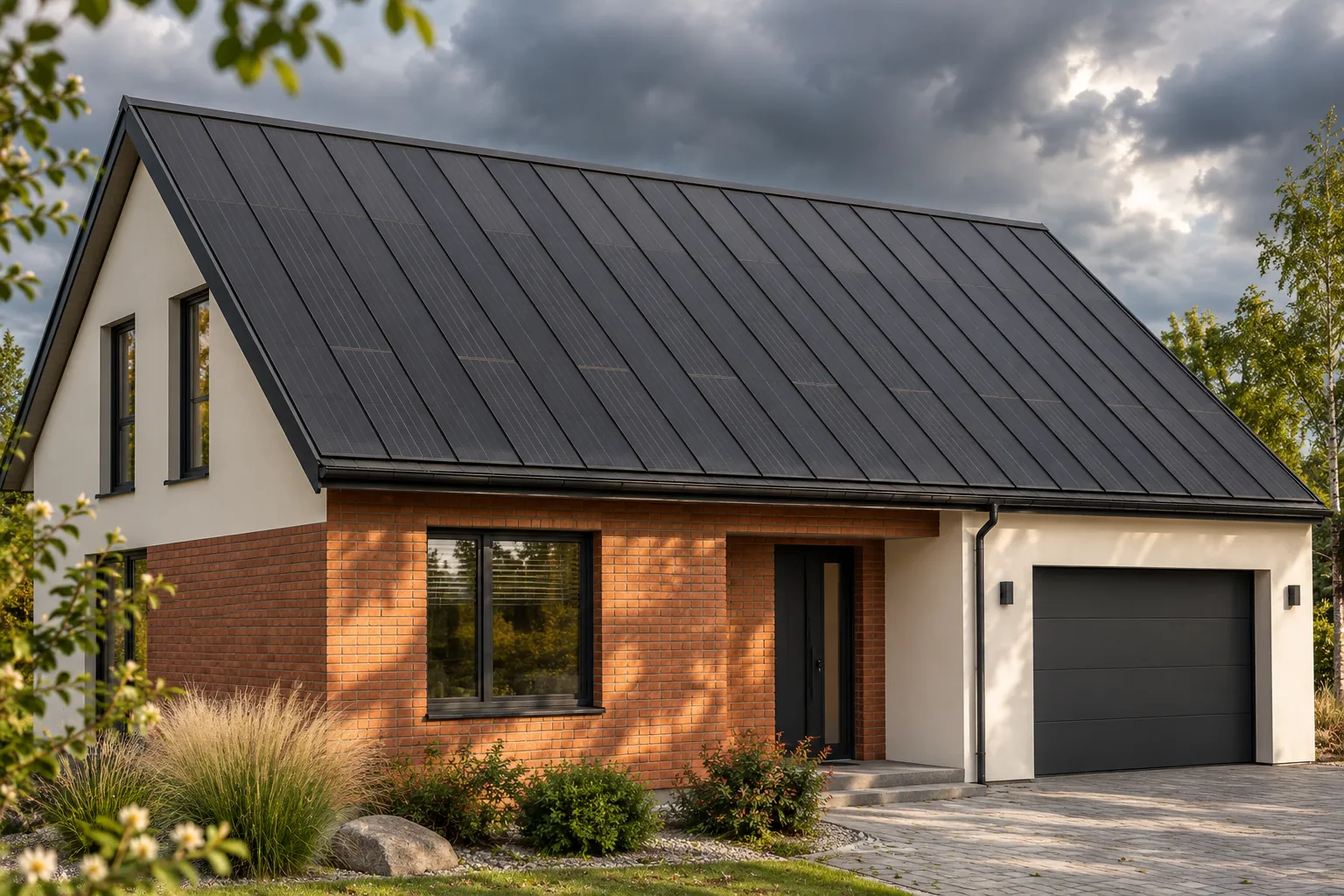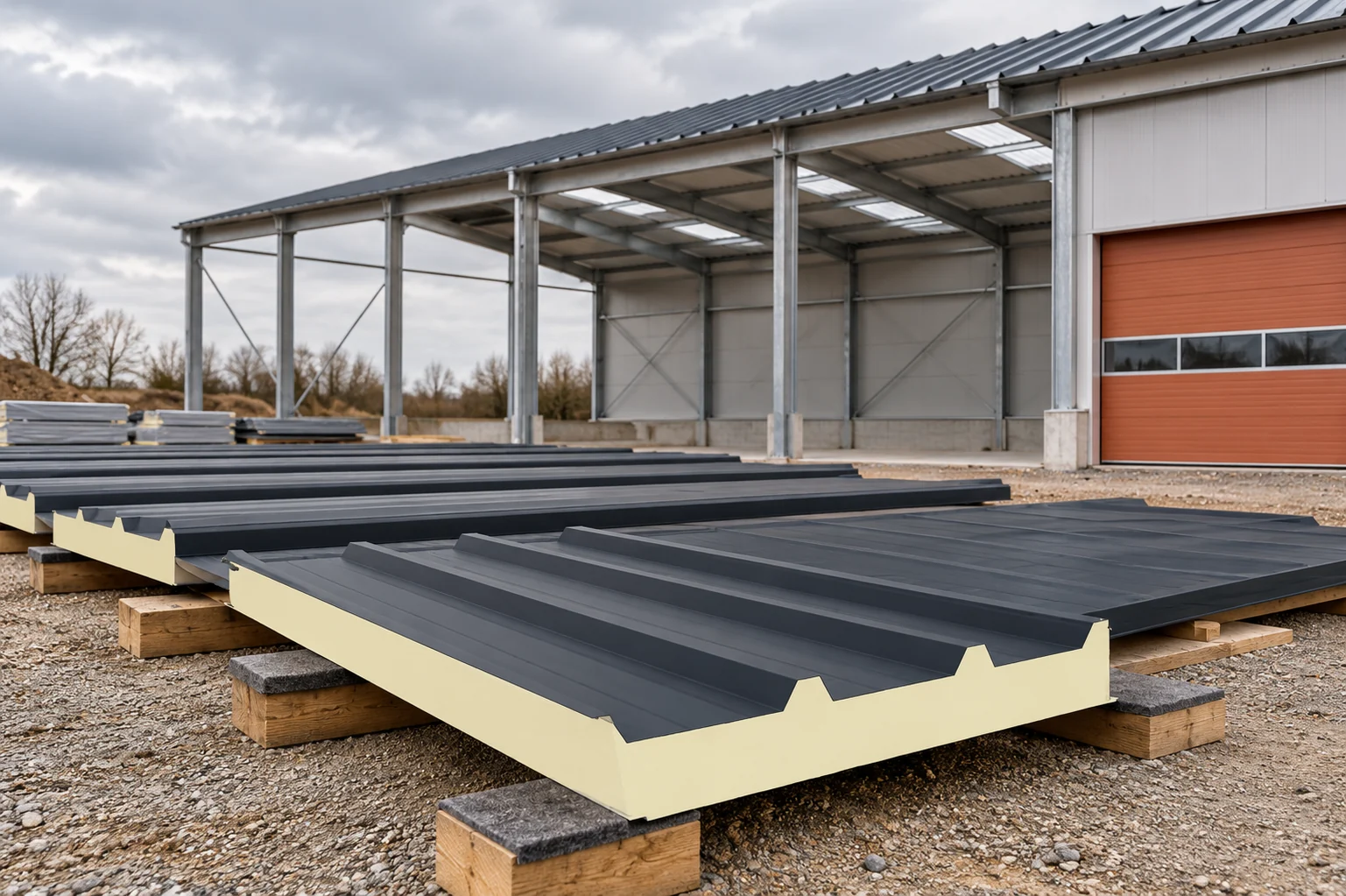
How should roof sandwich panels be laid so that the joints remain sealed?

A roof made of sandwich panels goes up quickly when the details have been worked out in advance. Supports, overlaps and flashings at the edges require the most attention. Laying the panels alone does not complete the installation. Drainage still has to be checked and the surface cleaned. The sequence below helps to prepare the work but does not replace the instructions for the selected system. Compare the delivery marking with the design. The core, thickness, facings, profile and length of each element matter. A panel in a similar colour may have different permissible loads. Also assess damage from transport. A dent at the interlock is more important than a minor mark on the film.

2026-11-14T13:13:48+01:00

How often should a metal roof be inspected and maintained?

A metal roof needs regular checks to catch small scratches, loose flashings or blocked gutters before they turn into bigger damage. How often you inspect should follow the covering instructions and the building’s surroundings. Many recommendations suggest at least one inspection a year, plus extra checks after strong wind or other events that may have harmed the roof. A leak is usually a late sign – coating damage, accumulated leaves and leaky joints can appear first. Spotting these early keeps repairs small. Once moisture reaches the insulation and timber, the work may go beyond the covering itself. An inspection is not just a look at the roof from street level.

2026-11-14T20:37:39+01:00

Choosing trapezoidal roofing sheet: when to consider T18 or T35

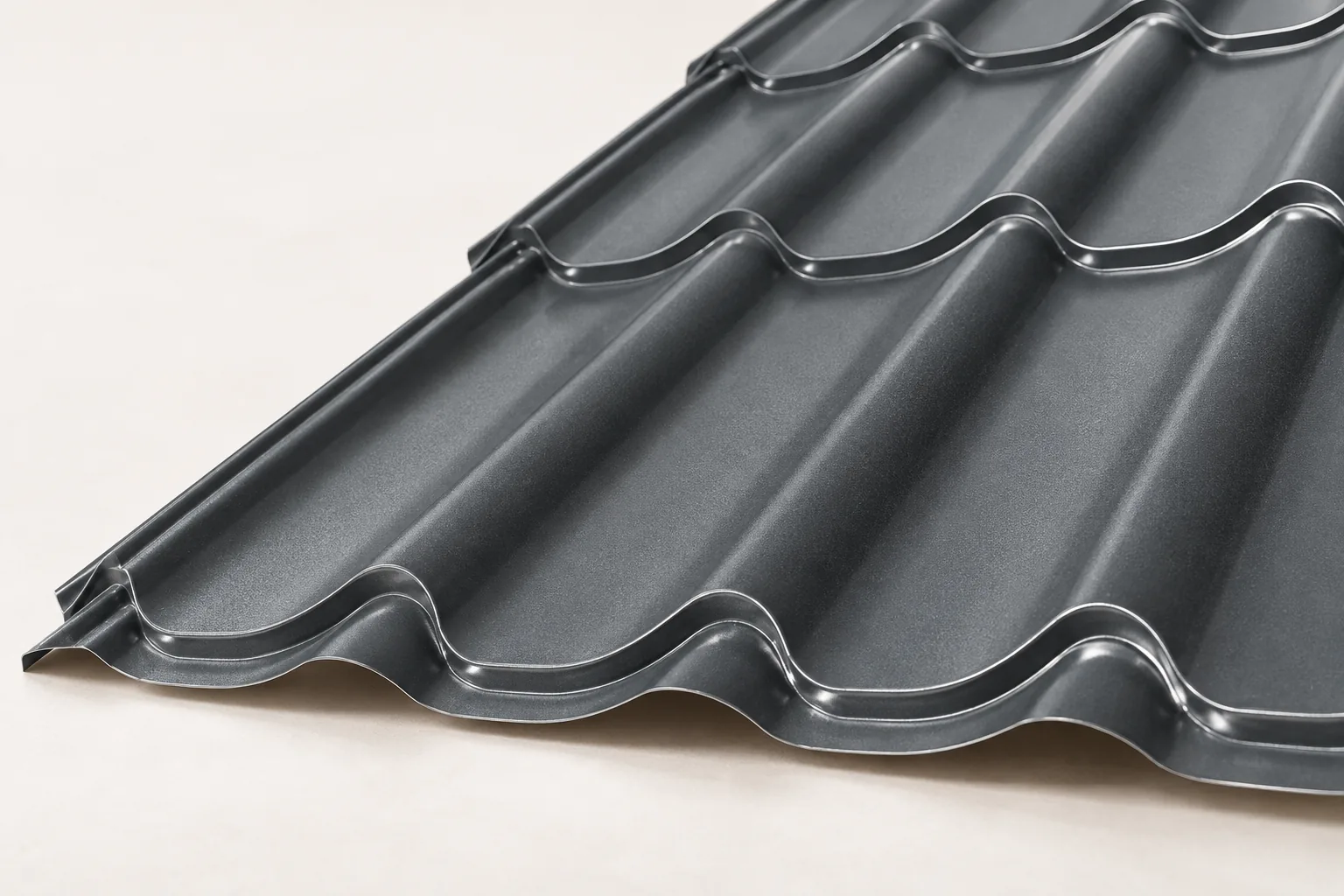
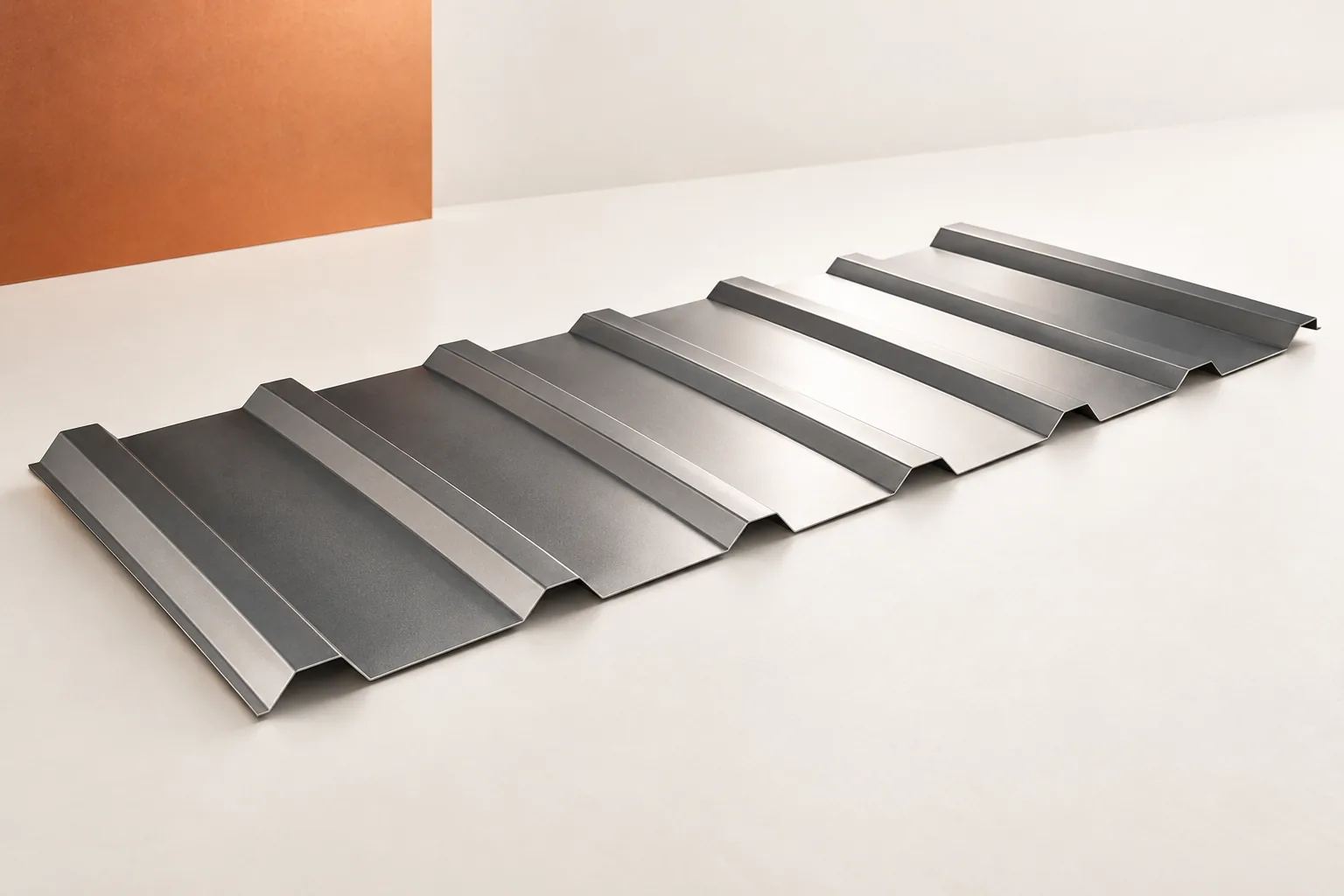
Start choosing trapezoidal roofing sheet by checking whether it suits the structure, roof pitch and service conditions. The names T18 and T35 indicate profile height, but they do not tell you everything about the sheet's parameters. Before buying, establish the steel thickness, coverage width, coating type, permissible loads and fixing method. The detailed geometry comes from the manufacturer's drawing, so similarly named sheets may differ in coverage width and load capacity. Also remember to distinguish the roof version from the façade version.

2026-11-15T00:23:54+01:00

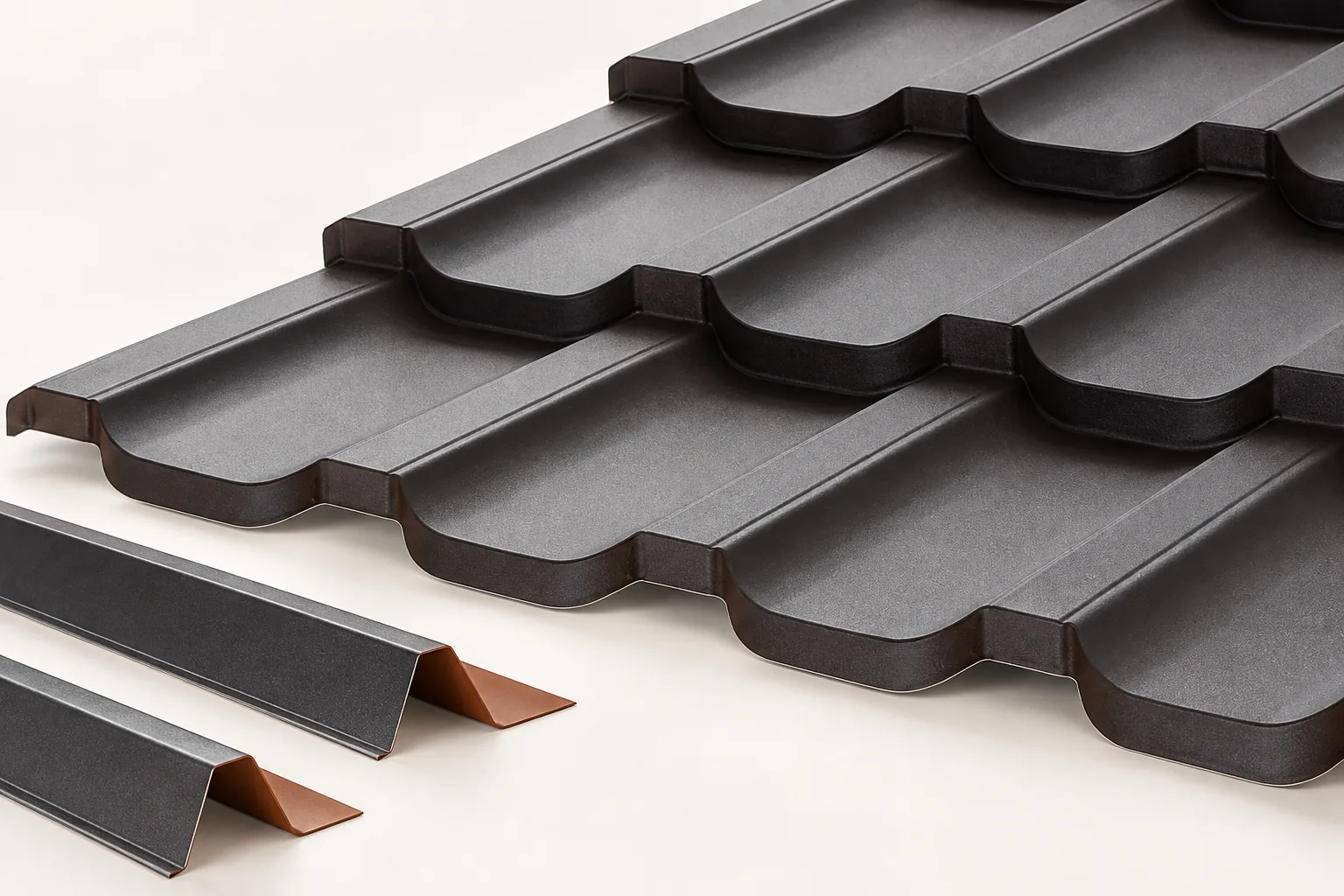
Roof flashings from eaves to ridge: choosing each component for its location

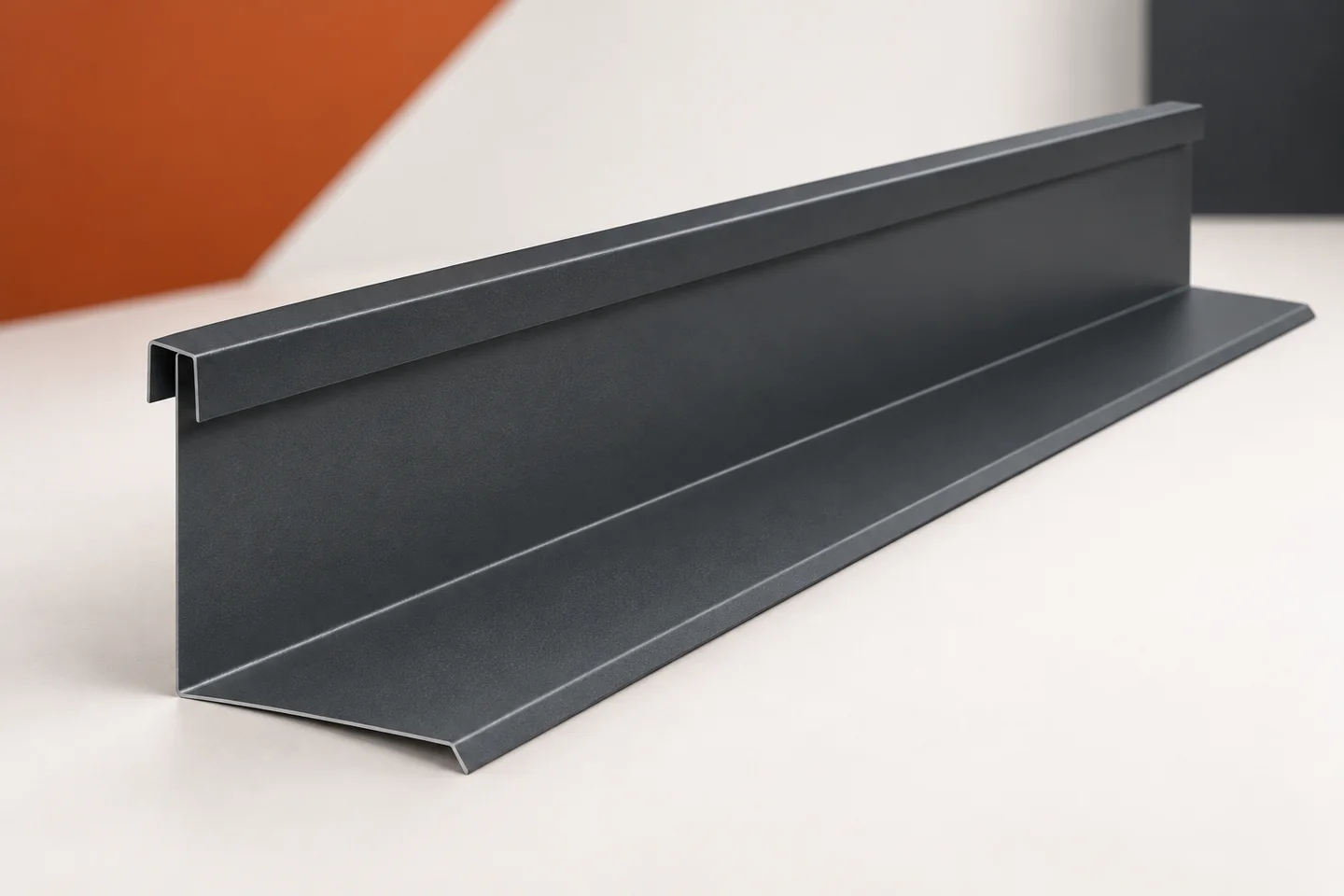
Metal flashings close the edges and junctions of a roof that cannot be finished with the covering alone. Rather than a generic recommendation, check the completeness of the order: whether every edge, valley, chimney and wall junction has a specific detail assigned. Take into account the roof geometry and the sheet profile. Bear in mind that flashings are not an optional extra to be omitted to reduce cost. Their role is to direct water and protect vulnerable points, especially where the roof slope changes direction and at elements projecting above the roof.

2026-11-14T20:36:44+01:00

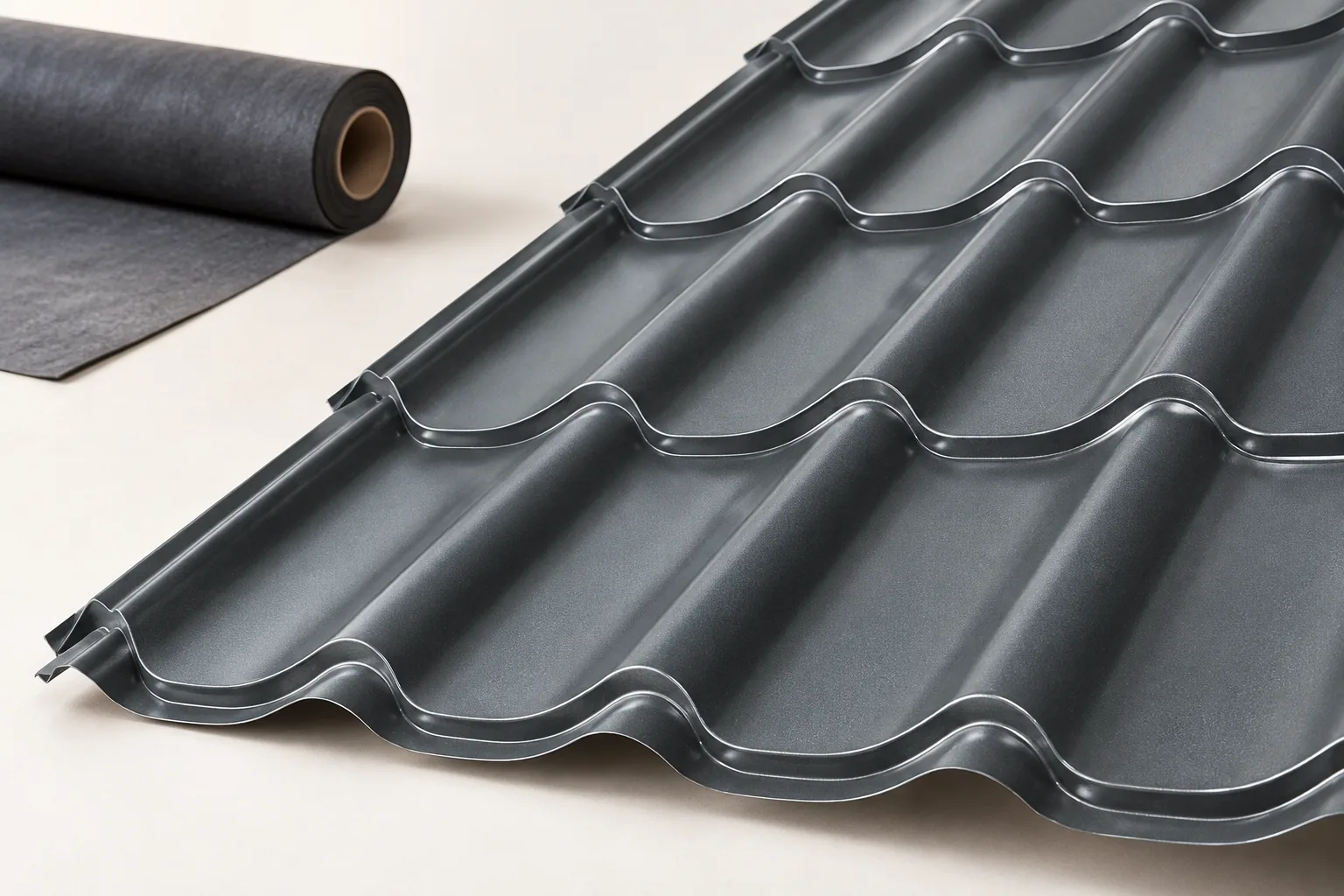
Which roofing membrane belongs where in the roof build-up?

The key is to establish whether the chosen membrane is to act as the underlay beneath the covering or as the layer on the room side – these roles are not interchangeable. The owner should check the intended use of the loft, the existing layers, the type of boarding and how moisture is drained away. During renovation, it is worth opening up the roof to determine what is actually beneath the covering, rather than relying on the colour of the old membrane. The designer decides the build-up, while selection rests on the scope of use and the documentation for the specific product.

2026-11-15T04:20:37+01:00

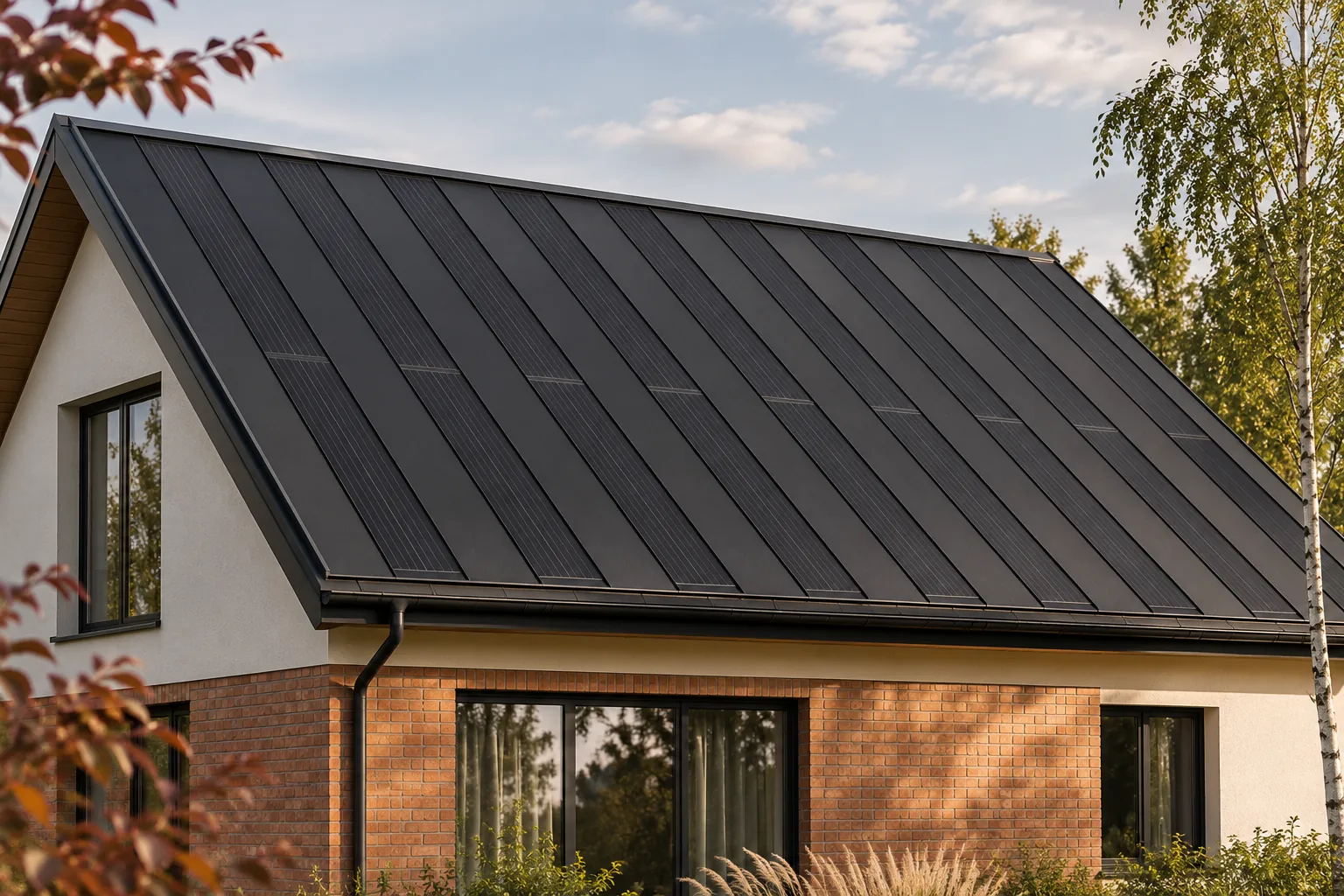
Does an integrated photovoltaic roof replace insulation?

A photovoltaic roof can replace part of the traditional covering while generating energy. This does not mean it takes over the task of thermal insulation. Warmth in winter and comfort in summer depend on the entire building envelope, including insulation, airtightness and protection against moisture. Integrating the cells organises the outer layer of the roof, but does not remove the need to design what lies beneath it. The covering primarily shields the building from the weather. In its active version it additionally produces electricity. Thermal insulation limits heat flow. The other layers can control the movement of water vapour, drain moisture and provide airtightness. A single shared term 'roof' does not mean a single material function.

2026-11-15T19:35:29+01:00

Planning a hipped roof: slopes, hips and supports

Whether a hipped roof performs correctly depends not on the shape of the solid alone, but on the truss layout and the arrangement of supports. It is worth checking that the design accounts for hip rafters, jack rafters and the points where loads are transferred to walls and internal supports. The roofing plan should indicate sheet cutting, ridge flashings and ventilation. The cost estimate should itemise these details separately. At handover, the geometry of the corners, the support and fixings are checked, along with the quality of cuts and the patency of ventilation.

2026-11-15T00:23:04+01:00

Does hail mean the entire photovoltaic roof must be replaced?

After a hailstorm, you should assume neither that the roof is fully functional nor that it needs to be completely replaced. The outcome depends on the event, the construction of the covering and the actual damage. With an integrated roof, you need to assess watertightness, the condition of the active layer and how the installation is performing. Product hail testing is important information, but it does not guarantee resistance to every possible weather event. Testing is carried out under defined conditions. The size and speed of the impacting objects, the number of impacts and the criteria for assessing the sample all matter. The phrase 'hail-resistant' on its own is therefore incomplete. Ask for the document, the method and the product version. Do not compare different results on the basis of a single highest figure.

2026-11-15T19:35:43+01:00

Recurring leaks around chimney flashings: where to look for the cause

A fresh layer of sealant at the chimney sometimes holds back water only briefly. This happens when the repair covers the visible gap rather than the actual cause. Chimney flashings form a system of several connected parts. Each is meant to take water from a specific direction and pass it on. A leak may involve the sheet metal, the junction with the wall or the layer beneath the covering. An accurate diagnosis requires separating these locations. First, it is worth checking when the sign of moisture appears. The intensity of the rainfall, the wind and the time since the thaw all matter. The inspection should also cover the condition of the chimney's external surface. Water may enter the masonry above the flashing and show up lower down.

2026-11-15T04:22:25+01:00

Repair the roof or replace the covering? What the condition survey can tell you

Whether a repair will suffice or the covering must be replaced depends on the cause and extent of the damage, not on the roof's age. Before deciding, the owner should inspect the slope from outside and from the loft and establish whether the planned work will remove the source of the problem rather than only the visible symptom. It is worth checking the condition of flashings, fixings and service penetrations, as well as hidden layers such as the membrane or insulation. Recording after which weather a mark appears helps diagnosis.

2026-11-15T04:21:04+01:00
Back to top