Sheet metal flashings
Recurring leaks around chimney flashings: where to look for the cause
In brief
A fresh layer of sealant at the chimney sometimes holds back water only briefly. This happens when the repair covers the visible gap rather than the actual cause. Chimney flashings form a system of several connected parts. Each is meant to take water from a specific direction and pass it on. A leak may involve the sheet metal, the junction with the wall or the layer beneath the covering. An accurate diagnosis requires separating these locations. First, it is worth checking when the sign of moisture appears. The intensity of the rainfall, the wind and the time since the thaw all matter. The inspection should also cover the condition of the chimney’s external surface. Water may enter the masonry above the flashing and show up lower down.
A leak at the chimney does not always start at the sheet metal
It is also necessary to assess whether the moisture actually comes from outside. The mere position of the stain at the roof penetration does not provide a complete answer. Chimney flashings are checked together with the roof slope layers and the available cladding elements. Only then can the scope of the repair be determined.
The front, sides and rear have different tasks
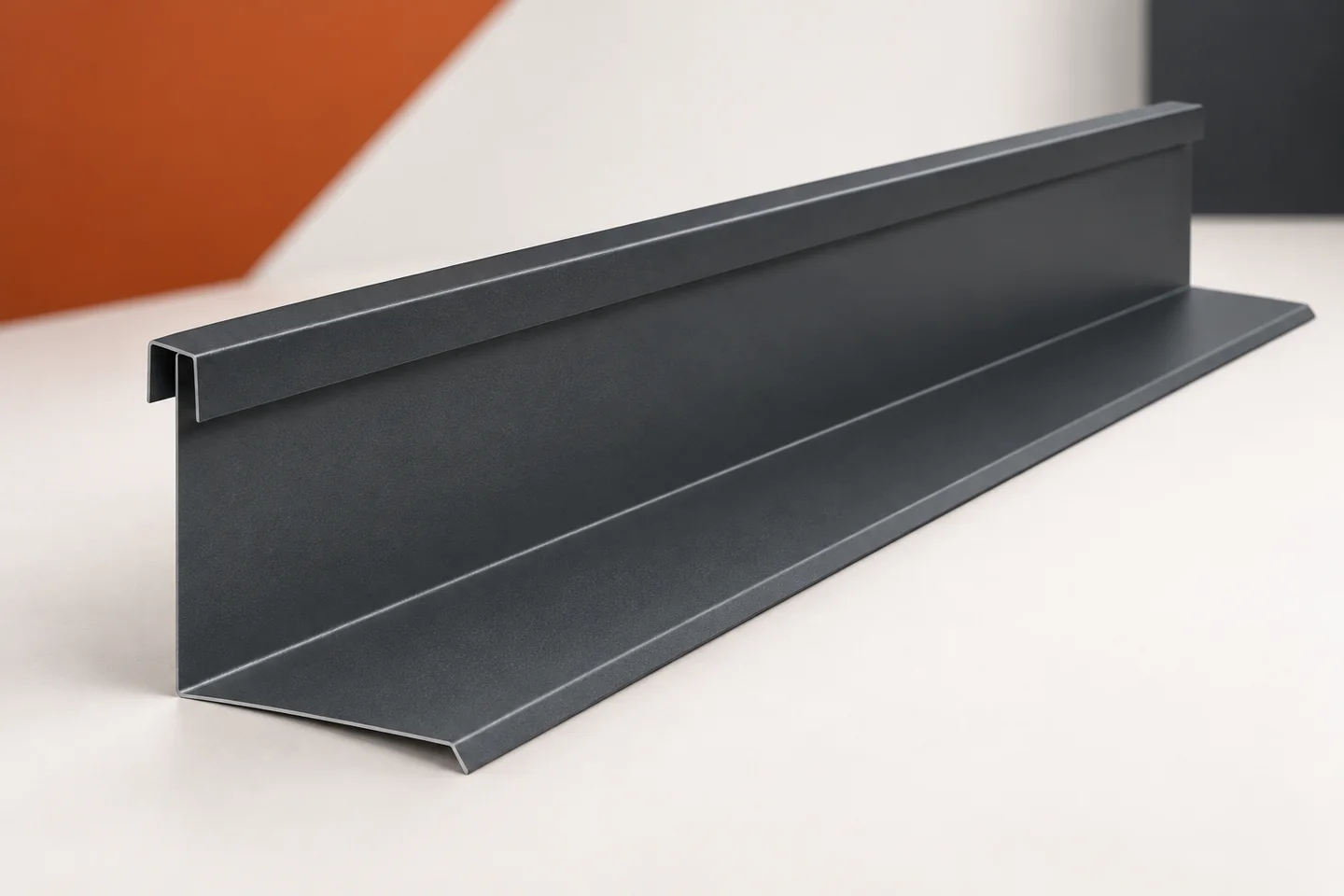
The lower part of the flashing collects water running down from the chimney surface and transfers it to the roof covering. The side elements guide it along the obstruction. Behind the chimney, a passage for the runoff from the roof slope must be ensured in such a way that no uncontrolled reservoir forms. The geometry of these parts is not accidental.
The joints are made in accordance with the direction of water flow. An incorrect sequence of laps can direct it under the sheet. Chimney flashings should not be treated as four identical angle pieces. The type of covering, the roof pitch and the width of the obstruction influence the details of the junction.
The junction with the chimney wall
The upper edge of the flashing at the wall requires a solution that will not allow water to pass behind the sheet. Depending on the system, a suitably seated strip or another designated cover is used. The method of its fixing should be adapted to the construction and finish of the chimney.
Not every crack along the sealant will be repaired by applying another layer. The substrate, the adhesion and the possibility of movement of the parts must be assessed. Chimney flashings may interact with a covering that changes dimensions under the influence of temperature. A rigid connection of all layers is sometimes inappropriate.
What happens beneath the covering?
The underlay layer requires proper termination at the chimney penetration. The visible flashing does not take over its functions in full. If water from this layer is directed into the opening, replacing the external strip may not solve the problem. An inspection of the correct zone is needed.
The method of leading out the membrane and draining moisture should correspond to the roof design and the chimney requirements. The required clearances from its elements should not be reduced arbitrarily. The steel sheet alone does not determine the correctness of the entire penetration or its fire requirements.

Contamination behind the chimney
Leaves and other deposits can obstruct water drainage in the upper part of the flashing. During inspection, it is worth checking this zone if access can be provided safely. Standing water increases the significance of any leak. Cleaning the detail also allows its joints and coating condition to be examined.
With a wide obstruction or an unusual roof slope layout, an additional water drainage solution may be needed. It should not be copied from another roof without assessing the conditions. Unusual sheet metal flashings should result from the geometry of the specific location and the construction documentation.
When should the material be replaced?
Minor coating damage and rusted sheet metal require different treatment. The extent of the loss and the feasibility of a durable connection must be assessed. A paint repair does not restore the missing metal. When replacing, it is worth also checking adjacent sections that were previously under the overlap.
Chimney flashings are made, among other things, from galvanised, aluzinc and coated sheets. The appropriate material is selected for the surroundings and the covering. A coloured finish can tidy up the appearance of the roof slope. However, it does not release from checking protective layers, cut edges and suitable sealants.
The repair should have a defined scope
A good quote indicates which parts will be replaced and how the junction with the covering will be resolved. It is worth establishing whether the works also include the layer under the sheet metal. An entry limited to the phrase chimney sealing can mean various activities. It is worth clarifying them before the works begin.
On the same occasion, the ridge caps and verge flashings in the vicinity can be inspected. The gutter aprons are responsible for the final water discharge at the eaves. The starter profiles belong to separate cladding details. The inspection should maintain this division so that the chimney repair does not obscure other roof defects.
Questions and answers
Is silicone sufficient for repairing chimney flashing?
There is no general rule. The type of sealant and the way it is used must match the materials. The geometry of the joint must be corrected or the damaged component replaced.
Can all four sides of a chimney be flashed in the same way?
No. The upper section, the sides and the lower apron work under different run-off conditions. Their geometry depends on the position of the chimney and the type of roof.
7 branches. Materials closer to your project.

- SEROCK — Dzierżenin 34 E
- BŁONIE — ul. Sochaczewska 138A
- RADOM — ul. Grobickiego 8
- ŁÓDŹ — Natolin 8
- OLSZTYN — Barczewo, ul. Prosta 9
- WROCŁAW — ul. Jerzmanowska 10C
- GORZÓW WLKP. — ul. Zielona 33/34