Renovation and maintenance
Repair the roof or replace the covering? What the condition survey can tell you
In brief
Whether a repair will suffice or the covering must be replaced depends on the cause and extent of the damage, not on the roof’s age. Before deciding, the owner should inspect the slope from outside and from the loft and establish whether the planned work will remove the source of the problem rather than only the visible symptom. It is worth checking the condition of flashings, fixings and service penetrations, as well as hidden layers such as the membrane or insulation. Recording after which weather a mark appears helps diagnosis.
Why does a leak alone not mean the roof must be replaced?
A stain on the ceiling shows the effect, but not always where the water enters. Moisture can travel along the membrane, the timber or the sheet joints. The cause may be chimney flashing, a damaged fixing or a service penetration. Replacing a large area of the covering without identifying the source may not eliminate the problem.
It is worth noting after what weather the mark appears. Rain from a particular direction, snow melting and a cool night without precipitation point to different possibilities. Dated photographs and an inspection of the loft help. Moisture condensation from inside can resemble a leak, but requires improvement of the layer build-up or ventilation, not just sealing the sheet metal.
When does local repair make sense?
A repair is often sensible when the damage is limited and the surrounding material remains in good condition. It may concern a single flashing, an incorrect fixing or a damaged covering element. However, access to the joints and the possibility of correctly recreating them must be ensured. Patching the visible spot does not always mean repairing the actual detail.
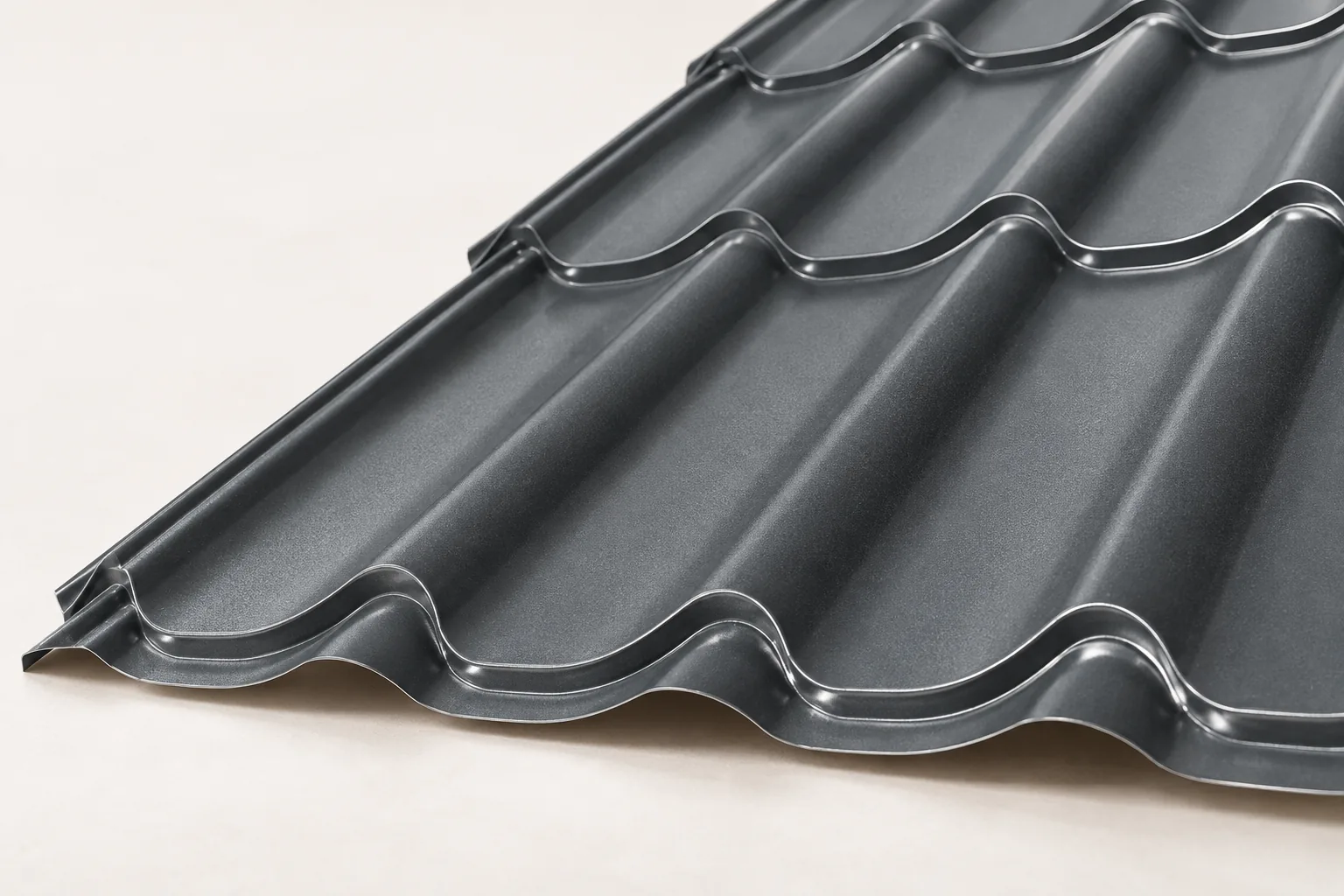
Before the work, the compatibility of the new material with the existing profile and coating is checked. Sheets of different models may look similar but not fit the laps. On an older roof, the shade of the new part may differ from the surface after years of use. It is worth agreeing both the expected technical result and the possible difference in appearance.
What symptoms suggest a wider replacement?
Extensive corrosion, perforations, numerous deformations and recurring leaks may indicate that further repairs are no longer justified. The same applies when a faulty installation method affects most of the roof slope. Sealing each screw separately will not solve the problem of a poorly selected system or an unsuitable substrate.
The condition of the hidden layers is also important. A damaged membrane, wet insulation or damaged battens may require stripping the covering, even if the sheet metal still looks good. The decision should take into account the possibility of reusing elements and the cost of their careful dismantling. Not every technically possible recovery of material will be economically sensible.

What must be checked in the structure and insulation?
Before replacing the covering, the condition of the roof structure or other supports is assessed. Deflections, biological damage, corrosion and unknown alterations require assessment by a person with appropriate qualifications. Lighter sheet metal is not an automatic solution to every structural problem. New fixings and changed loads must still be properly transferred.
A renovation is an opportunity to tidy up insulation and air tightness. However, material should not be added without analysing the existing layers. The possibility of drying out and the continuity of ventilation must be checked. If the insulation is wet, the cause is removed first and its condition assessed. Covering moisture with new roofing may make the situation worse.
How do you compare repair and replacement costs?
For both options, access to the roof, dismantling, material, labour, flashings and protection of the building must be taken into account. Replacement also involves waste and possible repair of the substrate. With repair, an honest assessment is needed of how much area will remain old and whether there is reason to expect further defects. It is not worth basing the comparison solely on the price of sheets.
It is good to obtain a written description of the scope and the reasons for the recommendation. In one option the entire roof can be replaced, in another a specific roof slope, and in a third only the details. Each should have a clearly described outcome. The promise that a minor repair will give the entire old roof the durability of a new covering has no technical justification.
How do you plan the work so that the renovation does not create new problems?
The timing should be adapted to the weather, material availability and the possibility of covering the building. Before stripping the covering, it is worth having a delivery plan ready and the details resolved. With old materials with special requirements, including those containing asbestos, dismantling must be entrusted to contractors authorised for such work. This is not a stage for improvised execution.
At the end, both the visible covering and the documented hidden layers are accepted. It is worth keeping photos before and after the repair and a description of the materials used. A sound decision results from diagnosis: a local defect justifies local action, while an extensive problem requires a broader scope. The age of the roof is one piece of information, but it does not replace an assessment of its condition.
7 branches. Materials closer to your project.

- SEROCK — Dzierżenin 34 E
- BŁONIE — ul. Sochaczewska 138A
- RADOM — ul. Grobickiego 8
- ŁÓDŹ — Natolin 8
- OLSZTYN — Barczewo, ul. Prosta 9
- WROCŁAW — ul. Jerzmanowska 10C
- GORZÓW WLKP. — ul. Zielona 33/34