Choosing roof insulation: PIR boards, mineral wool or EPS?

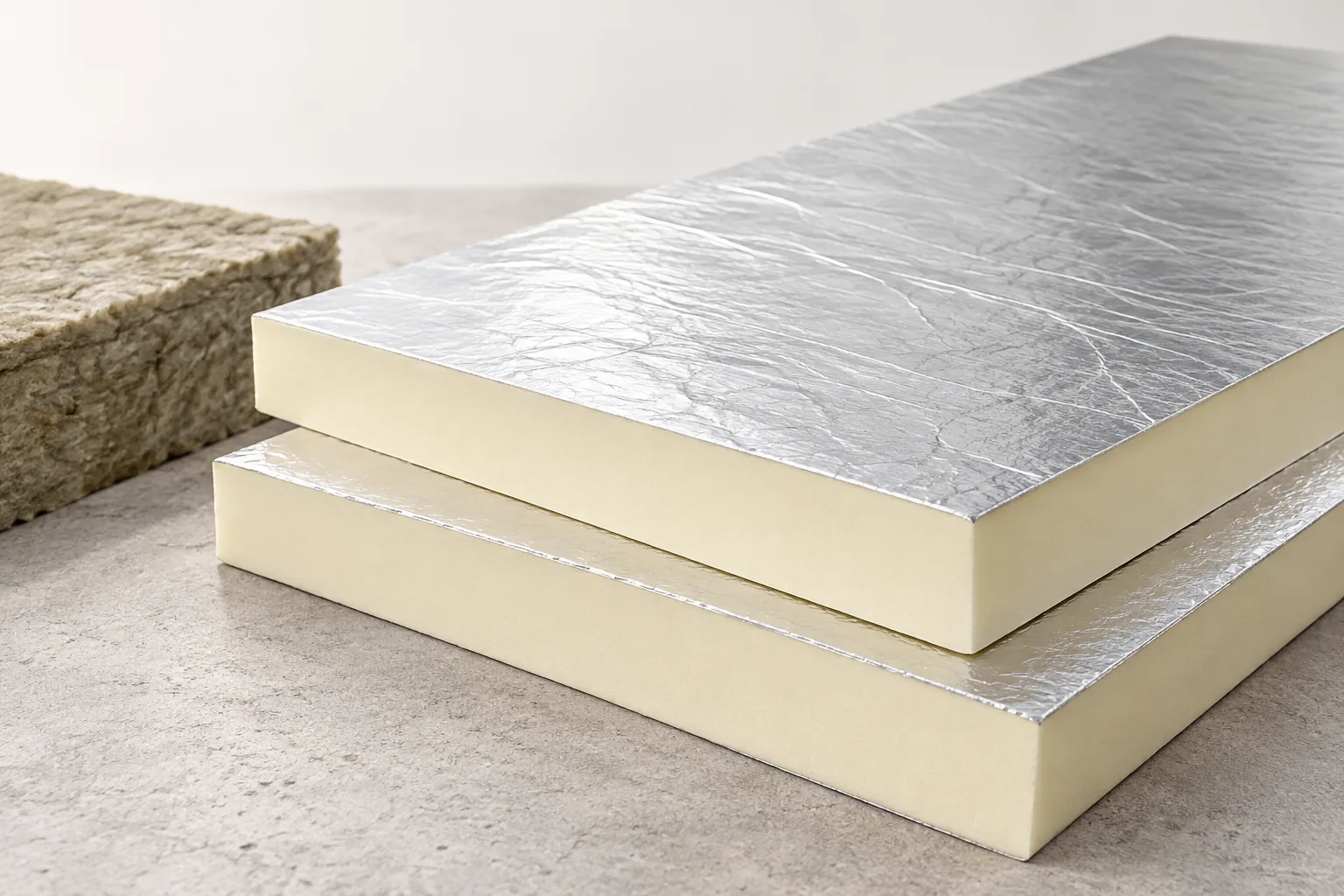
The choice of roof insulation material depends primarily on the roof construction, the available thickness and the working conditions. PIR provides high thermal resistance in a thin layer, mineral wool fits well into the space between rafters, and suitably selected EPS is widely used in flat roofs. Before purchase, check the product's intended use, declared lambda, reaction to fire and mechanical and moisture-related parameters. Also establish the layer build-up and ventilation method, because no material can replace a correct design and airtight execution.
By |2026-11-15T00:24:47+01:002026-03-29|Building academy|Comments Off on Choosing roof insulation: PIR boards, mineral wool or EPS?

What determines the durability of an insulated wall panel with a mineral wool core?

It is not possible to fairly assign a single number of years of service life to all panels with wool. Durability is determined by operating conditions, the coating and the execution of joints. What happens after building handover is also important. A well-selected panel can retain its functions for a long time if its edges remain dry and damage is noticed early. A sandwich panel combines steel facings with a wool core. The external surface is exposed to sun, water and contamination. The internal surface works under indoor conditions. The core should remain covered. The durability of the wall depends on the interaction of all these parts and the joints between panels.

By |2026-11-14T10:54:41+01:002025-10-06|Building academy|Comments Off on What determines the durability of an insulated wall panel with a mineral wool core?

How to choose fixings for insulated wall panels with a mineral wool core?

A screw for a panel with a mineral wool core must connect the panel to the correct support and maintain the sealing of the fixing point. It is not selected solely by core thickness. The steel facings, the material of the structure and the wind load are important. The number and arrangement of fasteners are determined for the specific wall. A universal number of pieces per metre can be misleading. The panel thickness, the type of fixing and the material of the support must be known. Steel, timber and a subframe fixed to masonry place different requirements. With steel, the drilling range of the fastener and the thickness of the element are important. A screw intended for a thin wall is not automatically suitable for a thicker section.

By |2026-11-14T10:55:01+01:002025-05-02|Building academy|Comments Off on How to choose fixings for insulated wall panels with a mineral wool core?

What needs to be checked in a 100 mm mineral wool wall panel?

One hundred millimetres is a specific core dimension, but not yet a full wall specification. Panels with mineral wool of this thickness can differ in weight, insulation performance and joint. The choice should cover the entire variant and the installation method. Below we show how to assess 100 mm without treating this value as an automatic standard for every building. A 100 mm panel can have different mineral wool density and facing thicknesses. This affects weight and performance characteristics. The joint type can also differ. A variant with concealed fixing does not have to have the same U-value as a panel with visible screws. Do not combine the most favourable figures from several data sheets into one fictitious product.

By |2026-11-14T10:55:20+01:002025-02-04|Building academy|Comments Off on What needs to be checked in a 100 mm mineral wool wall panel?

How to select and use walls made of panels with mineral wool?

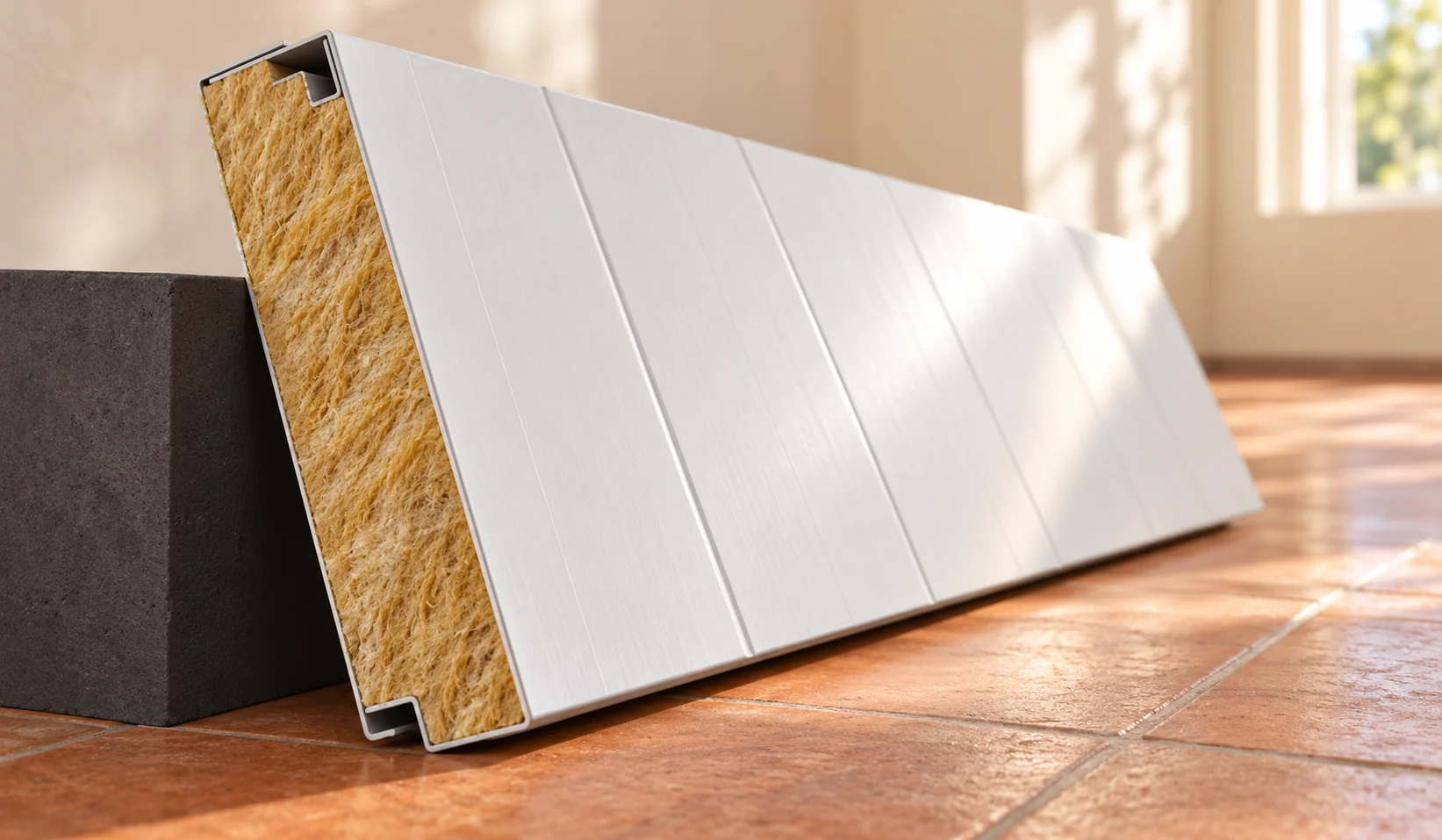
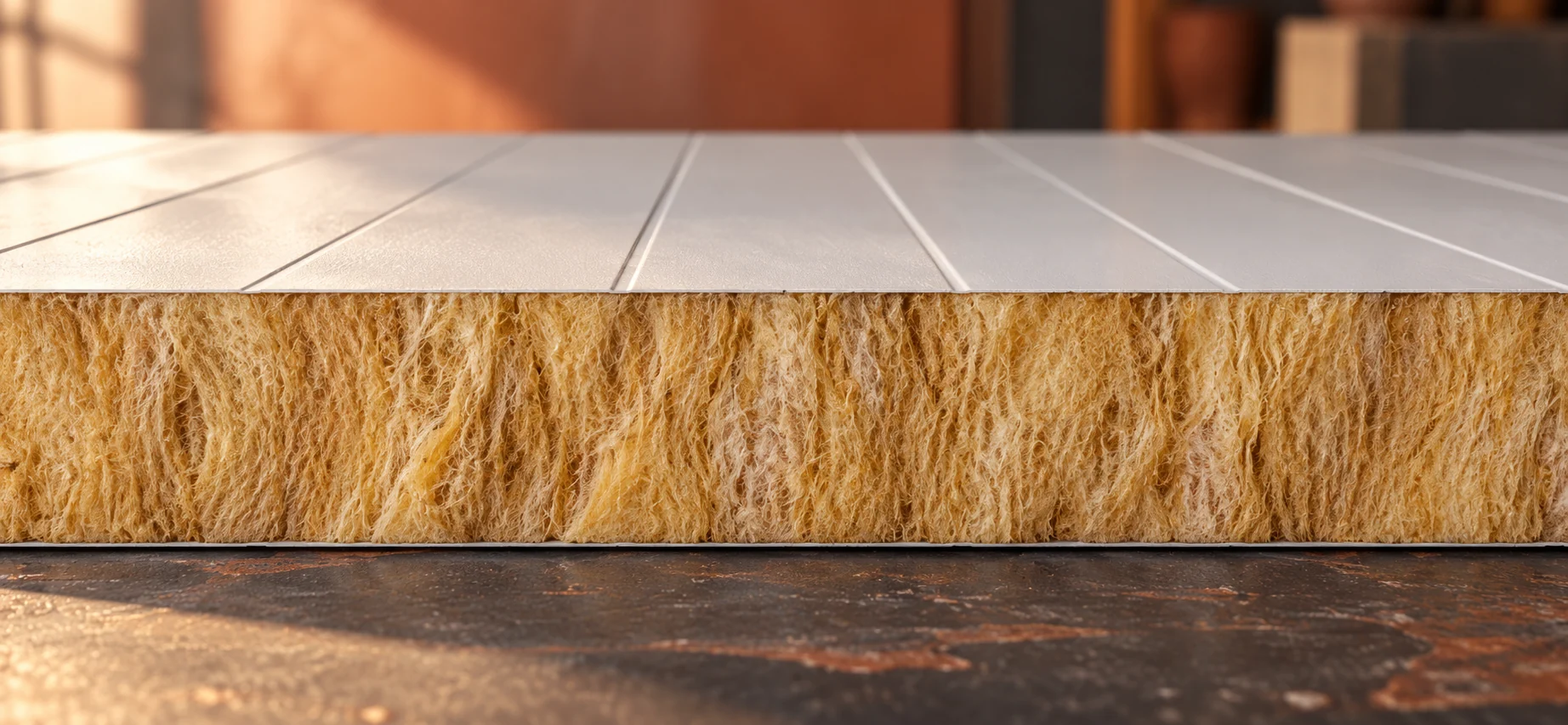
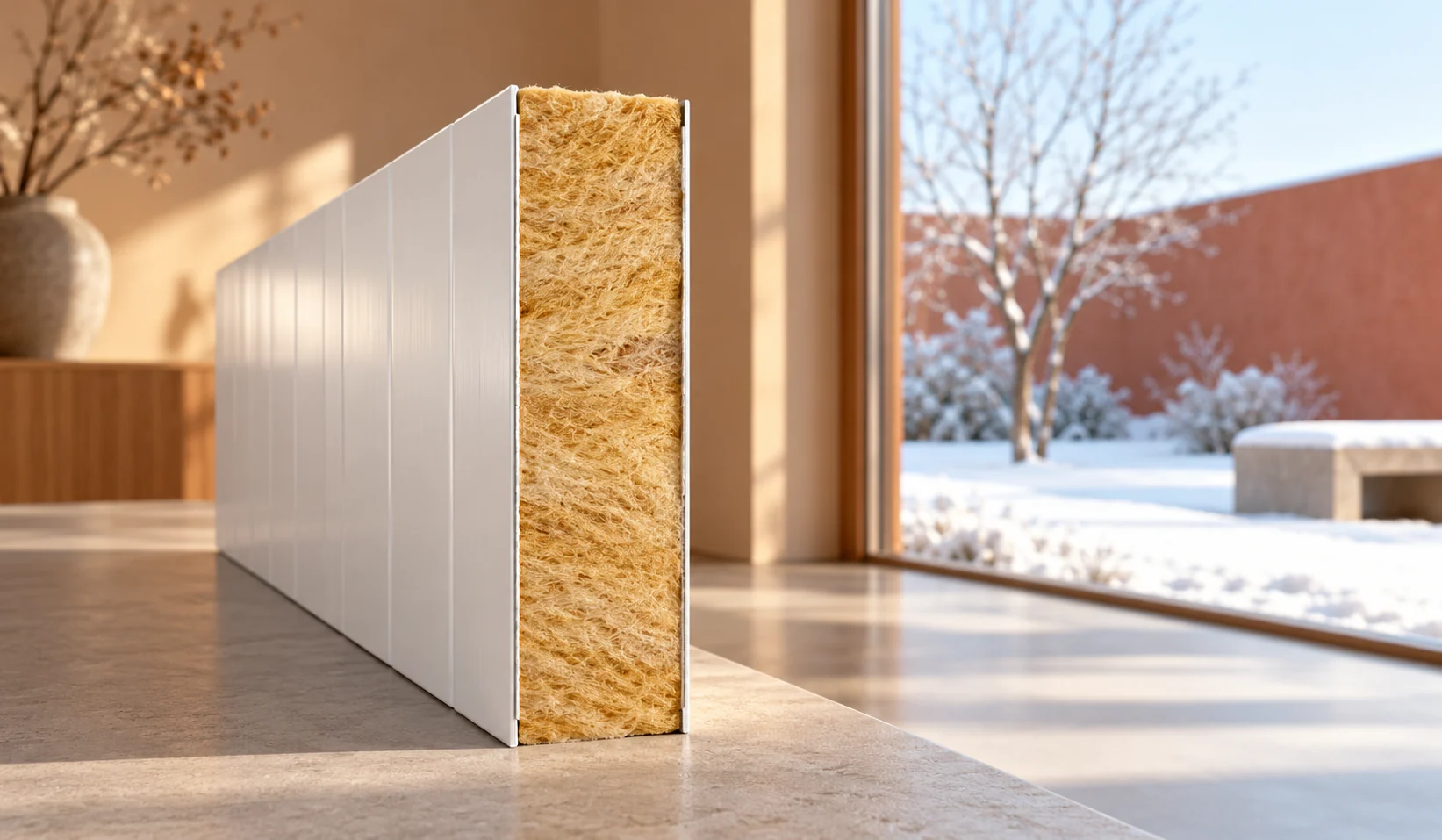
A wall made of insulated wall panels with a mineral wool core goes up quickly, but its properties depend on the entire solution. Mineral wool is one possible core. When choosing, the steel sheets, joints and supports also matter. This guide leads from how a small building is used to delivery acceptance and later inspections. Two thin facings are bonded to the core. The interaction of these parts allows loads to be transferred within the range specified for the product. Panels with mineral wool use, among other things, a lamella arrangement. In it, the fibres are oriented mainly perpendicular to the facing surfaces. It is not a loose mat inserted between two steel sheets.

By |2026-11-14T10:55:34+01:002024-09-24|Building academy|Comments Off on How to select and use walls made of panels with mineral wool?

Does the whole panel with mineral wool have class A1, or does A2 need to be checked?

A mineral core alone is not enough to assign class A1 to the whole panel. The adhesive and facings must also be assessed. For many complete insulated wall panels with a mineral wool core, class A2-s1,d0 is declared. This must be distinguished from the fire resistance of the finished wall. This information describes different material behaviour and the two cannot be substituted for each other. Reaction to fire describes the product's contribution to fire development under specified test conditions. The classification is read for the specified product. In a sandwich panel, that product is the element with core, adhesive and facings. The parameter of the mineral wool alone is not automatically the parameter of such an assembly.

By |2026-11-14T10:55:31+01:002024-09-01|Building academy|Comments Off on Does the whole panel with mineral wool have class A1, or does A2 need to be checked?

How to read the U-value and lambda of an insulated panel without confusing the two parameters?

Lambda describes heat conduction through a material. The U-value relates to the element or building component under consideration. In a sandwich panel, these quantities should not be used interchangeably. Selecting the thickness requires checking the parameter of the finished variant and the joints in the building. Below we show what can really be inferred from a catalogue figure. Lambda, written as λ, expresses a material's ability to conduct heat. It is given in W/(m·K). A lower value means greater resistance of a layer of the same thickness. However, it does not describe the entire panel with its facings, joint and surface heat transfer conditions.

By |2026-11-14T10:54:59+01:002024-08-26|Building academy|Comments Off on How to read the U-value and lambda of an insulated panel without confusing the two parameters?

When does composite cladding work in a livestock building?

In a cowshed, pigsty or poultry house, the inner roof surface operates in a demanding environment. Moisture, deposits and compounds produced during rearing act on it. One solution is a panel with composite cladding on the inside. This does not mean full resistance to every substance. The conditions of use must be matched to the specific building. An example roof panel has a profiled steel outer cladding, a PUR or PIR core and a flat inner cladding. The latter is made of polyester resin reinforced with glass fibre. The fibre reinforces a thin surface layer. It is not a mineral wool core.

By |2026-11-14T13:14:07+01:002024-03-19|Building academy|Comments Off on When does composite cladding work in a livestock building?

How to compare prices for insulated wall panels with a mineral wool core on a like-for-like basis?

Two 100 mm insulated wall panels with a mineral wool core can have different prices and different properties. The price is affected by the facings, the coating, the fixing and the delivery conditions. A comparison only makes sense once the parameters have been aligned. It is also worth calculating the cost of the finished wall. A cheap panel in a non-matching size may require extras that eat up the initial saving. First establish the type of core and its thickness. Then check both facings, the type of coating and the fixing method. A panel with a visible fastener and a panel with a hidden lock may belong to different families. Their prices do not describe the same solution. A similar colour does not even out these differences.

By |2026-11-14T10:55:14+01:002024-02-21|Building academy|Comments Off on How to compare prices for insulated wall panels with a mineral wool core on a like-for-like basis?

PIR or mineral wool in a sandwich panel: what to choose for a given building?

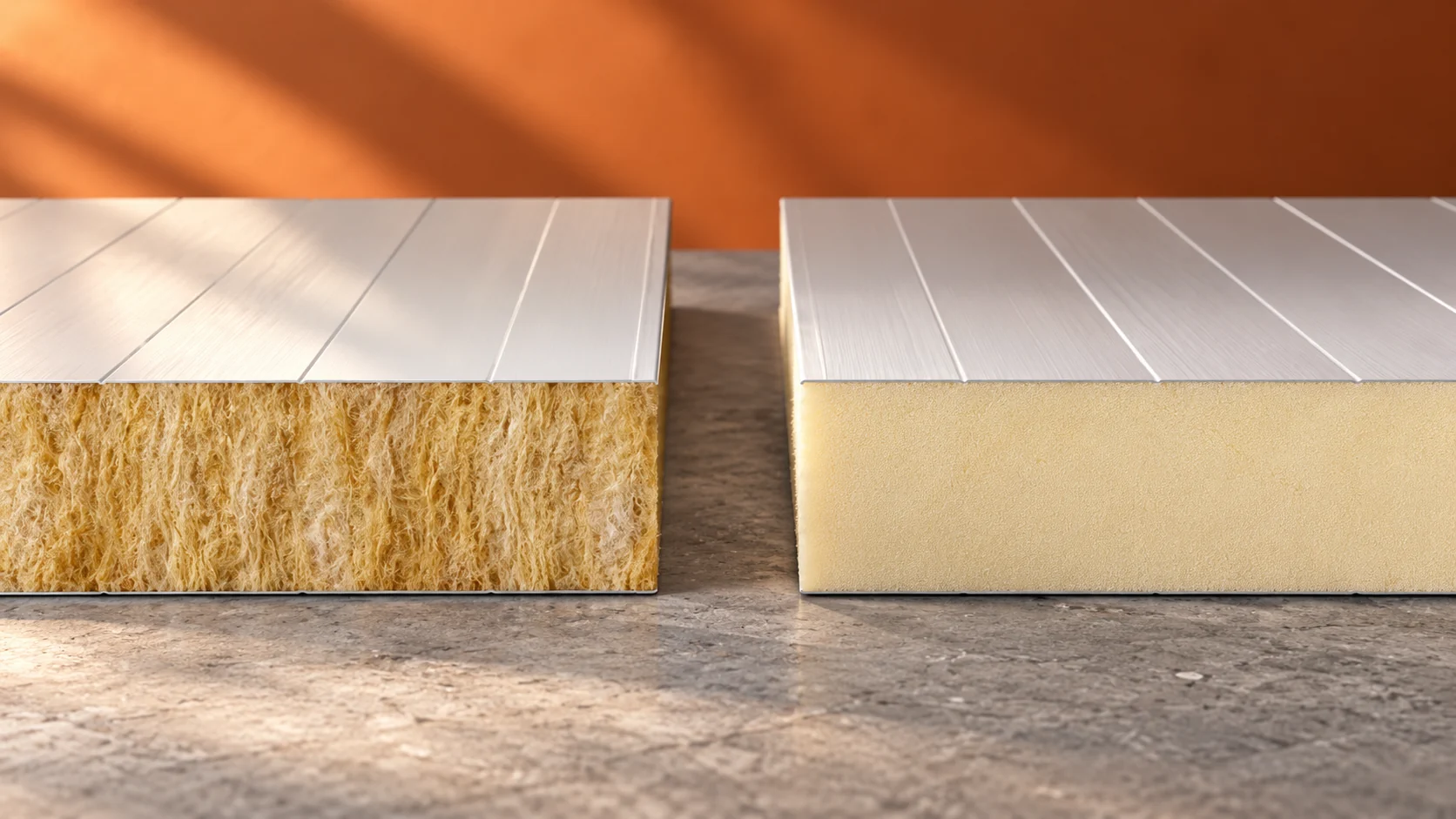
There is no single core that is best for every building. PIR can achieve a low U-value at a smaller thickness. Mineral wool offers different possibilities for fire reaction and classified partitions. However, the choice is determined by the properties of the complete panel. The facings, joints and method of support also matter. First establish the building's function and the requirements that cannot be omitted. This may be a specific partition class, a thermal target or an environmental condition. Only then compare weight and cost. A ranking of cores without information on the application is of little use. The same panel may suit one pavilion and not another.

By |2026-11-14T13:11:19+01:002024-01-06|Building academy|Comments Off on PIR or mineral wool in a sandwich panel: what to choose for a given building?
Back to top