Is a 60 mm wall panel with mineral wool enough, and what about the 40 mm version?

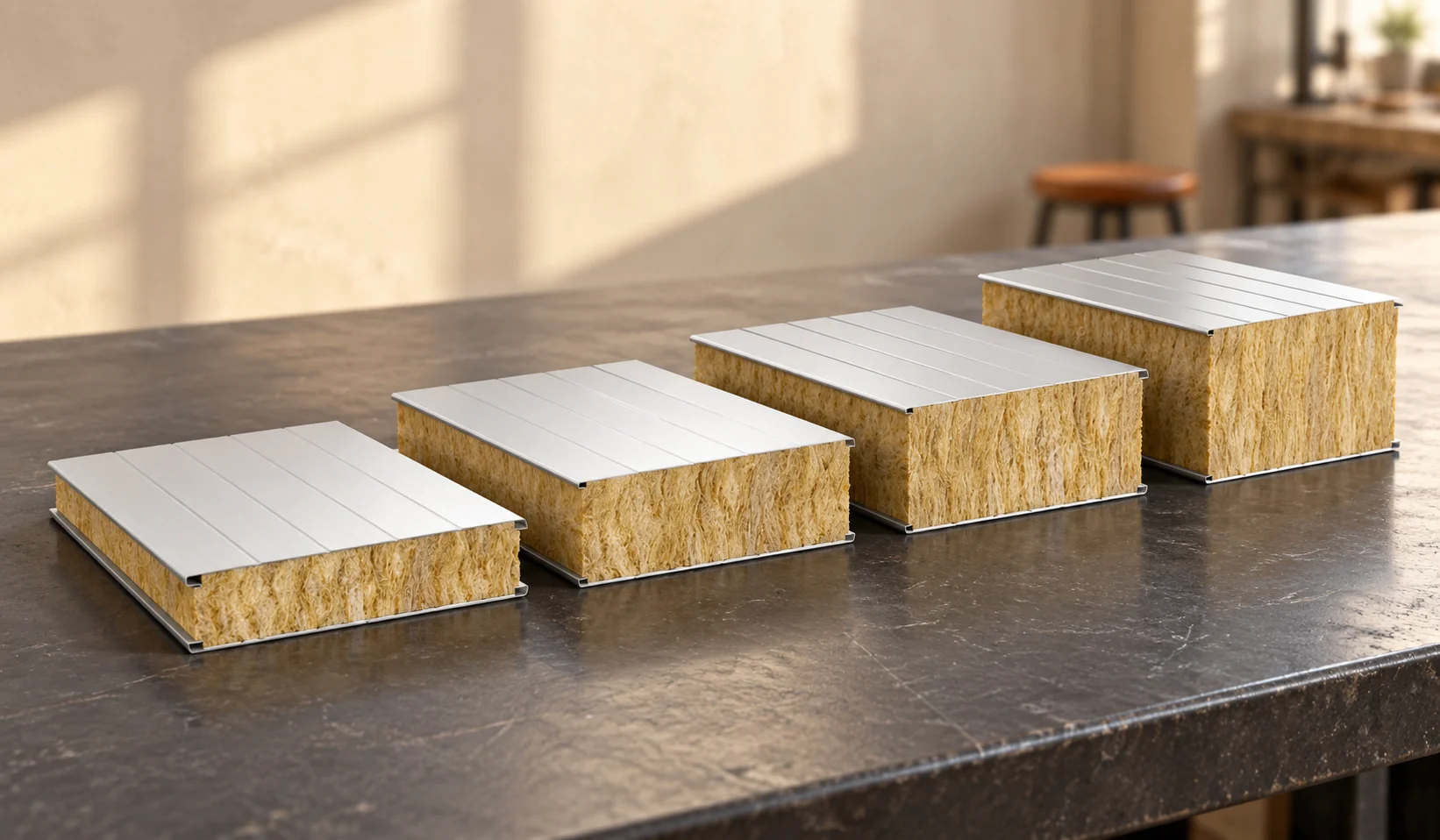
The 60 mm panel with mineral wool is available in selected wall families. However, it should not be treated as a solution for every small building. Insulation performance, load-bearing capacity and fire requirements must be checked. The 40 mm offer may relate to a different core. Before comparing prices, it is worth confirming which product is actually being sold. No. The thickness range depends on the panel family. In some catalogues, wall panels with mineral wool start at 60 mm, in others at 80 mm or more. A single availability table for the whole market should not be created. The dimension must be confirmed for the specific product, joint and facings.
By |2026-11-14T10:55:18+01:002023-12-10|Building academy|Comments Off on Is a 60 mm wall panel with mineral wool enough, and what about the 40 mm version?

In which buildings does a wall with mineral wool offer a particular benefit?

Panels with mineral wool are often considered where fire requirements matter. Their use does not, however, end with a large hall. They can also form the walls of back-of-house areas or a small service building. Suitability is determined by the verified wall assembly, not by the mere presence of mineral wool in the core. It is worth taking openings and joints into account from the outset. Ready-made panels with mineral wool can have a favourable reaction-to-fire class. An example is A2-s1,d0 for a specific product. However, this does not automatically mean any given wall resistance. The latter property relates to the behaviour of the complete wall assembly during testing and is described by separate criteria.

By |2026-11-14T10:54:44+01:002023-10-26|Building academy|Comments Off on In which buildings does a wall with mineral wool offer a particular benefit?

PIR, EPS, XPS or mineral wool: where do their properties differ?

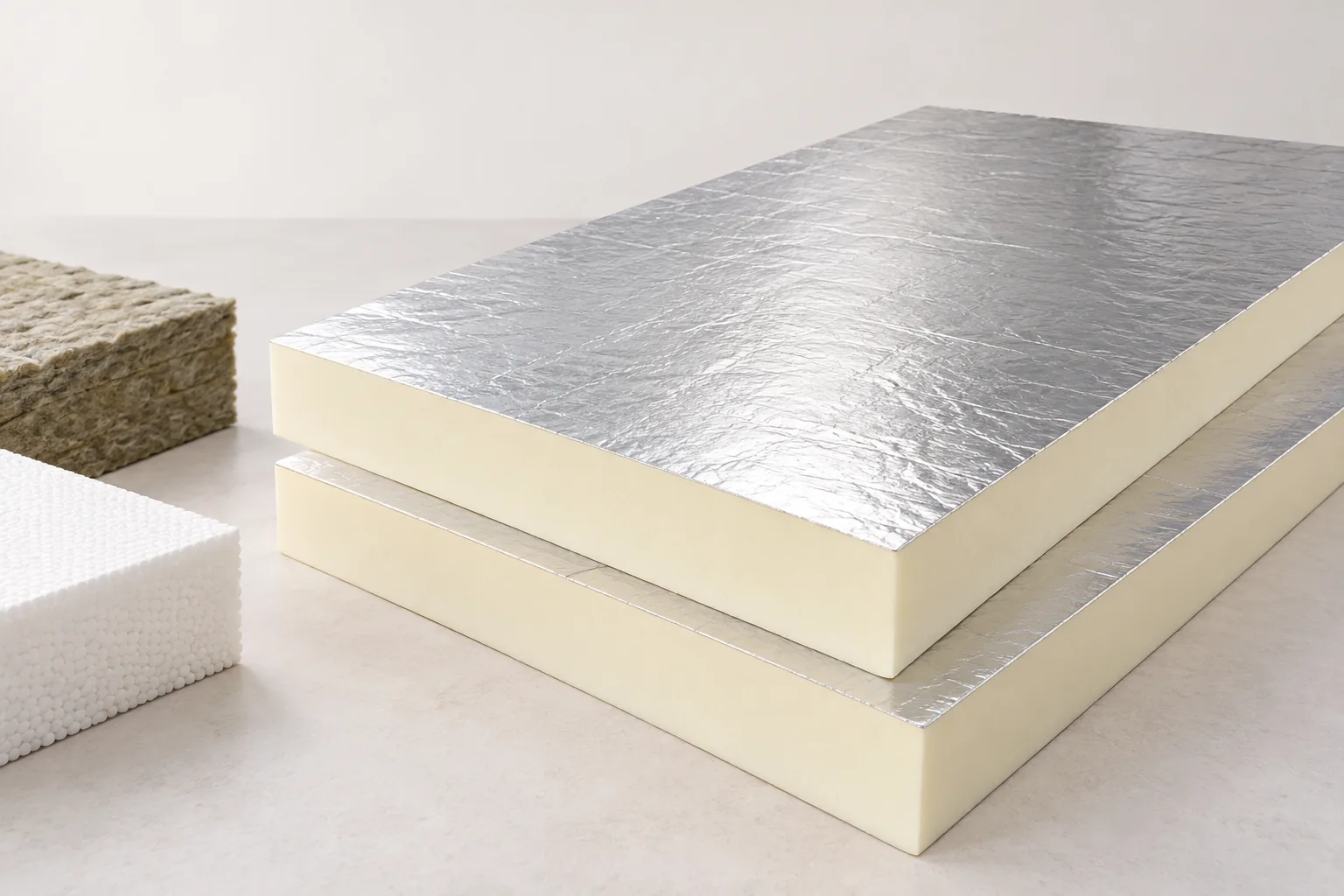
A low eaves detail or a fixed floor level can leave little room for insulation. Compare PIR boards and EPS at the same required thermal resistance and use the declared thermal conductivity of each product to work out the thickness needed. If the insulation will be exposed to water, check water absorption, loading and the uses approved for the board. Where sound or fire performance matters, consult the documentation for the complete assembly. This shows when a thinner PIR board solves a space problem and when other properties favour EPS, XPS or mineral wool.

By |2026-11-15T00:23:38+01:002023-10-22|Building academy|Comments Off on PIR, EPS, XPS or mineral wool: where do their properties differ?

What substructure allows insulated wall panels with a mineral wool core to be installed correctly?

A panel with a mineral wool core requires supports with adequate load-bearing capacity and geometry. The structure must carry its weight and wind action. It must also allow connections and flashings to be fixed correctly. In a small pavilion, this does not mean an arbitrarily light frame. Selection requires assessment of the entire wall, openings and the method of connection to the foundation and roof. The wall carries self-weight and actions perpendicular to its surface, primarily wind. The panel transfers these through fixings to the supports. The forces must then reach the main structure and foundation. Every stage matters. A strong column will not compensate for an inadequate connector or an incorrectly anchored rail.

By |2026-11-14T10:55:03+01:002023-07-18|Building academy|Comments Off on What substructure allows insulated wall panels with a mineral wool core to be installed correctly?

How do you compare two variants of insulated wall panels with a mineral wool core?

Similar thickness and white colour do not mean that two panels with mineral wool are interchangeable. The core density, the sheet thickness and the fixing method may differ. In a small pavilion, these features affect transport, wall performance and cost. It is worth starting the comparison with a single technical table and only then moving on to price. Terms suggesting a basic or reinforced version are offer names. They do not form a common scale for the whole market. One variant may have a lighter core, another different facings or concealed fixing. Without data, it is difficult to tell what change lies behind the name and whether it is needed in a given building.

By |2026-11-14T10:55:33+01:002023-06-09|Building academy|Comments Off on How do you compare two variants of insulated wall panels with a mineral wool core?

What changes when switching to wall panels with 150 and 200 mm mineral wool?

A thicker core can improve the thermal insulation of a mineral wool panel. However, it does not automatically mean the highest fire class or the best solution for every building. With 150 and 200 mm, weight, fixings and details must also be checked. The choice makes sense when the greater thickness helps achieve a specific project goal. In one family of mineral wool wall panels, the 150 mm variant has a Uc of 0.27 W/(m²·K), and the 200 mm variant 0.20. Both have 0.5/0.5 mm facings and a defined core construction. These are data for this family, not values for all panels of these thicknesses. Before comparing, the conformity of the variants must be confirmed.

By |2026-11-14T10:55:16+01:002023-05-25|Building academy|Comments Off on What changes when switching to wall panels with 150 and 200 mm mineral wool?

How do you choose the thickness of a wall panel with mineral wool from 60 to 200 mm?

The 60–200 mm range offers several options, but it does not form a simple ladder from worse to better material. Thickness must be linked to temperature, fire requirements and construction. A thinner panel may suffice in one application, while a thicker one may be needed in another. First define the wall's task, then compare full variants. Determine whether the building will be heated continuously, periodically or not at all. Describe the humidity and the type of work inside. Check the fire and acoustic requirements. This requires panel spans, installation direction and an opening plan. None of this information is replaced by the floor area alone.

By |2026-11-14T10:55:29+01:002023-04-22|Building academy|Comments Off on How do you choose the thickness of a wall panel with mineral wool from 60 to 200 mm?

Will mineral wool panels help reduce noise in a pavilion?

Mineral wool is often associated with quiet, but a ready-made sandwich panel has steel surfaces. Its sound insulation and its sound absorption are different properties. In a small pavilion, doors, openings and joints also determine the effect. Choosing the core alone is not enough to promise a specific level of quiet. Sound can pass through the wall, the joinery and gaps. It can also travel by flanking paths through the structure and adjacent partitions. If there is a large gate in the wall, its properties will be an important part of the result. A good panel will not automatically compensate for an open vent.

By |2026-11-14T10:56:22+01:002023-03-30|Building academy|Comments Off on Will mineral wool panels help reduce noise in a pavilion?

When does an outlet insulated wall panel with a mineral wool core really pay off?

An outlet panel can lower the cost of a small enclosure, but a discount alone does not yet tell you whether the material suits the job. First you need to know why the grade was reduced. A scratch on the coating is a different problem from a damp core or a crushed interlock. It is also worth calculating how much of the purchased batch can be used without weakening the required wall properties. There is no single common list of defects for all outlet offers. The material may come from the end of a production run, a dimensional surplus or a batch with a visual deviation. It may also be damaged. The description should clearly distinguish these situations. The term “second grade” on its own specifies neither suitability nor the scope of documentation.

By |2026-11-14T10:54:39+01:002023-02-12|Building academy|Comments Off on When does an outlet insulated wall panel with a mineral wool core really pay off?

How much does an insulated wall panel with a mineral wool core weigh and how do you calculate the weight of a whole batch?

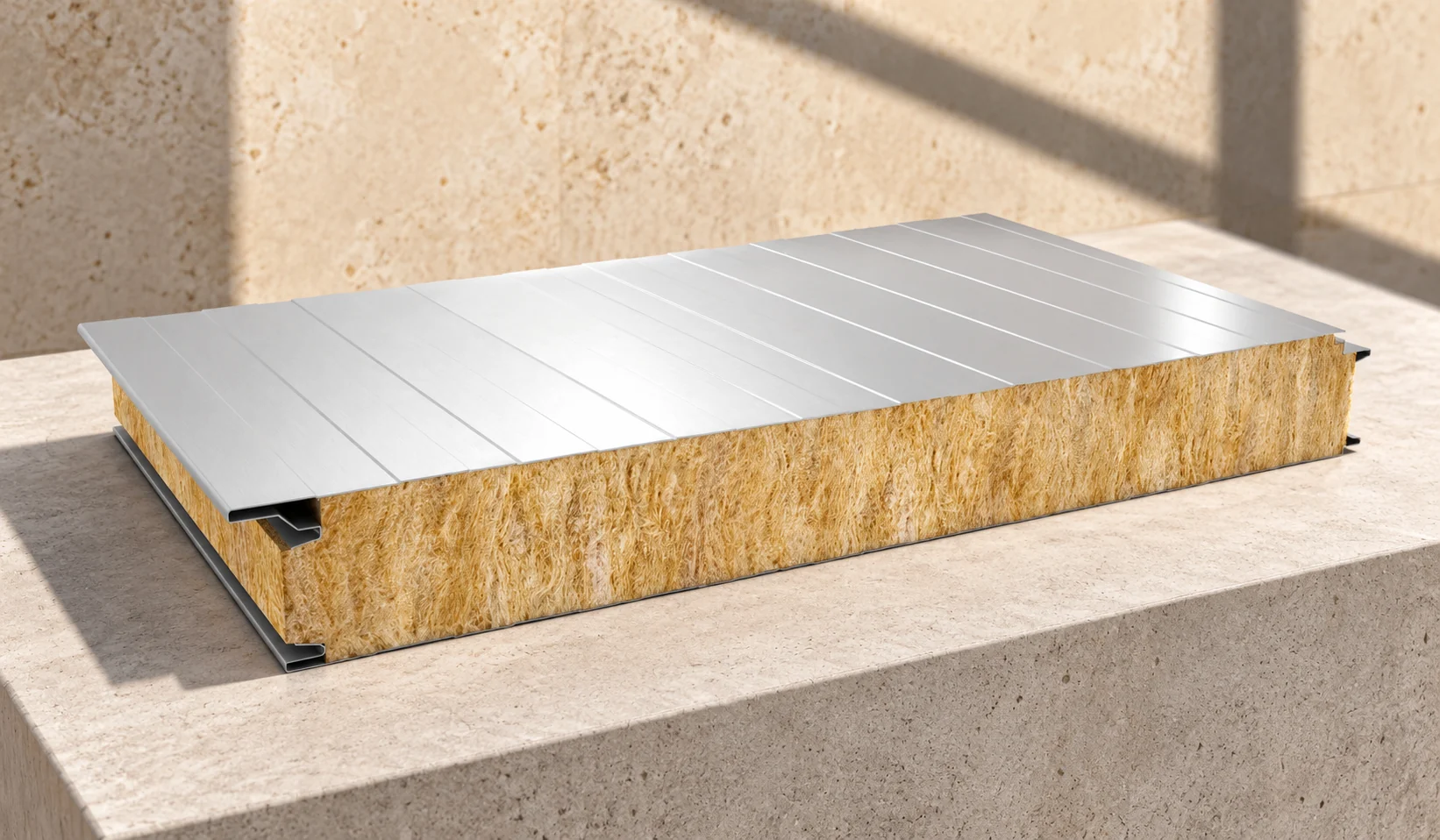
The weight of a panel with a mineral wool core is needed to check the structure, delivery and lifting method. It is not worth guessing it from thickness alone. The core, steel facings and module width matter. It is particularly easy to confuse kilograms per linear metre with kilograms per square metre. The examples below show how to calculate correctly. The weight consists of the mineral wool, both facings and the other components of the panel. Cores can have different densities. Steel sheets may be made in different thicknesses. Profiling changes the amount of material per covered area. Therefore the name “100 mm panel” does not define a single weight.

By |2026-11-14T10:55:13+01:002022-10-07|Building academy|Comments Off on How much does an insulated wall panel with a mineral wool core weigh and how do you calculate the weight of a whole batch?
Back to top