Insulation and energy
PIR, EPS, XPS or mineral wool: where do their properties differ?
In brief
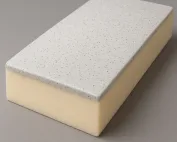
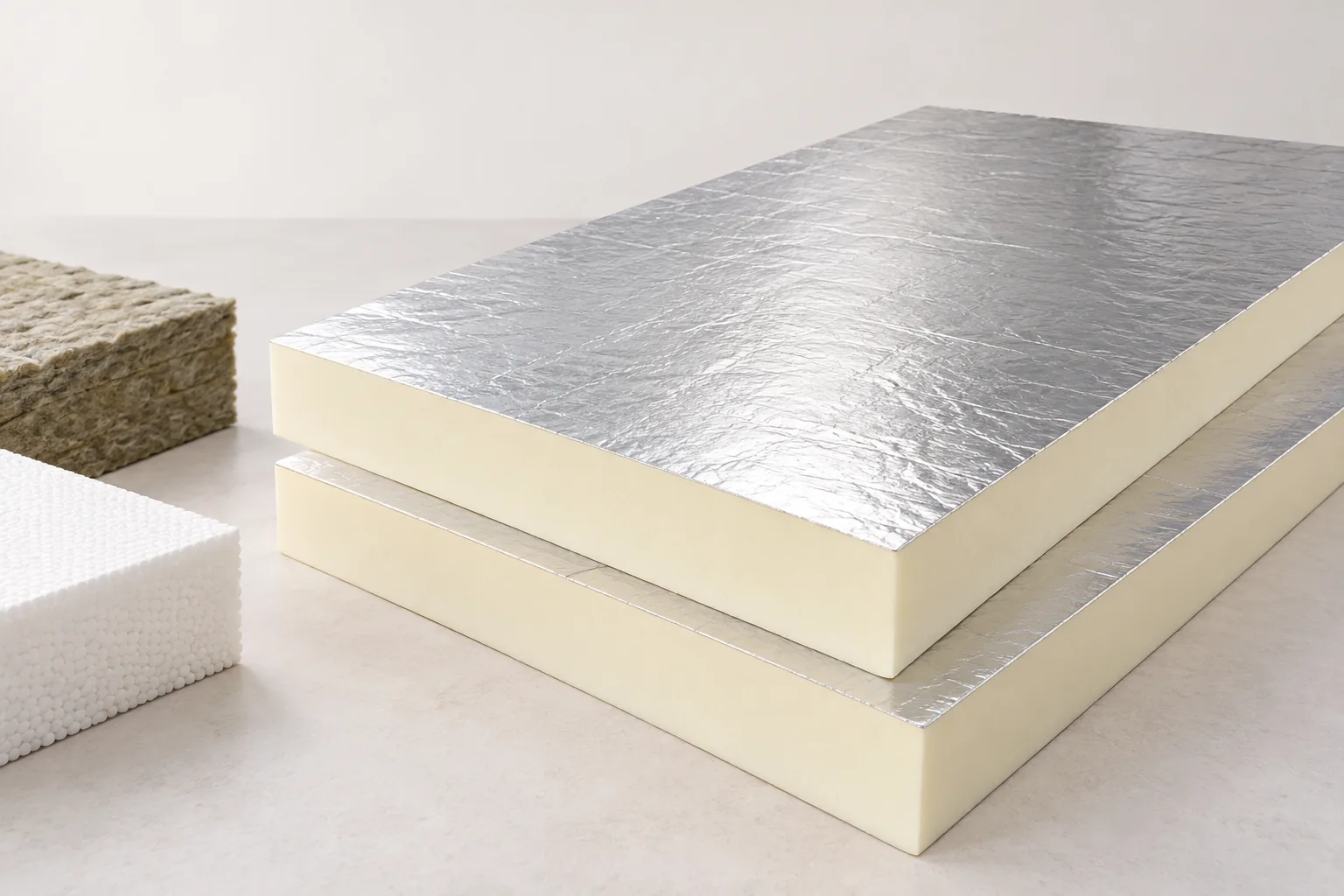
A low eaves detail or a fixed floor level can leave little room for insulation. Compare PIR boards and EPS at the same required thermal resistance and use the declared thermal conductivity of each product to work out the thickness needed. If the insulation will be exposed to water, check water absorption, loading and the uses approved for the board. Where sound or fire performance matters, consult the documentation for the complete assembly. This shows when a thinner PIR board solves a space problem and when other properties favour EPS, XPS or mineral wool.
What does the lambda value really say?
Lambda describes heat conduction through a material. The lower the value, the greater the thermal resistance of a layer of the same thickness. For some PIR boards with aluminium facing, the declared lambda is 0.022 W/(m·K). This is the value for a specific product and should be checked in its documentation.
A comparison makes sense at the same required insulation level. A 10 cm layer with a lambda of 0.022 gives a calculated resistance of approximately 4.55 m²K/W. A similar resistance requires approximately 14.1 cm of material with a lambda of 0.031 or 18.2 cm at a lambda of 0.040. This is a comparison of the layers alone. It does not replace calculation of the thermal transmittance of the entire roof.
When does a smaller PIR thickness matter greatly?
Space savings help when insulating existing roofs where the height of the parapet or flashings is the limiting factor. They can also be useful at terrace thresholds and in floors. Above the rafters, a continuous layer of boards reduces the impact of wooden elements on heat loss.
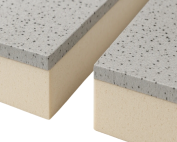
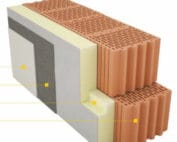
Not every thin insulation will be suitable for every substrate. Boards have different facings, edges and intended uses. A variant for flat roof waterproofing may differ from a board for a rendered system. The choice is made according to the intended application, and only then are thickness, price and installation method compared.
How to compare PIR with EPS fairly?
EPS is available in many variants. A graphite board with a low lambda is a different reference point than basic white polystyrene. One should not compare the best parameter of PIR with the weakest variant of a competing material and present the result as a rule for the entire group.
With a large available thickness, EPS can deliver the expected thermal effect at a favourable cost. PIR gains where space has a specific value or reducing thickness simplifies the detail. Fixings, labour and accompanying layers must be included in the calculation. The price per cubic metre alone does not show the cost of achieving the designed thermal resistance.
Can PIR replace XPS in a damp location?
The low water absorption of PIR boards is an advantage, but does not turn them into waterproofing. On the roof, the material must be protected from precipitation during storage and installation. Encapsulating damp insulation between sealed layers can hinder its drying out.
XPS is often chosen for applications exposed to moisture and pressure, including certain inverted roofs and perimeter insulation. Switching to PIR requires confirmation for the specific assembly. In addition to lambda, water absorption, long-term deformation and service conditions are compared. Compressive strength at ten percent compression is not the permissible working load of a floor.

Where does mineral wool retain its advantage?
Mineral wool behaves differently in fire than organic foams. It can also facilitate achieving the required acoustic protection in a suitably designed component. However, the material name alone does not determine the sound insulation of the entire wall. Facings, joints and the layer build-up matter.
PIR is not a non-combustible material. Individual insulation boards may have fire reaction class E, and some thin variants F. Better classifications of finished assemblies do not automatically apply to the core alone. A distinction must be made between the fire reaction of the product, the fire resistance of the component and the behaviour of the roof under external fire.
How to choose a material without oversimplifying?
First, the place of application, the required insulation level and the available thickness must be determined. Then the moisture conditions, loads and fire and acoustic requirements are checked. Only against this background are complete offers compared. A board with the best lambda does not necessarily produce the most favourable component.
In the enquiry, it is worth stating the type of substrate, the planned waterproofing and the intended use of the surface. For PIR, the facing and the method of joining the edges should also be checked. Well-chosen boards allow the small thickness of the layer to be used effectively. Their advantage is best seen in a specific detail, not in the promise that one material will replace all others.
It is worth requesting a declaration for the exact thickness and variant specified. Similar boards from the same group may have different facings and parameters. The rebate also reduces the effective coverage area relative to the external dimension. For a larger order, this difference should be included in the quantity survey and cost estimate, not only when laying the last row.
| Material | When it is worth considering | What to check in the documentation |
|---|---|---|
| PIR | Where available insulation space is limited | Lambda, facing, reaction to fire and approved application |
| EPS | When selecting boards for floors or roofs in the appropriate configuration | Product variant, lambda and load-related parameters |
| XPS | In assemblies exposed to moisture and pressure | Water absorption and behaviour under long-term load |
| Mineral wool | For specific fire and acoustic requirements | The product classification and the parameters of the entire building envelope |
7 branches. Materials closer to your project.

- SEROCK — Dzierżenin 34 E
- BŁONIE — ul. Sochaczewska 138A
- RADOM — ul. Grobickiego 8
- ŁÓDŹ — Natolin 8
- OLSZTYN — Barczewo, ul. Prosta 9
- WROCŁAW — ul. Jerzmanowska 10C
- GORZÓW WLKP. — ul. Zielona 33/34