Mineral wool in panels
How to compare prices for insulated wall panels with a mineral wool core on a like-for-like basis?
In brief
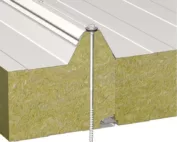
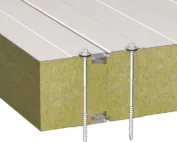
Two 100 mm insulated wall panels with a mineral wool core can have different prices and different properties. The price is affected by the facings, the coating, the fixing and the delivery conditions. A comparison only makes sense once the parameters have been aligned. It is also worth calculating the cost of the finished wall. A cheap panel in a non-matching size may require extras that eat up the initial saving. First establish the type of core and its thickness. Then check both facings, the type of coating and the fixing method. A panel with a visible fastener and a panel with a hidden lock may belong to different families. Their prices do not describe the same solution. A similar colour does not even out these differences.
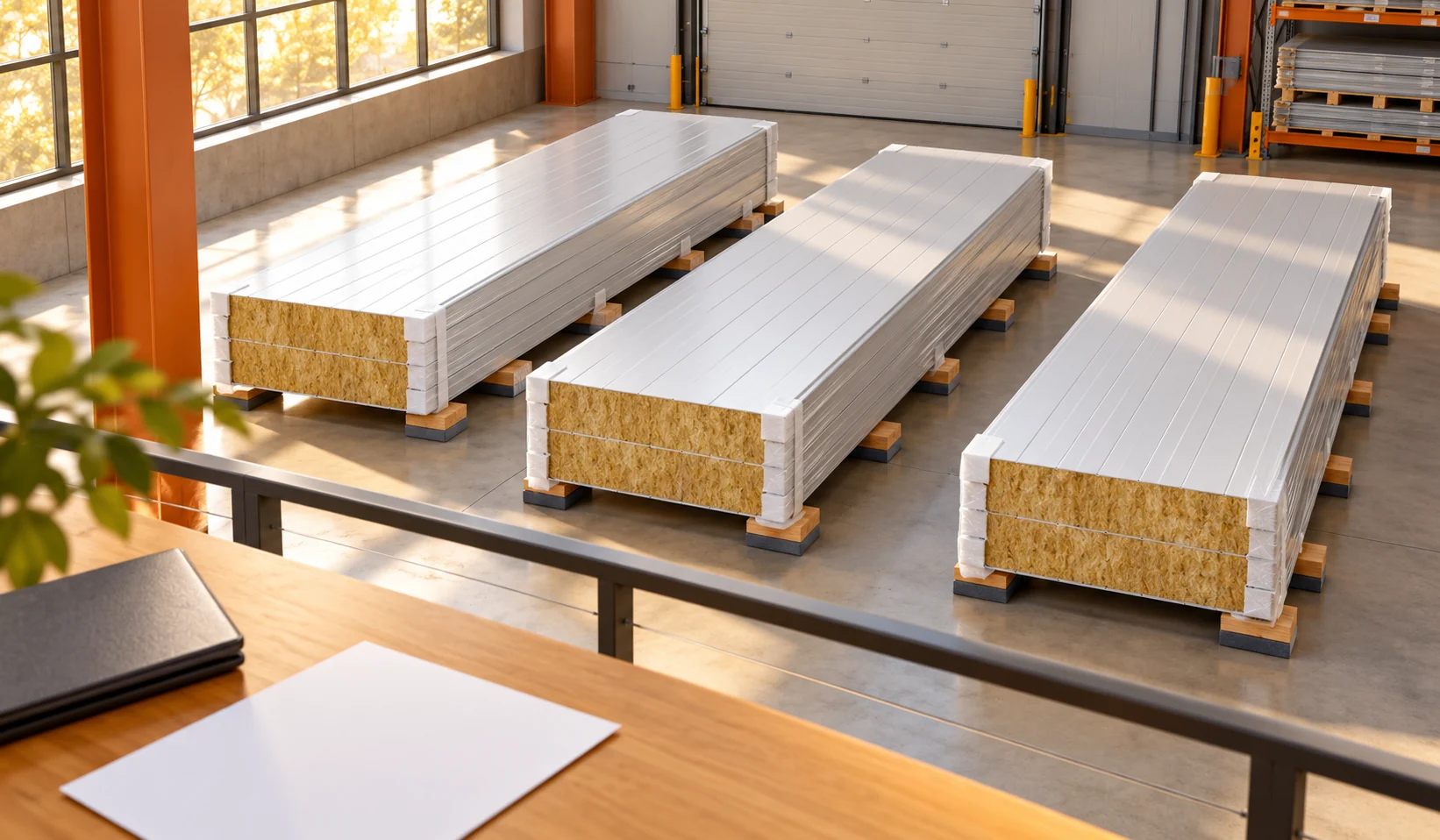
What must be identical in the offers being compared?
Thermal and fire requirements should also match the design. A cheaper panel without the required class should not be compared with a more expensive system that meets the requirement. First, unsuitable variants are ruled out. Only then is a favourable price and delivery terms sought within the remaining group.
How to read the unit and the price list date?
The price may relate to a square metre, a linear metre or a specific piece. Check whether it refers to the usable area and which module was adopted. Tables sometimes have separate net and gross columns. The quote should clearly indicate the tax and the scope of supply. A net amount should not be compared with the final price to the customer.
The validity date of a specific section is also important. The name of the downloaded file does not always mean a uniform date for all items. The price list is a reference point, and delivery requires confirmation of terms. In this guide, we do not give a catalogue amount as a current offer available for every quantity.
How do dimensions affect the actual cost per metre?
Compare two illustrative net prices. To cover 80 m² of wall, the first option requires 88 m² at €32.40/m², costing €2851.20 for the panels. The second requires 82 m² at €34.72/m², or €2847.04. The higher rate gives a slightly lower total because less material is needed.
This is not a commercial offer. The example shows the role of cutting and length matching. It is still necessary to check whether both systems are technically correct. Short sheets may require additional supports and flashings. An excessive number of joints should not be created just to use up an attractive batch of material.
Which extras should be calculated separately?
The schedule should include subconstruction profiles, main fasteners, tapes and flashings. Add to this the elements at the plinth, corners, roof and openings. Each item has its own dimension and quantity. A single general percentage surcharge may not reflect the cost of a small wall with several windows.
In a small pavilion, the ratio of edge length to surface area can be high. That is why a complete metre of cladding may cost more than in a large, simple hall area. This does not automatically mean an inflated price. It is worth comparing the lengths of flashings and the number of details. The same panels can form walls with very different labour requirements.

How do transport and weight affect the quote?
Mineral wool panels require appropriate lifting arrangements. The delivery cost depends not only on the area but also on the lengths and packaging. A long pack may require a different means of transport or unloading space. It must be established who provides the equipment and prepares the lay-down area.
With several small buildings, a joint purchase can simplify logistics. However, the possibility of splitting deliveries and storage must be checked. Material waiting without proper protection can be damaged. The actual saving should not be based on omitting the cost of safe panel handling.
How do you prepare an enquiry that will give comparable answers?
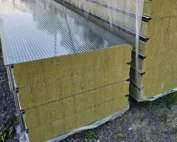
Provide the wall drawing, lengths, quantities and required parameters. Add the type of substrate, delivery location and planned date. Ask for the material, accessories and transport to be listed separately. If you want to compare outlet stock, request a description of the specific batch and its useful dimensions. A discount alone does not determine suitability.
Finally, check the validity of the quote and the rules for any material substitution. Every change to the cladding, interlock or core should be visible in the specification. This ensures that a low price is not the result of a quiet simplification of the product. Make your decision based on the complete cost of a variant that complies with the design.
Keep both versions of the quote if the scope was revised. This will make it easier to explain the difference without reconstructing conversations and measurements.
Also ask about the minimum quantity for the given coating and length. A small batch may have different terms from a large repeat order. Such differences should be stated in the quote.
What else is worth asking about
Does a lower price for a thicker panel mean a better deal?
Not always. Check the facings, coating, classes, lengths and condition of the material. Thickness is only one element of the comparison.
Is installation included in the price of the panel?
Only when the quote explicitly states so. Material, delivery, unloading and wall installation should have a clearly described scope.
7 branches. Materials closer to your project.

- SEROCK — Dzierżenin 34 E
- BŁONIE — ul. Sochaczewska 138A
- RADOM — ul. Grobickiego 8
- ŁÓDŹ — Natolin 8
- OLSZTYN — Barczewo, ul. Prosta 9
- WROCŁAW — ul. Jerzmanowska 10C
- GORZÓW WLKP. — ul. Zielona 33/34