Renovation and maintenance
Safe removal of moss and algae from metal roof tiles
In brief
Safely removing moss and green film from coated steel roofing means gentle cleaning matched to the type of soiling and the condition of the coating, not merely a quick reveal of the sheet colour. First assess whether it is moss, a thin film of algae or dirt-bound deposit, and inspect the coating for flaking, scratches and corrosion. Check for water pooling and clear drainage, since washing alone will not remove the cause. Check the cleaning instructions for the specific coating before choosing a product. If the work requires access at height, agree on a cleaning method and safe access with the contractor.
Why does growth appear only on part of the roof slope?
Shade, moisture and deposited dirt create favourable conditions for the growth of moss and algae. A north-facing or tree-sheltered roof slope may dry more slowly than a section exposed to the sun. Leaves trapped in the gutter outlet also keep moisture in place. An uneven appearance therefore does not necessarily mean a difference in the quality of the steel sheet.
It is worth checking whether the problem is accompanied by standing water or a blocked drain. If so, cleaning alone will not remove the cause. The drainage path should be cleared and the accumulation of organic debris limited. The scope of such work depends on the building’s surroundings.
How to assess the condition of the covering before cleaning?
Inspect the coating for flaking, scratches and corrosion. An older roof may be more sensitive to intensive scrubbing. A test should be carried out on a small, barely visible section. It will show whether the chosen product changes the colour or gloss.
Not every green trace is thick moss. It may be a thin film of algae or a dirt-bound deposit. The choice of method should match the actual problem. Aggressive mechanical removal of a fine film is often unnecessary and may leave damage to the coating greater than the original soiling.
Which method should you start with?
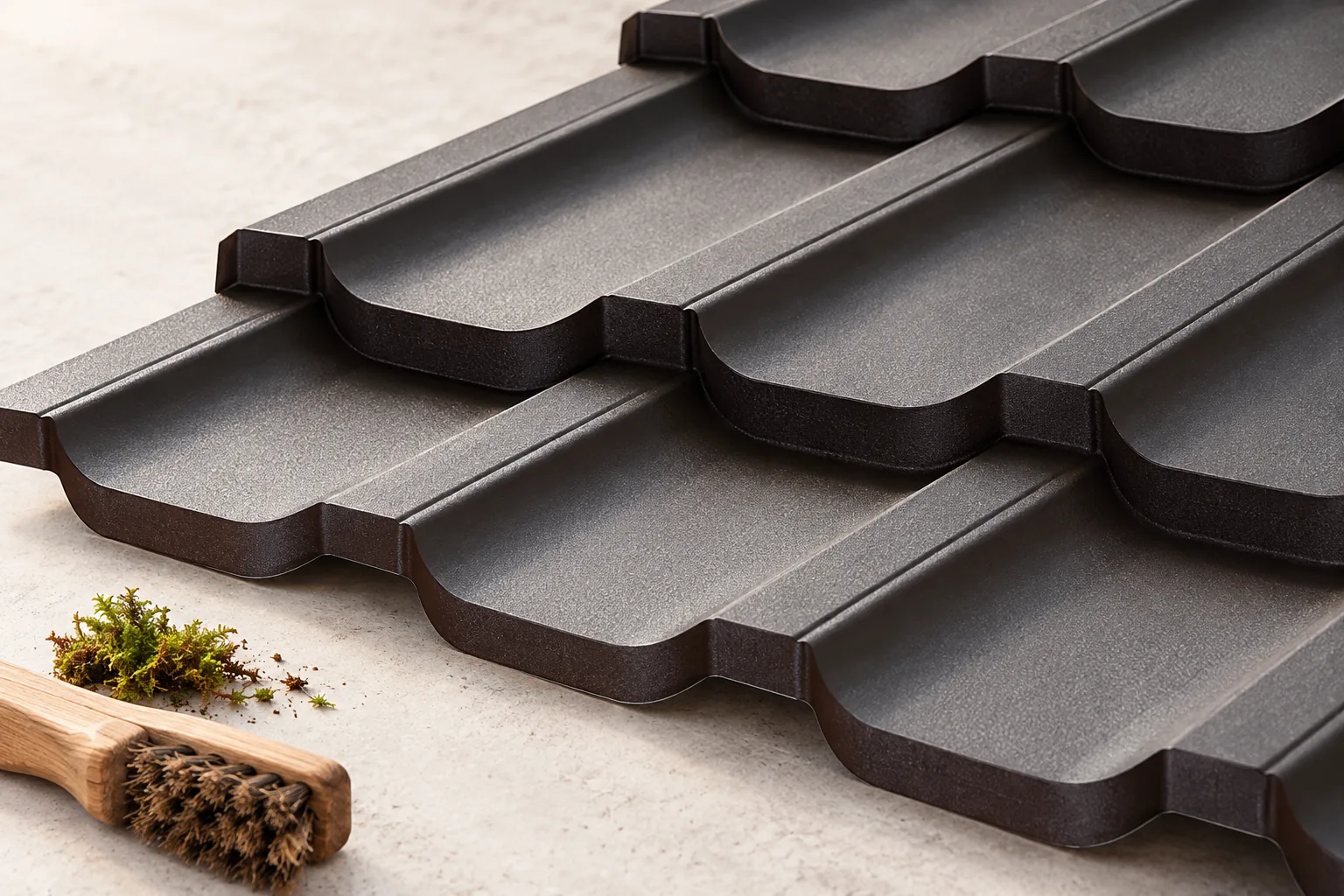
Usually the starting point is the removal of loose leaves and gentle washing in accordance with the covering manufacturer’s instructions. Soft tools that do not scratch the surface are used. A metal brush should not be used, nor should scraping with a sharp object. The small profiles require patience and access to the entire soiled area.
Water should flow in the direction of the slope. A stream directed under the overlap may force moisture into the interior of the roof. The device parameters and nozzle distance are selected to suit the coating. The maximum pressure of the washer is not the correct setting merely because the growth is difficult to remove.
When is a special preparation needed?
If gentle washing alone is not enough, a product intended for the specific type of growth and substrate can be considered. It must be compatible with the sheet coating. The concentration, contact time and rinsing method are determined by the product instructions. Do not create your own chemical mixtures.
Avoid improvised household preparations whose effect on the surface has not been confirmed. This also applies to strongly acidic or alkaline substances or those containing aggressive ingredients. Effective removal of the green colour does not yet mean that the method was safe for the roof.

How to protect gutters, façade and garden?
Plan the drainage path for water and the cleaning agents used. Contaminants should not clog outlets and pipes. If rainwater goes into a tank, proceed in accordance with the requirements of the product and the installation. Do not use the rinse water for watering without checking.
Protect sensitive elements and monitor areas where water runs down the façade. After the work, check that drainage is clear. Cleaning the roof and leaving a mass of leaves in the gutter can quickly lead to overflow during the next downpour. This is a separate task that should not be skipped.
How to limit the return of the film?
Regularly remove leaves and branches from the gutter outlets and eaves. Where possible, limit contact between vegetation and the covering. If a tree needs pruning, the scope of work must be assessed separately. The aim is not to remove all shade at any cost, but to improve conditions and make roof inspection easier.
Check whether water is standing due to deformation of the sheet or incorrect detailing. More frequent use of chemicals will not solve such a problem. The coating should also be assessed after cleaning. Damaged areas should be repaired using a method appropriate to the material.
When to call in professionals?
A wet and overgrown roof is very slippery. If prepared access and safeguards are not in place, cleaning should be entrusted to a suitable team. This applies particularly to steep slopes, areas around roof valleys and edge locations. A good service includes assessment of the method, protection of the surroundings and a check after completion.
Ask for information on which products were used and which areas required additional repair. Keep before-and-after photos. This makes it easier to assess the rate at which the growth returns and to plan the next inspection. The aim is a clean roof with the coating preserved, not just a quick visual effect for a photograph.
7 branches. Materials closer to your project.

- SEROCK — Dzierżenin 34 E
- BŁONIE — ul. Sochaczewska 138A
- RADOM — ul. Grobickiego 8
- ŁÓDŹ — Natolin 8
- OLSZTYN — Barczewo, ul. Prosta 9
- WROCŁAW — ul. Jerzmanowska 10C
- GORZÓW WLKP. — ul. Zielona 33/34