Roof and energy
Why does a photovoltaic roof produce different power on sunny frosty days and in summer heat?
In brief
Strong sunlight is not the only factor determining the instantaneous output of a photovoltaic system. Cell temperature also matters. In typical silicon modules, cooler operation favours output at the same amount of light. This does not mean, however, that winter will deliver greater annual production than summer. Shorter days, the sun’s angle, snow and weather can outweigh the benefit of lower temperature. Air temperature in the shade is not the temperature of the active roof surface. Cells absorb radiation and heat up during operation. Their conditions also depend on wind and heat dissipation through the covering. A summer ambient temperature reading alone therefore does not allow you to determine how the photovoltaic layer is performing.
Why is a thermometer on the wall not enough?
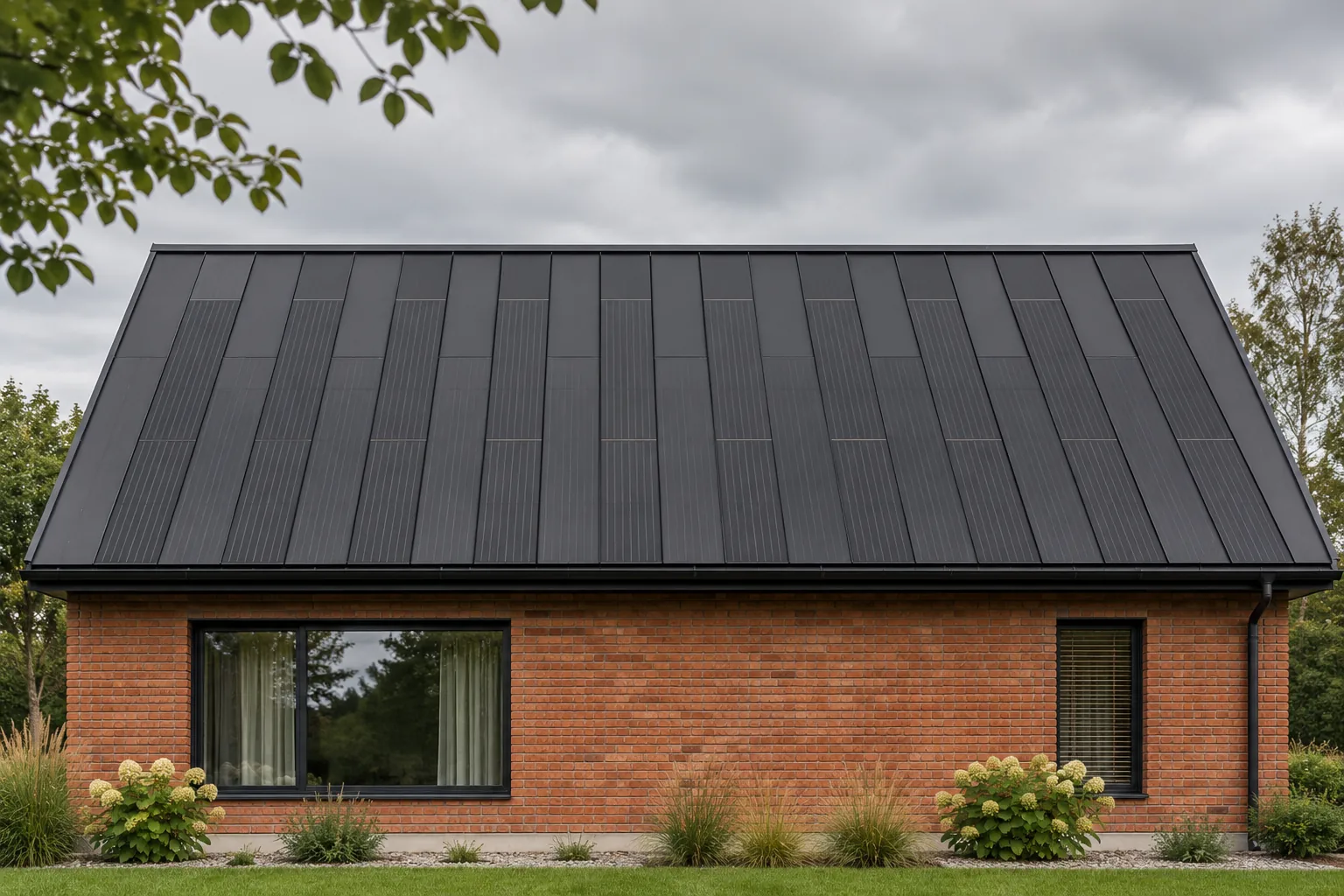
In an integrated system, its actual construction must be taken into account. A steel element with cells has a different environment from a module on an open mounting frame. The correct assumptions should be included in the yield forecast. An incidental temperature read from one location or a thermal image should not be applied to the whole roof.
What does the temperature coefficient mean?
The datasheet may state how power changes with temperature. This is used for calculations within a defined range of conditions. It does not by itself describe the annual result of an installation. Different products may have different coefficients, so any comparison should concern specific models and the same electrical quantity.
Besides power, other parameters also change, including voltage. The designer takes these into account when selecting circuits and equipment. The owner should not change the configuration himself in winter for this reason. The task of a correct design is to account for the expected conditions throughout the year, not only on the day of installation.
Why can a clear winter day be surprising?
When the surface is exposed, the air is cool and there is enough light, the momentary result may look very good. This does not mean that the roof will perform similarly on every winter day. Clouds, lying snow and a low sun path can quickly change the situation. The shorter day also limits the number of production hours.
It is therefore necessary to distinguish between power and energy. A high reading over a short time need not produce a large daily total. It is best to compare the curves for whole days and then for months. This shows why an impressive winter record does not replace the longer operating periods of summer and does not guarantee coverage of heating needs.
Such a comparison is best carried out using data from the same building. Results from another location or from a roof slope with a different pitch are not a simple reference point.
Does a summer midday drop mean a fault?
A lower reading than expected is not enough on its own for such a conclusion. Temperature, cloud cover, equipment limits and grid conditions may all matter. Sometimes the curve stops at a level resulting from the inverter selection. Each of these cases requires a different interpretation. The alarm should not, however, be explained automatically by heat alone.
When reporting a problem, provide the date, time, the device message and comparable data from an earlier period. The service team can then check whether the behaviour falls within the expected range. It is not worth assessing the roof solely against the best result from a cool day. The operating conditions were different then.
Can heat dissipation be improved?
The basis is the preservation of the solutions provided for in the design. Ventilation paths should not be obscured by cables, leaves or later modifications to the eaves. This is an argument for coordinating the roofing and electrical work from the outset. In an integrated steel roof, these details can be established before the roof slope is closed.
However, you should not cool an overheated roof with water yourself or make additional openings. Such ideas can damage the product, impair tightness or create a hazard when working at height. If the temperatures raise doubts, the design and workmanship must be checked. Remedial measures should have a specific cause.
How can this knowledge be used when buying?
Ask whether the simulation takes into account the integration with the roofing and the assumed ventilation conditions. Ask for the monthly yield rather than just the highest power. This makes it easier to assess the home’s seasonal needs. It is also worth knowing what operating information the monitoring will provide and whether it will cover the individual active fields.
The advantage of a well-designed roof is not constant power in every weather condition. It is predictable operation within the described assumptions, while maintaining the roofing function and a consistent appearance. A reliable quote explains natural fluctuations. It does not try to hide them behind a promise of maximum yield all year round.
Among the manufacturers and brands of photovoltaic roofs are MDM NT (MyRoof), Megasol Energie, SolRoof, ML System, Autarq, 3S Swiss Solar Solutions, SunRoof, Wienerberger Wevolt, BIPVco and Electrotile.
7 branches. Materials closer to your project.

- SEROCK — Dzierżenin 34 E
- BŁONIE — ul. Sochaczewska 138A
- RADOM — ul. Grobickiego 8
- ŁÓDŹ — Natolin 8
- OLSZTYN — Barczewo, ul. Prosta 9
- WROCŁAW — ul. Jerzmanowska 10C
- GORZÓW WLKP. — ul. Zielona 33/34