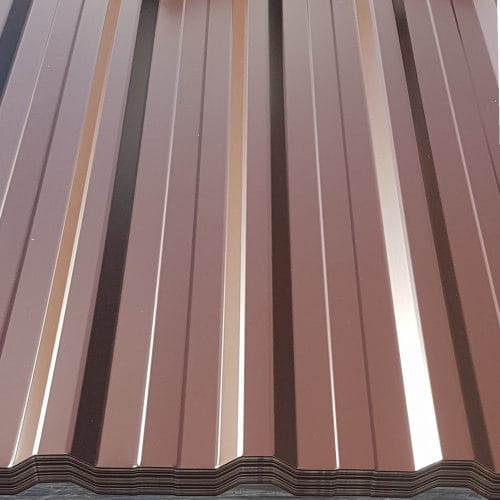
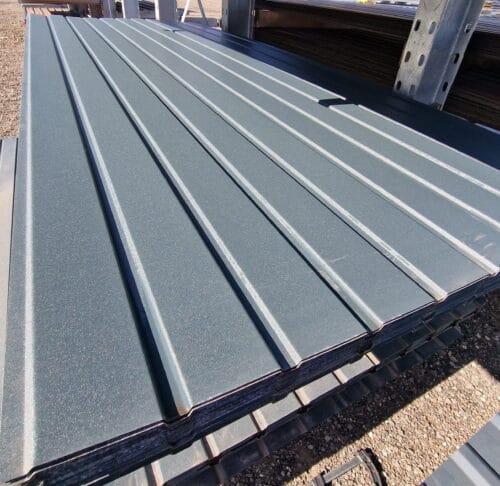
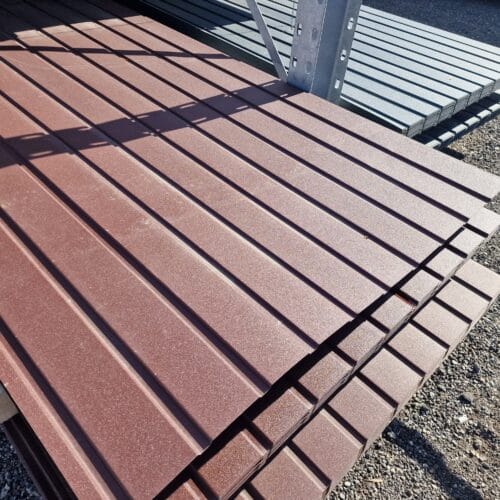
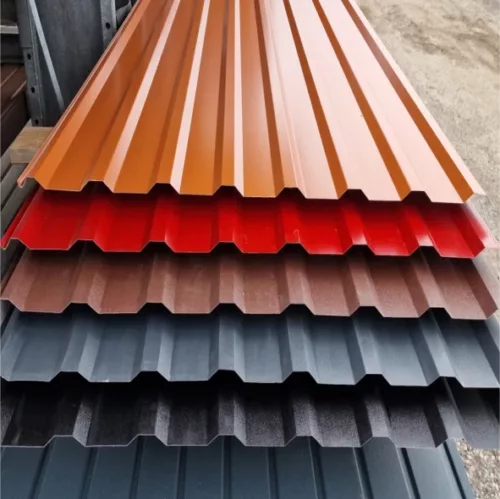
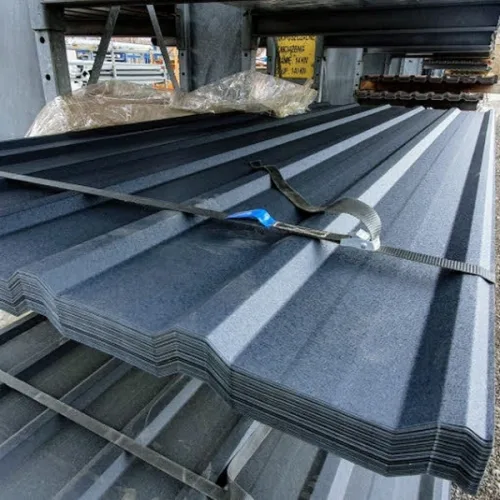
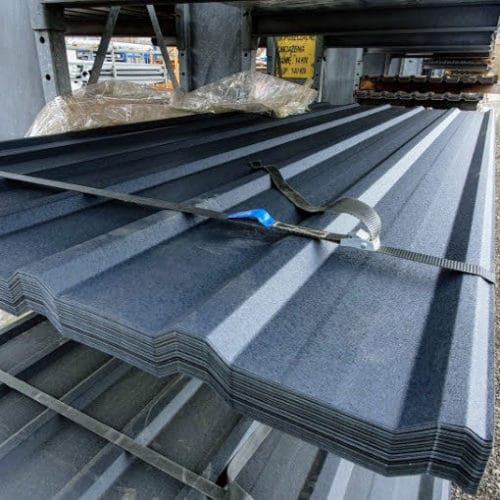
Profiled steel roofing with a tile pattern
A pronounced tile pattern is also possible with a lightweight metal covering. Tile-effect roofing uses profiled sheets to combine a decorative rhythm with a relatively low load on the structure. It is an attractive option for new houses and renovated roofs, particularly where the owner wants to retain a traditional building style while benefiting from large elements and a factory-finished surface.
1 The appearance of tiles with less weight
The profiling shapes the steel into a pattern resembling successive rows of tiles. This creates a three-dimensional roof surface at a much lower weight than typical clay or concrete coverings. That difference is useful when replacing the roof on an older house, where the new covering’s weight is an important part of assessing the supporting structure. Low weight also makes transport and lifting sheets easier when the work is well organised. The appearance need not be simplified: available profiles range from pronounced waves to calmer, flatter lines. They can suit traditionally shaped houses as well as buildings that call for a restrained roof pattern. Colour selection connects the roof with the windows and facade, helping a new covering bring the whole house together visually.
2 Protective layers with distinct roles
The steel substrate provides strength, the metallic protection helps resist corrosion, and the outer coating determines appearance and resistance to environmental exposure. Choosing the finish is therefore a functional decision as well as a colour choice. For a house among trees, beside a road or in more demanding surroundings, compare the specific coating’s properties with the roof’s exposure. Factory finishing provides a ready surface without painting the entire roof after installation. The coating is applied in a controlled production process, which supports consistency across the supplied covering. Roof maintenance remains important, but the starting point is an organised system of sheet protection.
3 A format matched to the roof geometry
On a simple roof, sheets selected to match the slope length can reduce transverse joints and cover a large area efficiently. Smaller modules may be more useful on roofs with many changes of direction. Selecting the format allows the same roofing principle to suit different building shapes without giving up the desired pattern. Tile-effect profiling produces more varied light and shade than straight trapezoidal lines and refers more directly to traditional residential roofs. Ready-made flashings and colour-matched accessories help finish eaves, ridge and edges consistently. The owner can therefore consider the roof as a whole: lightweight, visually defined and suited to the proportions of the house and its surroundings.
SteelProfil supplies tile-effect roofing and other coverings in first and second grade, with stock items available for prompt collection or dispatch. We help compare profiles, colours and formats for the roof. Promotions and competitive pricing make it easier to choose the intended pattern and colour while considering the budget for the whole project.