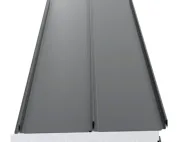
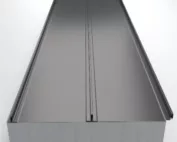
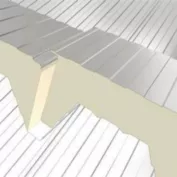
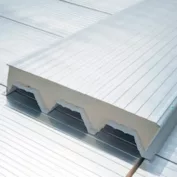
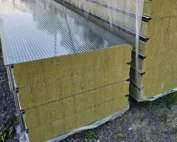
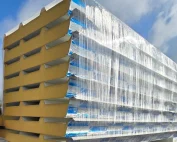
Panels in use
PIR or mineral wool in a sandwich panel: what to choose for a given building?
In brief
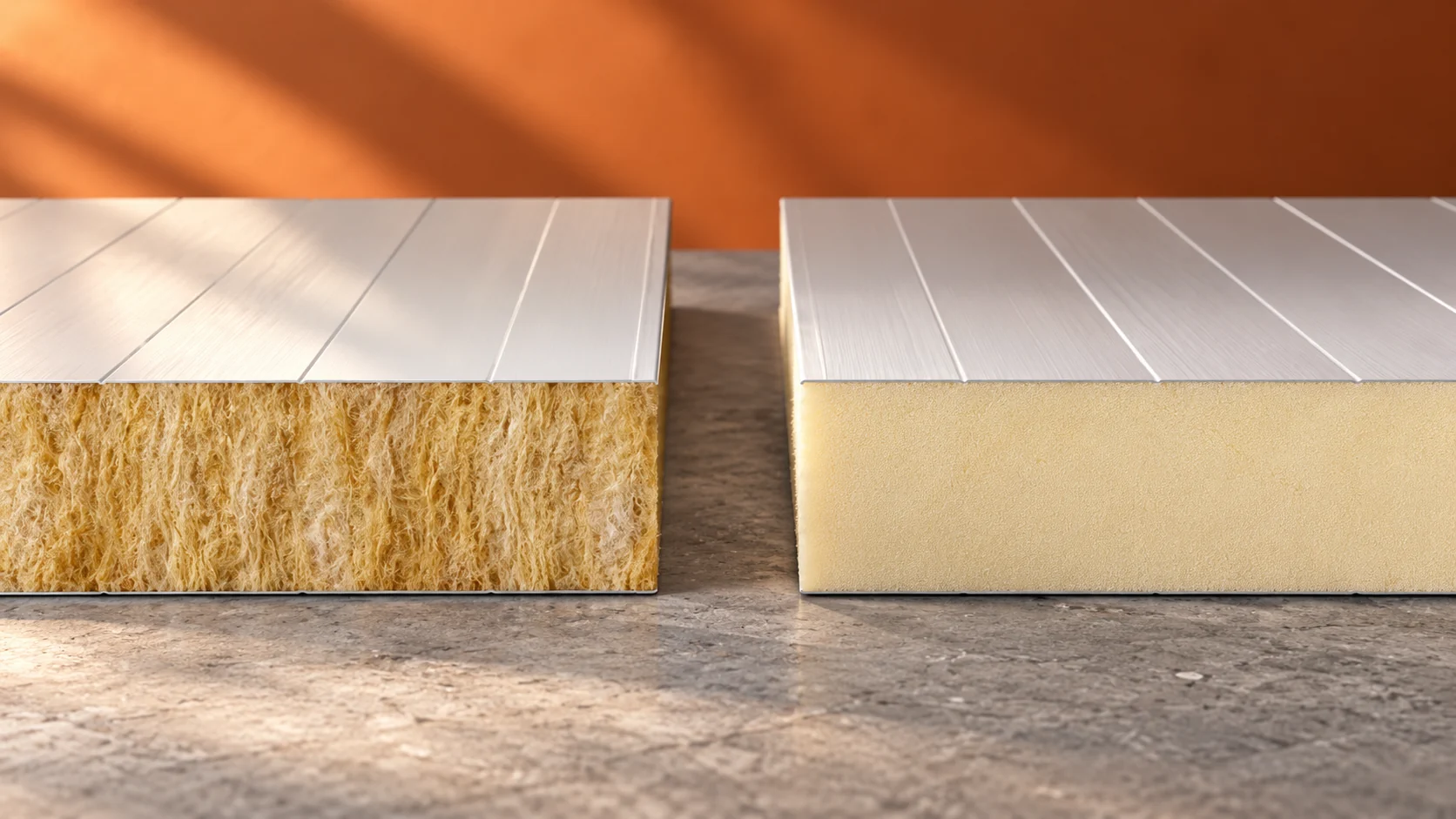
There is no single core that is best for every building. PIR can achieve a low U-value at a smaller thickness. Mineral wool offers different possibilities for fire reaction and classified partitions. However, the choice is determined by the properties of the complete panel. The facings, joints and method of support also matter. First establish the building’s function and the requirements that cannot be omitted. This may be a specific partition class, a thermal target or an environmental condition. Only then compare weight and cost. A ranking of cores without information on the application is of little use. The same panel may suit one pavilion and not another.
Which requirement should be decisive first?
If the project requires a specific fire solution, the choice must start with the compliant classification. Where space is the constraint, the required thickness of the complete wall will matter. In a room with noise, the relevant acoustic result must be checked. Each parameter answers a different question.
How to compare thermal insulation?
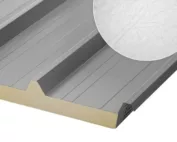
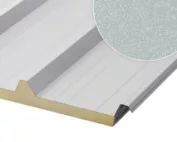
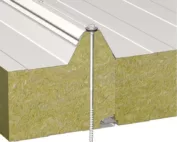
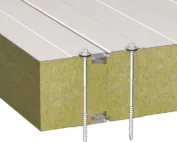
For an example PIR panel 100 mm from a specific family, the declared U-value is 0.19 W/(m²·K). For another 100 mm panel with mineral wool and concealed fixing, it is 0.44. These are data for two specific variants. They show the thermal difference, but not full interchangeability of the products.
With an area of 40 m² and a temperature difference of 25 K, the simple heat flow is 190 and 440 W respectively. This is a calculation for the panel area. It does not include openings, thermal bridges or ventilation. If a similar U-value is required, other thicknesses of both families must be compared, and then the remaining requirements checked.
What does the weight comparison tell us?
In the cited PIR 100 mm variant, the mass is 12.4 kg/m² with 0.5/0.5 mm facings. The mineral panel has 20.3 kg/m² with 1 m coverage and 0.5/0.6 mm facings. The facings are therefore different. The entire weight difference cannot be attributed solely to the type of core.
Mass affects handling and the organisation of installation. A 5 m long element with 1 m coverage in these examples weighs approximately 62 and 101.5 kg respectively. The lifting method must also take into account stiffness and the recommendations for the product. Lower weight does not automatically give a greater permissible span.
How to understand the difference in fire behaviour?
Complete panels with mineral wool may have a declared reaction of A2-s1,d0. For the specified PIR family, it is B-s1,d0. These are not the same classes. PIR must not be called non-combustible simply because the panel achieved a favourable result in a particular test. The core and the complete product must be distinguished.
EI or REI resistance is a separate property of the assembly. It depends on thickness, joints, supports and classification conditions. It does not follow directly from the reaction to fire alone. Variants with NPD may appear in the documentation. This entry is not replaced by the result of another panel of similar appearance.

Does mineral wool always give a quieter interior?
A result is needed for the specific panel and the complete partition. Sound insulation is not the same as absorption within the room. Mineral wool enclosed between solid metal sheets does not act like exposed porous material. Hard facings can leave a reverberation problem.
Doors, windows, penetrations and flanking transmission also determine the effect. In a small building, a large gate can account for a significant share of the entire wall. It is not worth paying extra for the core based only on an association with quietness. The main noise paths and the appropriate parameter for assessment must first be established.
How should moisture and surface conditions be taken into account?
Both solutions require properly closed edges and sealed details. The resistance of the core does not replace protection of the contact. The type of coating on the interior and exterior side is important. Standard white metal sheet does not become resistant to aggressive chemicals by changing the insulation material.
At acceptance, check the condition of the joint, debonding and damage to the facings. A panel with a favourable U-value may be unusable if the correct joint cannot be made. Catalogue properties apply to a specific product in the appropriate condition. A material defect requires separate assessment.
How should the financial decision be made?
Compare two variants that meet the requirements, not just two equal thicknesses. Count panels, structure, accessories, transport and installation. If the wall thickness differs, the flashings and fastener lengths will also change. In a small pavilion, the costs of these elements can be significant.
Record the reason for the choice in the specification. This will facilitate assessment of a later proposal for substitution. The right core is the one which, together with the rest of the panel, corresponds to the conditions of the building. The lowest price alone or the lowest λ does not provide sufficient justification for the decision.
What else is worth asking about
Is it enough to compare two panels with a thickness of 100 mm?
Such a starting point shows differences, but not equivalence. Variants meeting the same thermal, fire and structural requirements must be compared.
Does a lighter panel always require a weaker structure?
No. The structure also carries wind, snow and other loads. The selection results from calculations and the behaviour of the entire system, not just the weight of the envelope.
7 branches. Materials closer to your project.

- SEROCK — Dzierżenin 34 E
- BŁONIE — ul. Sochaczewska 138A
- RADOM — ul. Grobickiego 8
- ŁÓDŹ — Natolin 8
- OLSZTYN — Barczewo, ul. Prosta 9
- WROCŁAW — ul. Jerzmanowska 10C
- GORZÓW WLKP. — ul. Zielona 33/34