Thermano Roof and point loads: avoiding overestimates of board strength

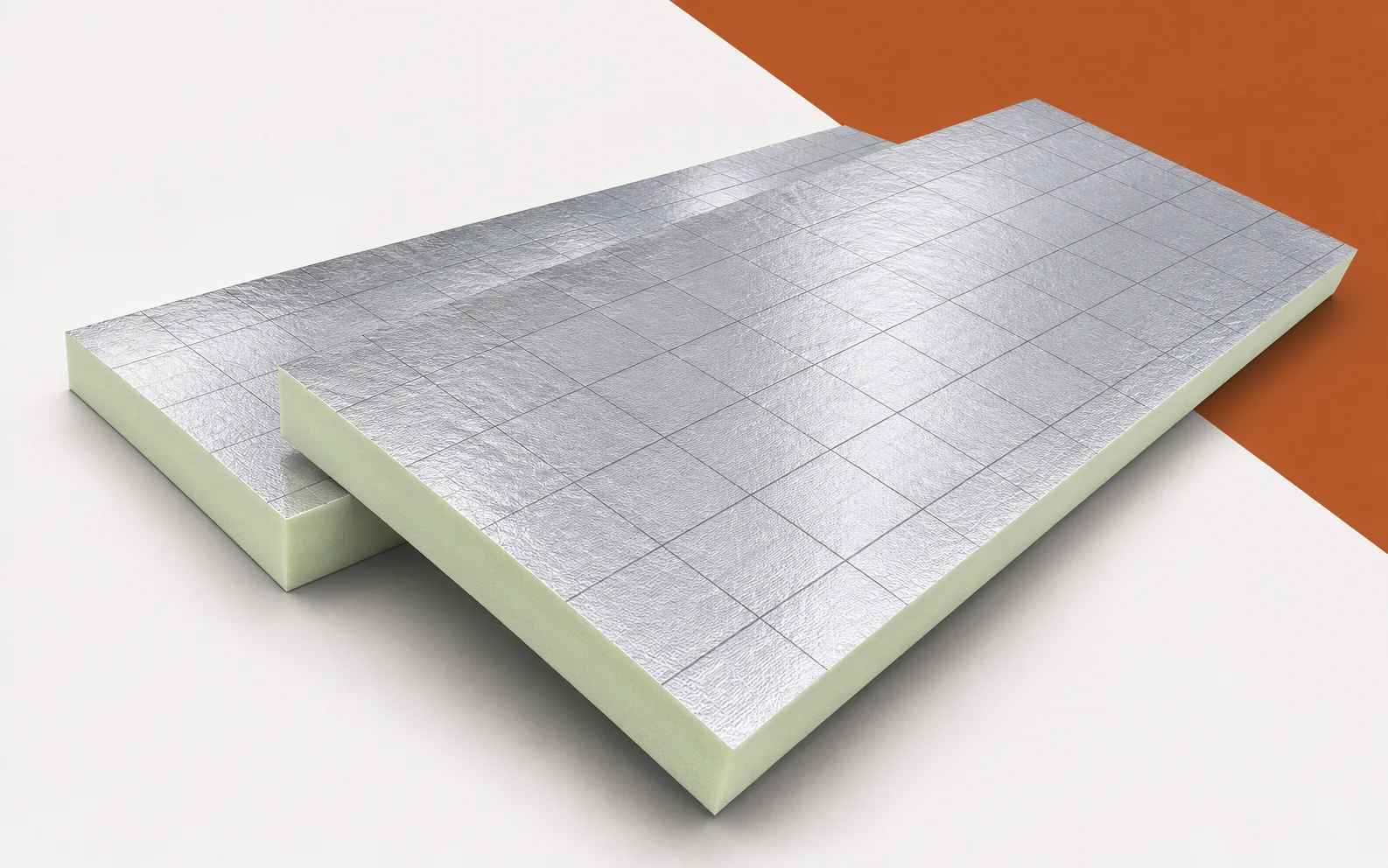
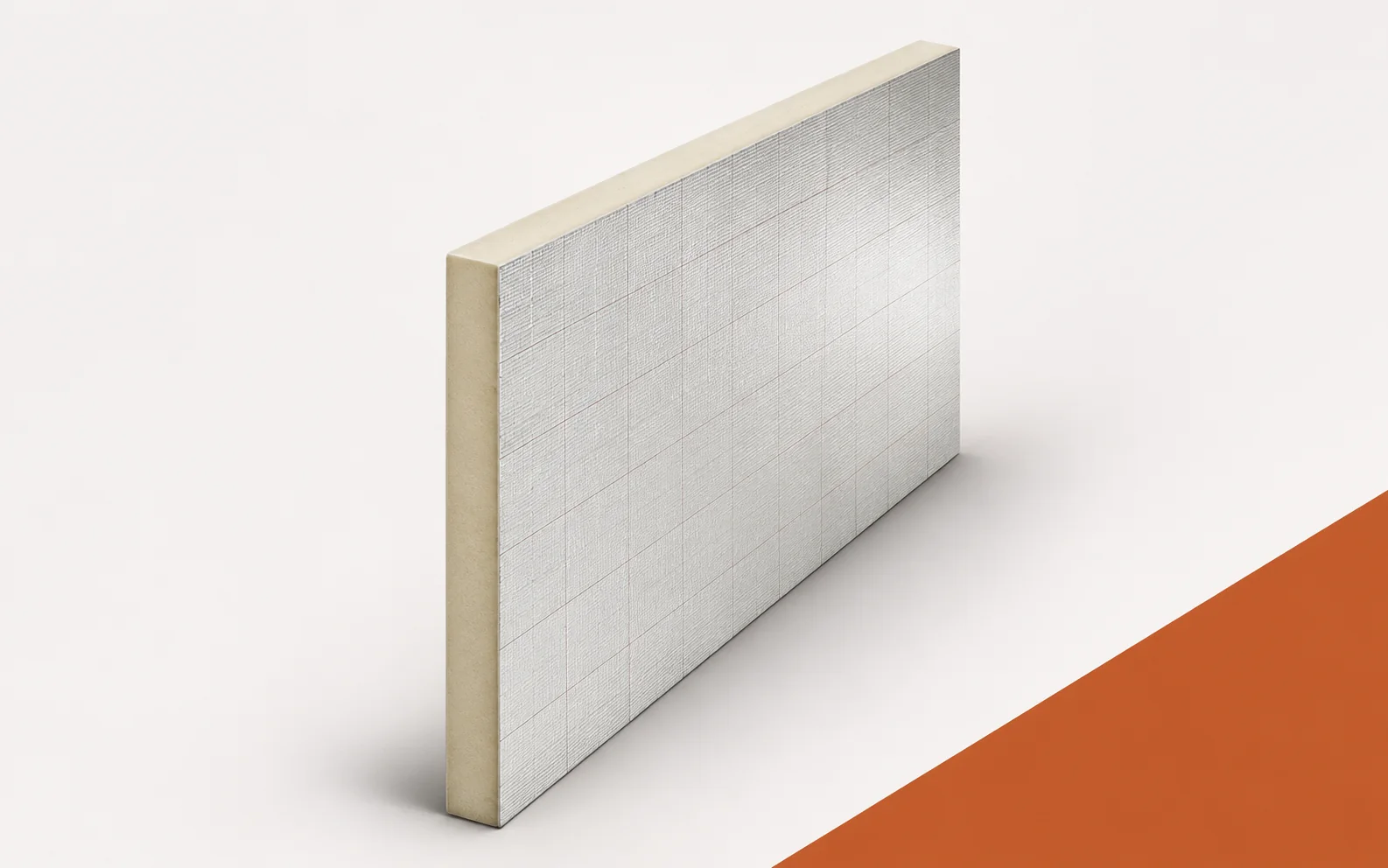
The rigidity of Thermano Roof does not by itself determine the permissible loads: what matters is where the force is applied and how long it acts. The board is a rigid PIR product with a gas-tight multilayer aluminium facing on both sides; the manufacturer specifies it for, among other things, flat roofs and above-rafter insulation. In a pitched roof it lies above the rafters, so the assessment concerns its connection to the terminations at the eaves and at openings. The bearing surface, the duration of the load and the behaviour of the other roof layers determine whether the hardness of the board has been overestimated.
2026-11-16T03:16:29+01:00

Do closed cells mean the same thing in PIR and XPS?

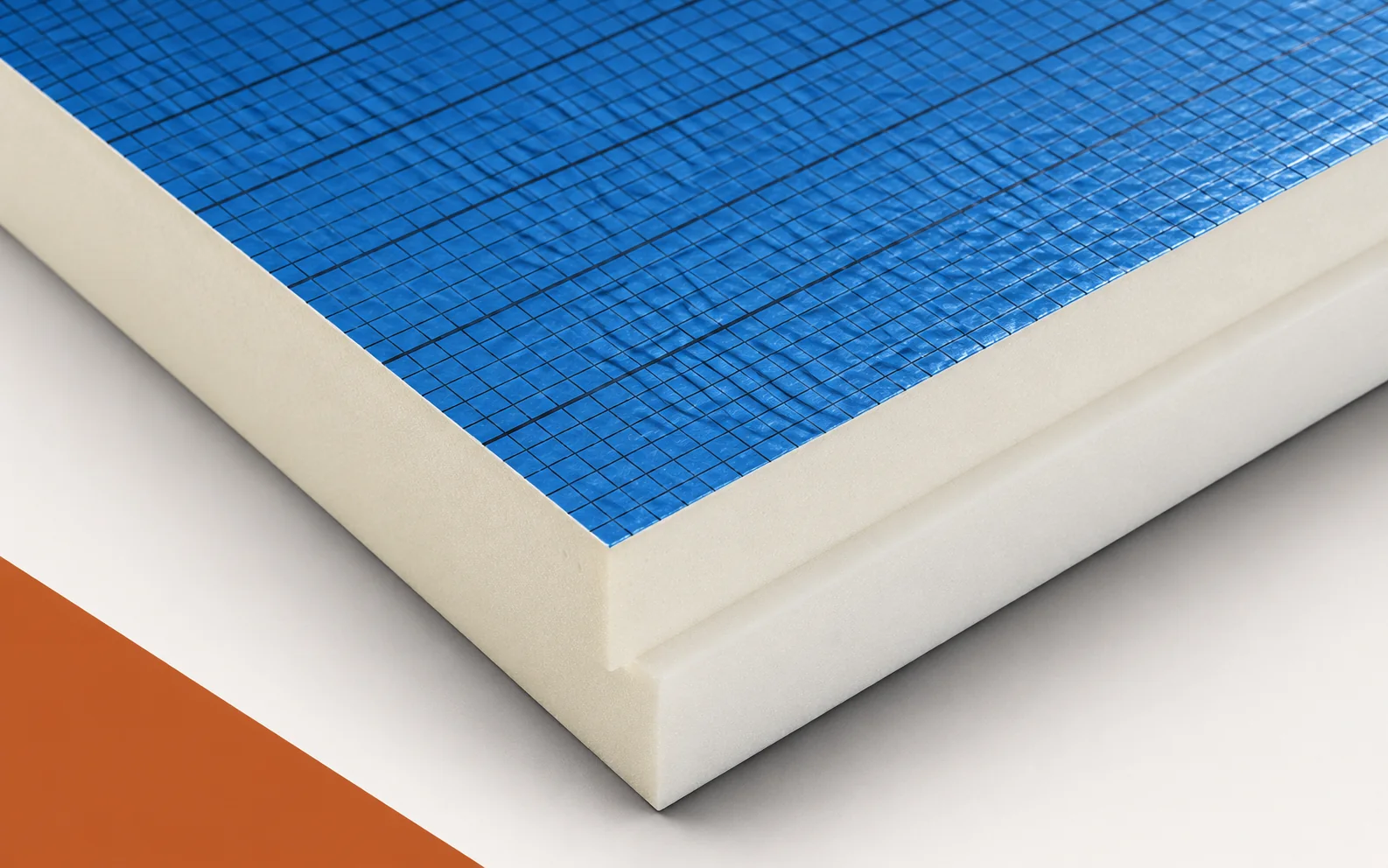
The PIR keyword instead of XPS sounds simple, but it hides several different questions. Is it about reduced thickness, performance under load, or contact with water? Each answer requires different data. PIR boards should be compared with a specific product and in a defined section, without creating a single ranking for all applications. In many comparisons, PIR boards with aluminium foil facing have a lower lambda than selected XPS boards. As a result, the required thermal resistance can be achieved with a smaller thickness. However, the value must be checked for both specific products. With XPS, as with some PIR variants, the thickness range can affect the declaration.

2026-11-16T03:15:47+01:00

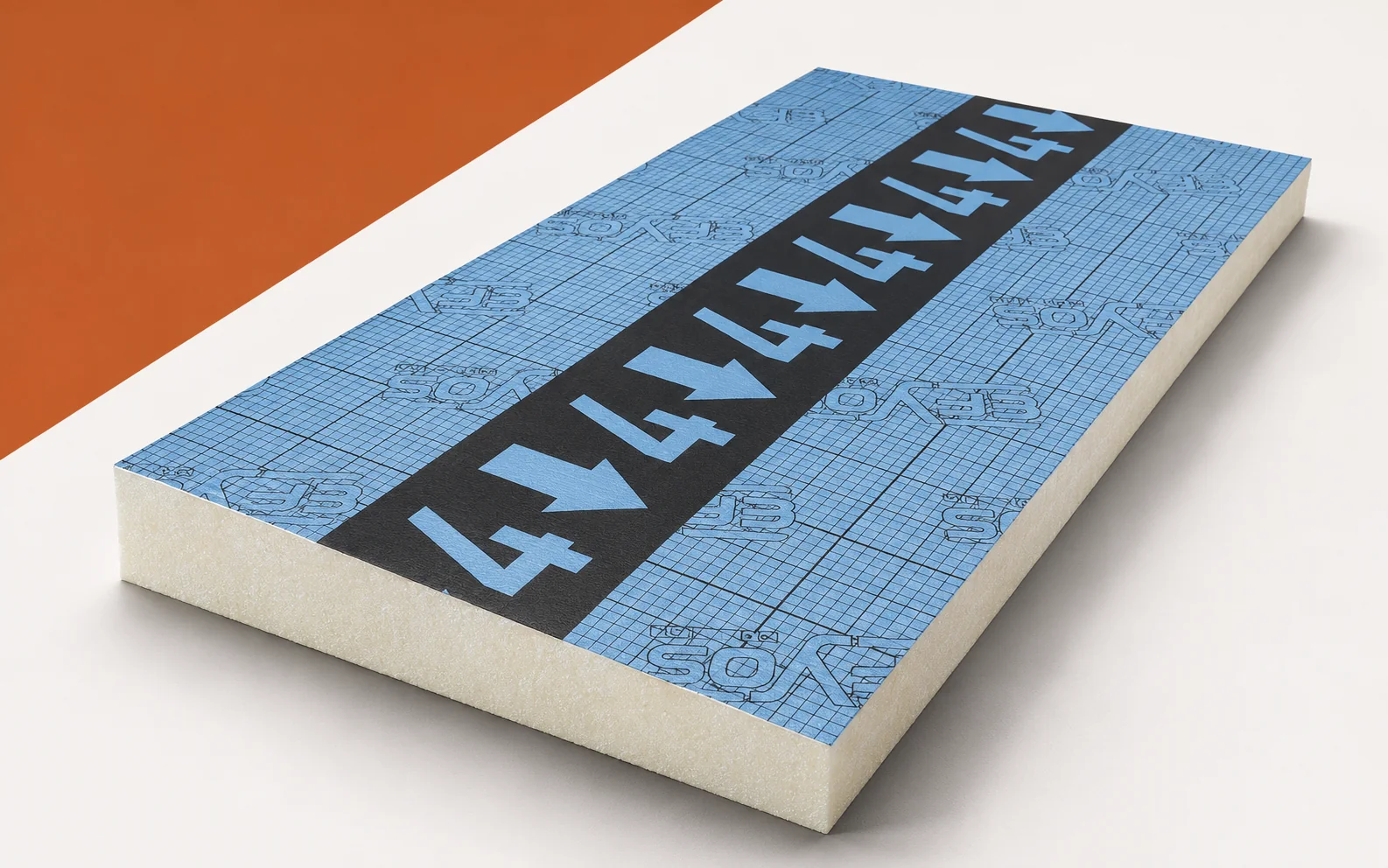
EFYOS BLUE SMART A: what a 2.08% slope means in practice

The slope given for EFYOS BLUE SMART A describes the geometry of the element itself, not of the finished roof assembly. That is why in an existing building standing water on the roof must first be linked to a specific location: the lowest section of thermal insulation next to the outlet. Only measuring the level of the outlet and the heights of the ends of the slope fields allows the symptom to be related to the laying of the tapered boards. The mere presence of tapered insulation boards does not prove that the assembly has retained the designed geometry — incorrect orientation of a taper, a difference in the levels of the substrate or a problem at the drainage outlet are all possible. The diagnosis begins with identifying the observed problem and the conditions in which it arose.

2026-11-16T03:16:58+01:00

A cold floor despite PIR? What to check with Utherm Floor LE

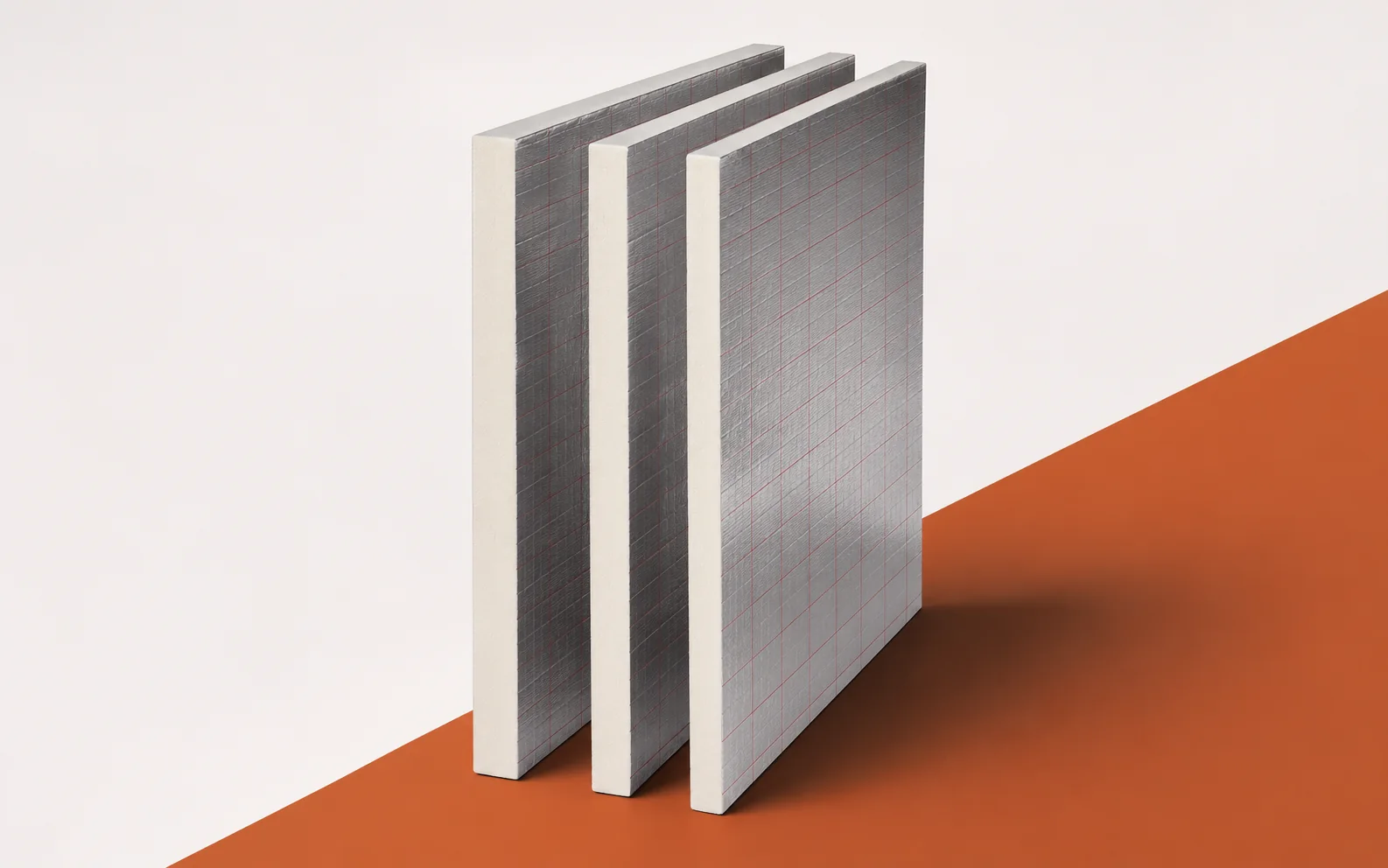
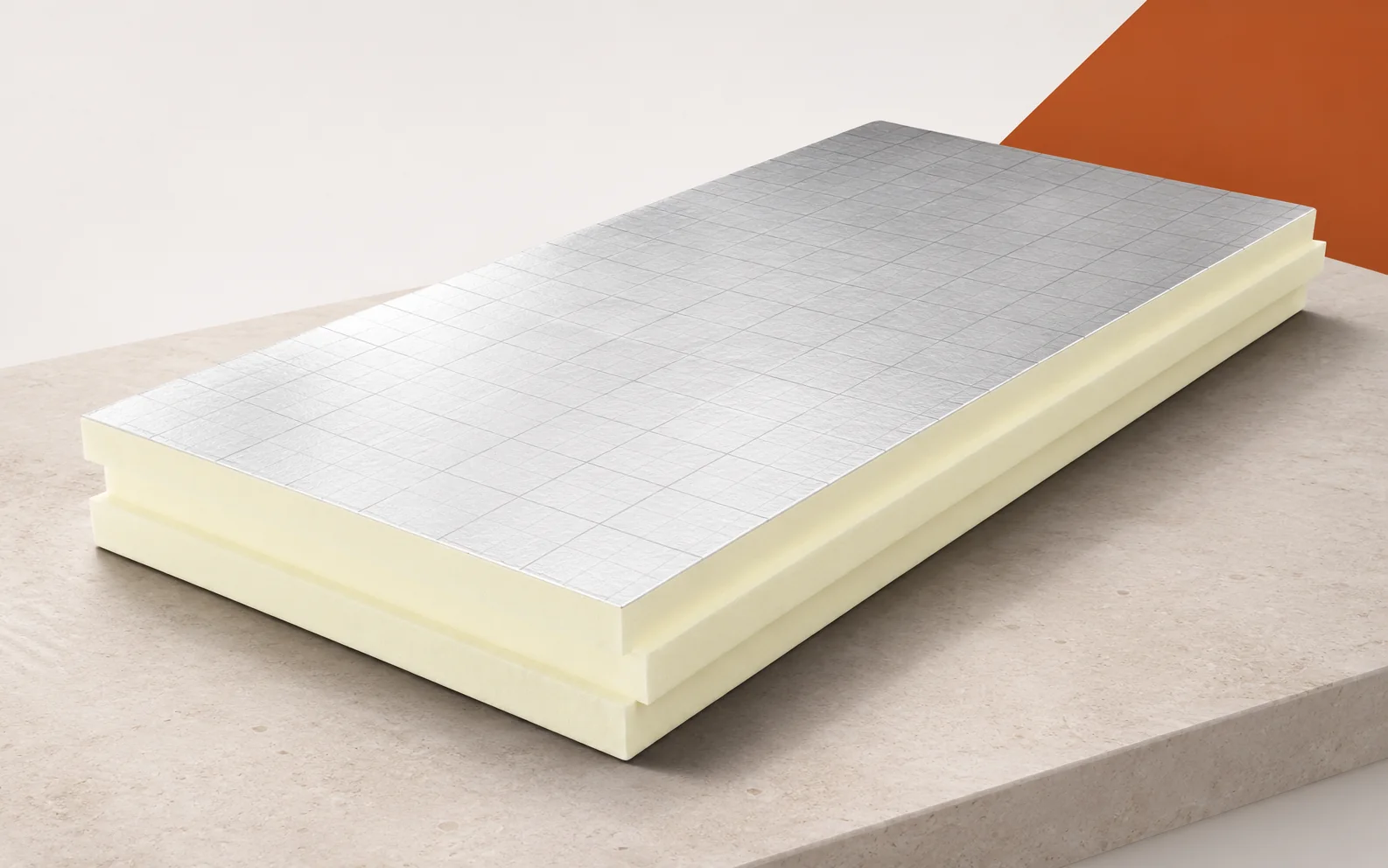
A cool sensation underfoot is not a direct measurement of the properties of Utherm Floor LE. The covering, the room temperature and the operation of the heating also influence it. An assessment should examine these factors together with the geometry of the thermal insulation at the walls. Utherm Floor LE is a PIR board intended for floors. It has a gas-tight laminate on both sides with a printed grid. The terms “polyurethane boards” and “polyurethane foam” are broader than the precise designation of the PIR product. When assessing the performance of the building element, it is worth checking the limited floor level at the doors in the solution with Utherm Floor LE. Before assessing the solution, the height of Floor LE, the screed, the services and the finished covering must be added together.

2026-11-16T03:17:45+01:00

IKO enertherm MG: interpreting lambda and facing specifications

The value 0.022 W/(m·K) is often attributed to IKO enertherm MG, although this variant has different declared data. When a result for a 100 mm board in a project is based on 0.022, the first step is to check whether the correct lambda range was assumed, rather than to assess the delivery. Only after correcting the calculation can it be determined whether the planned thickness meets the intended objective. Separately, the cause of the symptom on a flat roof under a synthetic membrane must be identified: for MG, what matters is the bond between the membrane and the board surface at the fleece, the thickness of the thermal insulation, the condition of the surface before covering, and the conditions in which the symptom arose.

2026-11-16T03:17:40+01:00

IKO enertherm ALU TAP: identifying falls and layout errors

A depression at the junction of two ALU TAP fields requires establishing whether it results from the geometry of how the tapered boards are laid, or from the level of the substrate. Comparing the taper markings with the design shows whether an element with the correct slope was used at that point. Checking the level of the substrate clarifies whether the specified elevations were achievable at all. The difference in slope between adjacent elements grows in successive rows, which is why the inspection should cover the junction of fields with a different drainage direction, the height difference between the ends of the taper, the length of the section in the direction of fall, and the conditions under which the symptom arose. The reference point is the drainage field plan with the slopes and heights marked.

2026-11-16T03:17:32+01:00

Metal fence pickets: checking advertising claims against the specification

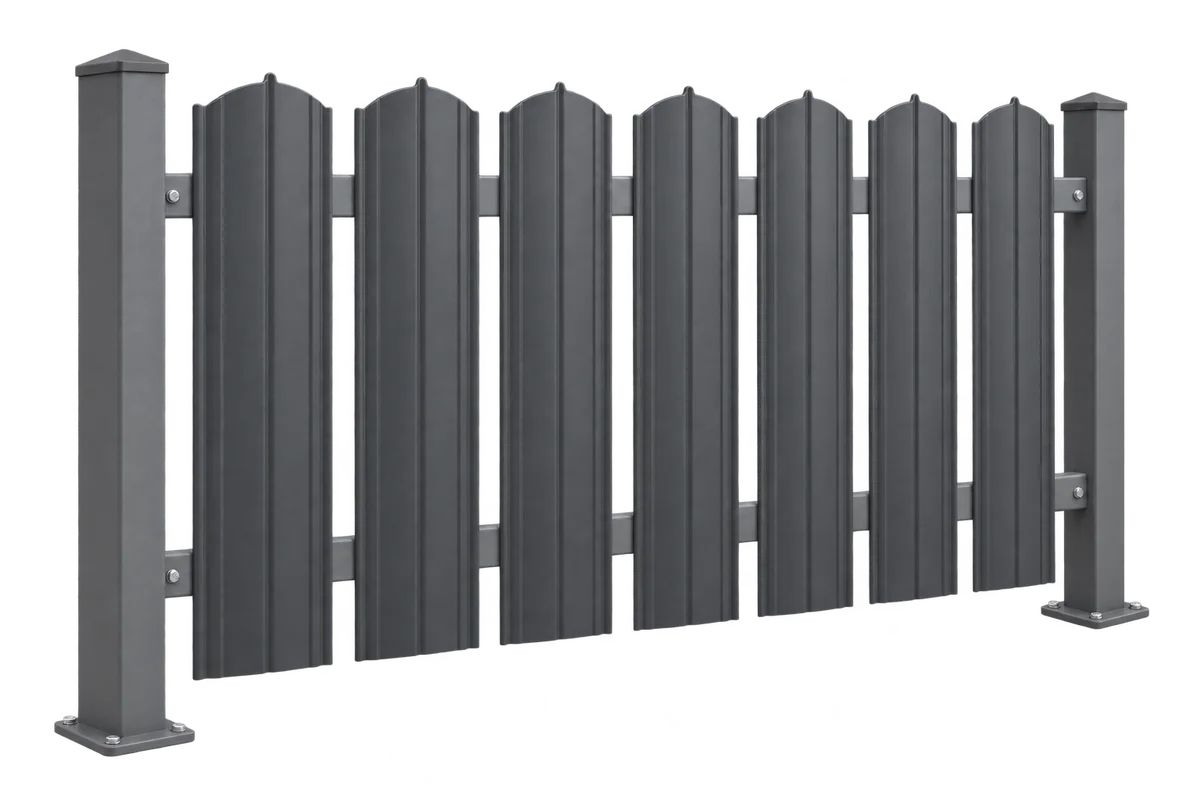
Metal fence picket advertising shows the intended appearance of the fence, but it does not replace the description of the specific product. Words such as solid, double-sided or maintenance-free may refer to different characteristics. Before buying, you need to establish the picket cross-section, the actual coating version, the finish on both sides and the conditions of use. Izoprofil.org explains how to turn general slogans into questions that the supplier can answer with a drawing, a sample or documentation. The guide covers the infill made of profiled steel sheet and its place in the fence as a whole. It does not set a universal thickness, support spacing or service life. It helps you check whether the features visible in the photo apply to the variant being ordered and whether a statement about the picket itself has not been mistakenly read as a promise about the entire structure.

2026-11-15T19:35:23+01:00

IKO enertherm ALU: class F and B-s2,d0 in the end-use application

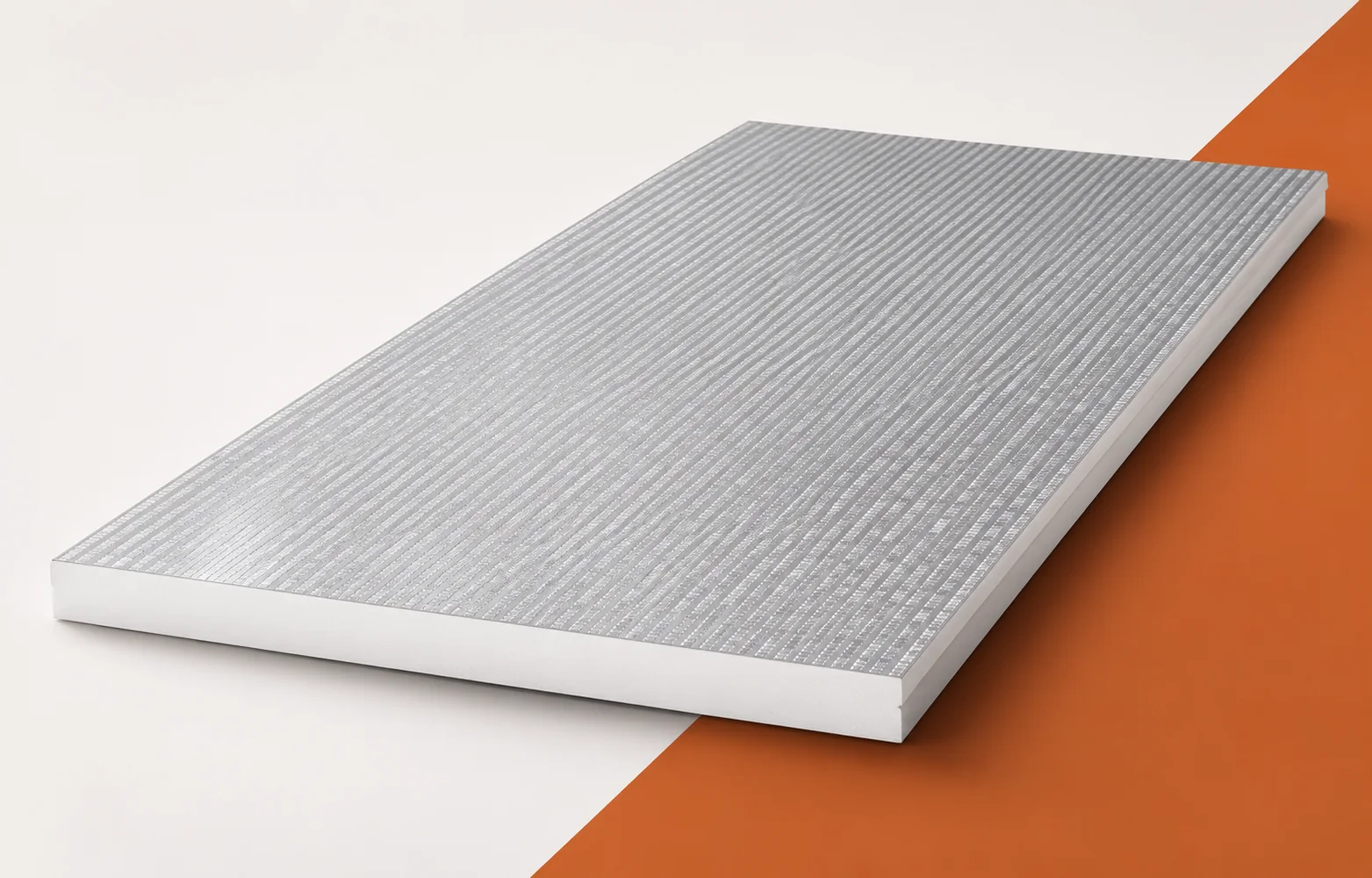
Both F and B-s2,d0 appear in the IKO enertherm ALU documents. This does not mean two interchangeable classes from the same assessment. The first designation refers to the product, the second to the specified end-use application. Before entering the class in a project, it is necessary to establish what the cited document actually describes and whether its conditions correspond to the planned building element. IKO enertherm ALU is a PIR board with a multi-layer aluminium facing on both sides. The manufacturer declares reaction to fire class F for the product itself. It also declares B-s2,d0 for a specific end-use application on a steel substrate. What is decisive, therefore, is not the symbol itself but the object and the conditions of the assessment.

2026-11-16T03:17:26+01:00

SOPREMA EFYOS BLUE A: understanding PIR board specifications

The answer to the question about the EFYOS BLUE A parameters begins by separating the product data from the behaviour of the entire building envelope. A cooler strip at the parapet does not mean that BLUE A has a poor lambda, because it must first be established whether the layer is continuous and what thickness actually reaches the termination. The thermal imprint also depends on ambient conditions, so the conclusion is based on comparing the image, the documentation and the site inspection. In the thermal insulation of a flat roof under the waterproofing, the reference point is the parapet cross-section with the levels of all layers; only against that background can it be seen whether the solution accommodated the thermal insulation layer and a correct termination of the waterproofing.

2026-11-16T03:16:57+01:00
Back to top