PIR insulation
Do closed cells mean the same thing in PIR and XPS?
At a glance
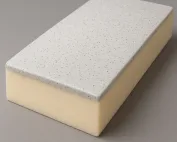
The PIR keyword instead of XPS sounds simple, but it hides several different questions. Is it about reduced thickness, performance under load, or contact with water? Each answer requires different data. PIR boards should be compared with a specific product and in a defined section, without creating a single ranking for all applications. In many comparisons, PIR boards with aluminium foil facing have a lower lambda than selected XPS boards. As a result, the required thermal resistance can be achieved with a smaller thickness. However, the value must be checked for both specific products. With XPS, as with some PIR variants, the thickness range can affect the declaration.
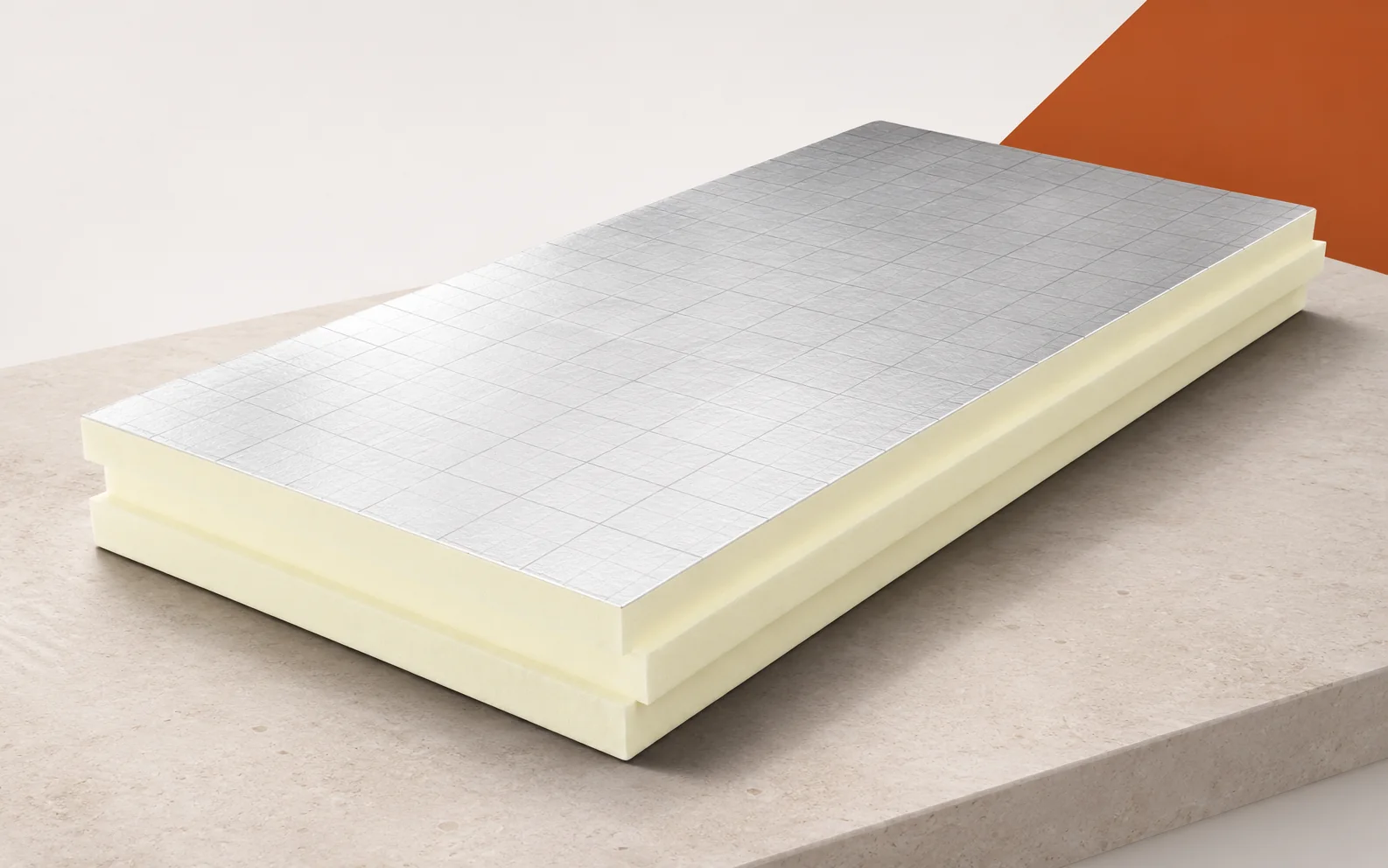
The advantage of PIR lies primarily in the space required
The thickness advantage can be verified by calculation for the stated lambda values. However, a conclusion of full interchangeability should not be added to it. Polyurethane boards may need less space to achieve a given resistance while at the same time having a different intended use. These are two independent pieces of information. A reliable comparison shows both. As a result, the favourable thermal result remains true, but is not used to justify an application outside the product documentation.
Contact with water matters more than the appearance of the core itself
The closed-cell structure limits water absorption, but does not make the product a waterproofing layer. Joints, edges and damage remain part of the real building component. In the case of PIR, the facing must also be taken into account. The resistance of the core does not entitle every board to be used in the ground.
Low water absorption is often confused with indifference to any contact with water. The finished product also includes surfaces, edges and joints. Polyurethane insulation requires assessment of this entire set. Similarly, the designation XPS does not automatically confirm every underground or roof application. It is worth asking about the test conditions and the intended use of the specific variant. The name of the material alone does not answer the question of whether the cross-section is correct.
CS and creep do not describe the same situation
A device foot, bracket or support point can load a small area of the surface. Dividing the total weight of the installation by the roof area will hide this problem. The way the forces are transferred must be planned and the substrate assessed. Replacing the insulation with a harder one is not always sufficient.
Trying to compare hardness with a finger test only gives an impression of the surface. It says nothing about creep or about the permissible deformation after years. Polyurethane foam and XPS have mechanical parameters described by corresponding symbols. The figures must be read together with the test method. If one relates to a short-term load and the other to a long period of time, they do not form a simple ranking. This distinction is more important than an impressive demonstration on a piece of board.
The facing and fixing limit the scope for substitution
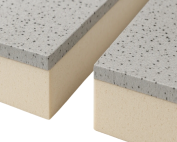
PIR boards often have a factory-applied facing. The choice of adhesive and the connection to the waterproofing should match this surface. XPS, by contrast, comes with various surface finishes and edge profiles. There is no single bonding method that is correct for all products in both families.
When a product has a different facing, the contact surface with the next layer changes. It is therefore not possible to draw a conclusion about installation solely from a similar rigidity of the core. Material compatibility is equally important. A good description of a substitution should indicate what remains unchanged and which elements need to be checked. The absence of this information is a technical gap, even if the table of lambda and thickness looks convincing.
The most common cases where the choice is justified
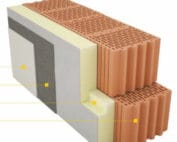
PIR is worth considering where a high thermal resistance at a small thickness is important. This may be a dry floor with limited height or a properly designed warm roof. However, it is necessary to select a product for this application. The spatial advantage must be reconciled with the other requirements.
It is worth replacing the question about the best material with the question about the most important requirement in a given location. Where height is limited, the answer may point to PIR boards. Under specific water conditions, a product with the right intended use will be needed, often from the XPS group. This does not mean a contradiction. Building materials are selected for the task. Their advantages can be true at the same time, but relevant in different parts of the same project.
Compare assemblies with the same function
Keep the data sheet and the declaration of performance for the batch you have selected. The documents help you check the delivery and avoid accidentally substituting a different product. On site, compare the markings, the thickness and the condition of the edges. If the information is unclear, resolve it before installation and before the insulation is covered.
The comparison should end with a description of two feasible assemblies. Polyurethane insulation then has an assigned function and installation conditions. If the comparison omits waterproofing, loads or the substrate, it does not yet describe a construction solution. It is only a fragment of the data. It is worth keeping this boundary with the price as well. A cheaper board does not mean a cheaper variant until it is known which other components are needed.
How to draw the correct conclusion
The term closed cells appears in the descriptions of both materials. It does not follow from this that they have identical water absorption or the same application. The results of the relevant tests and the conditions of use must be read. A material is not assessed solely on the basis of the microscopic shape of its core.
When checking the advice, note thermal, mechanical and moisture-related conclusions separately. Each should have its own basis. Do not let a good lambda replace evidence of suitability for water or long-term loading. PIR boards have a clear advantage when limiting thickness. XPS should also be assessed according to the characteristics of the specific product. Organising the criteria allows the real benefits of both groups to be retained and overly broad promises to be rejected.
7 branches. Materials closer to your project.

- SEROCK — Dzierżenin 34 E
- BŁONIE — ul. Sochaczewska 138A
- RADOM — ul. Grobickiego 8
- ŁÓDŹ — Natolin 8
- OLSZTYN — Barczewo, ul. Prosta 9
- WROCŁAW — ul. Jerzmanowska 10C
- GORZÓW WLKP. — ul. Zielona 33/34