PIR insulation
IKO enertherm MG: interpreting lambda and facing specifications
At a glance
The value 0.022 W/(m·K) is often attributed to IKO enertherm MG, although this variant has different declared data. When a result for a 100 mm board in a project is based on 0.022, the first step is to check whether the correct lambda range was assumed, rather than to assess the delivery. Only after correcting the calculation can it be determined whether the planned thickness meets the intended objective. Separately, the cause of the symptom on a flat roof under a synthetic membrane must be identified: for MG, what matters is the bond between the membrane and the board surface at the fleece, the thickness of the thermal insulation, the condition of the surface before covering, and the conditions in which the symptom arose.
First, the question about the cause
The reference point for the inspection is the roof cross-section with a confirmed method of fixing the membrane. Comparing the actual condition against it shows whether the adopted solution allowed the correct thickness and a compatible method of connection to the membrane to be selected. Without this comparison, a characteristic of the board itself is often confused with a defect in the connection.
The right product and the scope of its data
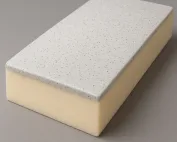
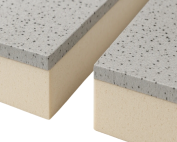
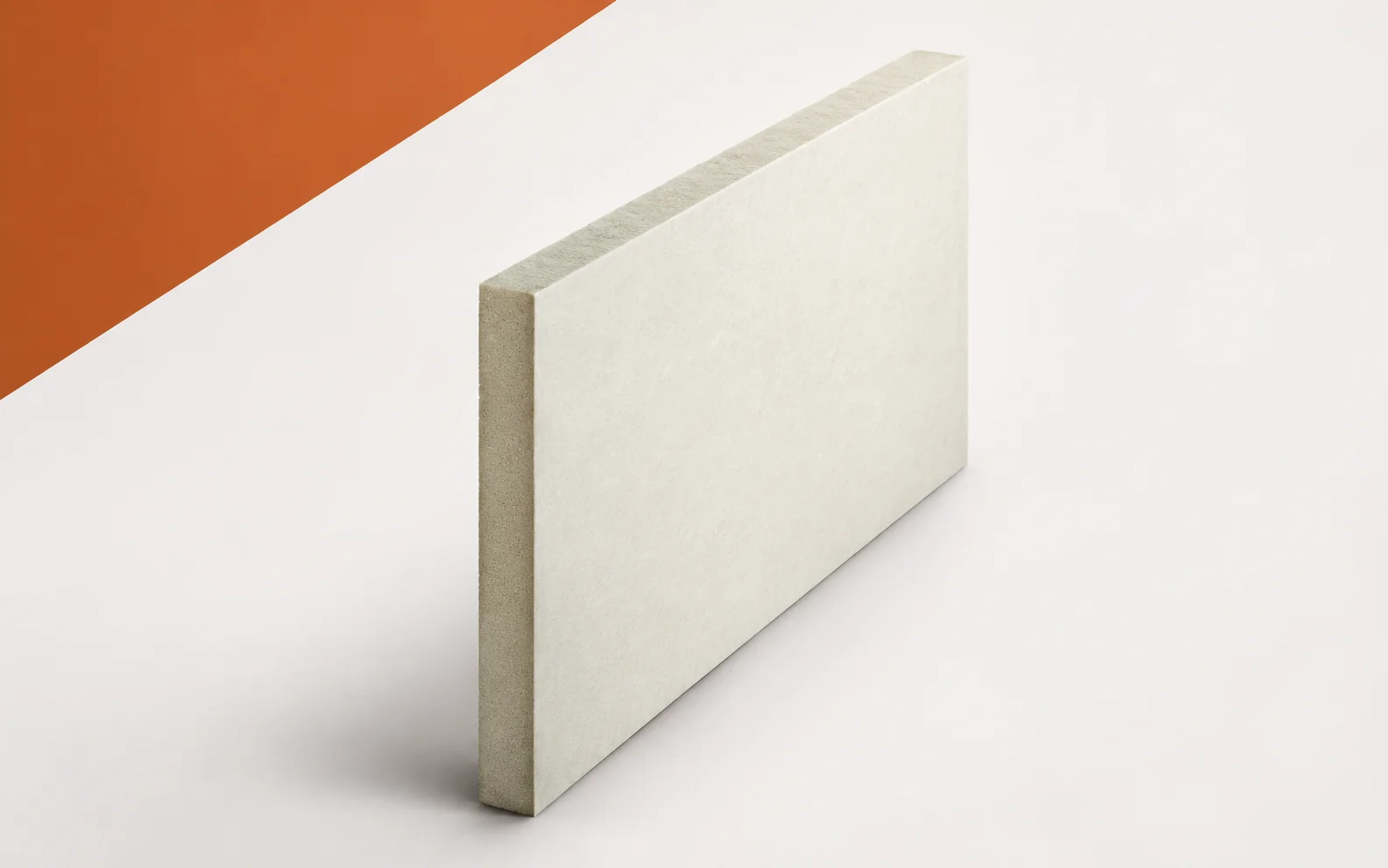
In IKO enertherm MG the core is made of PIR, and both sides are covered with a perforated, coated glass fleece. At thicknesses below 120 mm, λD is 0.026 W/(m·K), while from 120 mm it is 0.025 W/(m·K). The RD of the 100 mm board is 3.80 m²K/W, and of the 120 mm board 4.80 m²K/W. The declared compressive strength is at least 150 kPa, reaction to fire E. The manufacturer envisages use under synthetic membranes. When checking an order, the term polyurethane boards alone is not sufficient – the full name IKO enertherm MG is required. The properties of the complete board also include the facings, not just the core itself.
How to read a simple example
For IKO enertherm MG with a thickness of 80 and 100 mm, a lambda of 0.026 W/(m·K) leads to simplified results of approximately 3.08 and 3.85 m²K/W. This calculation must not be confused with the declared RD or with the assessment of the condition of the fleece. The MG designation and the thickness identify the thermal insulation, whereas the method of connection to the membrane and the condition of the surface must be established from the inspection and the documentation of the system used.
The numerical example for IKO enertherm MG shows the dependence of resistance on thickness, but does not indicate the cause of a specific defect. The background to it is the set of requirements for the coated fleece and the waterproofing. A lambda of 0.026 below 120 mm and 0.025 from 120 mm describes a property of the board, not the condition of the connection. Before a conclusion is drawn, the conformity of the covering layer with the coated fleece and the record of the MG designation and the condition of the fleece before covering must be confirmed; where the data deviate from reality, the description of the MG and the layers is corrected first.
Matching the action to the identified problem
Selecting the MG thickness for the required thermal resistance and the chosen covering is a different task from reassessing the entire assembly after a change of facing. With IKO enertherm MG, you must first establish which actions follow from the identified symptom and which follow from the correction of assumptions alone. Contact between the membrane and the fleece-faced board is assessed separately from the rest of the roof field. It is a mistake to attribute to the MG board a lambda of 0.022 that belongs to another variant. When the data raise doubt, the roof designer, familiar with the requirements of the complete build-up, should assess them in relation to the specific synthetic membrane. Only an MG description covering the thickness, format and the way the membrane performs can become the basis for a repair or a new order.
What can be seen at the joint
The inspection of IKO enertherm MG should determine whether the boards were kept in simple contact beneath a continuous covering layer, and what condition the perforated, coated glass fleece is in. A different print or colour is not the same as an open gap, loss of facing or permanent deformation. The reference point remains the record of the MG designation and the condition of the fleece before covering. On the other side there is, or is to be, a covering of synthetic membrane in the agreed installation, which affects access to the damage. It is worth noting whether the inspection covered the junction of the membrane with the board surface at the fleece, or whether the contact of the membrane with the fleece still needs to be exposed.
How to separate a feature from a defect
In an assembly with IKO enertherm MG, assess the support and protection against point loading together with the method of fixing the synthetic membrane. The repair must not disregard the requirements for the coated glass fleece. The roof designer should receive the layer cross-section and a record of the exposed contact between the membrane and the board.
The conclusion should have limits
The description of the MG inspection opening should identify the product and the condition of the fleece before covering, with clear indication of the invisible areas. Subordinate the plan for further exposure to the verification of the connection with the synthetic membrane. Only confirmed compatibility of these materials and a properly selected thickness determine the scope of the repair order.
7 branches. Materials closer to your project.

- SEROCK — Dzierżenin 34 E
- BŁONIE — ul. Sochaczewska 138A
- RADOM — ul. Grobickiego 8
- ŁÓDŹ — Natolin 8
- OLSZTYN — Barczewo, ul. Prosta 9
- WROCŁAW — ul. Jerzmanowska 10C
- GORZÓW WLKP. — ul. Zielona 33/34