What role does the aluminium facing play in internal insulation?

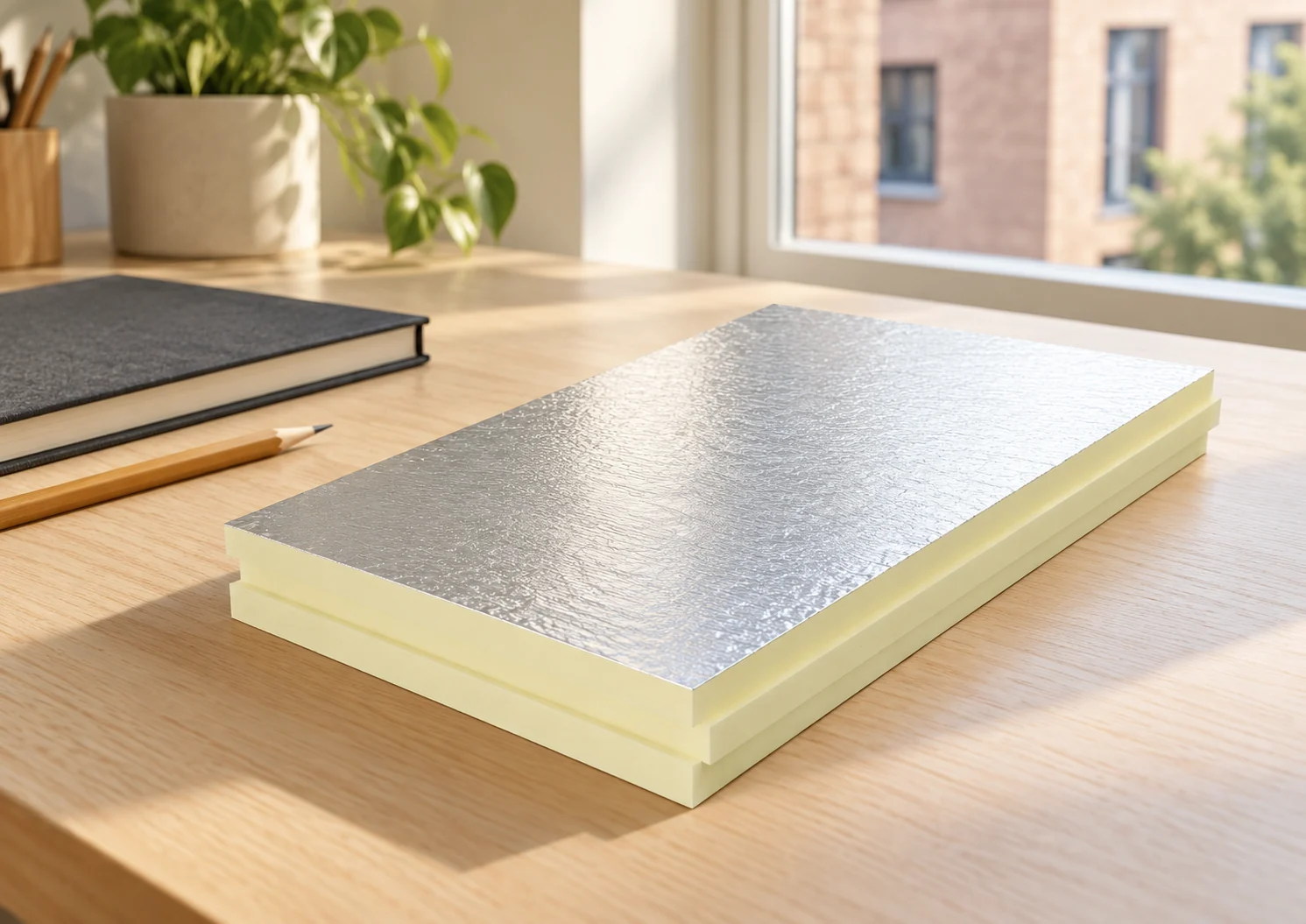
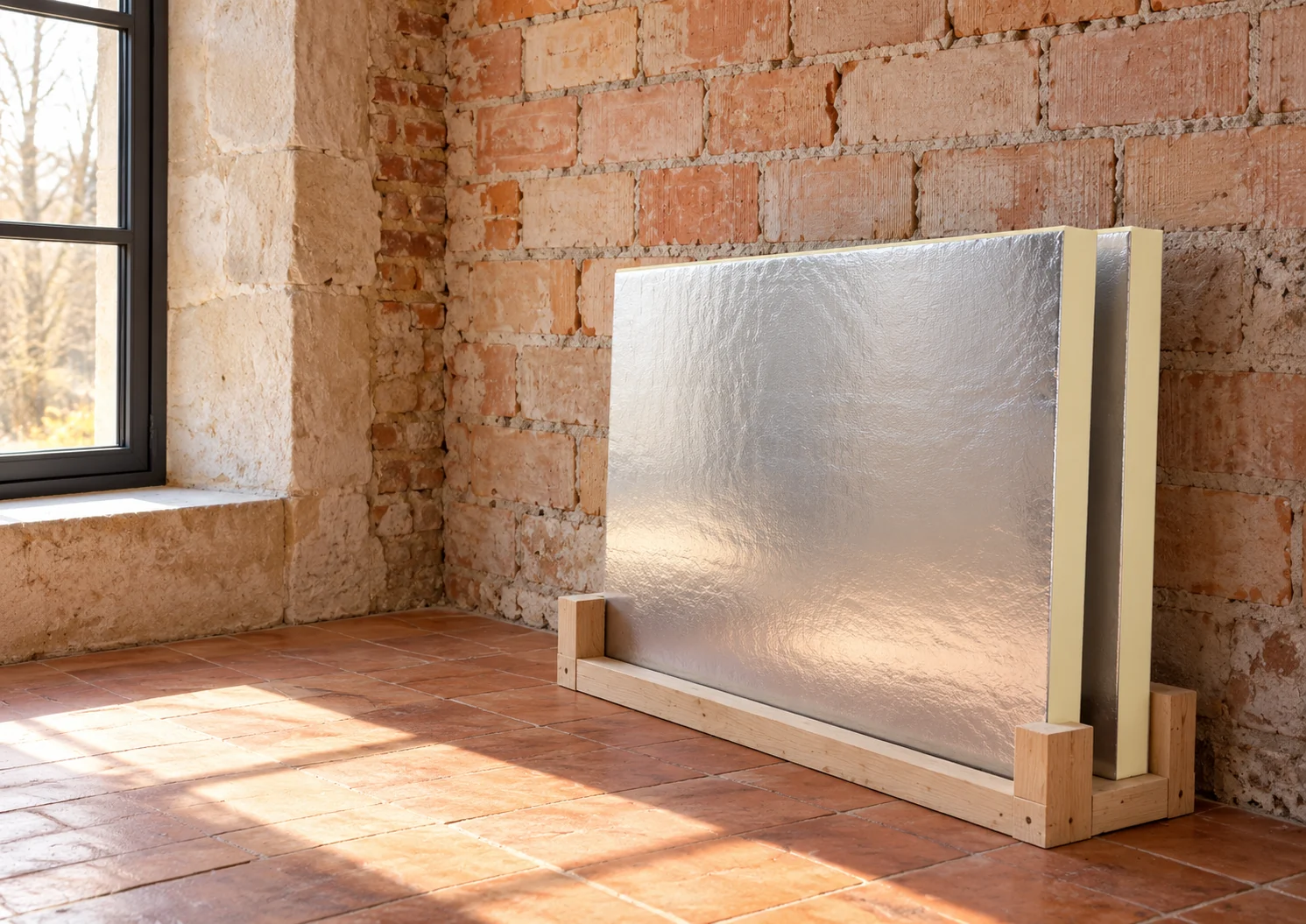
Foil-faced PIR board can reduce the thickness of insulation required. Its facing also affects water vapour transmission. This matters for internal insulation, but it does not automatically permit any wall build-up. An assessment of the masonry, moisture and continuity of seals is needed. Simply bonding the boards does not close the matter. The new layer restricts heat flow from the interior to the existing wall. The room surface may become warmer, and the masonry behind the insulation cooler. Drying conditions and the temperature distribution change. Internal insulation therefore requires assessment of the whole system. It is not merely transferring an external wall solution to the other side.
By |2026-11-14T10:55:48+01:002024-05-23|Building academy|Comments Off on What role does the aluminium facing play in internal insulation?

When does a white PIR board 100 mm in second grade suit a project?

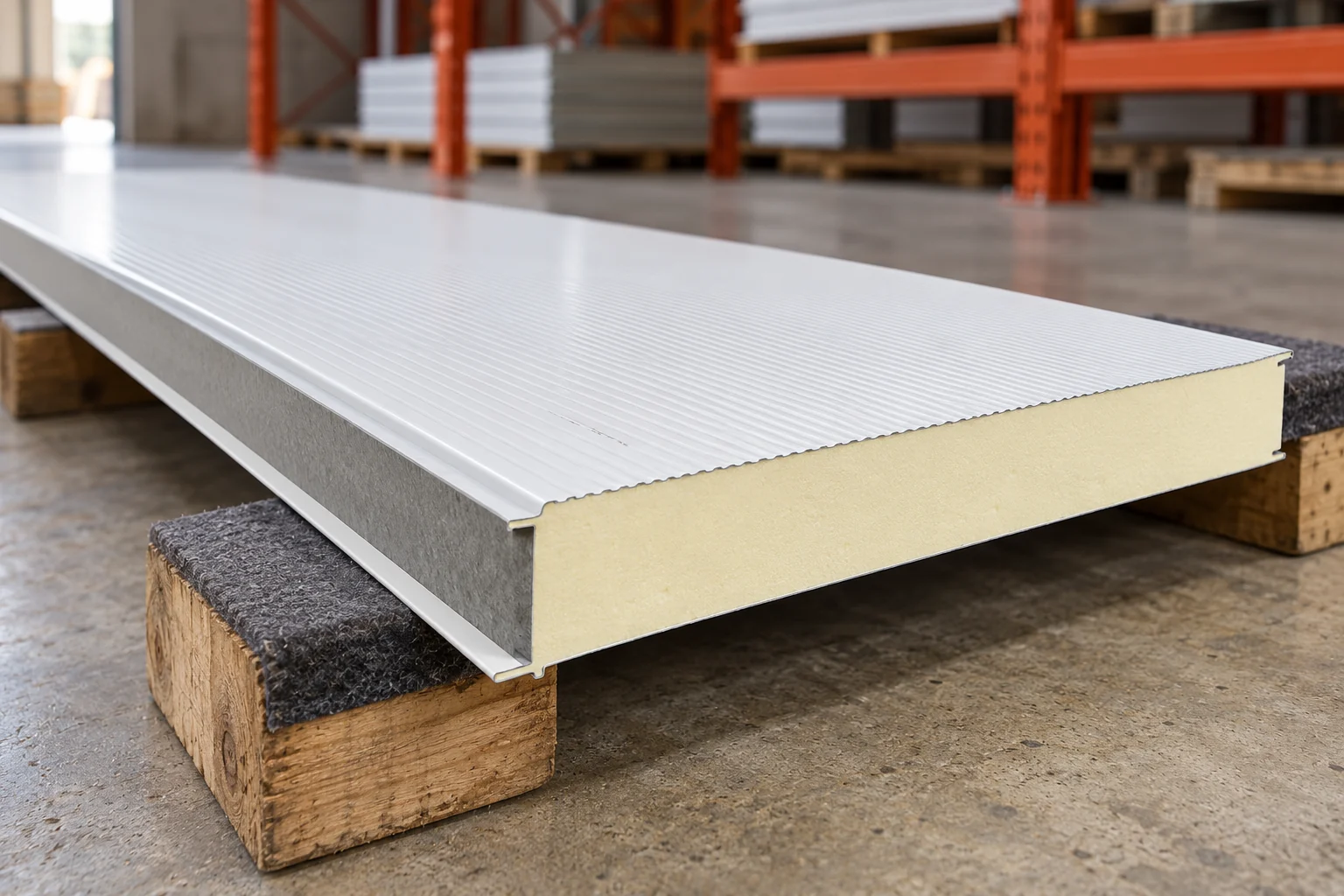
A white wall PIR board 100 mm with a length of 2480 mm can be considered for a small building. However, its exact variant and the reason for classification as second grade must be checked. The finished length does not suit every wall. This description shows how to assess such a batch. It does not confirm current stock levels or a price offer. The core, thickness, length, cover width and joint type are needed. The white colour must be specified by number and coating finish. Different whites and gloss levels can look different on one façade. Also check the colour of the inner face, the sheet thicknesses and the intended use of the coatings.

By |2026-11-14T13:13:29+01:002024-05-06|Building academy|Comments Off on When does a white PIR board 100 mm in second grade suit a project?

When does composite cladding work in a livestock building?

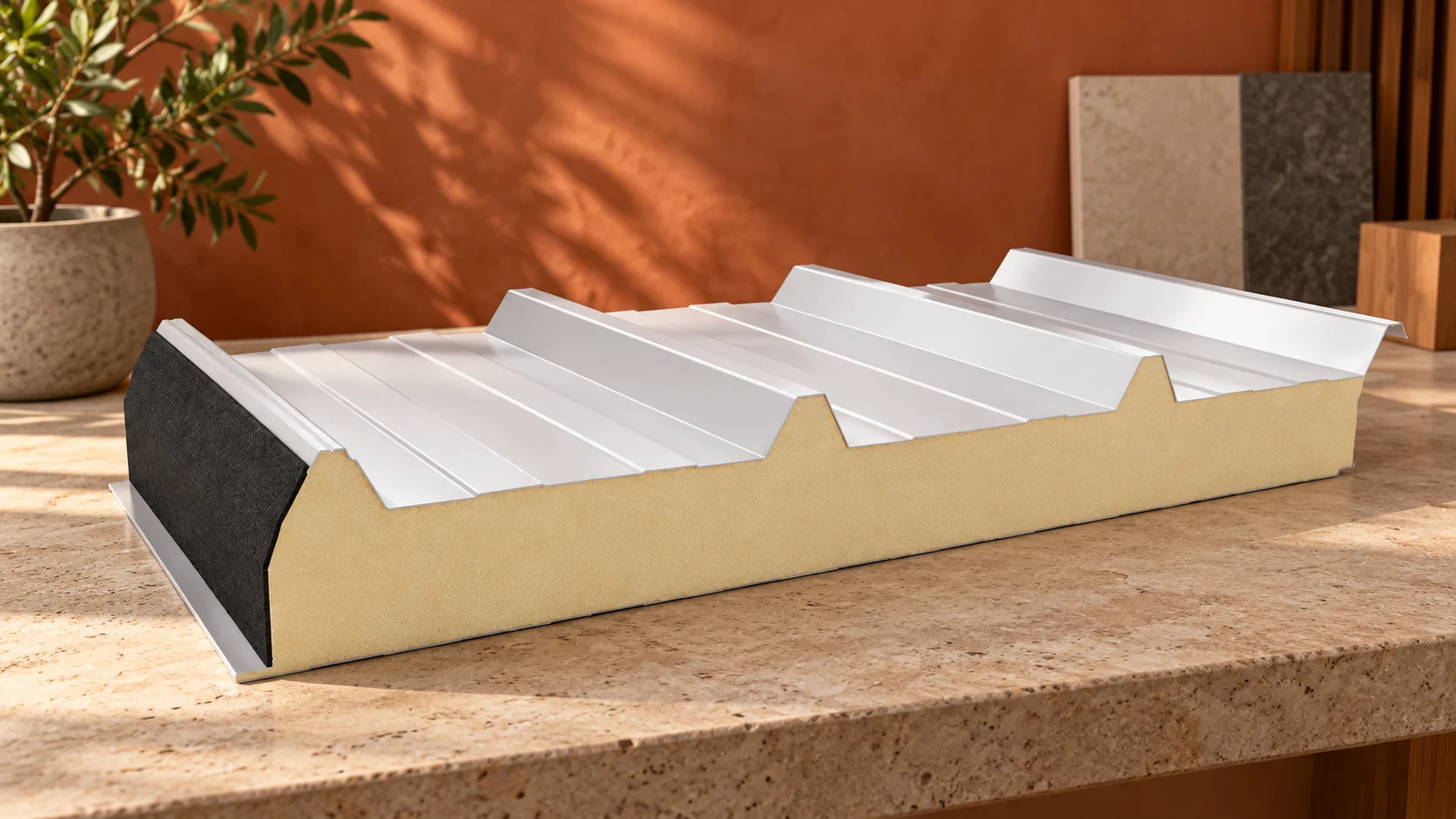
In a cowshed, pigsty or poultry house, the inner roof surface operates in a demanding environment. Moisture, deposits and compounds produced during rearing act on it. One solution is a panel with composite cladding on the inside. This does not mean full resistance to every substance. The conditions of use must be matched to the specific building. An example roof panel has a profiled steel outer cladding, a PUR or PIR core and a flat inner cladding. The latter is made of polyester resin reinforced with glass fibre. The fibre reinforces a thin surface layer. It is not a mineral wool core.

By |2026-11-14T13:14:07+01:002024-03-19|Building academy|Comments Off on When does composite cladding work in a livestock building?

What thickness of PIR can replace a layer of polystyrene?

Replacing polystyrene with PIR starts with comparing thermal resistance. There is no single fixed thickness conversion factor for all products. Two λ values and a clear comparison objective are needed. Equal layer resistance does not yet mean that the materials can be freely interchanged in a façade or internal insulation system. PIR comes with different facings and declared properties. λ may also depend on the thickness range. Polystyrene is also not a single variant with a common parameter. Therefore, the statement “half the thickness is always enough” omits the data that determine the result. Specific materials must be compared.

By |2026-11-14T10:56:06+01:002024-02-03|Building academy|Comments Off on What thickness of PIR can replace a layer of polystyrene?

PIR or mineral wool in a sandwich panel: what to choose for a given building?

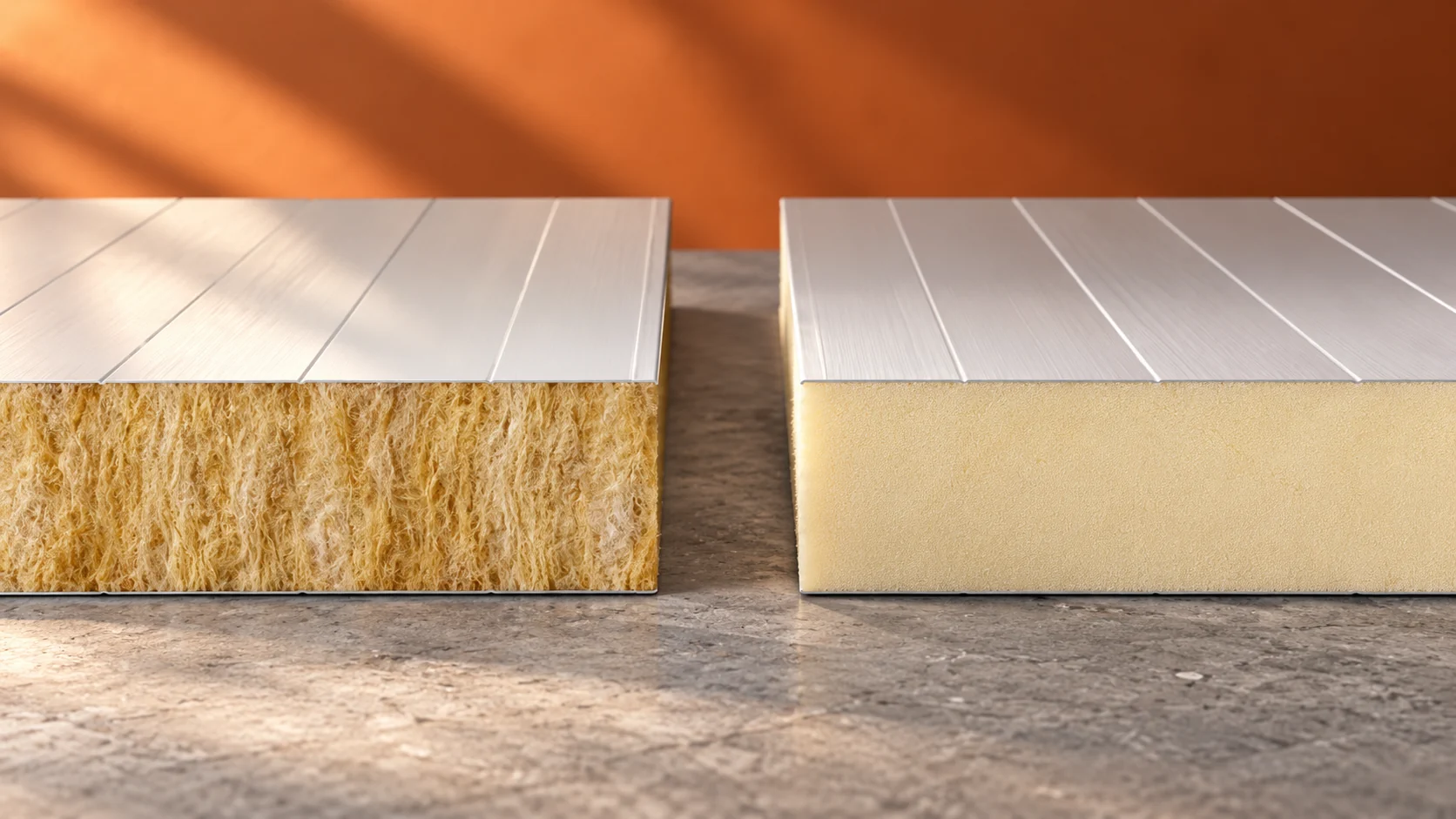
There is no single core that is best for every building. PIR can achieve a low U-value at a smaller thickness. Mineral wool offers different possibilities for fire reaction and classified partitions. However, the choice is determined by the properties of the complete panel. The facings, joints and method of support also matter. First establish the building's function and the requirements that cannot be omitted. This may be a specific partition class, a thermal target or an environmental condition. Only then compare weight and cost. A ranking of cores without information on the application is of little use. The same panel may suit one pavilion and not another.

By |2026-11-14T13:11:19+01:002024-01-06|Building academy|Comments Off on PIR or mineral wool in a sandwich panel: what to choose for a given building?

EPS, XPS or PIR: how to match insulation to the place of work?

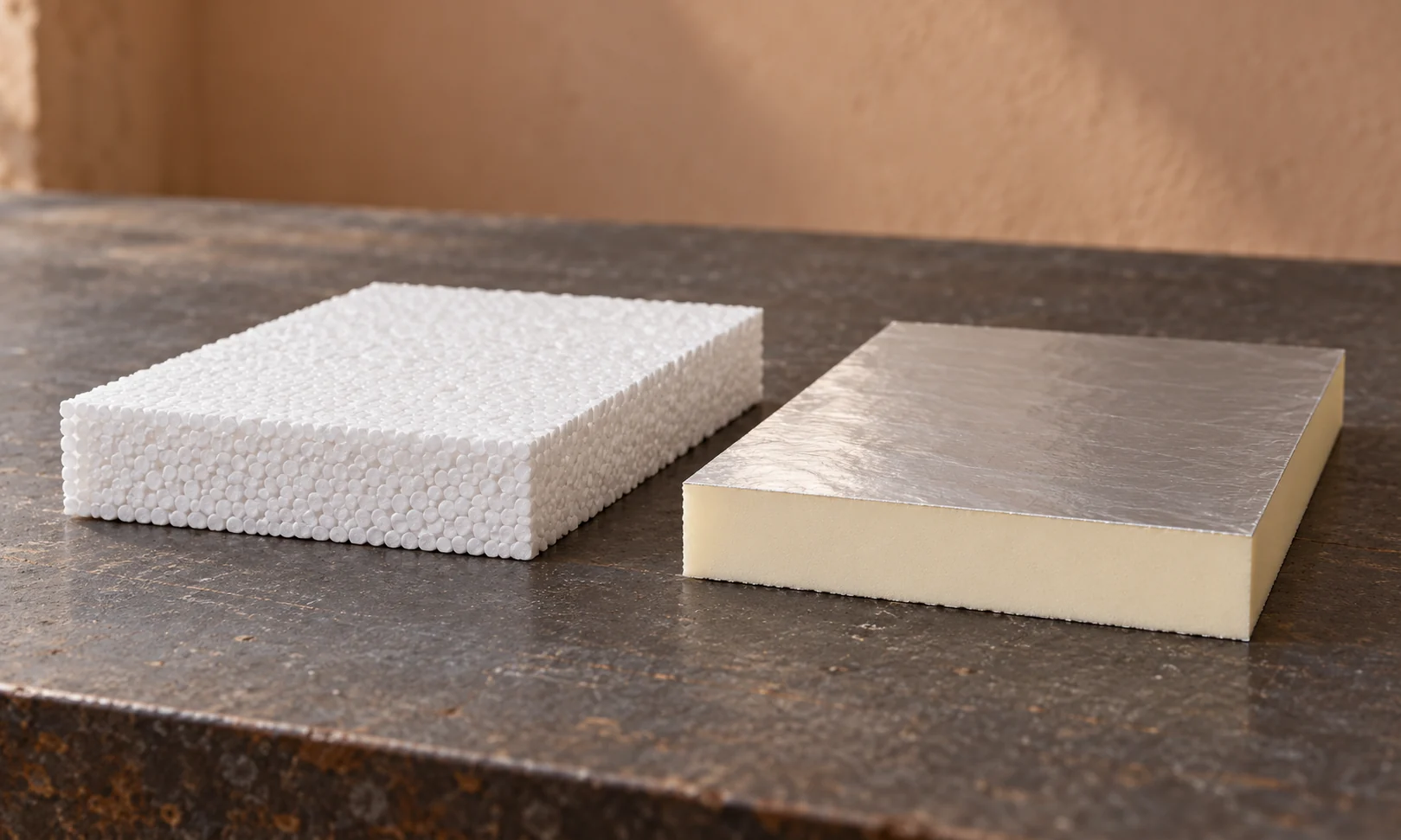
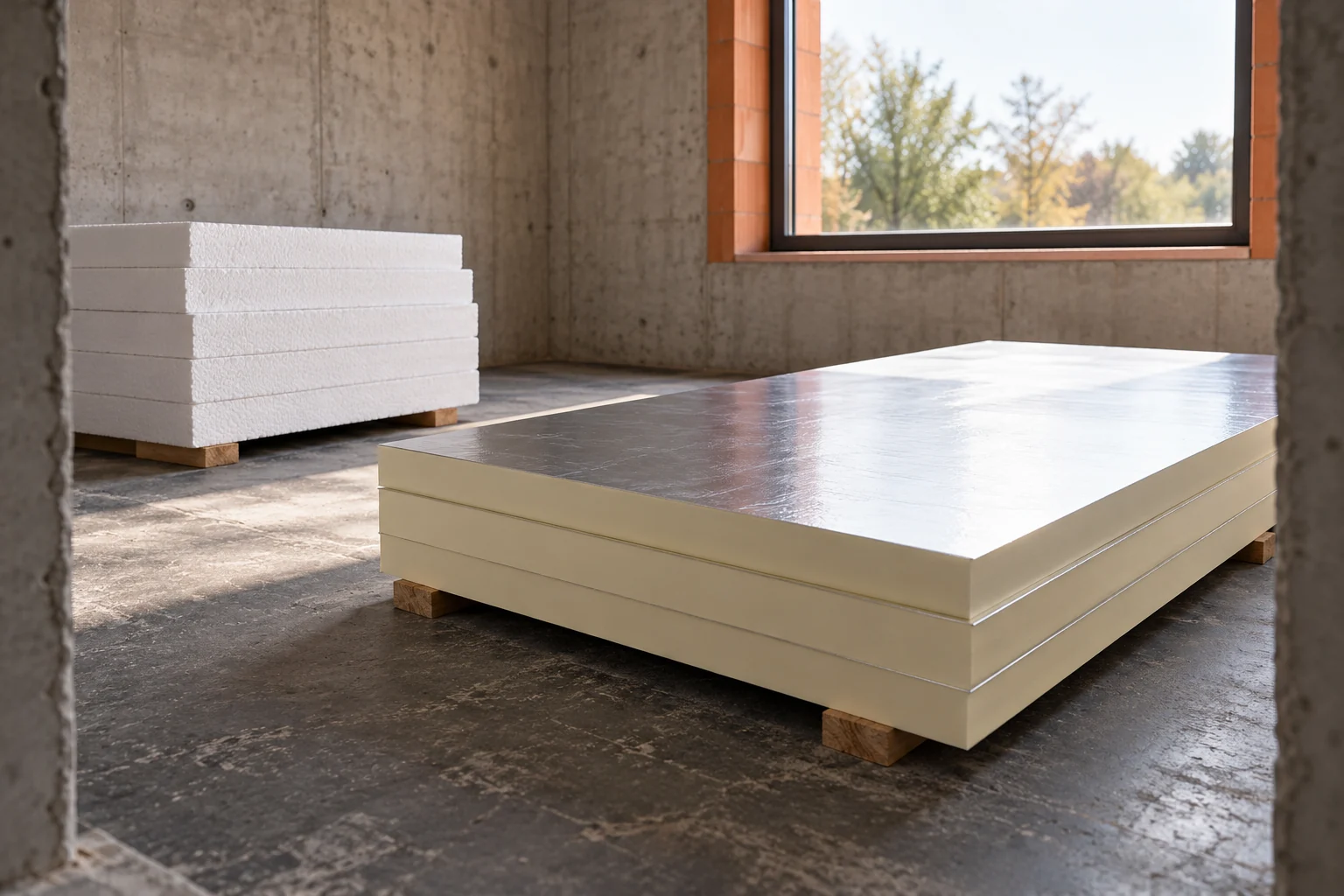
The insulation material must be matched to the place where it will work. A dry façade, a floor and an inverted roof have different requirements. EPS, XPS and PIR are not a single group of interchangeable products. They differ in structure and in their service variants. A good choice combines the required thermal resistance with resistance to conditions and compatibility of the whole system. EPS is expanded polystyrene. Its structure shows fused granules. XPS is produced by extrusion and has a more homogeneous closed-cell structure. PIR is rigid polyisocyanurate foam, often with a specified facing. These names should not be used interchangeably.

By |2026-11-14T13:13:15+01:002023-11-21|Building academy|Comments Off on EPS, XPS or PIR: how to match insulation to the place of work?

PIR, EPS, XPS or mineral wool: where do their properties differ?

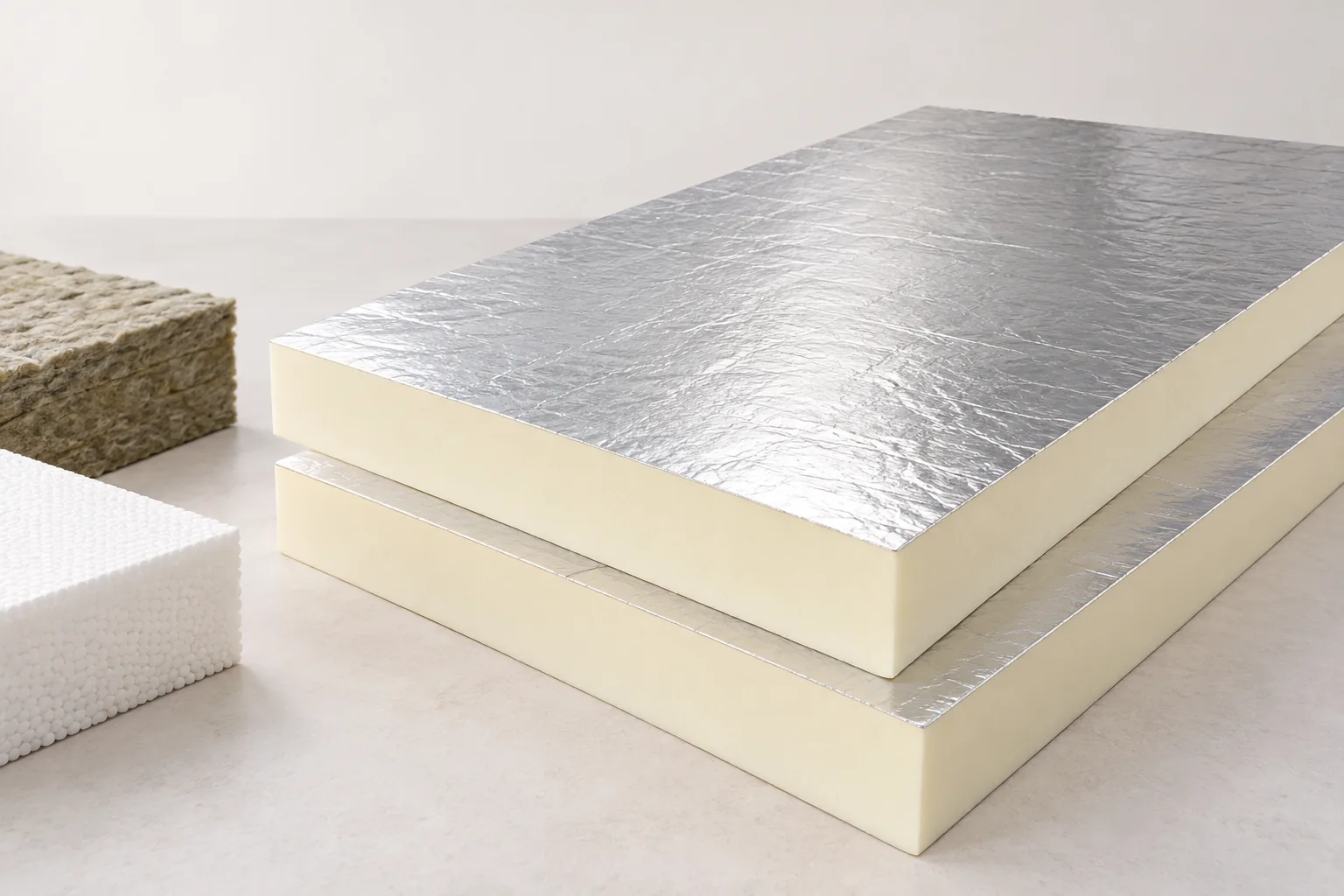
A low eaves detail or a fixed floor level can leave little room for insulation. Compare PIR boards and EPS at the same required thermal resistance and use the declared thermal conductivity of each product to work out the thickness needed. If the insulation will be exposed to water, check water absorption, loading and the uses approved for the board. Where sound or fire performance matters, consult the documentation for the complete assembly. This shows when a thinner PIR board solves a space problem and when other properties favour EPS, XPS or mineral wool.

By |2026-11-15T00:23:38+01:002023-10-22|Building academy|Comments Off on PIR, EPS, XPS or mineral wool: where do their properties differ?

How to sensibly insulate a garage, storage room and seasonal cottage?

A small building does not always need the same insulation as a heated house. A garage, storage room and summer cottage have different sources of moisture and different patterns of use. A cost-effective renovation starts with defining the objective. Only then are the material, thickness and scope of work chosen. The cheapest board does not have to give the cheapest result. Possible objectives are shorter heating-up times for the interior, reduced losses during operation or a more stable temperature. In an unheated storage room, insulation alone will not ensure a positive temperature throughout the winter. It slows down heat exchange but does not generate heat. If stored items must not freeze, heating must also be considered.

By |2026-11-14T10:55:50+01:002023-04-10|Building academy|Comments Off on How to sensibly insulate a garage, storage room and seasonal cottage?

What must be maintained for a PIR roof to meet fire requirements during use?

The fire properties of the roof result from a specific arrangement of panels and joints. After acceptance, later openings, repairs and changes to equipment also matter. In a small building it is easy to treat these as minor works. However, every change should preserve the conditions on which the selection of the entire assembly was based. PIR describes the core material, but does not give the full classification of the panel. The facings, thickness and joint construction are important. Identification of the exact variant is needed. Data cannot be transferred from a similar product solely on the basis of the foam name.

By |2026-11-14T13:15:29+01:002023-03-09|Building academy|Comments Off on What must be maintained for a PIR roof to meet fire requirements during use?

How quickly can you prepare correct thermal and moisture calculations for a wall?

A quick result is only valid if the input data are correct. When selecting insulation, you need to know the wall layers, their condition and the conditions of use. A simple calculator helps compare thicknesses. However, it does not replace the assessment of moisture, thermal bridges and details. Particular care is needed with internal insulation. Prepare the layer build-up from the inside to the outside. Record their thicknesses and thermal properties. For an existing wall, the material must be identified accurately. The information “brick” alone is often too general. Include renders, gaps and existing insulation. Do not replace unknown data with the most favourable value from a catalogue.

By |2026-11-14T10:55:36+01:002023-01-30|Building academy|Comments Off on How quickly can you prepare correct thermal and moisture calculations for a wall?
Back to top