Insulation materials
EPS, XPS or PIR: how to match insulation to the place of work?
In brief
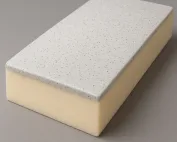
The insulation material must be matched to the place where it will work. A dry façade, a floor and an inverted roof have different requirements. EPS, XPS and PIR are not a single group of interchangeable products. They differ in structure and in their service variants. A good choice combines the required thermal resistance with resistance to conditions and compatibility of the whole system. EPS is expanded polystyrene. Its structure shows fused granules. XPS is produced by extrusion and has a more homogeneous closed-cell structure. PIR is rigid polyisocyanurate foam, often with a specified facing. These names should not be used interchangeably.
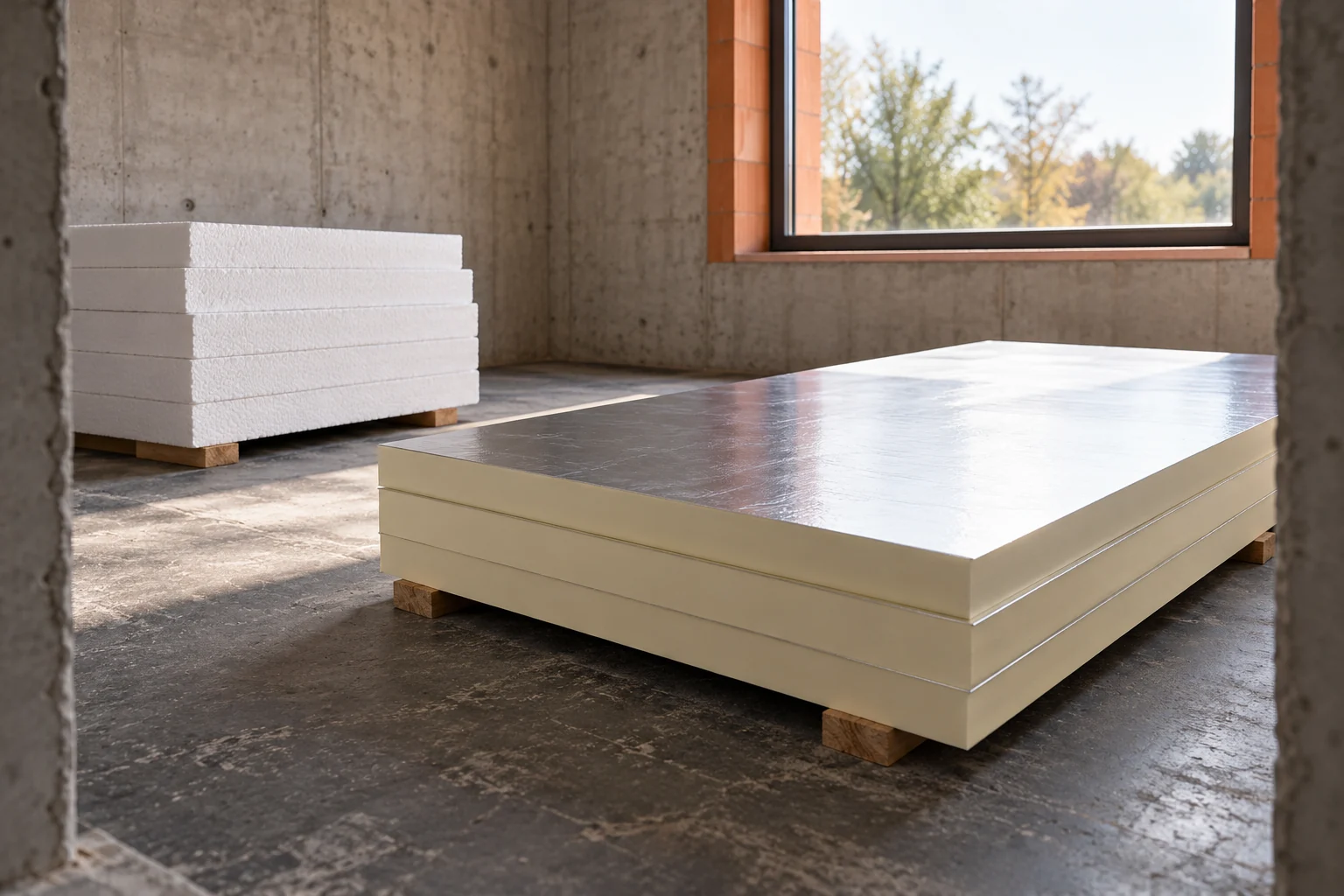
What distinguishes these three types of insulation?
Within each group there are products with different parameters. Facade polystyrene is not automatically a material for high loads. XPS with one surface may have a different purpose than a variant with another. PIR cladding affects installation and vapour transport. The specific board needs to be identified.
How to compare the amount of space needed for insulation?
Use the resistance R = d/λ. For an assumed R = 4.0 m²·K/W, a material with λ 0.038 requires a calculated 152 mm. With λ 0.022, a calculated 88 mm is sufficient. This is a comparison of the layer alone, based on two example parameters. It is not a ready-made substitution of materials in the facade.
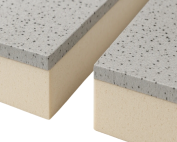
The dimension also includes claddings, fixing and finishing. With PIR combined with gypsum, the total thickness is not the thickness of the foam. With milled edges, the coverage must also be checked. Space savings are best assessed on the full section, particularly at reveals and thresholds.
What to choose for damp conditions?
Data on water and the intended use of the product are required. Suitable XPS grades are used, among other things, in inverted roofs, where the insulation lies above the waterproofing. This does not mean that every rigid board is suitable for this assembly. Conditions of long-term moisture differ from brief contact with rain.
A thermal insulation material does not automatically replace a waterproof layer. Low water absorption does not seal joints, penetrations and edges. Water drainage and protection of the building must be designed. Choosing a “moisture-resistant foam” does not allow proper waterproofing to be omitted.
How to select material under pressure?
Check the mechanical properties required for the given function. The stress parameter at a specific deformation in a test is not a permissible constant compressive stress. Under equipment, flooring or ballast, long-term performance also matters. The load must be distributed in accordance with the layer design.
A narrow rack foot can create different conditions from a uniformly loaded floor. Insulation is therefore not selected solely by the name ‘hard’. The parameters of the specific variant and the way loads are transferred are needed. Pressing a sample with a finger alone does not provide a useful structural assessment.

Why do cladding and fire require separate verification?
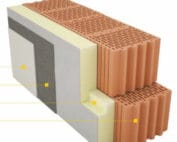
Foil-faced PIR can have high diffusion resistance. The variant with a fleece for a specific render system has a different task. A board with metal facings forms yet another product. Fire classes cannot be transferred between the foam alone, the insulation board and the complete sandwich panel.
Similarly, the classification of the entire roof is not the class of each component separately. The required data depend on the function of the building envelope. When replacing EPS with PIR or XPS, the conformity of the solution must be checked. A more favourable λ is not on its own justification for changing the design and finish.
How to compare the full cost?
Calculate materials for the same area and the required thermal effect. Prices per cubic metre, per pack and per square metre must be standardised. Add fixing layers, finish, waste and work on details. A thinner material may reduce some of the rework, but it does not always lower the final total.
In a small room, the cost of relocating a radiator can account for a large share of the renovation. On a large roof, logistics and the method of fixing the covering may be more important. There is therefore no single profitability ranking. Two complete, feasible variants for the same task are compared.
How to record the final choice?
State the material, variant, thickness, declared λ and type of facing or surface. Add the required water and mechanical properties. Record the layer build-up and the fixing method. Such a specification reduces the risk of delivery of a similar-looking but unsuitable product.
On acceptance, check the labels and the condition of the edges. Do not accidentally mix different variants in one area. If a substitution is needed, return to the requirements of the application. The insulation selection must match the conditions of the building envelope, not the current availability of any board of similar thickness.
What else is worth asking about
Do XPS and EPS mean the same polystyrene?
These are two types of material with a different production process and structure. The properties and scope of application must be checked for the specific product.
Does the lowest λ mean the best choice for every building component?
It helps to reduce thickness, but does not settle water conditions, pressure, fire and system compatibility. All these requirements must be met together.
7 branches. Materials closer to your project.

- SEROCK — Dzierżenin 34 E
- BŁONIE — ul. Sochaczewska 138A
- RADOM — ul. Grobickiego 8
- ŁÓDŹ — Natolin 8
- OLSZTYN — Barczewo, ul. Prosta 9
- WROCŁAW — ul. Jerzmanowska 10C
- GORZÓW WLKP. — ul. Zielona 33/34