






Building academy
The Izoprofil.org building academy explains decisions made during construction and refurbishment. The articles start with the materials themselves, including sandwich panels, PIR insulation boards and profiled sheet metal. Learn the terms used in product descriptions and how several properties affect a complete assembly. Topics include thermal insulation, joints, moisture protection, roof coverings and purchasing. Each article includes a summary and contents to help you find the relevant detail. Use the guides alongside the drawings and product documentation for your own project.
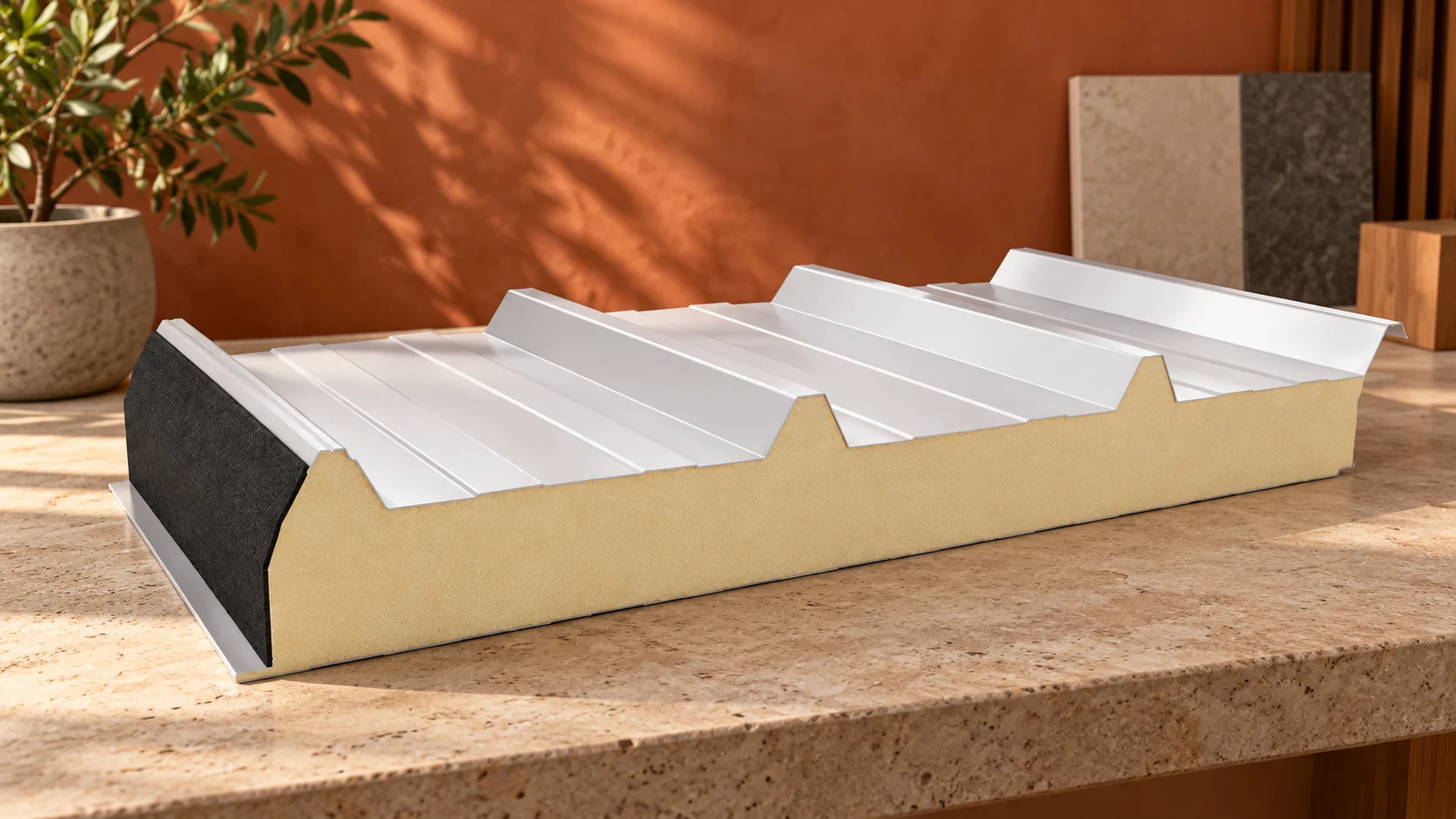
What must be maintained for a PIR roof to meet fire requirements during use?
The fire properties of the roof result from a specific arrangement of panels and joints. After acceptance, later openings, repairs and changes to equipment also matter. In a small building it is easy to treat these as minor works. However, every change should preserve the conditions on which the selection of the entire assembly was based. PIR describes the core material, but does not give the full classification of the panel. The facings, thickness and joint construction are important. Identification of the exact variant is needed. Data cannot be transferred from a similar product solely on the basis of the foam name.
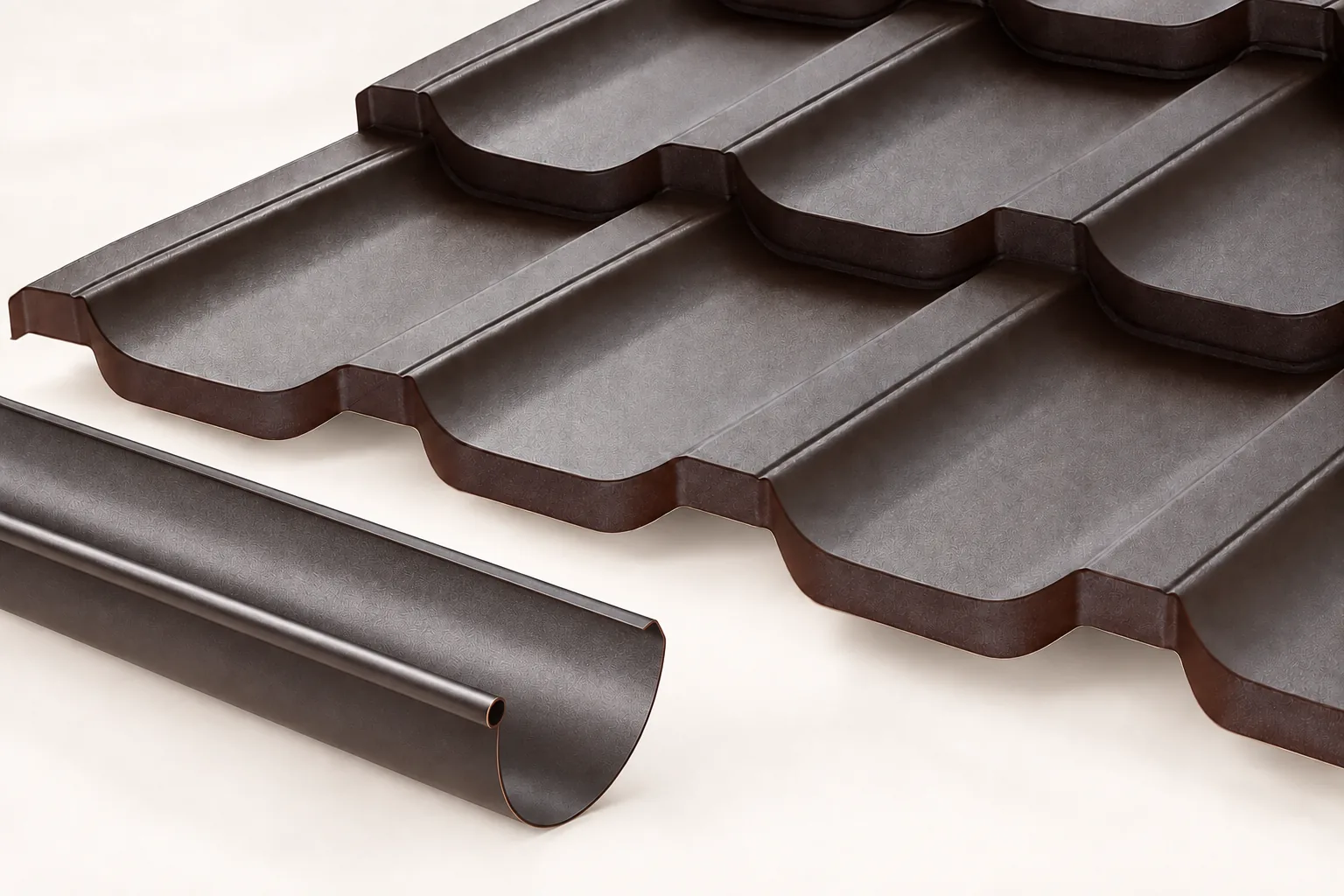
Choosing a gutter system for sheet metal roofing
In Poland, gutters for a metal-sheet roof are selected primarily according to the roof geometry and the arrangement of outlets, not merely the type of sheet. Readers should check which part of the roof drains to a given gutter section, especially at valleys and with a complex building form. They should also examine the number and position of downpipes and the material compatibility of the system. Leave the choice of cross-section and shape to the designer, based on the specific system's data.

Modules or long sheets of tile-effect metal roofing: which suits your roof slope better?
A small module is easier to carry and to fit to a complex roof slope. A long sheet can efficiently cover a simple area. Neither solution wins on every building, however. You need to compare the cutting layout, delivery conditions and the requirements of the chosen profile. It also matters how a damaged section will be replaced later. A module has a fixed length and coverage width. Repeated elements form successive rows. Made-to-measure sheets are ordered in selected lengths, within the limits of the given technology. In both solutions, side joints remain. Long strips can reduce the number of transverse laps on a simple roof slope.
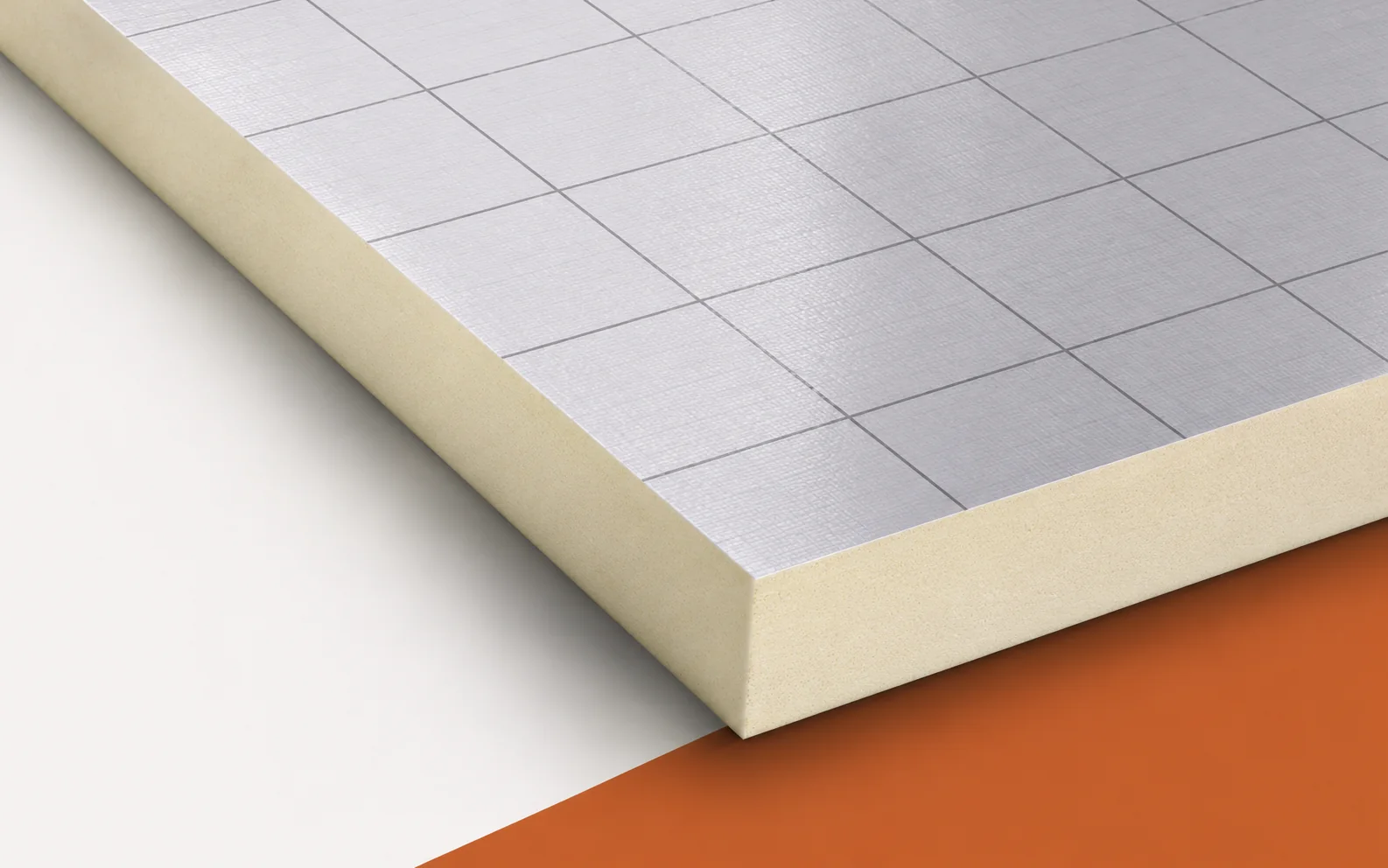
Does Eurofloor foil direct all the heat upwards? How it works
The question about the foil on Eurofloor is whether its surface alone directs heat towards the room. The board has a rigid PIR foam core and a multi-layer, gas-tight foil with a printed grid on both sides; the manufacturer intends it for thermal insulation of floors, including those with underfloor heating. Heat is retained primarily by the thermal resistance of the core, not by any reflection of radiation beneath the screed. Eurofloor must therefore be identified in the floor cross-section as a layer beneath the designed heating installation, and not as a mere screen on the surface.
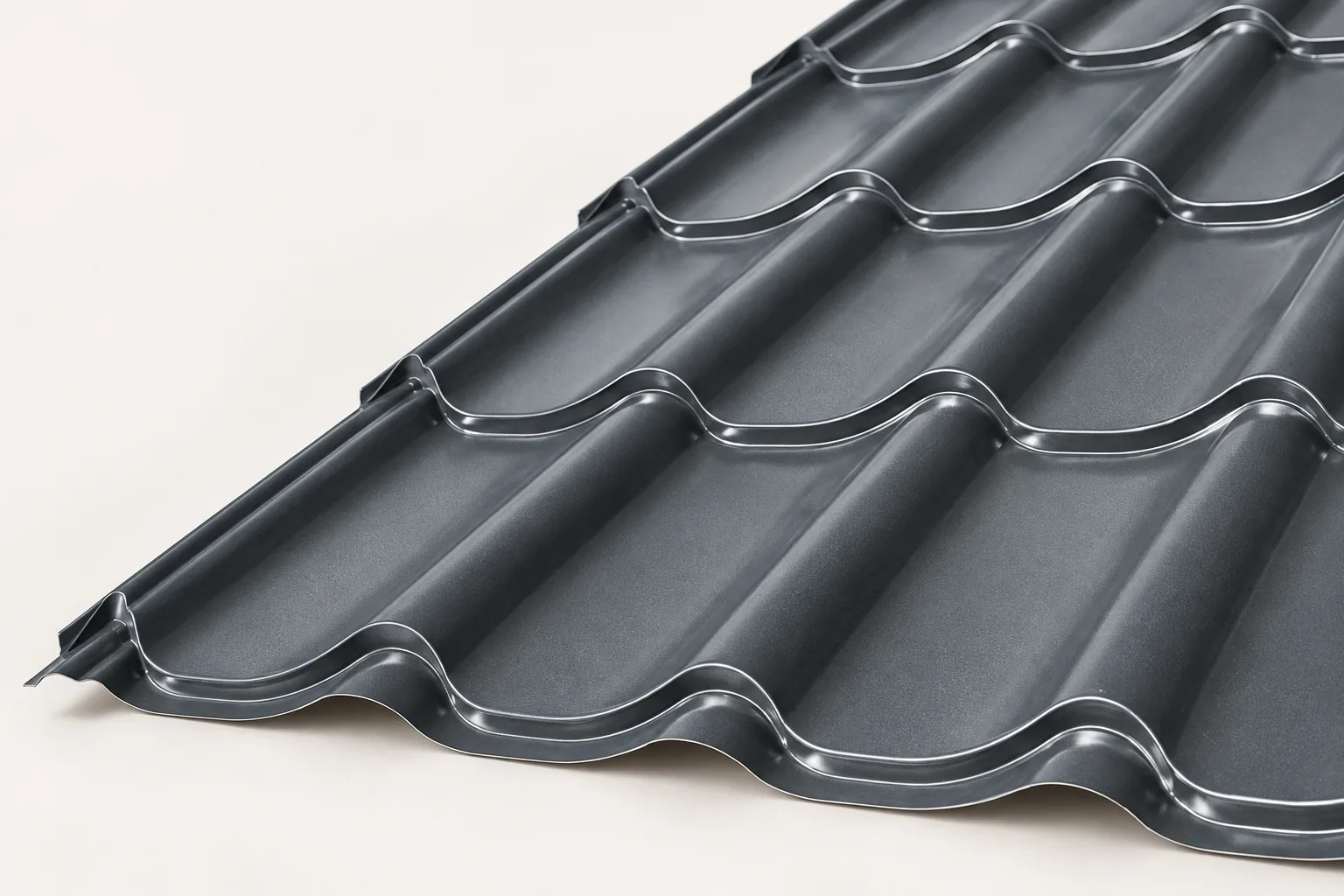
What should guide your choice of a tile-effect steel roof?
Before choosing a pattern or colour, establish which sheets the roof can take. The pitch and slope length, positions of windows and chimneys, and condition of the frame and substrate all affect the choice. On a refurbishment, compare the drawings with measurements on site. Include the diagonals and the edges where sheets will be trimmed. Use these dimensions to select the profile, coating and sheet format. For a fair price comparison, ask each supplier to include everything needed for your roof.
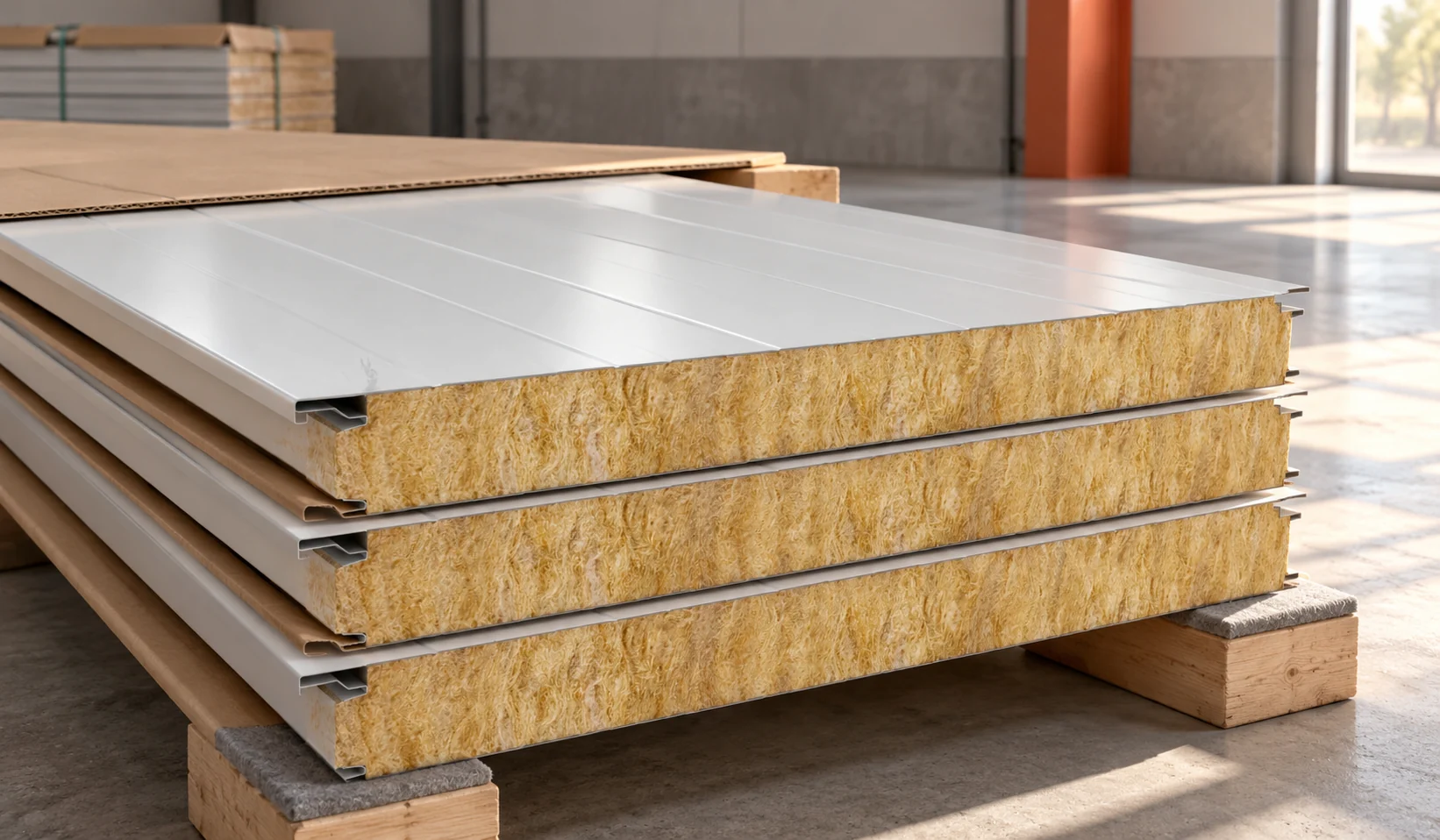
When does an outlet insulated wall panel with a mineral wool core really pay off?
An outlet panel can lower the cost of a small enclosure, but a discount alone does not yet tell you whether the material suits the job. First you need to know why the grade was reduced. A scratch on the coating is a different problem from a damp core or a crushed interlock. It is also worth calculating how much of the purchased batch can be used without weakening the required wall properties. There is no single common list of defects for all outlet offers. The material may come from the end of a production run, a dimensional surplus or a batch with a visual deviation. It may also be damaged. The description should clearly distinguish these situations. The term “second grade” on its own specifies neither suitability nor the scope of documentation.