Roof and structure
What should guide your choice of a tile-effect steel roof?
In brief
Before choosing a pattern or colour, establish which sheets the roof can take. The pitch and slope length, positions of windows and chimneys, and condition of the frame and substrate all affect the choice. On a refurbishment, compare the drawings with measurements on site. Include the diagonals and the edges where sheets will be trimmed. Use these dimensions to select the profile, coating and sheet format. For a fair price comparison, ask each supplier to include everything needed for your roof.
Which decisions are already fixed in the building?
The roof pitch, its length and the arrangement of openings limit the choice of system. In a new house, some of these data come from the design. In a renovation, the actual condition must be checked, because the old roof may have been altered. The measurement should also cover the diagonals and edges needed for cutting. The area read from an old roofing invoice is not enough.
The structure and the substrate must be assessed before ordering the material. A new profile may require a different batten spacing and different details. The framework should not first be prepared out of habit and then any tile-effect metal roofing chosen to fit it. The right order avoids rework and compromises at the start of installation.
How to establish expectations for the material?
It is worth defining the environmental conditions and the way the building is used. Salt, industrial pollution, shading and leaves affect the requirements for the coating and maintenance. In a building with high humidity, the underside of the sheet also matters. Not every offer prepared for a residential house will be suitable for a workshop or livestock building.
It should also be established what matters to the investor: reducing waste, easy logistics, a specific appearance or the possibility of staging the work. Expectations can differ without creating one best product. A solution suited to the given task is needed. The term ‘top of the range’ alone does not explain what specific feature the buyer is paying for.
When to choose the profile and finish?
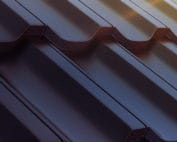
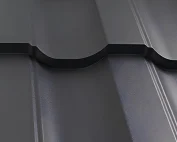
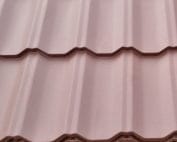
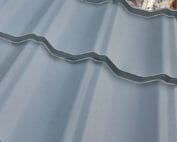
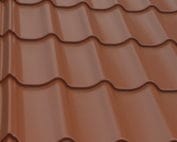
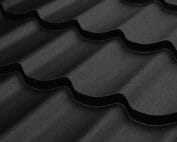
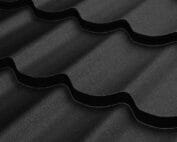
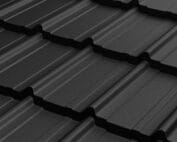
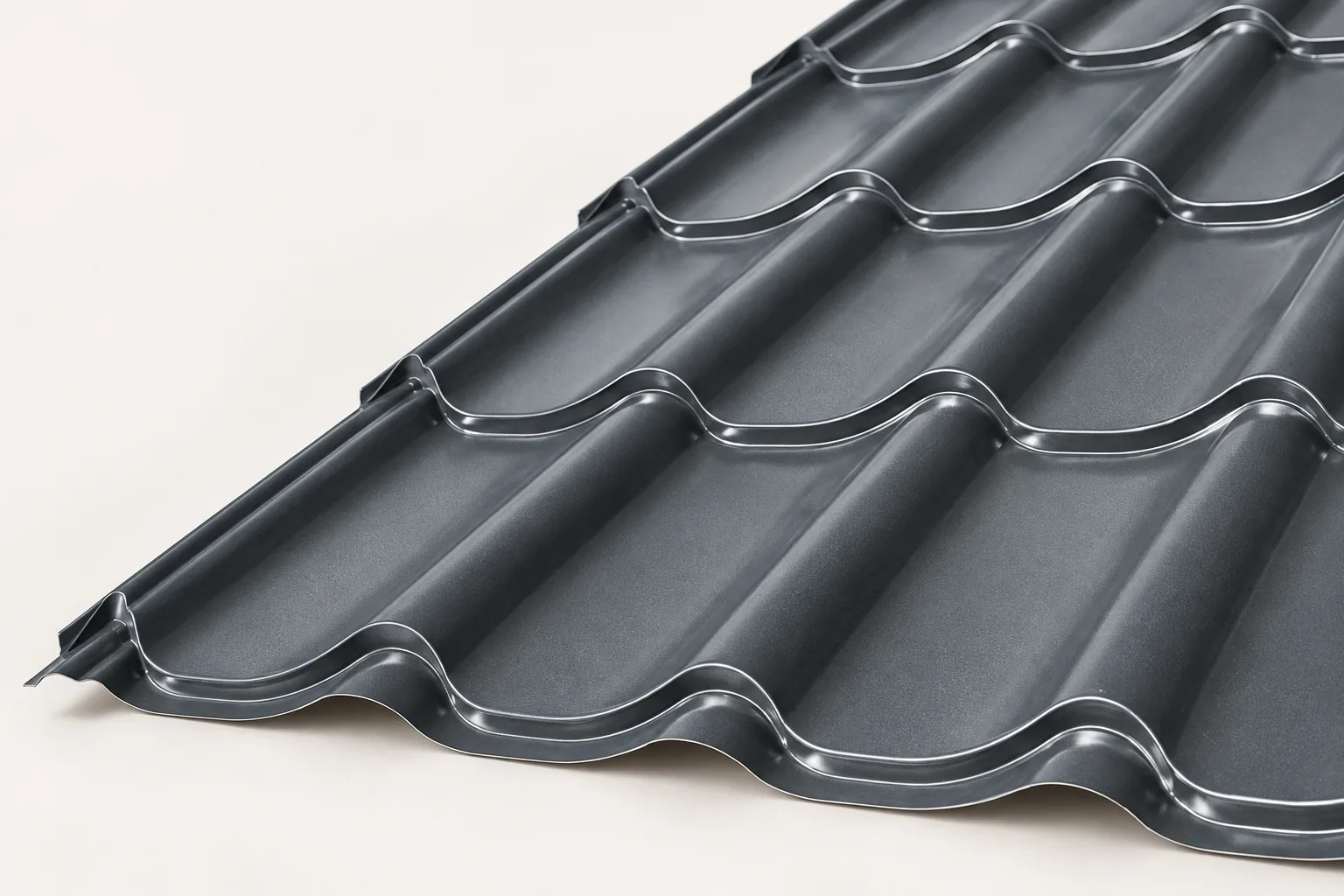
After rejecting models that are technically unsuitable, the shape of the pressings, the colour and the texture can be compared. It is worth viewing a sample in daylight and a larger completed project. A small fragment does not show the rhythm of the whole roof slope. On a simple roof, the profile details will be perceived differently than on a building with numerous dormers and roof valleys.
The coating should be assessed independently of appearance. Matt and gloss do not form a universal durability ranking. The structure of the protection, the declared properties and the warranty conditions must be checked. The selection also includes flashings and accessories. If a consistent set in the chosen finish cannot be obtained, the problem should be resolved before ordering the main sheets.

How does the format affect the construction process?
Tile-effect metal roofing cut to size requires accurate measurement and planning of lengths. On a regular roof slope it can reduce transverse joints. The modular format makes it easier to handle smaller elements and can be convenient with many short sections. However, the amount of waste is determined by the specific cutting layout, not by the name of the format alone.
Access, the unloading area and the ability to deliver material onto the roof must be taken into account. A long sheet requires suitable support and organisation of work. Small modules must also be stored correctly. It is worth agreeing the delivery date with the contractor to limit storage time and the risk of the pack becoming damp.
How should prices be compared without omitting part of the roof?
The same coverage area and a similar scope of materials should be compared. The price per gross metre is not the same as the price per effective metre. The cost estimate should include flashings, screws, seals, accessories and delivery. For a renovation, dismantling and possible work on the substrate are added. Only the full total shows the difference between the options.
It is worth paying attention to items that are missing or described only in general terms. Snow guards, roof access and flashings for non-standard penetrations can significantly change the cost. If any item depends on a later inspection, this should be clearly stated. This makes the quote comparable and gives any price change a concrete cause that can be verified.
What should be confirmed before placing an order?
The final summary should clearly state the profile, format, core thickness, coating and colour. The quantity, lengths, laying direction and completeness of the accessories must be confirmed. It is good to establish who is responsible for measuring and checking the delivery. The contractor should receive the current instructions for the model that will actually be installed.
It is worth keeping the purchase documents and material data sheets for future inspections. Photos of labels and details before covering are also useful. A decision made in this order is easier to defend: the product suits the roof, matches the conditions of use and fits within the full budget. Only on this basis does appearance become a free choice rather than a source of later limitations.
7 branches. Materials closer to your project.

- SEROCK — Dzierżenin 34 E
- BŁONIE — ul. Sochaczewska 138A
- RADOM — ul. Grobickiego 8
- ŁÓDŹ — Natolin 8
- OLSZTYN — Barczewo, ul. Prosta 9
- WROCŁAW — ul. Jerzmanowska 10C
- GORZÓW WLKP. — ul. Zielona 33/34