






Building academy
The Izoprofil.org building academy explains decisions made during construction and refurbishment. The articles start with the materials themselves, including sandwich panels, PIR insulation boards and profiled sheet metal. Learn the terms used in product descriptions and how several properties affect a complete assembly. Topics include thermal insulation, joints, moisture protection, roof coverings and purchasing. Each article includes a summary and contents to help you find the relevant detail. Use the guides alongside the drawings and product documentation for your own project.
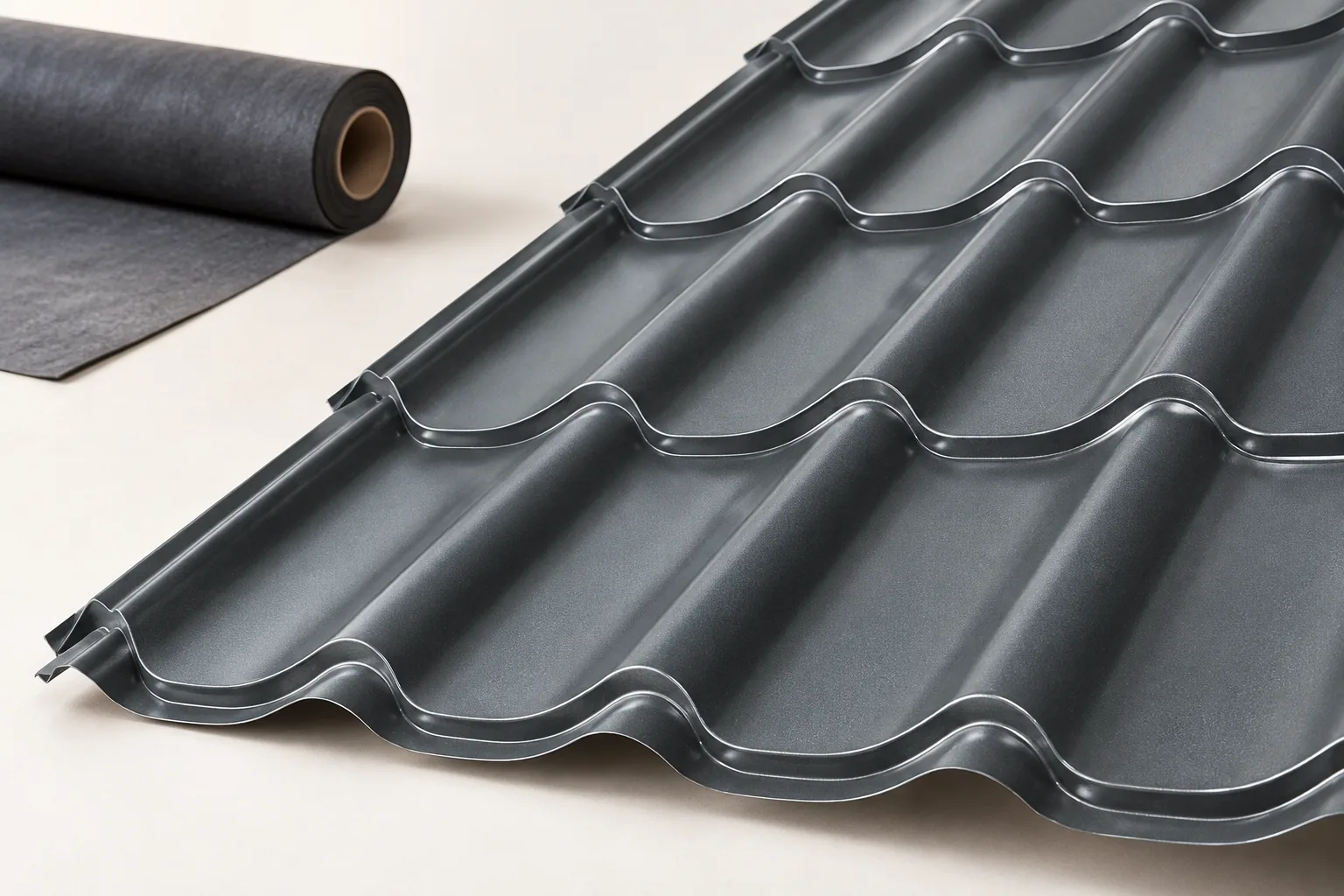
Which roofing membrane belongs where in the roof build-up?
The key is to establish whether the chosen membrane is to act as the underlay beneath the covering or as the layer on the room side – these roles are not interchangeable. The owner should check the intended use of the loft, the existing layers, the type of boarding and how moisture is drained away. During renovation, it is worth opening up the roof to determine what is actually beneath the covering, rather than relying on the colour of the old membrane. The designer decides the build-up, while selection rests on the scope of use and the documentation for the specific product.
Choosing sandwich panels for a cold store and an adjoining warehouse
Insulated panels in cold stores and warehouses A cold store and an adjacent warehouse may have a similar façade of insulated panels, even though their envelopes perform under different conditions. When selecting the wall, record the temperatures on both sides, how the rooms are used and how often the doors are opened. Also look at the places where warm, moist air can penetrate into the colder zone. This information allows the designer to assess the insulation and to plan airtight connections to the floor, ceiling and door frame. In the purchasing schedule, distinguish between panels for internal partitions and elements exposed to precipitation. What does the way the room is used change? Record whether goods are delivered in a single drop or whether the doors remain frequently open while orders are being picked. Include the washing of the floor and walls and the type of cleaning agents used. These conditions matter when selecting the coating on the room side and the finish of the plinth. Mark the forklift traffic zones on the plan. Where there is a risk of impact, allowing for suitable mechanical protection can help maintain the tightness of the cladding during use. How to compare cores [...]
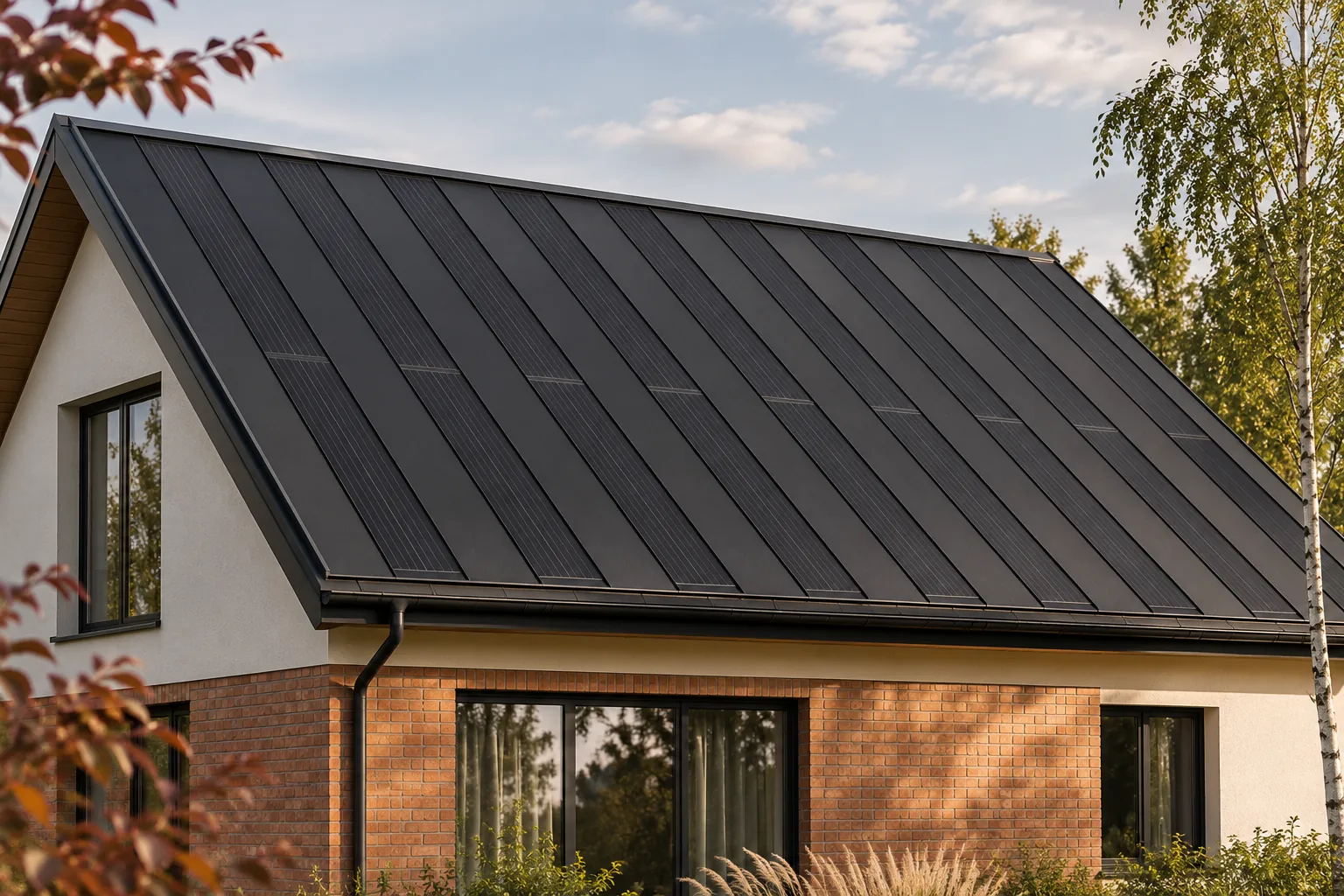
Does an integrated photovoltaic roof replace insulation?
A photovoltaic roof can replace part of the traditional covering while generating energy. This does not mean it takes over the task of thermal insulation. Warmth in winter and comfort in summer depend on the entire building envelope, including insulation, airtightness and protection against moisture. Integrating the cells organises the outer layer of the roof, but does not remove the need to design what lies beneath it. The covering primarily shields the building from the weather. In its active version it additionally produces electricity. Thermal insulation limits heat flow. The other layers can control the movement of water vapour, drain moisture and provide airtightness. A single shared term 'roof' does not mean a single material function.
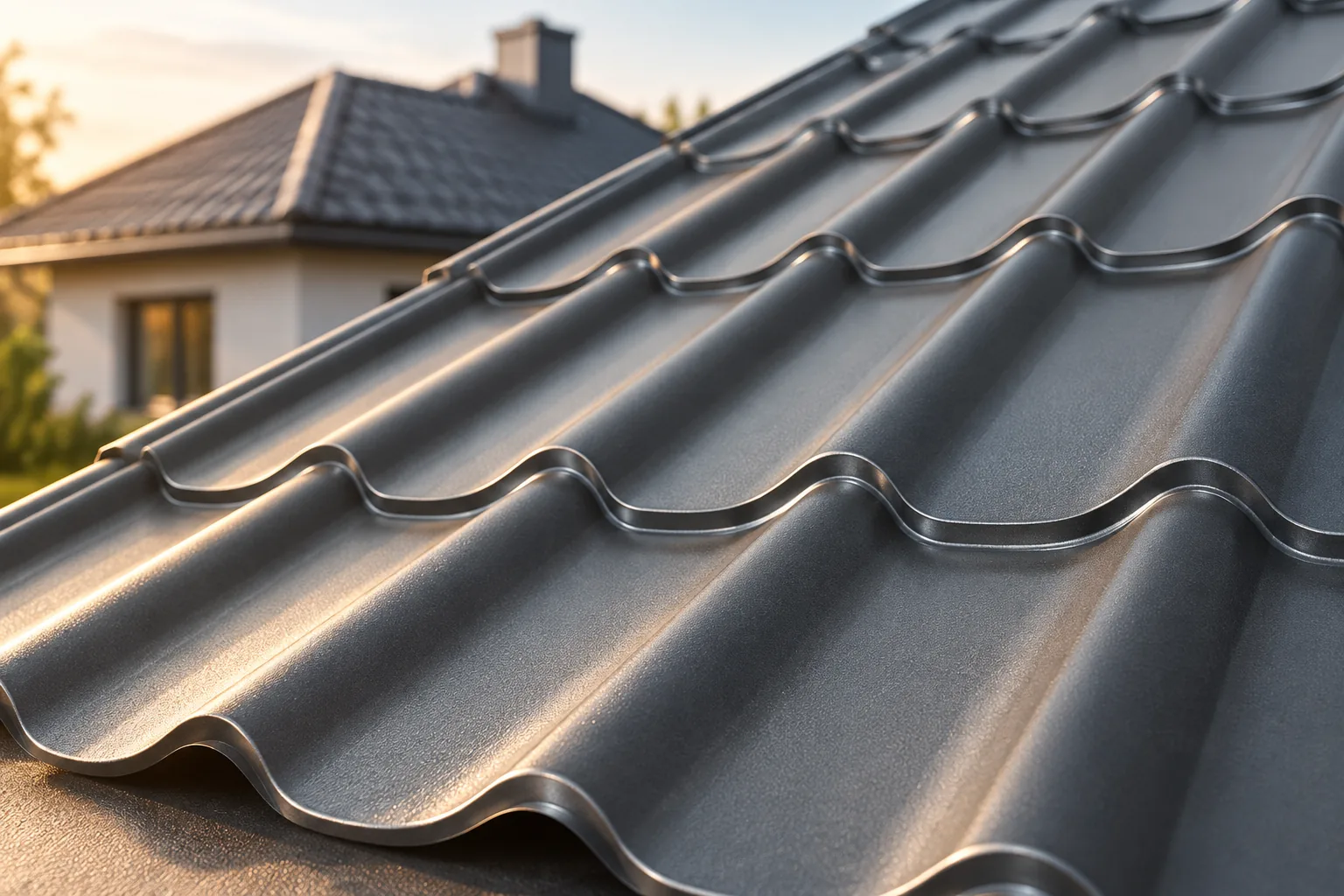
Planning a hipped roof: slopes, hips and supports
Whether a hipped roof performs correctly depends not on the shape of the solid alone, but on the truss layout and the arrangement of supports. It is worth checking that the design accounts for hip rafters, jack rafters and the points where loads are transferred to walls and internal supports. The roofing plan should indicate sheet cutting, ridge flashings and ventilation. The cost estimate should itemise these details separately. At handover, the geometry of the corners, the support and fixings are checked, along with the quality of cuts and the patency of ventilation.
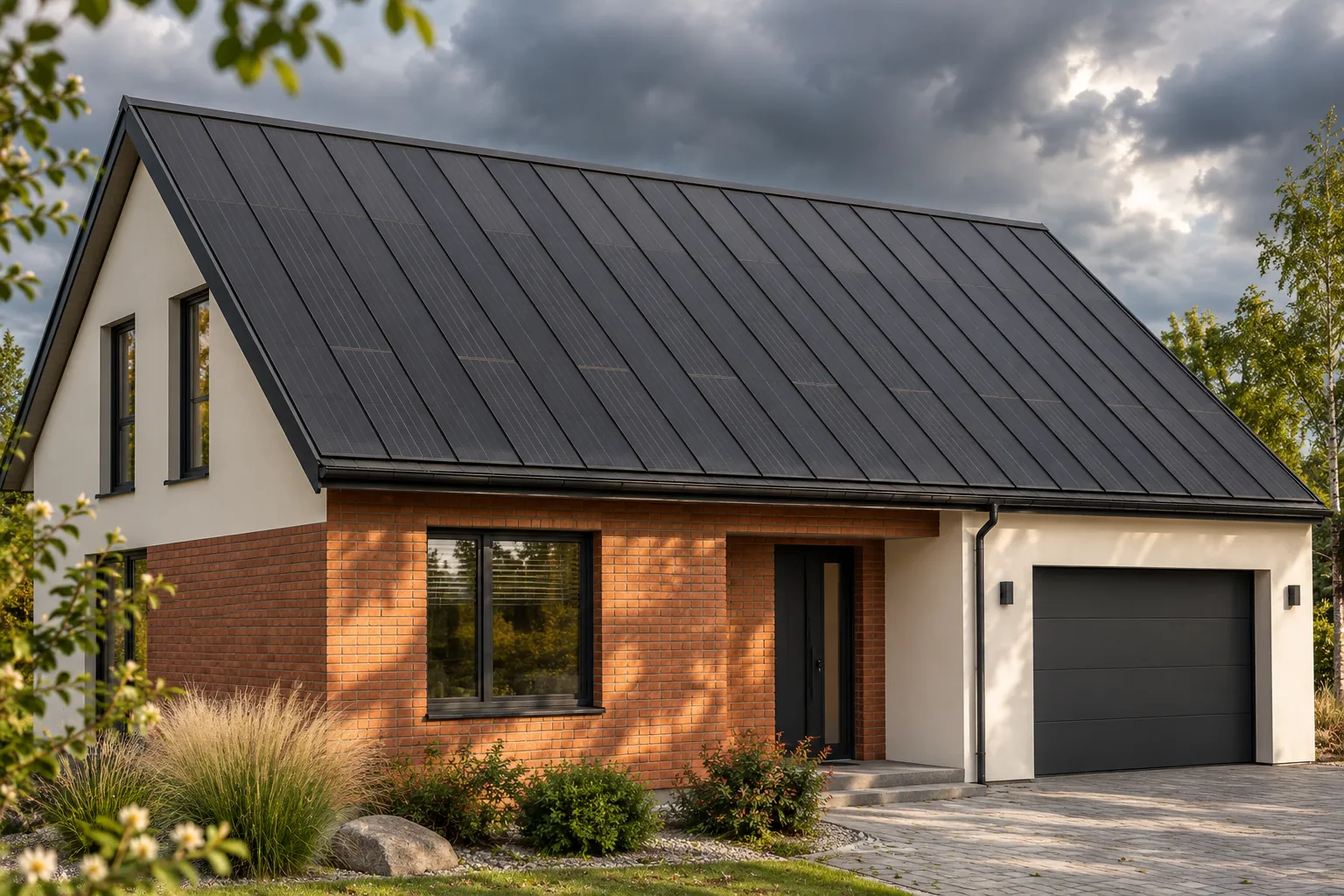
Does hail mean the entire photovoltaic roof must be replaced?
After a hailstorm, you should assume neither that the roof is fully functional nor that it needs to be completely replaced. The outcome depends on the event, the construction of the covering and the actual damage. With an integrated roof, you need to assess watertightness, the condition of the active layer and how the installation is performing. Product hail testing is important information, but it does not guarantee resistance to every possible weather event. Testing is carried out under defined conditions. The size and speed of the impacting objects, the number of impacts and the criteria for assessing the sample all matter. The phrase 'hail-resistant' on its own is therefore incomplete. Ask for the document, the method and the product version. Do not compare different results on the basis of a single highest figure.
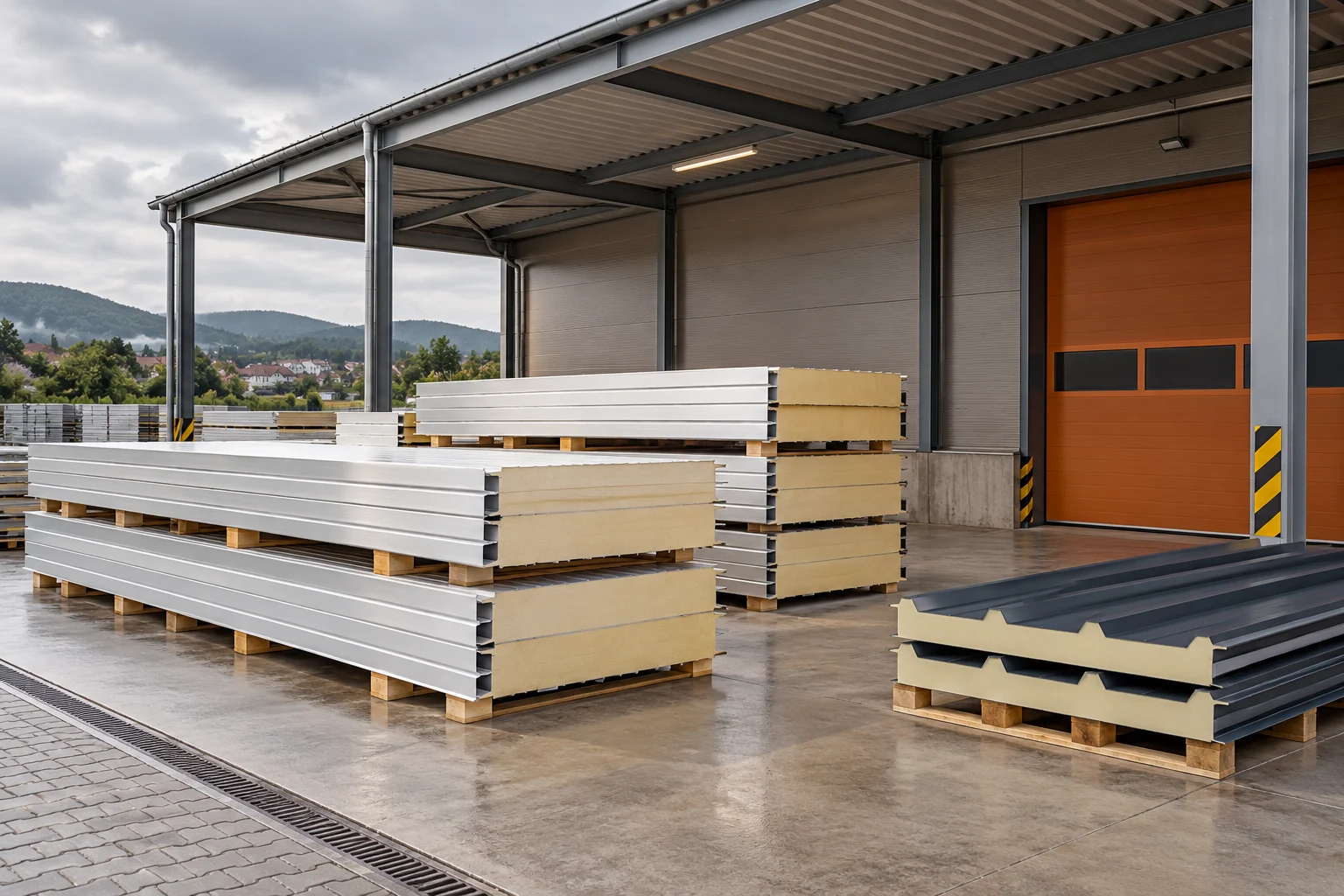
How to choose a supplier of panels and sheets in Lower Silesia?
A good point of purchase is one that supplies the right material within the agreed scope. The size of the yard does not determine the quality of the offer. In Lower Silesia, it is worth considering the route, access to the plot and the organisation of unloading. Sandwich panels and sheets must be compared using the same parameters. The headline price alone is not enough. Separate wall panels, roof panels and the profiled sheet itself. Specify the core, thickness, facings and required parameters. For trapezoidal steel sheet, the profile, steel thickness and coverage are important. If the enquiry contains only colour and square metres, sellers may quote for different products. Their prices will not be comparable.