






Building academy
The Izoprofil.org building academy explains decisions made during construction and refurbishment. The articles start with the materials themselves, including sandwich panels, PIR insulation boards and profiled sheet metal. Learn the terms used in product descriptions and how several properties affect a complete assembly. Topics include thermal insulation, joints, moisture protection, roof coverings and purchasing. Each article includes a summary and contents to help you find the relevant detail. Use the guides alongside the drawings and product documentation for your own project.
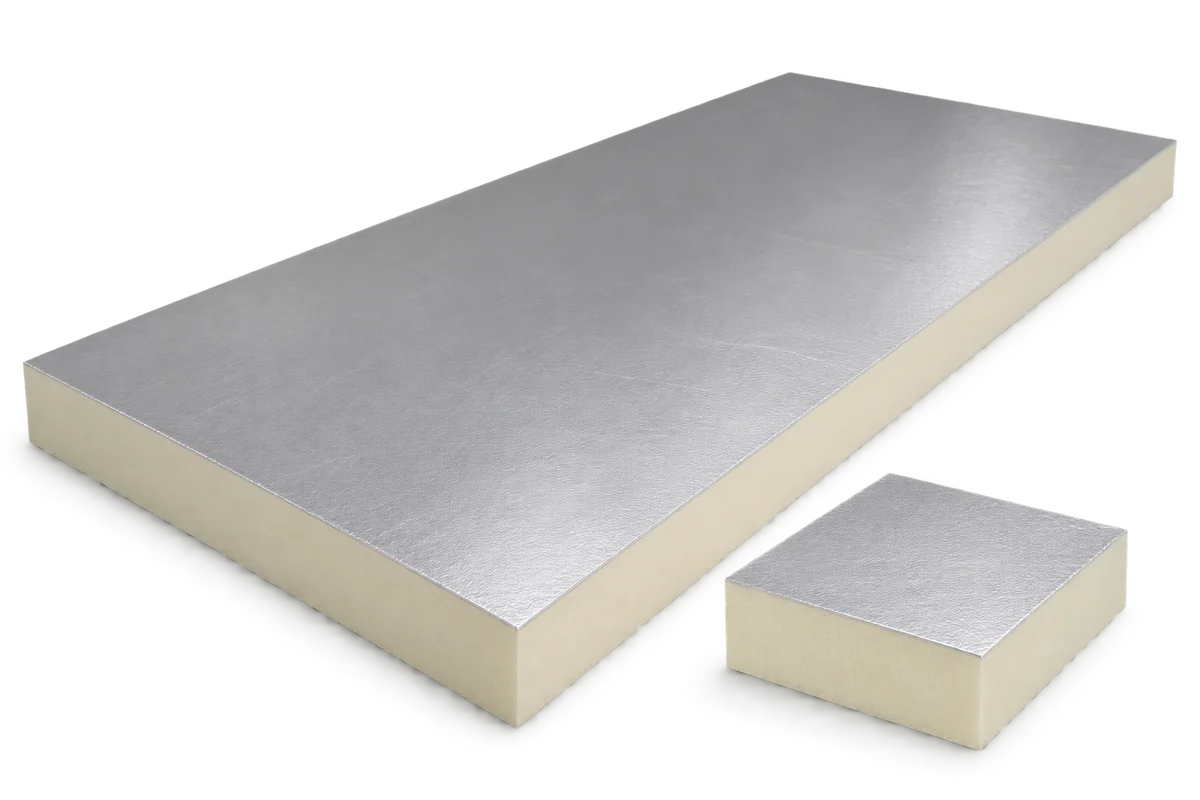
Inspecting above-rafter PIR before the roof covering goes on
Once a pitched roof is covered, it is difficult to inspect the PIR board joints or the junctions with adjoining insulation. Agree an inspection point with the roofer before work starts. Have the roof section and the eaves, ridge and roof window details ready, then check them in turn before the next layer conceals them. This checklist helps the client record how the design was built and direct questions to the right person. It does not replace the fixing design or the instructions for the selected system.
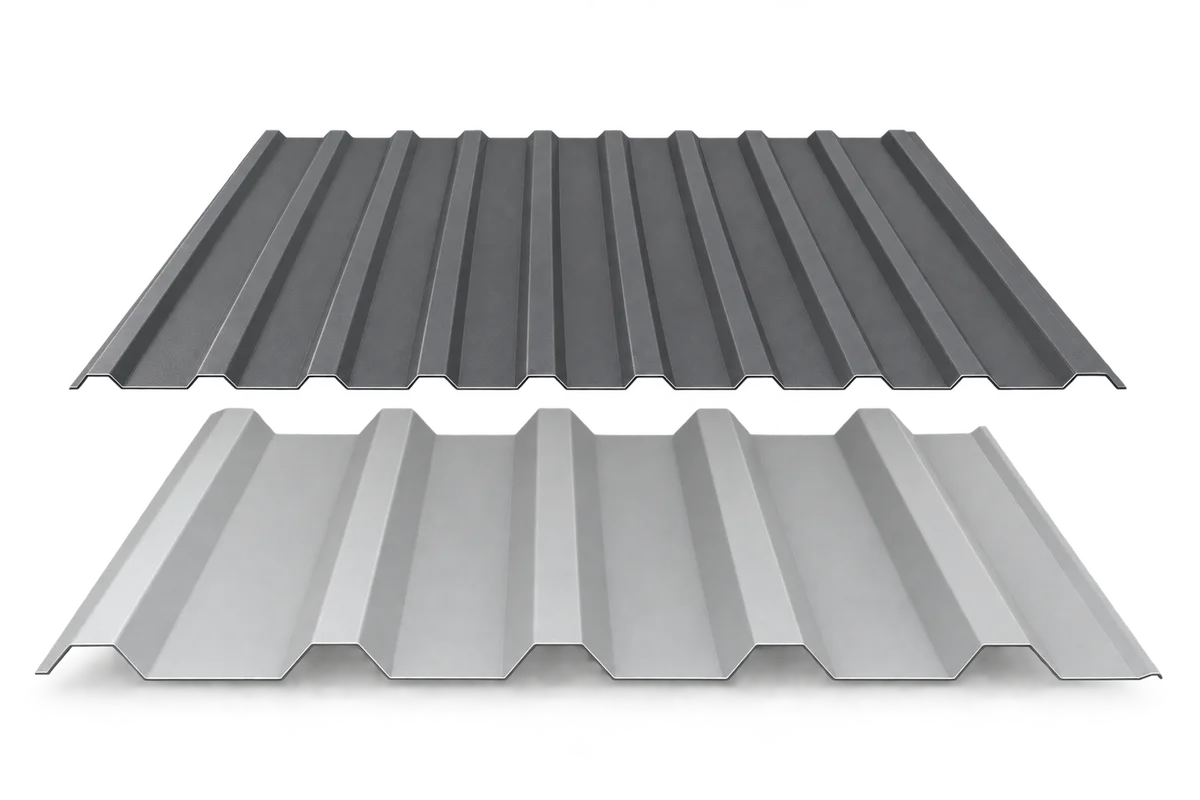
Buying surplus trapezoidal sheets: inspecting a batch before ordering
When buying a surplus batch of trapezoidal sheet, first work out how many of the available sheets actually fit the building. List lengths, cover widths, profiles and coated faces. Separate sheets with bent edges from those that merely differ in shade. Bent edges may prevent a tight side lap, whereas a shade difference may matter mainly on a prominent elevation. Assess each sheet against its proposed position. A schedule of usable pieces gives a better basis for pricing the batch than its total area. For structural decking, you also need documentation identifying the exact profile and material.
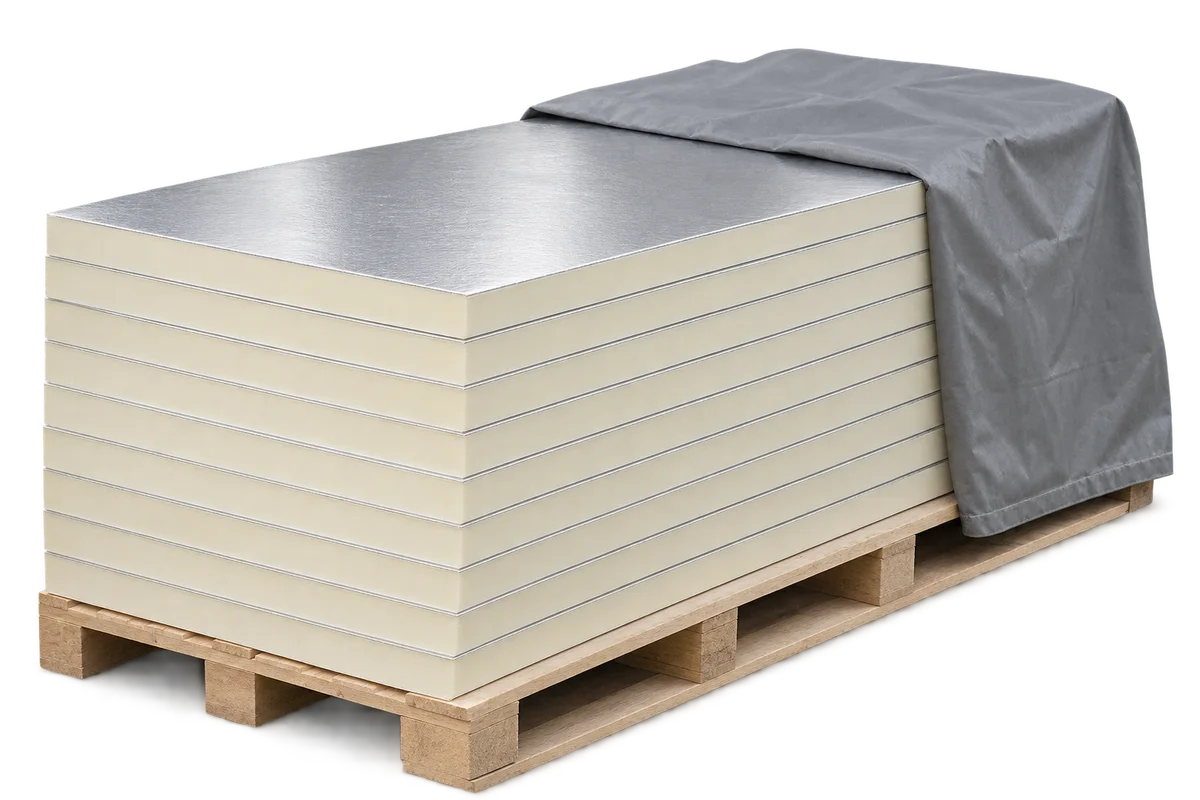
Pausing façade insulation work and handing over the unfinished wall for winter
When façade works stop before winter, each elevation may be at a different stage. Boards beside the entrance may still be exposed while the garden wall already has a reinforced base coat. For each wall, record the last layer installed, locations open at the top and the protection agreed for that system. The contractor can use this record to prepare the building for the break and decide where to resume in spring. A marked-up elevation makes it easy to find the areas that need another inspection.
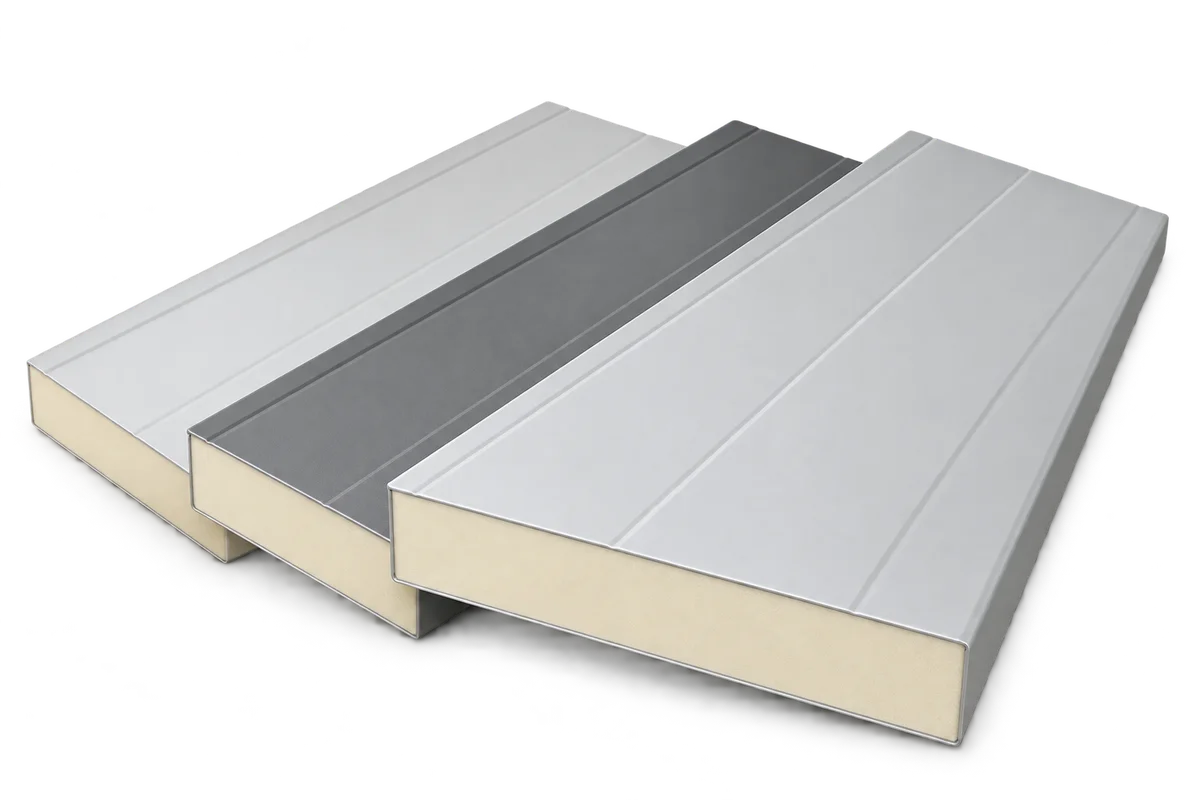
A heated work bay in an unheated hall: where should the panel enclosure run?
In an unheated hall, enclosing an inspection bay can be an alternative to heating the entire building. First trace the boundary of the heated space: its walls, the space overhead, the floor and the doorway. That gives a supplier a meaningful basis for pricing the sandwich panels. A room opened a few times per shift is a different proposition from a bay with constant forklift traffic. A single annotated drawing can bring the thermal boundary, access routes and space for servicing equipment into the same discussion.
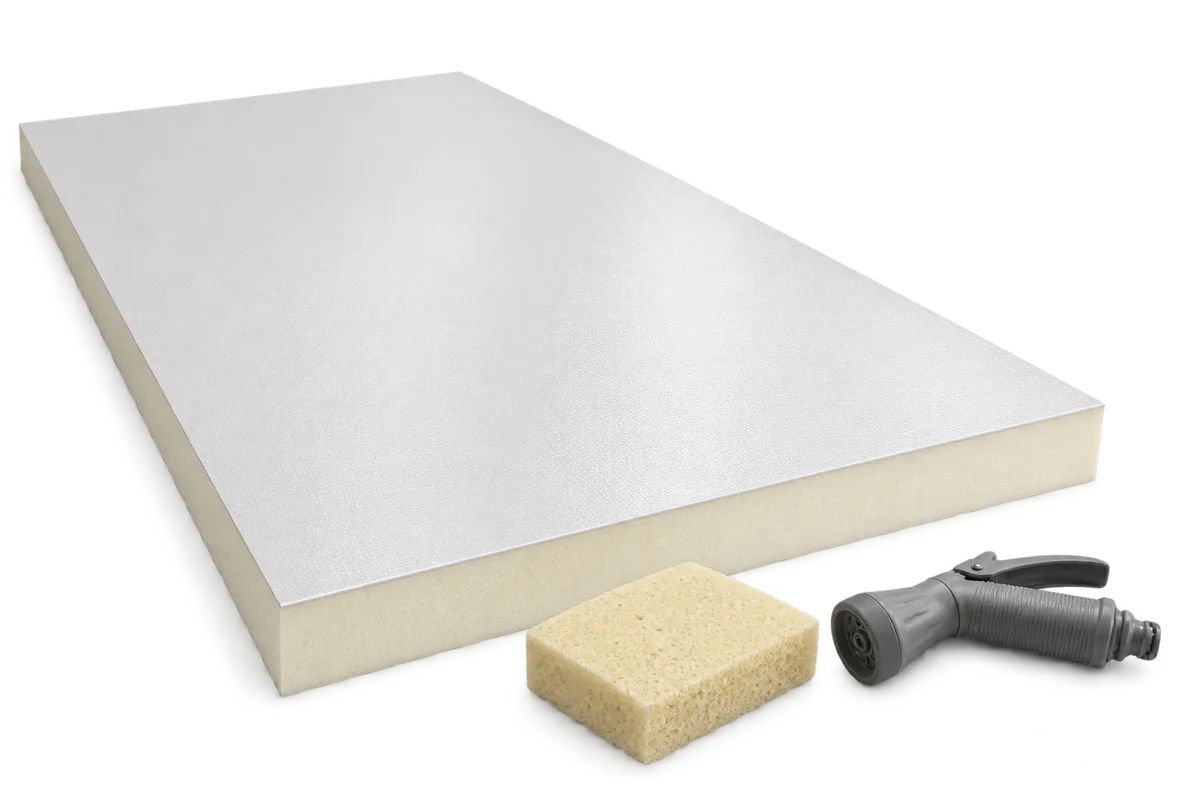
Cleaning a livestock building ceiling. What should you ask before buying panels?
Two ceiling panels can have the same thickness and a white underside yet require different care. When asking for a quotation, describe how the farm plans to wash the ceiling, what it currently uses to clean the room and how service penetrations are finished. Ask for an answer specific to the proposed facing and the joints in the completed ceiling. That makes quotes easier to compare and helps identify a purchase that would also require a change to the farm’s routine. Here is what to collect before ordering and what to hand over to the people responsible for the first clean.
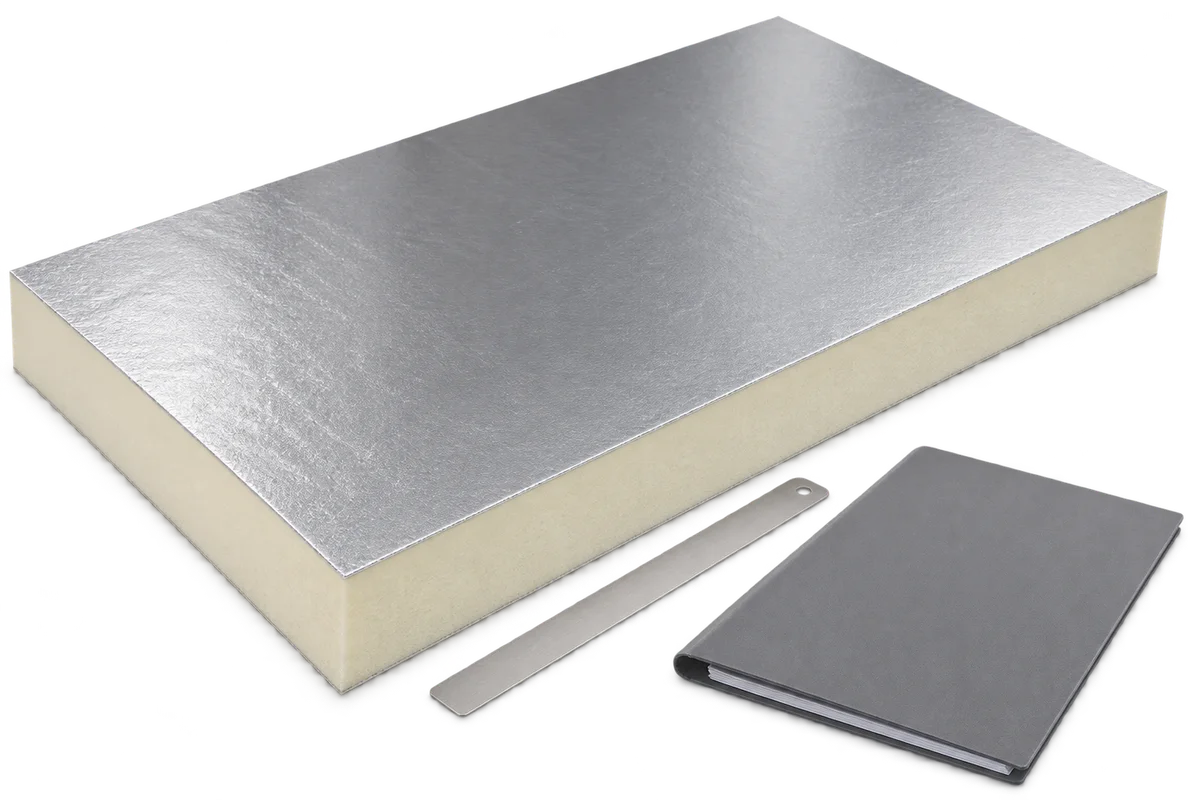
Why does a PIR board’s resistance table give a slightly different conductivity from its label?
A PIR board data sheet lists thickness, thermal resistance and declared conductivity. Divide thickness by resistance and the result may differ slightly from the label. That alone does not show an error or a loss of performance. The table reports numbers to a stated precision; reversing the calculation cannot recover digits that were never printed. Using one product as an example, we show how to check the units, select the right row and interpret the difference. We also explain why the number you obtain should not become a new design conductivity in your specification.