






Building academy
The Izoprofil.org building academy explains decisions made during construction and refurbishment. The articles start with the materials themselves, including sandwich panels, PIR insulation boards and profiled sheet metal. Learn the terms used in product descriptions and how several properties affect a complete assembly. Topics include thermal insulation, joints, moisture protection, roof coverings and purchasing. Each article includes a summary and contents to help you find the relevant detail. Use the guides alongside the drawings and product documentation for your own project.
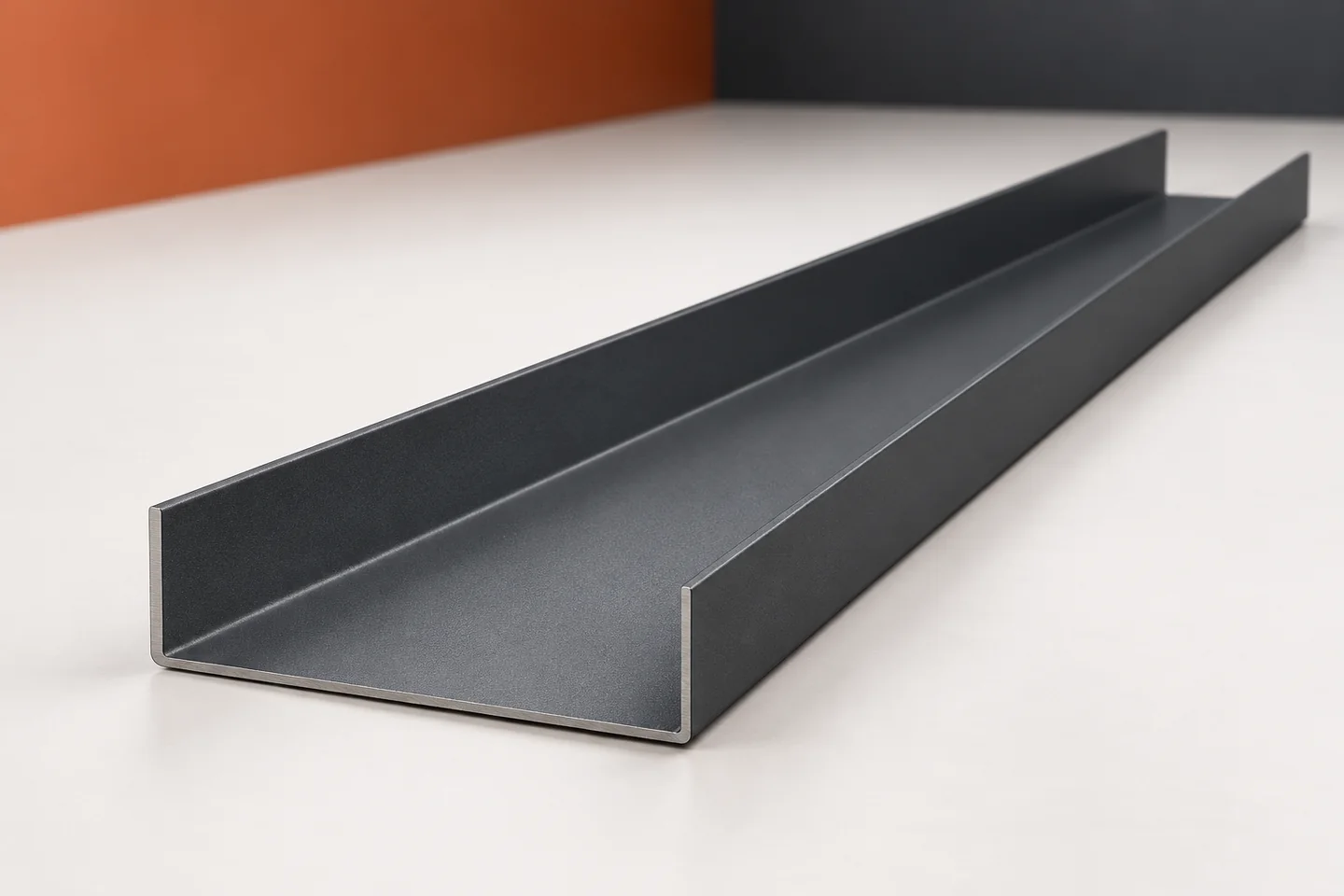
Starter profiles at the plinth: spotting defects at the foot of a wall
The lower edge of the wall cladding is where different materials and different tasks meet. The end of the cladding must be protected, water must be drained away and the continuity of seals must be maintained. Starter profiles bring order to this detail, but not every one of them carries the load of the panel. If there are streaks or gaps at the plinth, it is worth checking the whole assembly. Simply adding another trim may only hide the problem. Various cross-sections appear under the name starter profile. Some begin the installation of the cladding. Others cover the lower edge or form part of the connection to the plinth. Whether an element provides support is decided by the design. A thin masking trim does not become a load-bearing element merely because of its position.
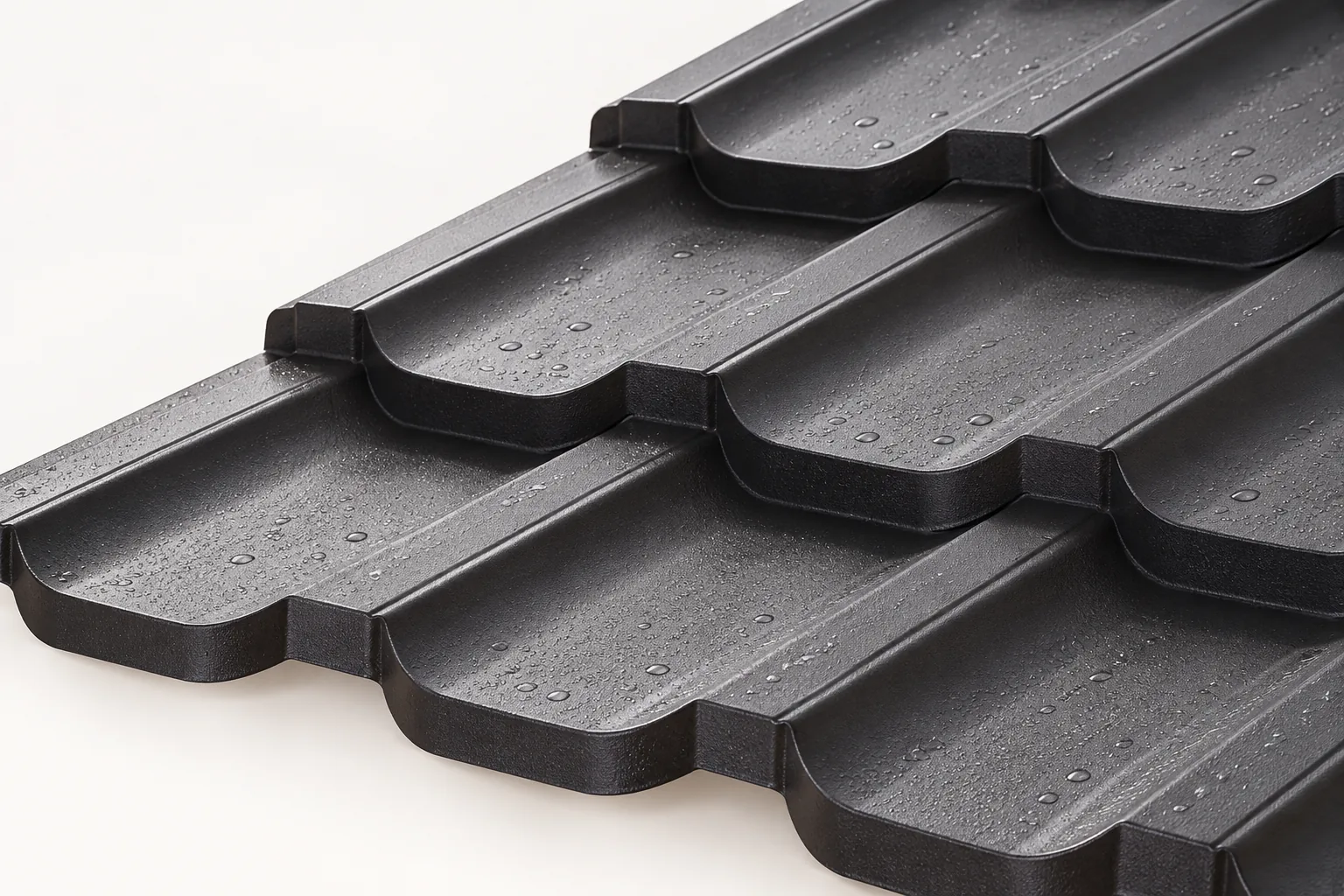
Inspecting a metal roof after the winter months
After winter, the key task on a metal roof is to establish whether there are signs of moisture and where they originate, rather than immediately tightening every screw. Assess the covering, flashings, gutters and equipment fixings from several sides in good light, using earlier photographs. Check for new stains in the attic, loose flashings, bent gutters and places where water changes direction. Note whether damp appears after rain, thaw or a frosty night — this helps diagnosis.
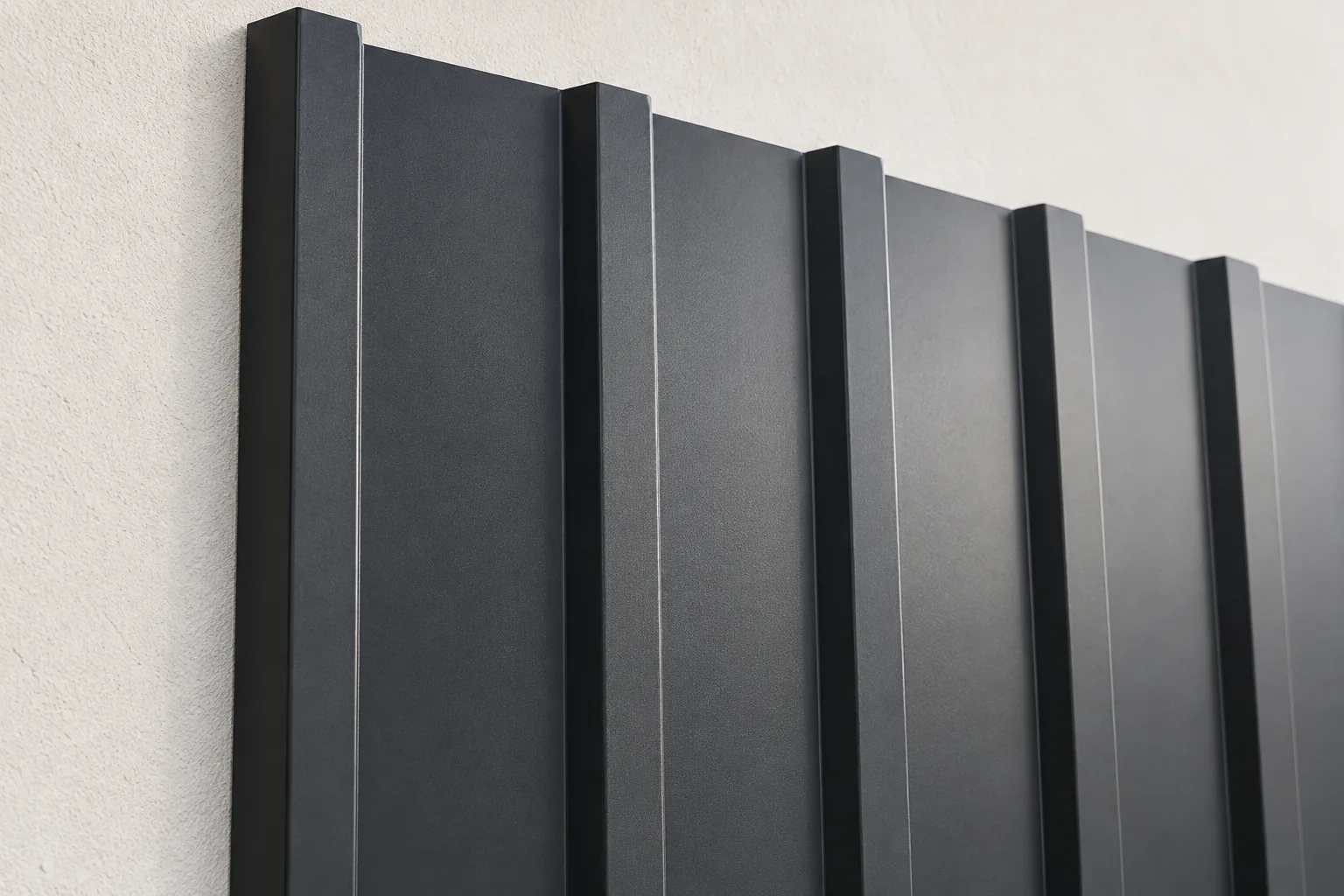
Façade cladding with trapezoidal sheets: choosing between T18 and T35
When choosing trapezoidal sheet for a façade, first establish what the product is intended for, how it will be supported and what wind load will apply. T18 gives a finer pattern, while T35 emphasises the profiling more strongly, but appearance alone is not enough. Check the technical data sheet and cross-section to identify the decorative-coated side and the effective width. Remember the corners, openings and the bottom edge of the wall. Specify the wall application, as similar designations may conceal a different lap arrangement.
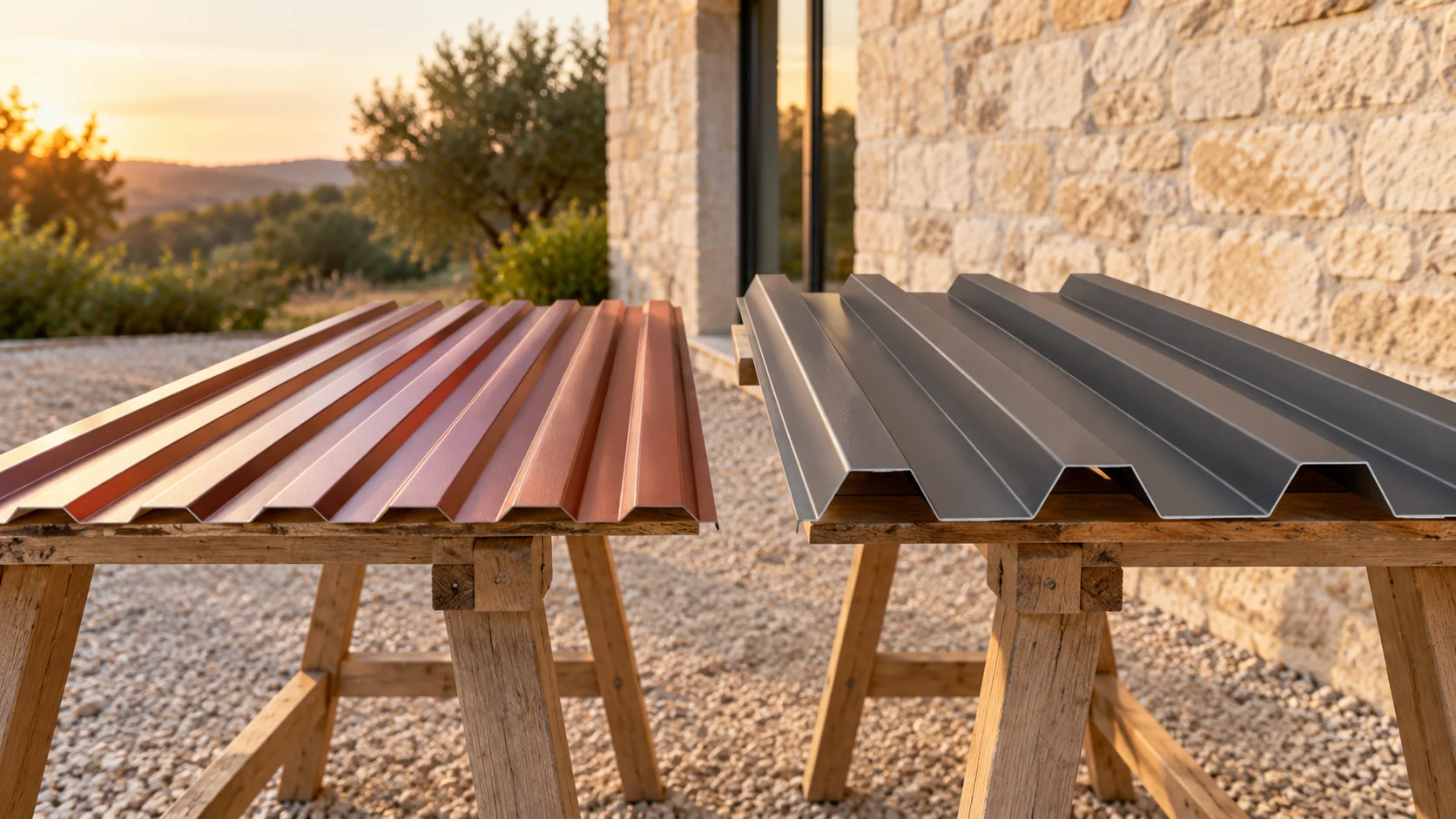
T18 or T35 for a sheet metal roof: when does the profile matter?
T18 and T35 differ in profile height, but the comparison does not end there. Cover widths, steel thickness and the arrangement of supports matter. In a small building, fit to openings and edges is also relevant. A taller profile should be assessed as a complete solution, together with the structure, flashings and intended use. In the examples considered, T18 has a profile height of 18 mm and T35 — 35 mm. A deeper rib affects the geometry and stiffness of the section. However, it does not automatically mean that every T35 variant outperforms every T18 in all applications.
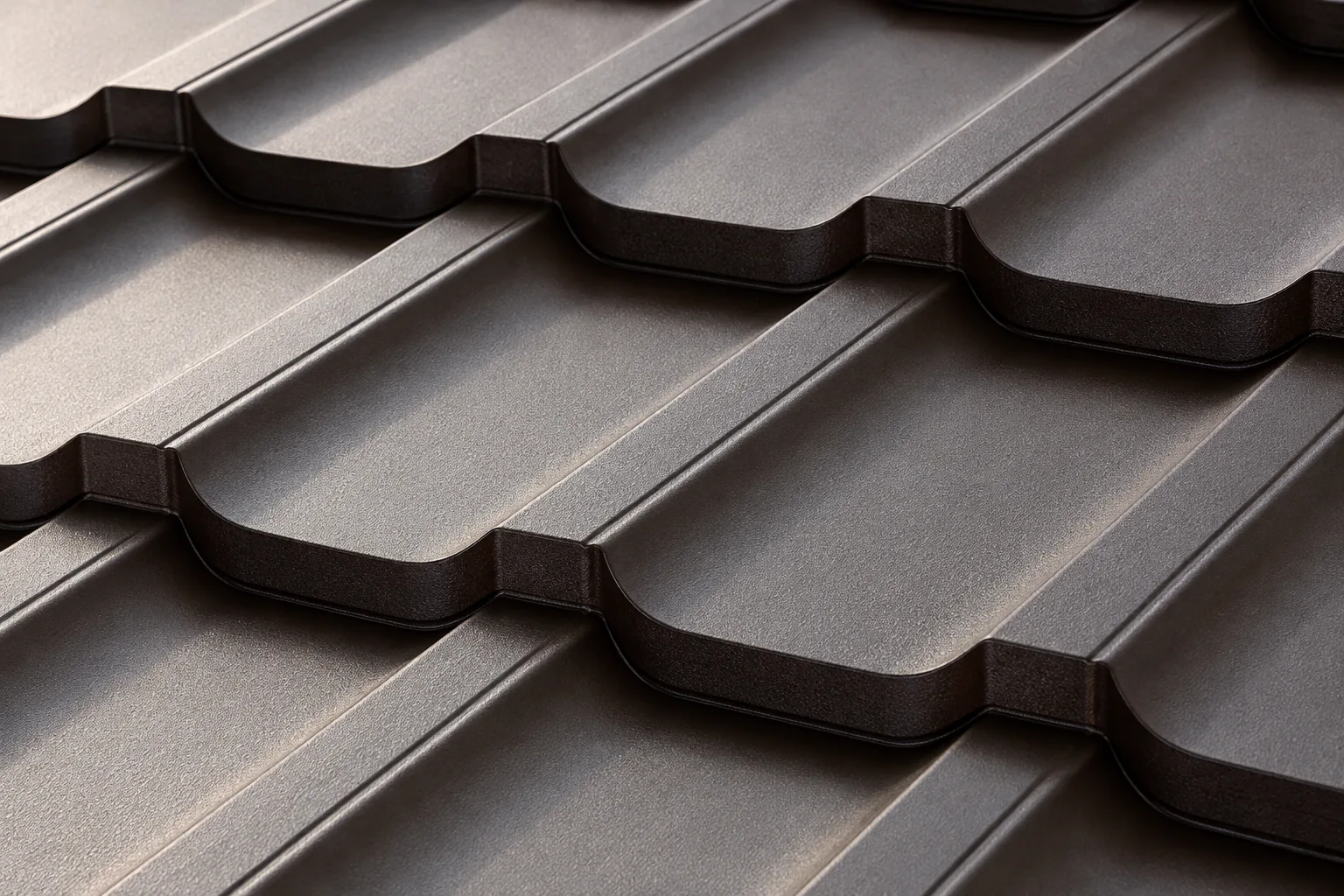
Tile-effect roof coatings: how finishes differ and how to choose
A metal roof tile coating is not a single layer of paint but a system of metallic protection and organic layers that shields the steel and gives the covering its colour. When choosing, check whether the declared properties match the building's actual surroundings, including moisture, salt and pollution. Corrosion resistance, sunlight resistance, damage resistance and the scope of the warranty are key. Gloss or colour alone does not determine protection, so compare the data sheet of the specific product rather than an entire material family.
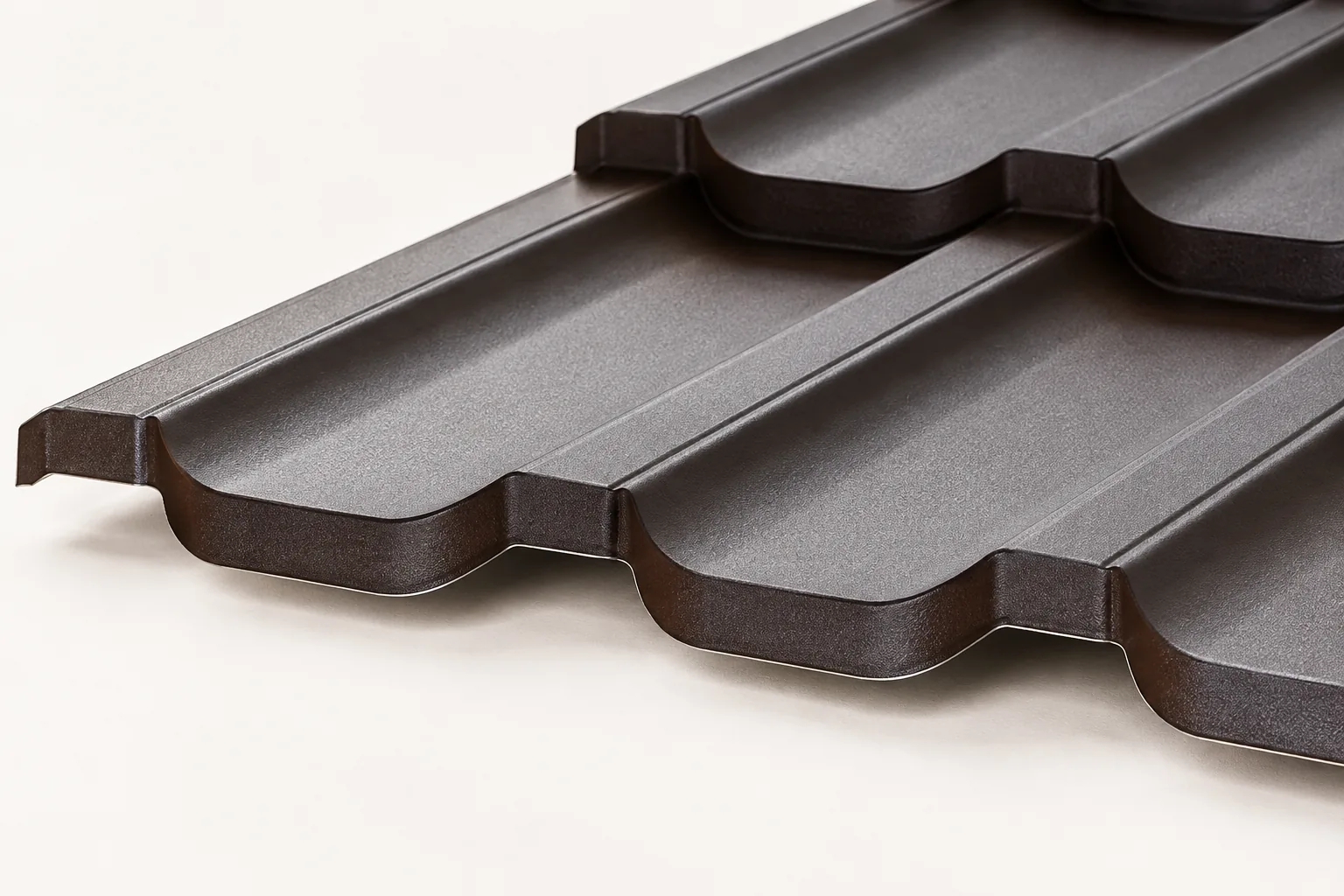
Which benefits of sheet metal roofing matter for your building?
In Poland, a metal sheet roof is worth considering when the covering's low weight, variety of appearance and efficient installation suit the requirements of a specific building. Check not only the advantages of the sheet itself but also the load capacity of the existing roof structure, acoustic requirements and protection against moisture. Tile-profile sheeting, trapezoidal sheeting and sandwich panels serve different purposes, and the final assessment should cover all layers of the building envelope. Leave the choice of product to the designer, who will match weight, geometry and details to the building's conditions.