Costs and formalities
Which benefits of sheet metal roofing matter for your building?
In brief
In Poland, a metal sheet roof is worth considering when the covering’s low weight, variety of appearance and efficient installation suit the requirements of a specific building. Check not only the advantages of the sheet itself but also the load capacity of the existing roof structure, acoustic requirements and protection against moisture. Tile-profile sheeting, trapezoidal sheeting and sandwich panels serve different purposes, and the final assessment should cover all layers of the building envelope. Leave the choice of product to the designer, who will match weight, geometry and details to the building’s conditions.
What does a low covering weight provide?
Thin steel sheet weighs less than many heavy coverings laid from individual elements. This can facilitate transport and reduce the dead load from the material itself. In renovation it is often a significant argument, particularly when the designer analyses the possibilities of the existing structure. The final assessment must, however, cover all layers.
Light sheet metal does not eliminate snow and wind loads. Nor does it allow checks of damaged timber or weak connections to be omitted. In a new building the structure is selected for the complete roof assembly. The benefit of low mass is real, but it does not mean arbitrary lightening of the truss.
Why can large elements speed up work?
A trapezoidal sheet or tile-effect metal roofing cut to size covers a relatively large part of the roof slope. On a simple roof it can reduce the number of operations involved in handing up and positioning elements. Smaller modular panels, in turn, make work on a complex roof shape easier. The choice of format allows the organisation of works to be adapted.
The pace also depends on the details. Chimneys, roof valleys and penetrations require careful execution regardless of sheet size. A long element needs suitable equipment and a method of lifting. Fast installation should not mean omitting checks of geometry, seals or the layers beneath the covering.
What possibilities does the choice of profile and colour offer?
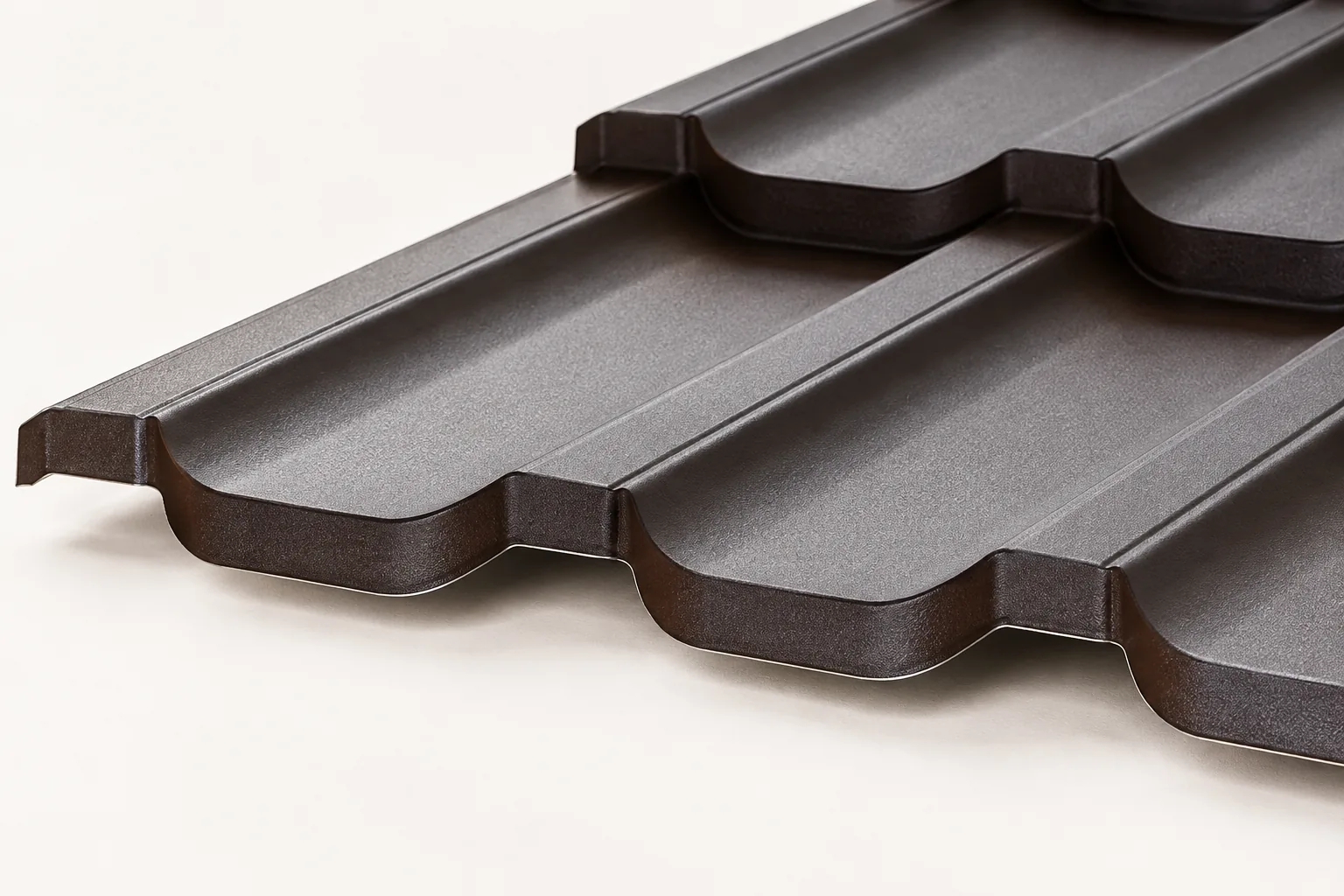
Tile-effect metal roofing can create a corrugated or calmer pattern with regular steps. T18 and T35 give a linear arrangement of trapezoids. The textures and degrees of gloss also differ. This allows the metal covering to be matched to a traditional house, a simple shape or a commercial building.
Aesthetics should be combined with technical aspects. Colour does not indicate corrosion resistance, and the profile name does not define the entire geometry. A sample must be compared with the façade and joinery, and the parameters checked separately. This approach allows the appearance to be chosen without giving up proper protection of the material.

Can a metal roof be warm and quiet?
It can provide comfort if the entire building envelope has been correctly designed. Thin sheet metal alone does not provide thermal insulation and is not sufficient for sound attenuation. In a house, insulation, air tightness, internal linings and details matter. The properties of the entire roof must not be attributed to the covering alone.
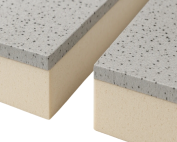
A roof sandwich panel combines facings with an insulating core and forms a different arrangement from a single sheet. Its thermal and acoustic parameters depend on the specific variant. Not every panel will provide the required comfort in every building. Joints, thermal bridges and fire requirements must be taken into account.
What speaks in favour of durability and repairability?
Steel is protected by appropriate coatings. Their selection for the environment and careful installation help preserve the properties over a long period. Sheets should be cut with the correct tools and swarf removed. Particular attention is required at edges, flashings and fixing points, where local damage can easily occur.
In many arrangements, a detail can be repaired or part of the covering replaced. The scope depends on the construction of the joints and the availability of material. A new section may differ in shade from the older roof area. It is therefore worth keeping product markings and photographs of the installation. This makes it easier to select components and identify the source of a leak.
When will the advantages of sheet metal be best utilised?
When the material is selected for the building’s function, not just the price per metre. A simple canopy roof may require T18 or T35 without the arrangement appropriate for a heated attic. A house needs a complete building envelope with insulation. A hall may use a sandwich panel or a roof based on structural trapezoidal steel sheet.
Before choosing, compare complete solutions with the same function. Include supports, layers, flashings, fixings and labour. The advantage of metal is the wide range of possibilities, but each variant requires its own design. The best result comes from using the right product in the right place.
It is also worth considering the later roof equipment. Photovoltaics, ventilation devices and service access affect loads and details. Planning them before installation reduces the number of additional openings and modifications. This makes it easier to preserve the benefits of a simple, lightweight covering during use.
7 branches. Materials closer to your project.

- SEROCK — Dzierżenin 34 E
- BŁONIE — ul. Sochaczewska 138A
- RADOM — ul. Grobickiego 8
- ŁÓDŹ — Natolin 8
- OLSZTYN — Barczewo, ul. Prosta 9
- WROCŁAW — ul. Jerzmanowska 10C
- GORZÓW WLKP. — ul. Zielona 33/34