Metal sheet coverings
Which standing seam should you choose: single-locked, double-locked or click-fit?
In brief
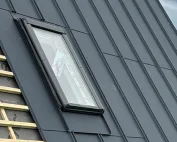
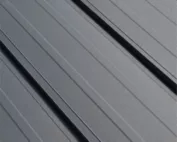
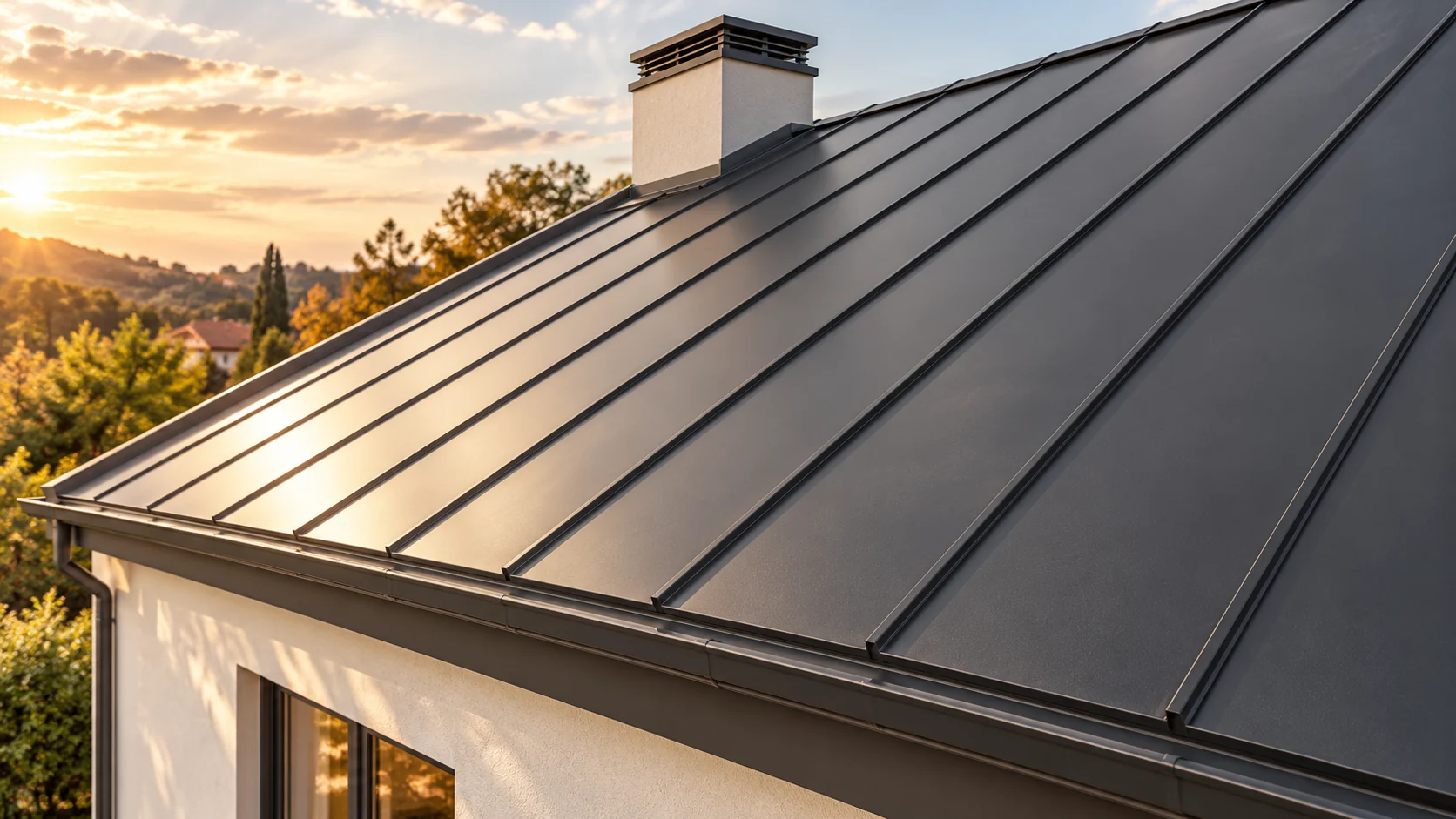
A standing seam describes the way the sheet metal joint is formed. However, this name covers various solutions. A traditional seam locked on site is not the same as a factory-made click-fit panel. The differences affect the execution of details, thermal movement and the permissible pitch. The choice should not be reduced to the appearance of the vertical line on the roof slope. In traditional covering, the edges are appropriately profiled and locked into a joint. A double seam has an additional fold compared with a single seam. This changes the path that water would have to take. However, tightness also depends on the accuracy of execution, the substrate and the details used. The name alone is not a guarantee of a tight roof.
What distinguishes a single seam from a double seam?
A single standing seam is sometimes used in solutions with different requirements than a double one. They should not be swapped without checking the system. The sheet material, its thickness and the intended surface matter. Roof, façade and flashings have different working conditions. The tools and the sequence for closing the joint must also be matched to the material.
How does the factory click-fit work?
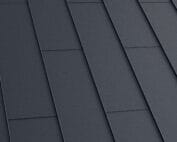
A click panel has edges formed so that they connect by snapping shut. The geometry of the lock is part of a specific product. It cannot be assumed that panels of similar width will connect to one another. Variants differ in seam height, fixing method and the detail at the eaves and ridge.
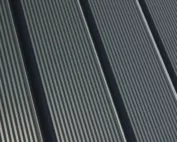
Factory profiling can simplify some work on the roof slope. It does not, however, remove the need for careful preparation of the substrate. Unevenness quickly becomes visible on wide flat fields. A panel may also have additional ribs that limit the visibility of deformation. This is a feature of the appearance and behaviour of the sheet, not a reason to disregard the rules of support.
Why is there no single minimum pitch value?
Different systems have different limits. The type of lock, the length of the panels, the transverse connections and the number of penetrations matter. The minimum pitch given for one traditional solution does not automatically apply to a click panel. Degrees must also not be equated with percentage of slope.
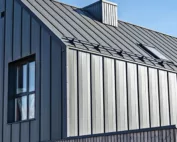
On a small building with a calm form, it is easy to plan long fields without transverse connections. With dormers and chimneys, the situation changes. Details can impose additional requirements. The pitch is therefore checked for the whole roof, with its actual obstacles. If the design leaves only a small margin, the accuracy of the substrate becomes particularly important.
How does the fixing allow the sheet metal to change length?
The covering heats up and cools down. The system must provide for how these changes are accommodated. Traditional solutions may use appropriately selected clips, while snap panels use their own fixing zones. The details depend on the product. Not every standing seam roof should be presented as fixed with identical clips.
A screw in the wrong position or an overly rigid closure at the end of the panel can restrict movement. The result may be surface deformation or overloading of the joint. A correct detail accounts for fixed points and allows movement where it is needed. Accidental drilling through the visible field changes the way the system works and the path of water ingress.

What affects the price and quality of workmanship?
Traditional seaming requires appropriate skills and tools. The snap-lock reduces part of the work involved in forming the joint. This does not mean that every snap-lock roof will be cheaper. The cost depends on the substrate, the number of details, the material and access to the roof area. A simple surface and a roof with many penetrations are different tasks.
In the quote, it is worth separating substrate preparation, laying of the covering and execution of flashings. Also ask about the separating layer and ventilation if the system provides for them. Omitting these items can create an apparent saving. The contractor should know the specific system, not just the general name of the technology.
How to compare solutions before making a final decision?
Combine pitch, substrate, type of steel sheet, method of fixing and edge details. Look at a sample of a finished joint. Pay attention to the width of the flat field and its appearance in light. Slight waviness of thin sheet metal may be a characteristic of the surface, but it does not exempt you from assessing whether the installation is correct.
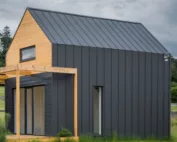
For a small pavilion, choose a solution consistent with a simple form and the expected roof maintenance. For a house with an attic, additionally compare the full thermal and acoustic build-up. Ultimately, a good choice is one that can be correctly executed on this specific structure and later safely inspected.
What else is worth asking about
Is a double standing seam always the best?
There is no single answer for all roofs. Material, pitch, substrate, details and the scope of the given system must be taken into account.
Can a snap-lock panel be combined with traditional steel sheet?
Not by randomly matching the edges. The junction of different solutions requires a designed detail and material compatibility.
7 branches. Materials closer to your project.

- SEROCK — Dzierżenin 34 E
- BŁONIE — ul. Sochaczewska 138A
- RADOM — ul. Grobickiego 8
- ŁÓDŹ — Natolin 8
- OLSZTYN — Barczewo, ul. Prosta 9
- WROCŁAW — ul. Jerzmanowska 10C
- GORZÓW WLKP. — ul. Zielona 33/34