






Building academy
The Izoprofil.org building academy explains decisions made during construction and refurbishment. The articles start with the materials themselves, including sandwich panels, PIR insulation boards and profiled sheet metal. Learn the terms used in product descriptions and how several properties affect a complete assembly. Topics include thermal insulation, joints, moisture protection, roof coverings and purchasing. Each article includes a summary and contents to help you find the relevant detail. Use the guides alongside the drawings and product documentation for your own project.
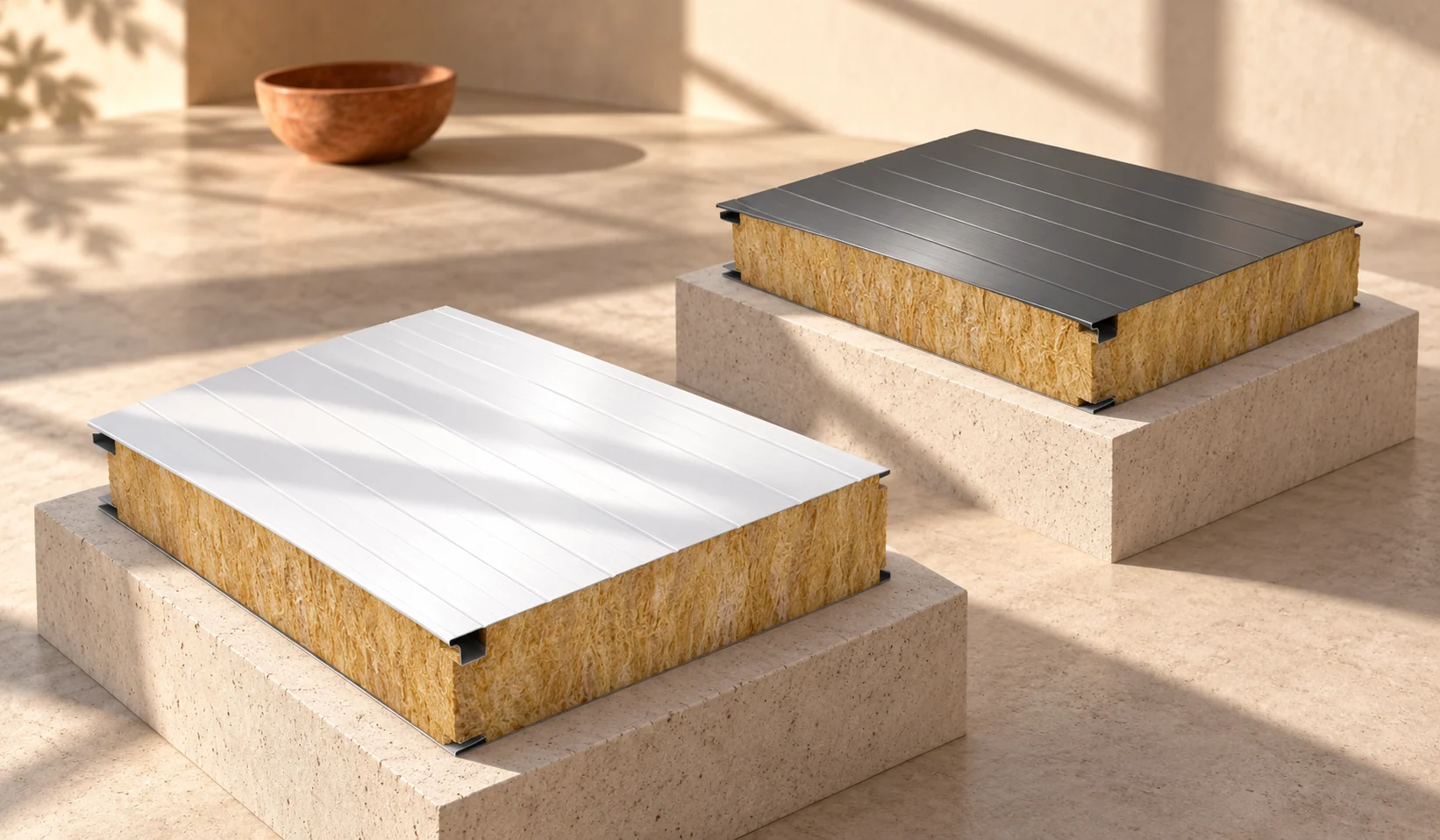
How do you compare two variants of insulated wall panels with a mineral wool core?
Similar thickness and white colour do not mean that two panels with mineral wool are interchangeable. The core density, the sheet thickness and the fixing method may differ. In a small pavilion, these features affect transport, wall performance and cost. It is worth starting the comparison with a single technical table and only then moving on to price. Terms suggesting a basic or reinforced version are offer names. They do not form a common scale for the whole market. One variant may have a lighter core, another different facings or concealed fixing. Without data, it is difficult to tell what change lies behind the name and whether it is needed in a given building.
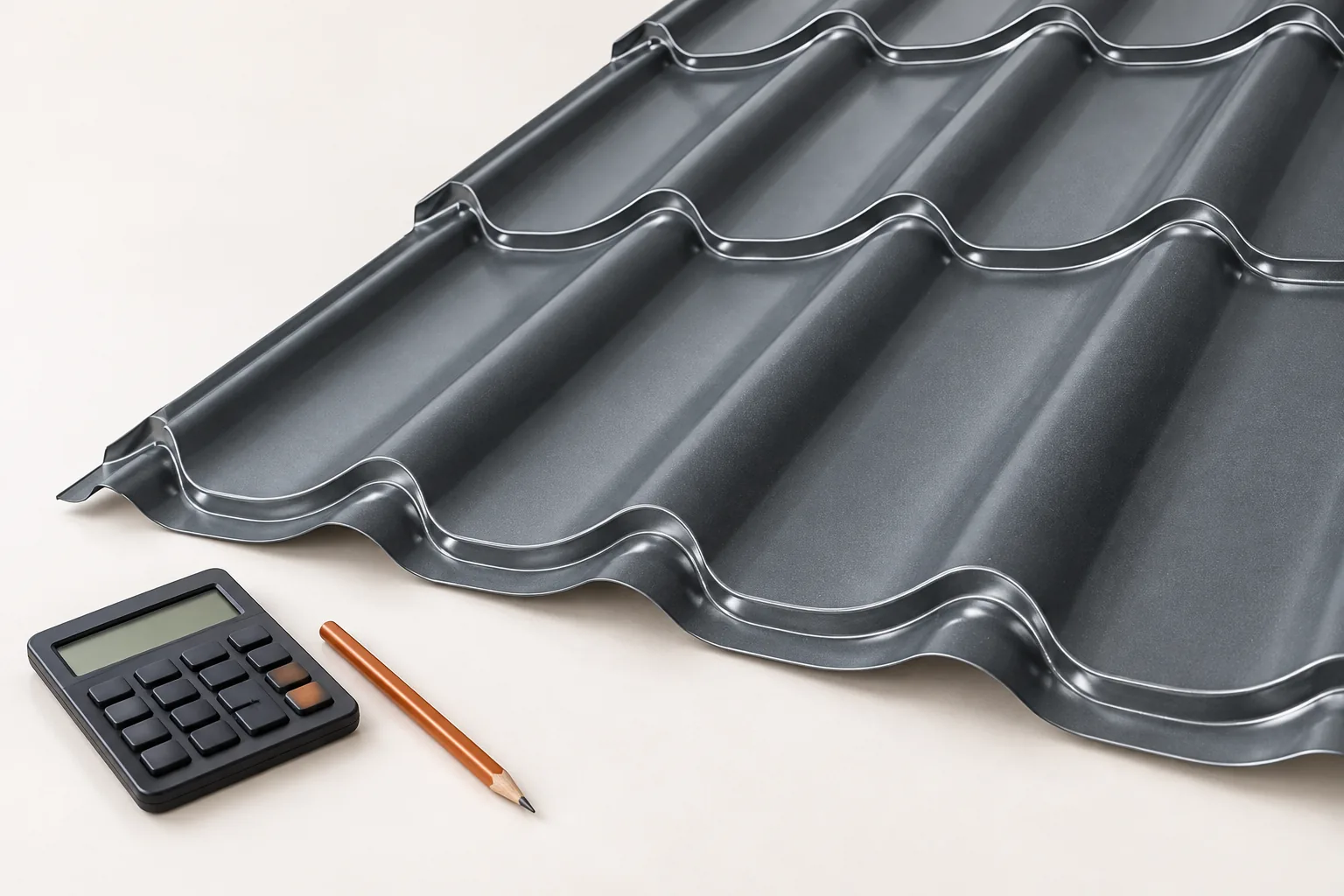
Calculating the full cost of a roof, from covering to installation
In Poland, the full cost of a roof must be calculated from the actual roof surface, not from the building's footprint. Check whether the quote separates covering, structure, flashings, drainage and labour, and whether it states the billing unit. For cut sheet metal tiles, the cutting plan is key; for modular ones, the number of panels and the usable area per element. Instead of assuming a single waste percentage, base it on roof geometry and laying direction. Compare prices per square metre of covering, because a sheet also has an overall width.
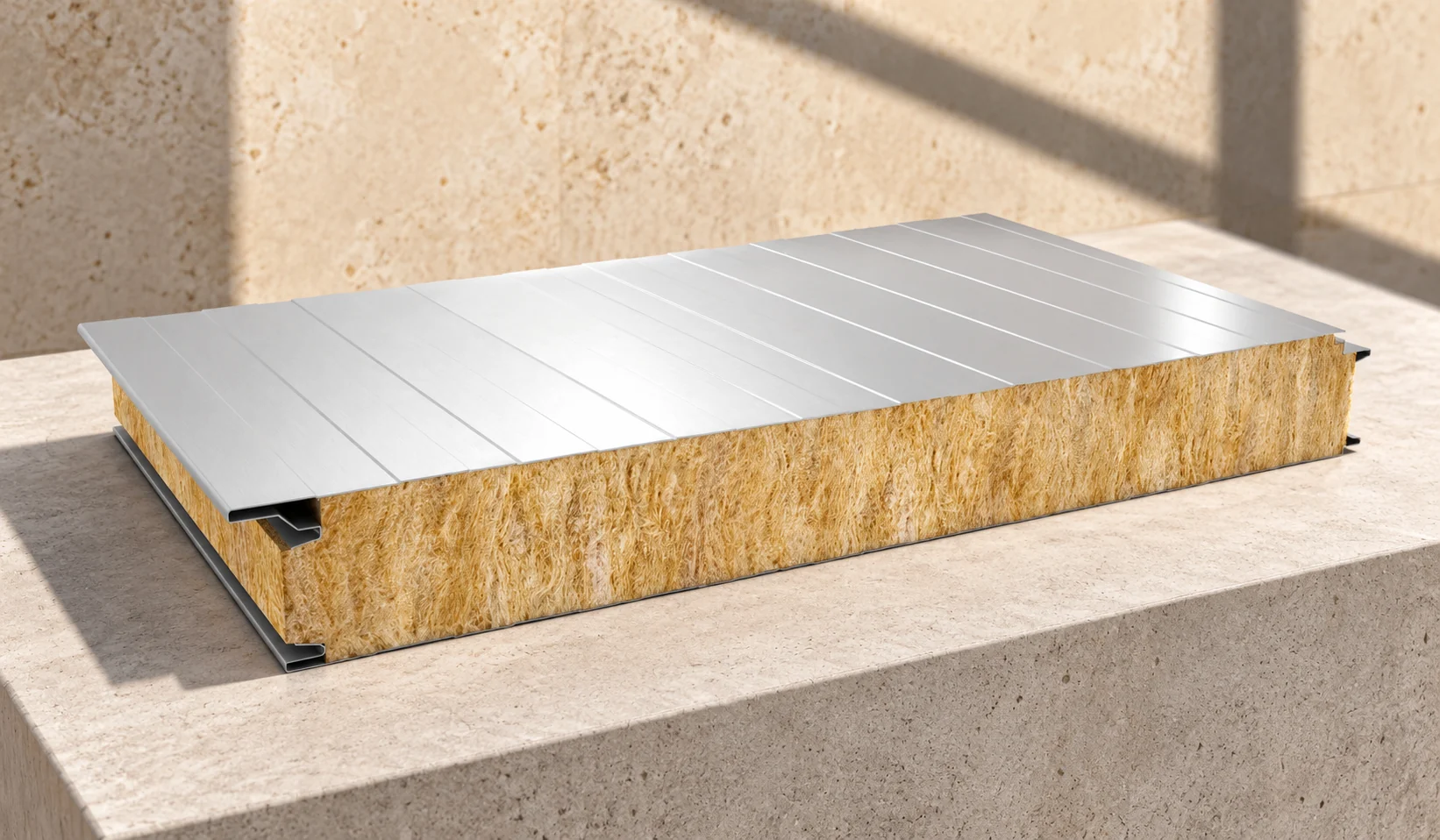
What changes when switching to wall panels with 150 and 200 mm mineral wool?
A thicker core can improve the thermal insulation of a mineral wool panel. However, it does not automatically mean the highest fire class or the best solution for every building. With 150 and 200 mm, weight, fixings and details must also be checked. The choice makes sense when the greater thickness helps achieve a specific project goal. In one family of mineral wool wall panels, the 150 mm variant has a Uc of 0.27 W/(m²·K), and the 200 mm variant 0.20. Both have 0.5/0.5 mm facings and a defined core construction. These are data for this family, not values for all panels of these thicknesses. Before comparing, the conformity of the variants must be confirmed.
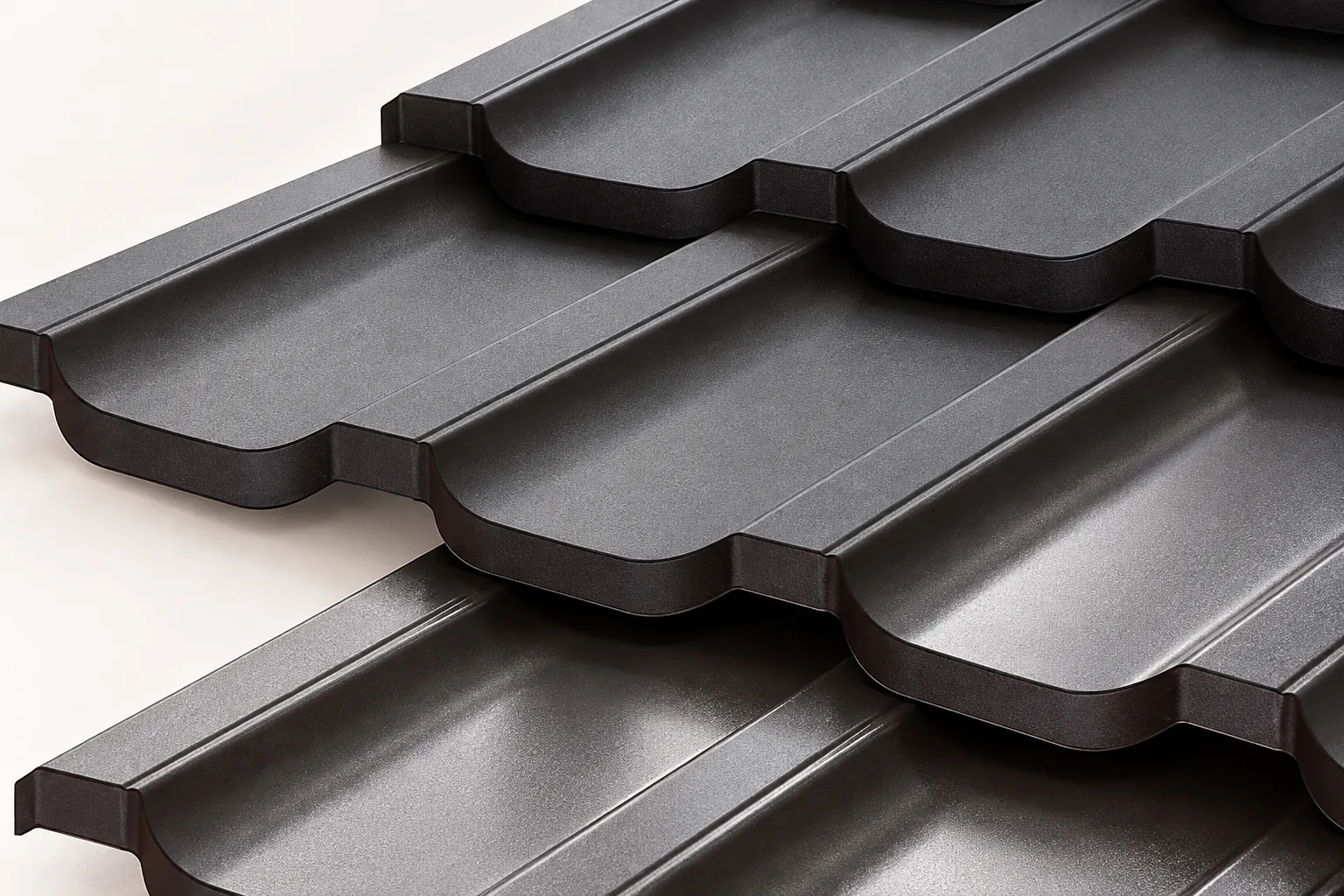
Choosing a matt or gloss finish for tile-effect roofing
In Poland, the choice between matt and glossy coated steel roofing sheets comes down to the desired visual effect, the parameters of the specific coating and the price of the complete covering. It is worth checking the type of metallic protection, the thickness of the organic coating and the warranty terms, including their scope for appearance and perforation. A sample should be viewed in daylight and compared with the façade, bearing in mind that the difference becomes more pronounced on a large roof slope. The degree of gloss alone does not determine durability – the entire coating system and the service environment govern steel protection.
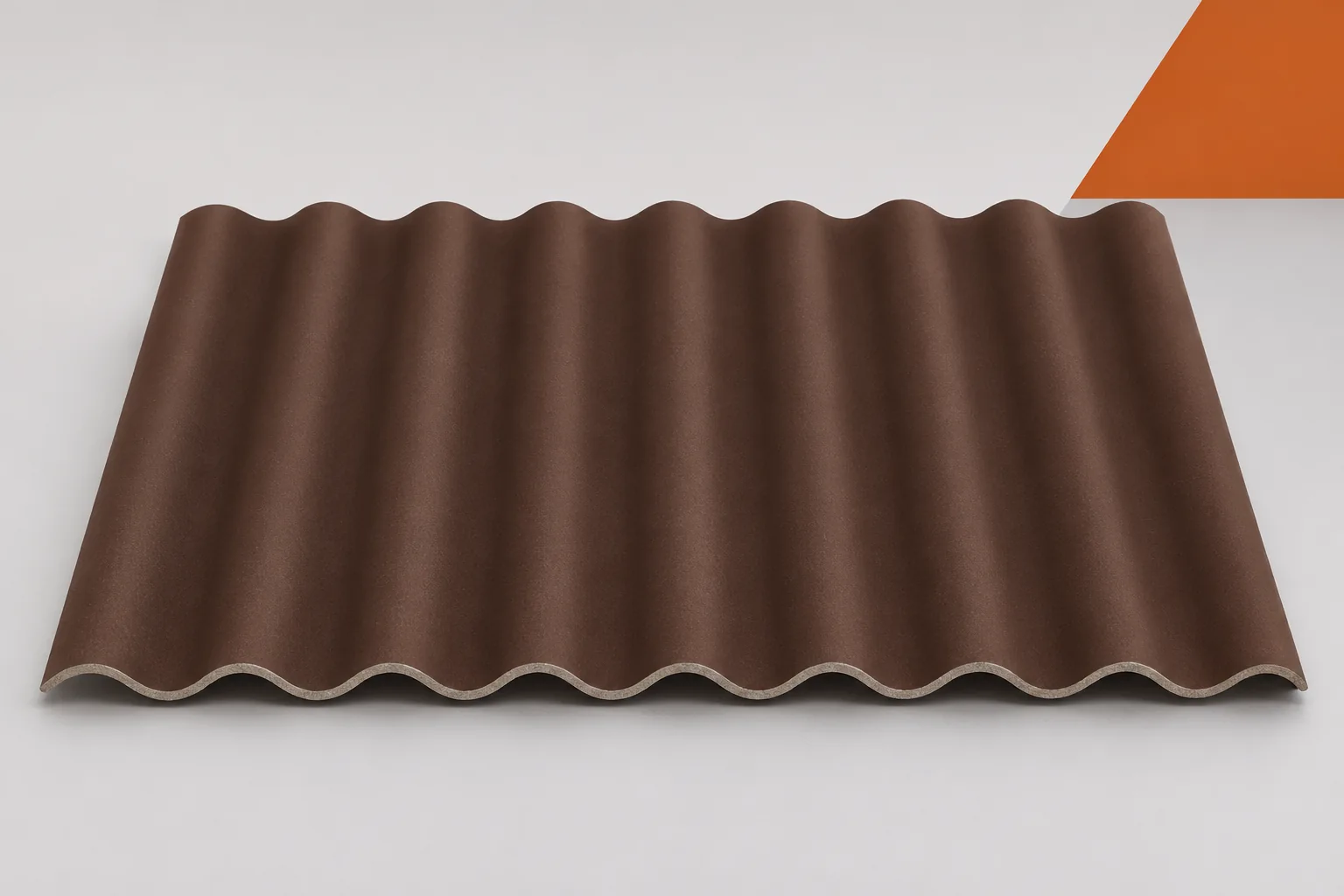
Can new corrugated sheets use the existing batten spacing?
Retaining the battens can reduce the cost and time of the renovation. However, it should not be an assumption made before choosing the system. Corrugated fibre cement sheets have specified working lengths and support requirements. Asbestos-free fibre cement will not automatically adapt to the spacing of the previous covering. The geometry, the condition of the structure and the possibility of proper fixing must all be checked at the same time. Only then is it clear which elements are actually worth keeping. The batten spacing may vary at the eaves, ridge and previous repairs. In an older roof, individual rows are also often uneven. The measurement should therefore cover the entire roof slope and special locations. Both the distances and the cross-sections and levels of the supports are important.
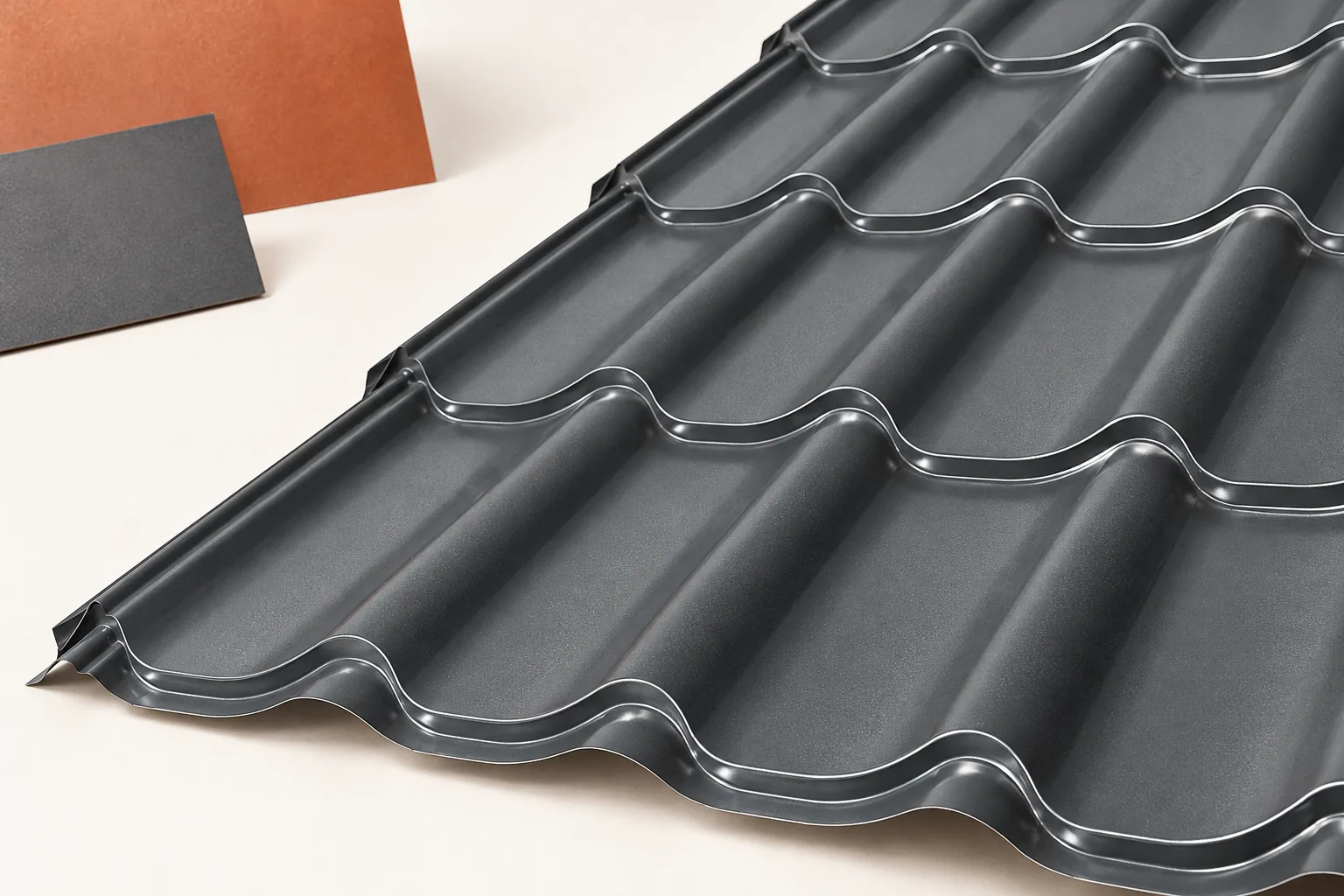
How to compare roofing materials for your building
The choice of roofing is driven primarily by the building's purpose and the roof geometry, not by the material's appearance alone. It is worth checking whether the offers being compared cover a complete assembly: covering, substrate, fixings and flashings, and for an insulated roof also the insulation and sealing layers. For metal roof tiles, the roof layout and the number of cuts are decisive in choosing between cut-to-size versions and modules. For trapezoidal sheet and sandwich panels, the requirements for the specific profile and application must be established.