






Building academy
The Izoprofil.org building academy explains decisions made during construction and refurbishment. The articles start with the materials themselves, including sandwich panels, PIR insulation boards and profiled sheet metal. Learn the terms used in product descriptions and how several properties affect a complete assembly. Topics include thermal insulation, joints, moisture protection, roof coverings and purchasing. Each article includes a summary and contents to help you find the relevant detail. Use the guides alongside the drawings and product documentation for your own project.
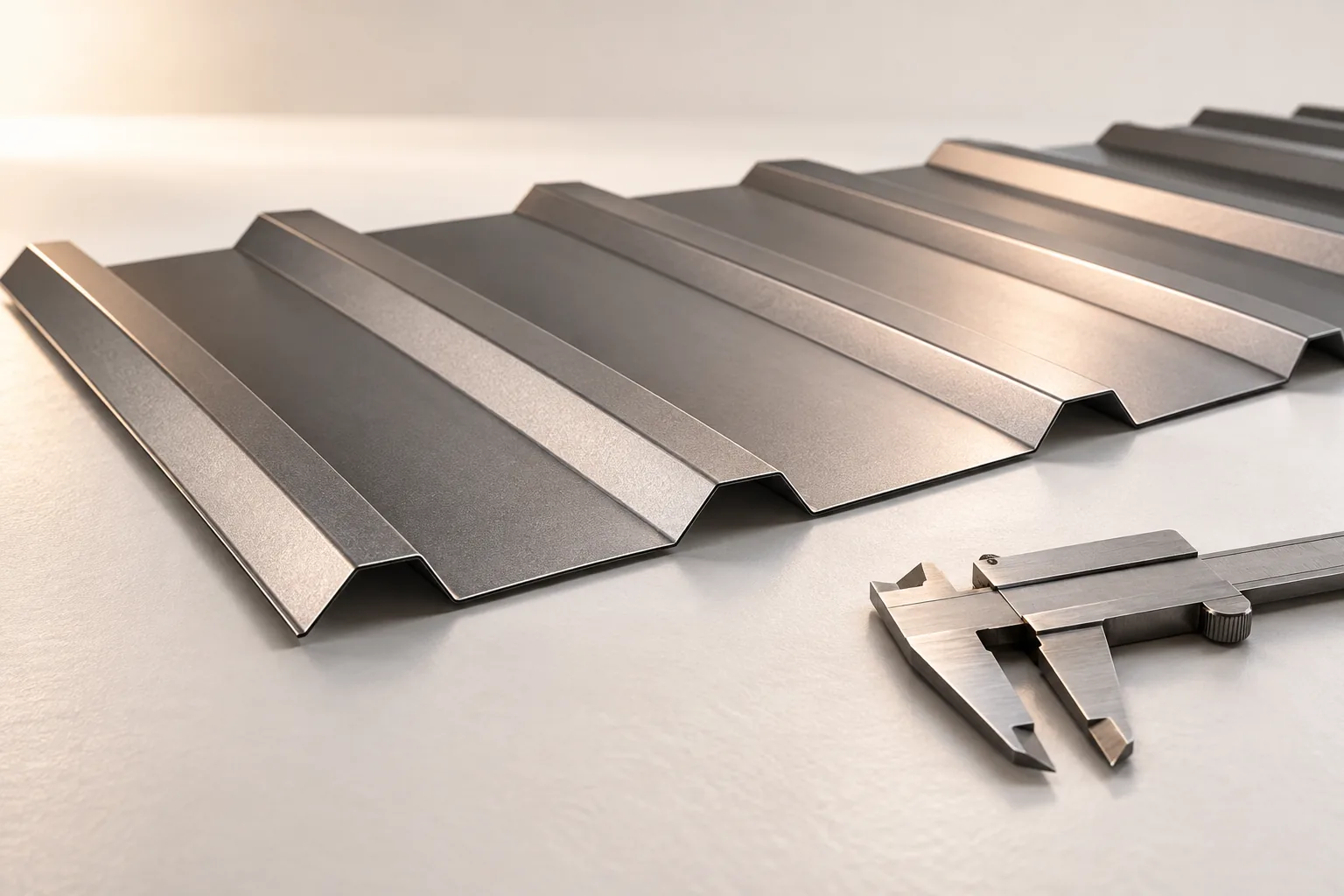
Reading the markings on trapezoidal steel sheets
In Poland, a trapezoidal sheet designation helps identify the profile family but does not replace the technical data sheet. The letter T indicates a trapezoidal profile, and the number usually refers to the height of the corrugation; the symbol alone is not an exact drawing of the product, as different catalogues may use similar names for different geometries. Before ordering, check the thickness, cover width, length and type of coating, as well as the actual dimension on the cross-section – even within the T18 family. These data determine whether the sheet fits the roof or façade.
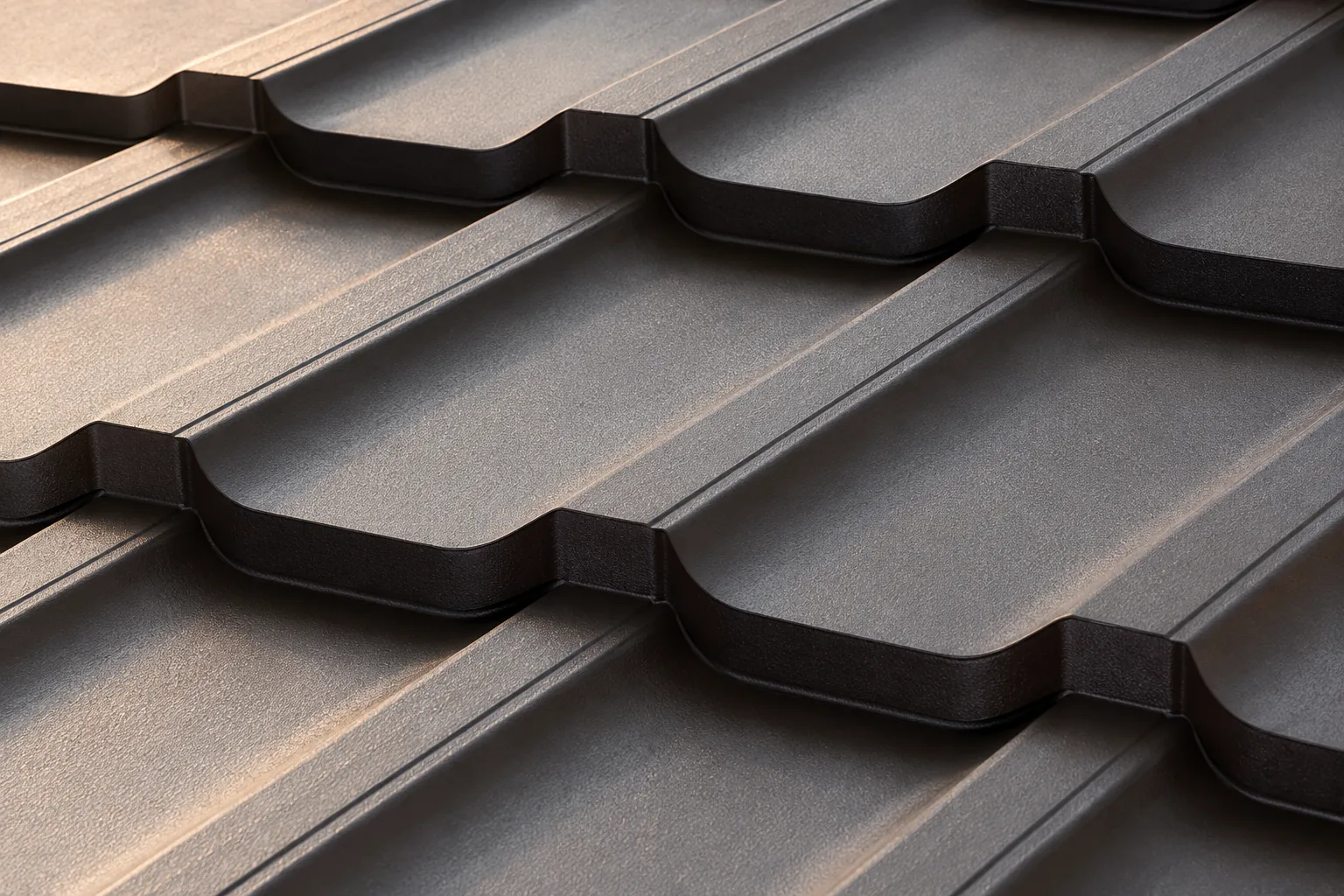
How many years can a tile-effect metal roof last?
In Poland, the service life of a blachodachówka roof depends on several variables rather than a single figure. Instead of looking for a universal term, check whether the chosen steel and its protection suit the environment in which the roof will operate. In the coating documentation, compare the type of metallic and organic protection and the intended use of the variant. Warranty periods may differ for perforation, adhesion and appearance, so their length does not set the replacement date. Read the full terms, including environmental exclusions and inspection duties.
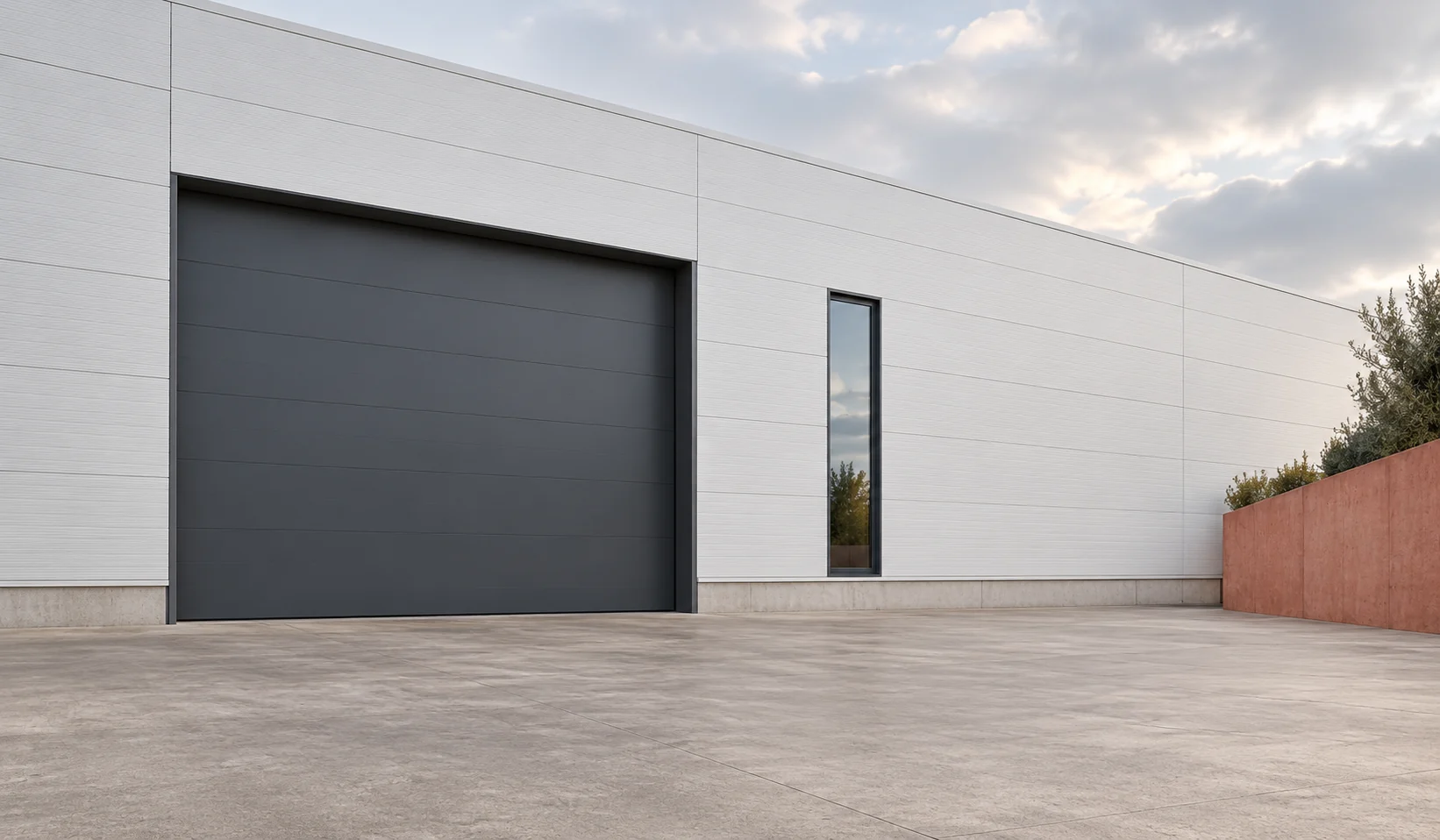
Does the whole panel with mineral wool have class A1, or does A2 need to be checked?
A mineral core alone is not enough to assign class A1 to the whole panel. The adhesive and facings must also be assessed. For many complete insulated wall panels with a mineral wool core, class A2-s1,d0 is declared. This must be distinguished from the fire resistance of the finished wall. This information describes different material behaviour and the two cannot be substituted for each other. Reaction to fire describes the product's contribution to fire development under specified test conditions. The classification is read for the specified product. In a sandwich panel, that product is the element with core, adhesive and facings. The parameter of the mineral wool alone is not automatically the parameter of such an assembly.
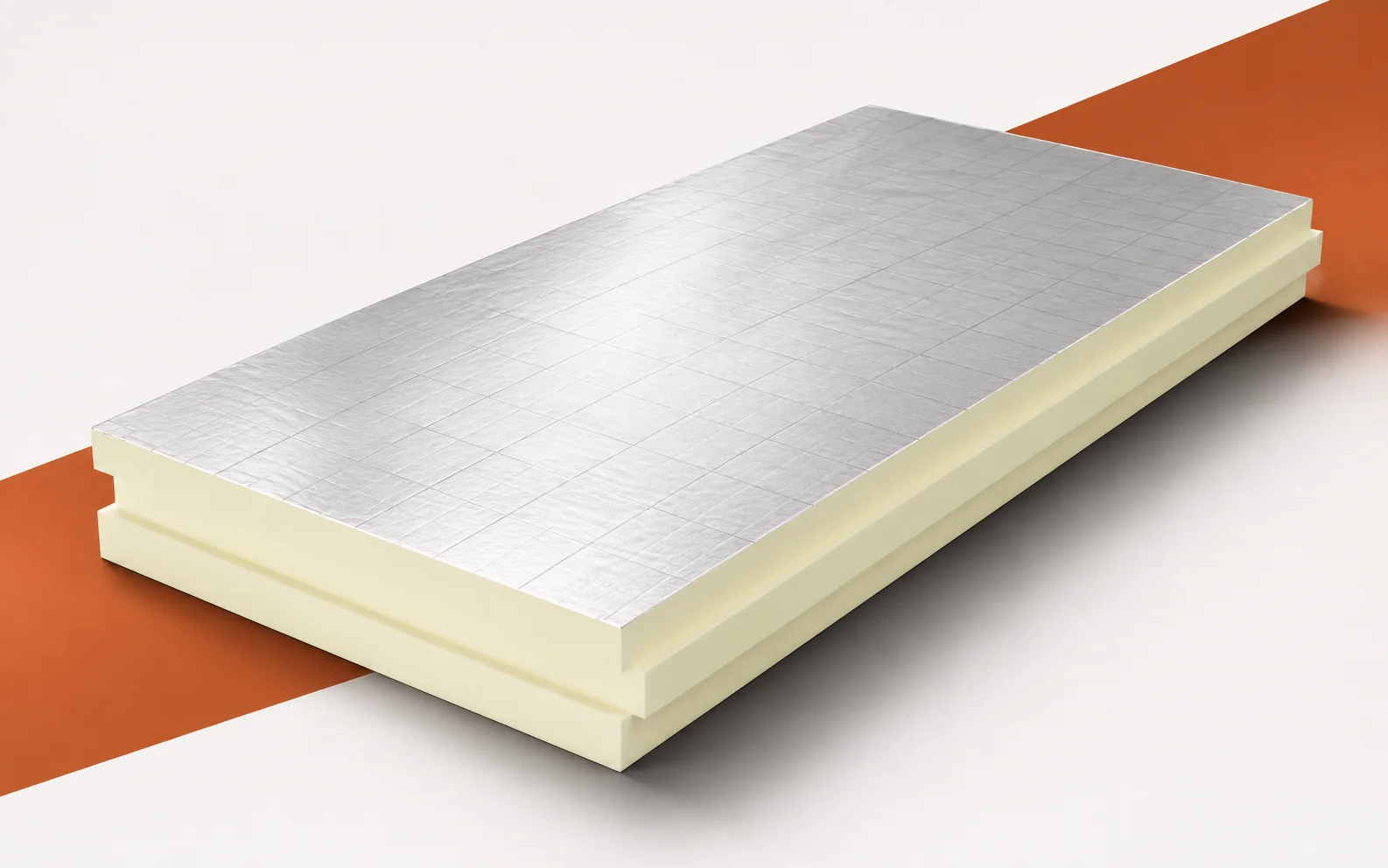
PIR, PUR and polyurethane boards: making sense of insulation names
PIR and PUR are sometimes used in conversation as if they meant exactly the same thing. However, this simplification makes choosing insulation more difficult. It is worth separating the name of the material, the product form and the method of installation. This makes it easier to check which promises apply to the board being purchased. PIR means rigid polyisocyanurate foam. It belongs to the polyurethane family of materials, but it is not just any foam sold under the abbreviation PUR. In thermal insulation boards, the core is produced in the factory. It is given a specific thickness and works together with the facing selected for the given product. The term polyurethane foam does not yet indicate whether the material was produced as a finished board or will be made on site.
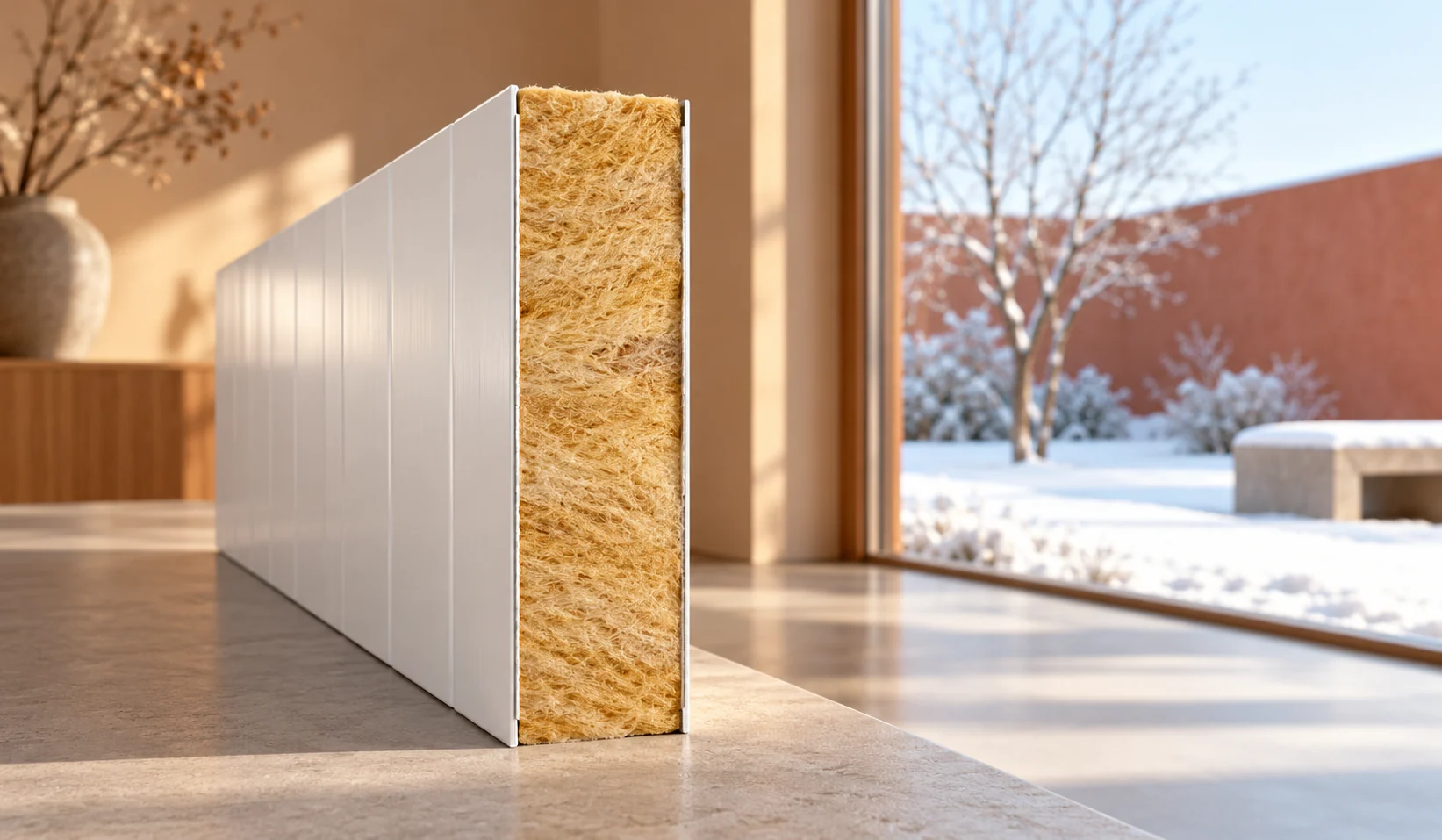
How to read the U-value and lambda of an insulated panel without confusing the two parameters?
Lambda describes heat conduction through a material. The U-value relates to the element or building component under consideration. In a sandwich panel, these quantities should not be used interchangeably. Selecting the thickness requires checking the parameter of the finished variant and the joints in the building. Below we show what can really be inferred from a catalogue figure. Lambda, written as λ, expresses a material's ability to conduct heat. It is given in W/(m·K). A lower value means greater resistance of a layer of the same thickness. However, it does not describe the entire panel with its facings, joint and surface heat transfer conditions.
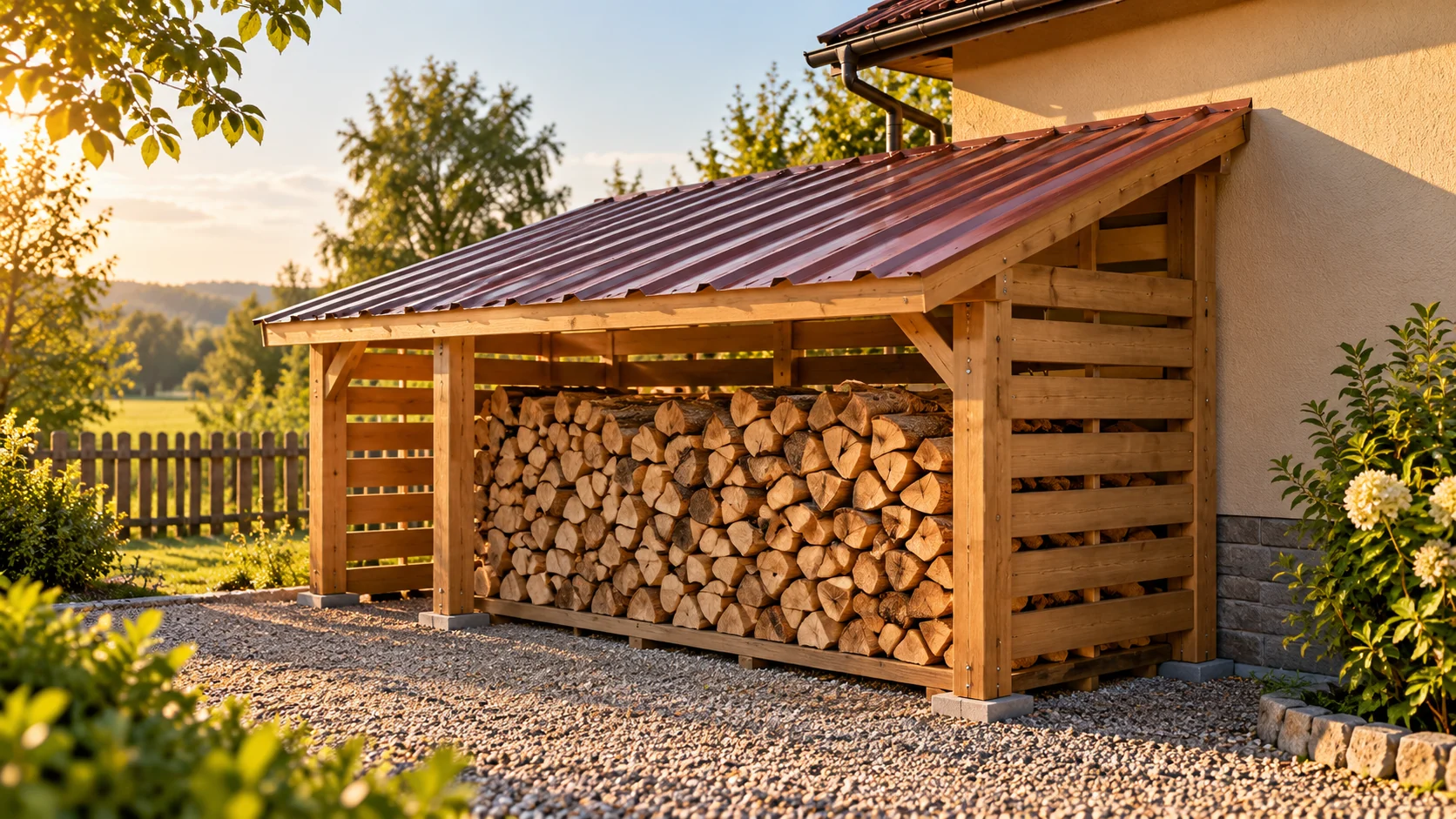
How do you find the cheapest roofing that suits a specific roof?
A low sheet price does not determine the price of the finished roof. You have to add the substrate, insulation, details and labour. The calculation for an open wood store is different from that for a heated pavilion. The most cost-effective material meets the requirements without unnecessary layers and large waste. That is why the comparison starts with function, not with a price ranking. In an open shelter, the primary task is protection and carrying the specified loads. In a heated interior, thermal performance, airtightness and moisture control are added. In a work room, acoustic comfort can also be important. Each of these objectives can change the layer build-up.