






Building academy
The Izoprofil.org building academy explains decisions made during construction and refurbishment. The articles start with the materials themselves, including sandwich panels, PIR insulation boards and profiled sheet metal. Learn the terms used in product descriptions and how several properties affect a complete assembly. Topics include thermal insulation, joints, moisture protection, roof coverings and purchasing. Each article includes a summary and contents to help you find the relevant detail. Use the guides alongside the drawings and product documentation for your own project.
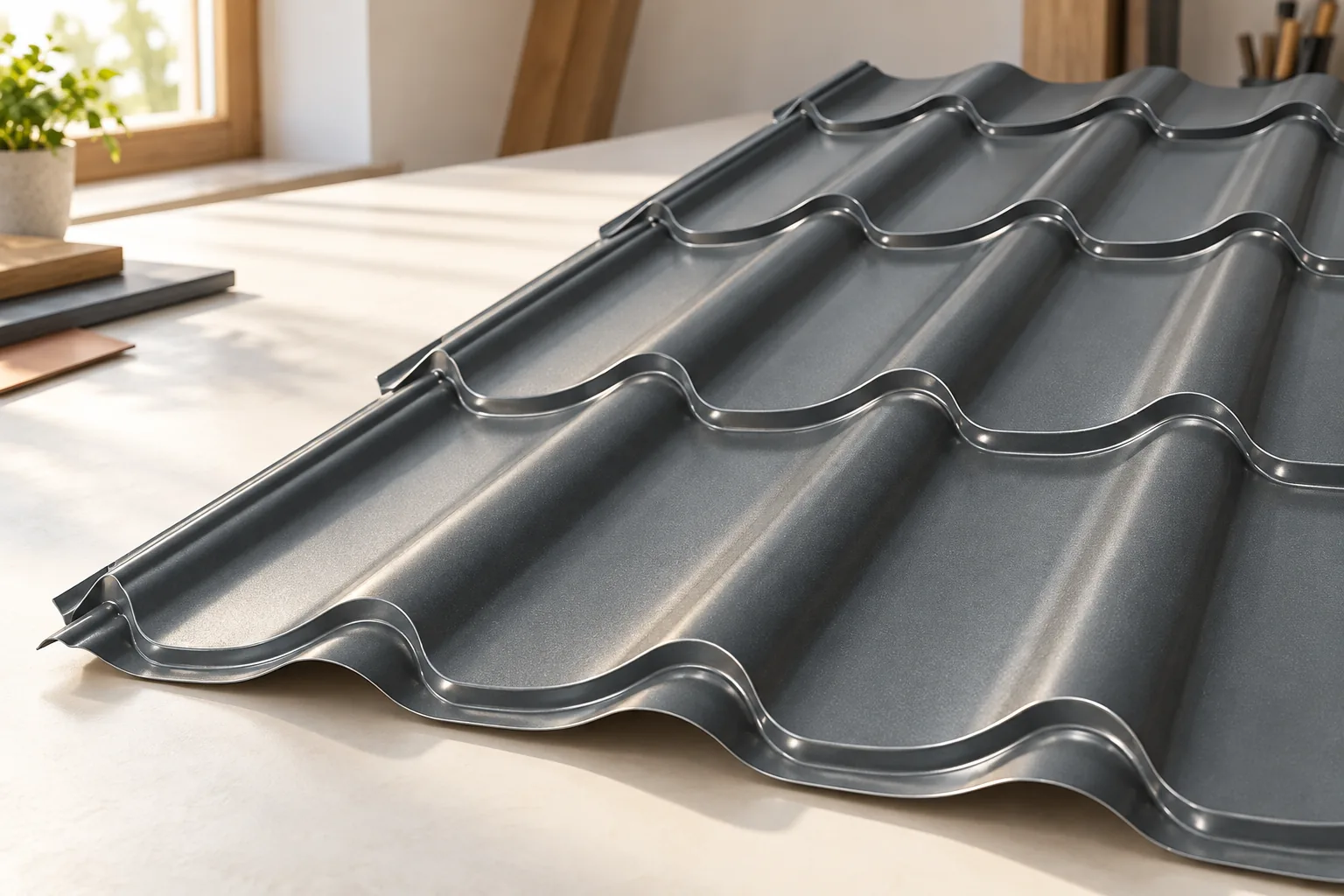
Daylighting a loft with gable windows, roof windows or dormers
The way of lighting an attic should be matched to the room layout and roof shape, not chosen on the strength of one striking glazed area. It is worth checking where light needs to reach during the day, how partition walls are positioned and what obstacles lie outside. Gable windows, roof windows and dormers have different limitations, so before deciding you should draw the intended interior division and assess orientation and ease of operation. The solution should suit the future room layout, not only the state on the day of renovation.
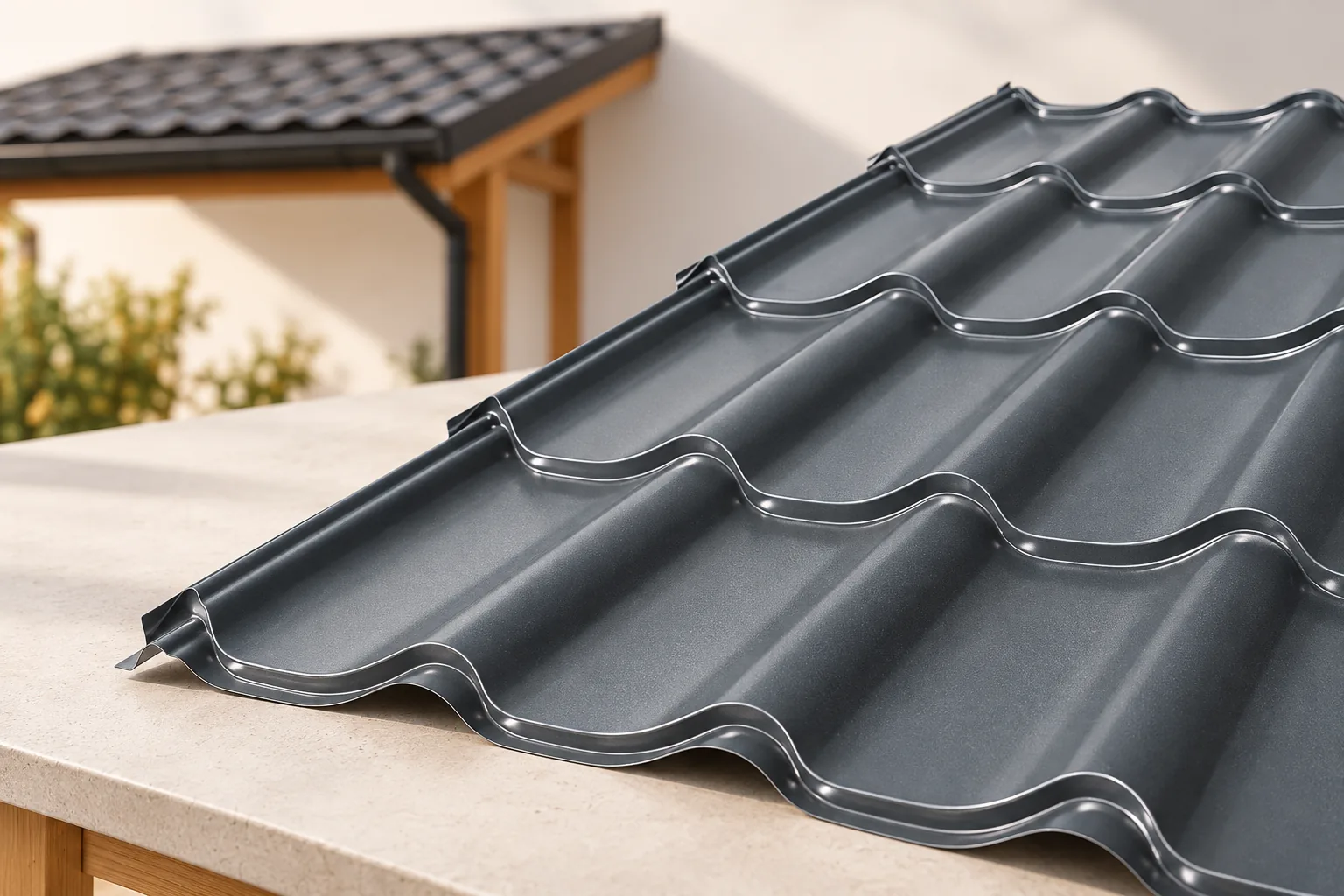
Mono-pitch roofs: how they work, their advantages and their limits
A mono-pitch roof has a single slope falling in a chosen direction, which can simplify construction and reduce the number of details. However, it is worth checking whether the structure, pitch, drainage and covering are properly matched to the building's conditions. The connection to a higher wall is also crucial and requires particular attention. A simple shape does not mean a lack of details to design – there are still eaves, side edges and a top termination. The decision to use this layout should be based on an analysis of span, supports and structural material, not just on the simplicity of the form.
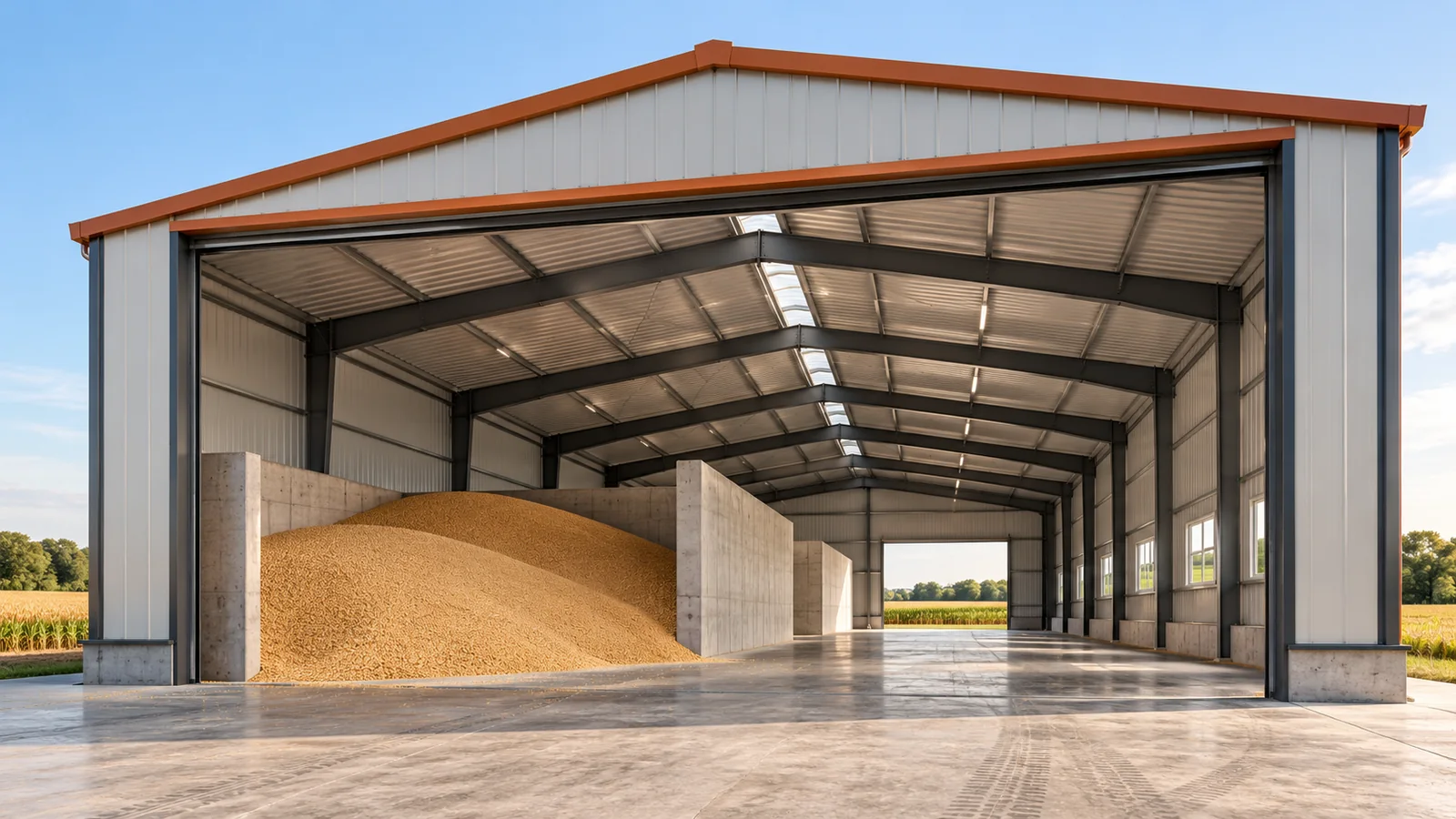
Storing grain in a steel building: designing walls for grain pressure
Bulk grain does not only load the floor. It also exerts pressure on the surfaces that confine the heap. That is why an ordinary steel hall for machinery does not become a grain store simply by removing the equipment. A solution is needed that takes into account the method of storage and handling. Retaining walls, the floor, the fill height and the conditions for maintaining crop quality are particularly important. Sandwich panels and sheet metal protect the interior from the weather and carry the loads envisaged for the envelope. They must not automatically be assumed capable of taking up the pressure of grain. This also applies to the columns. The steel structure of the hall may not be designed for this type of loading. Filling the wall to a level that appears low does not solve the problem.
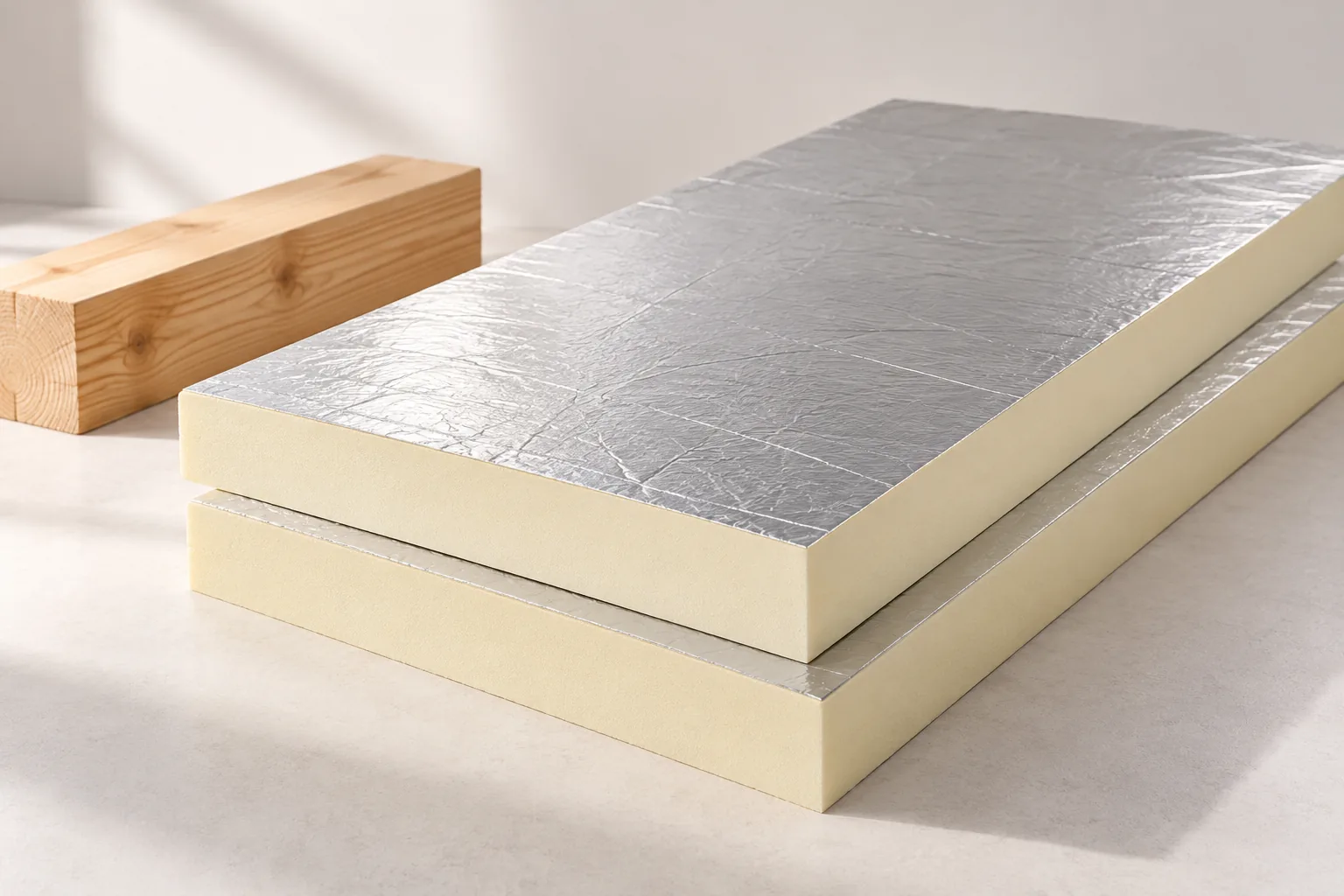
Closing the gap in roof insulation at the wall plate
The wall plate marks where the roof meets the wall, and that is where insulation continuity is easily broken. A cold strip can then form along the slope, heat loss increases and condensation becomes a risk. Simply filling gaps with foam without a plan is not enough. Roof and wall insulation must be connected, airtight layers maintained and ventilation under the covering kept open. The tight space brings together the wall plate, rafters, ring beam, façade layers, fixings and eaves components. Once the covering is laid, access is limited, so a gap at the lower edge of the slope stays hidden behind the lining.
How to maintain a sandwich panel roof without damaging the covering
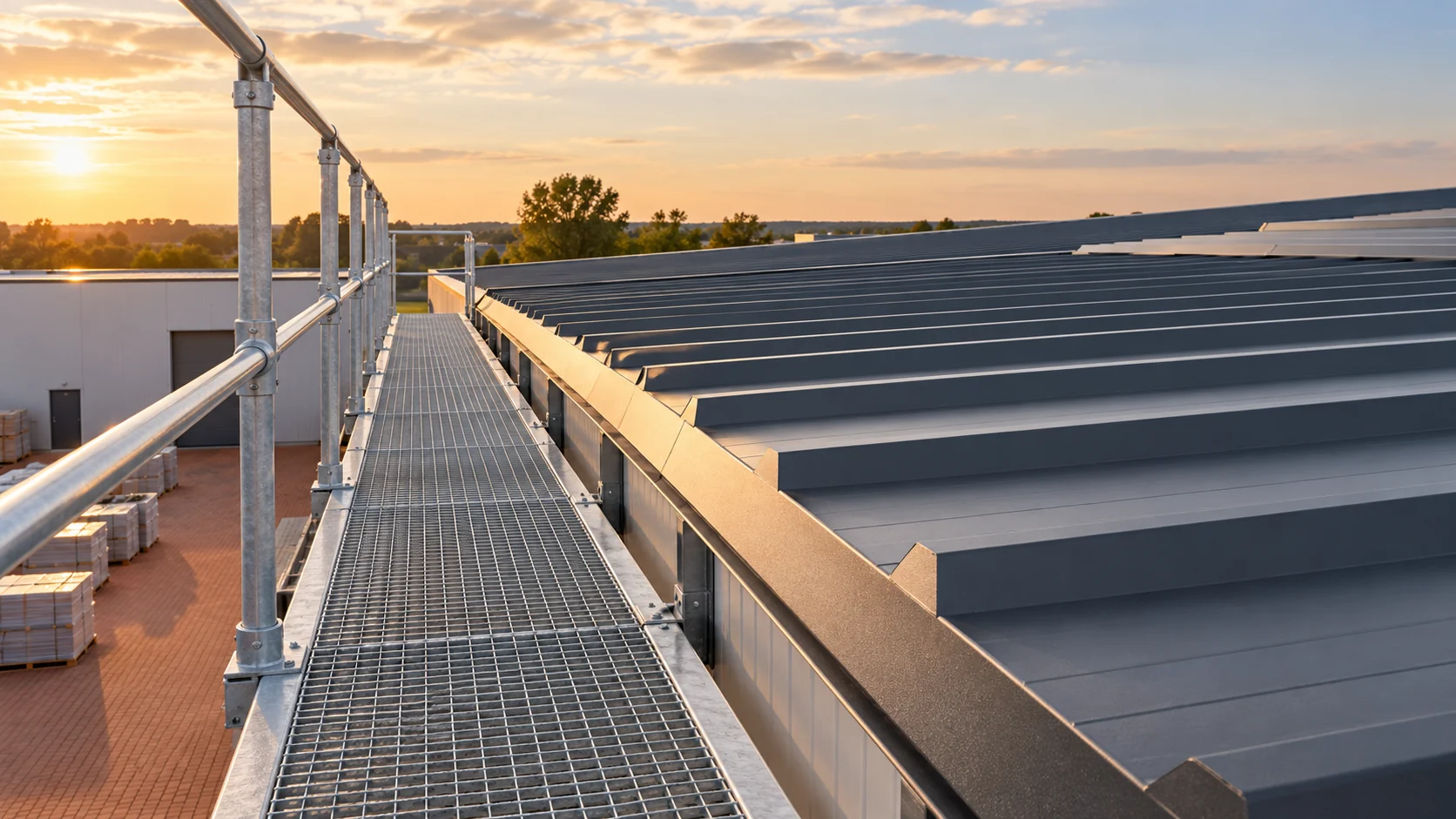
Servicing a sandwich panel roof requires prepared access and protection of the facings. It must not be assumed that every panel can be walked on freely. The pressure of a foot, a toolbox or the base of a device acts locally. A planned route, proper support and inspection after work help limit damage. The sheet coating protects it from environmental exposure. During servicing it can be scratched by a tool, a metal filing or a small stone. Visible damage does not necessarily cause a leak immediately, but it requires assessment and proper handling. Denting the facing is also not neutral. It can change the local geometry and hinder water drainage.
Rust on sheet metal flashings: material, installation or maintenance?
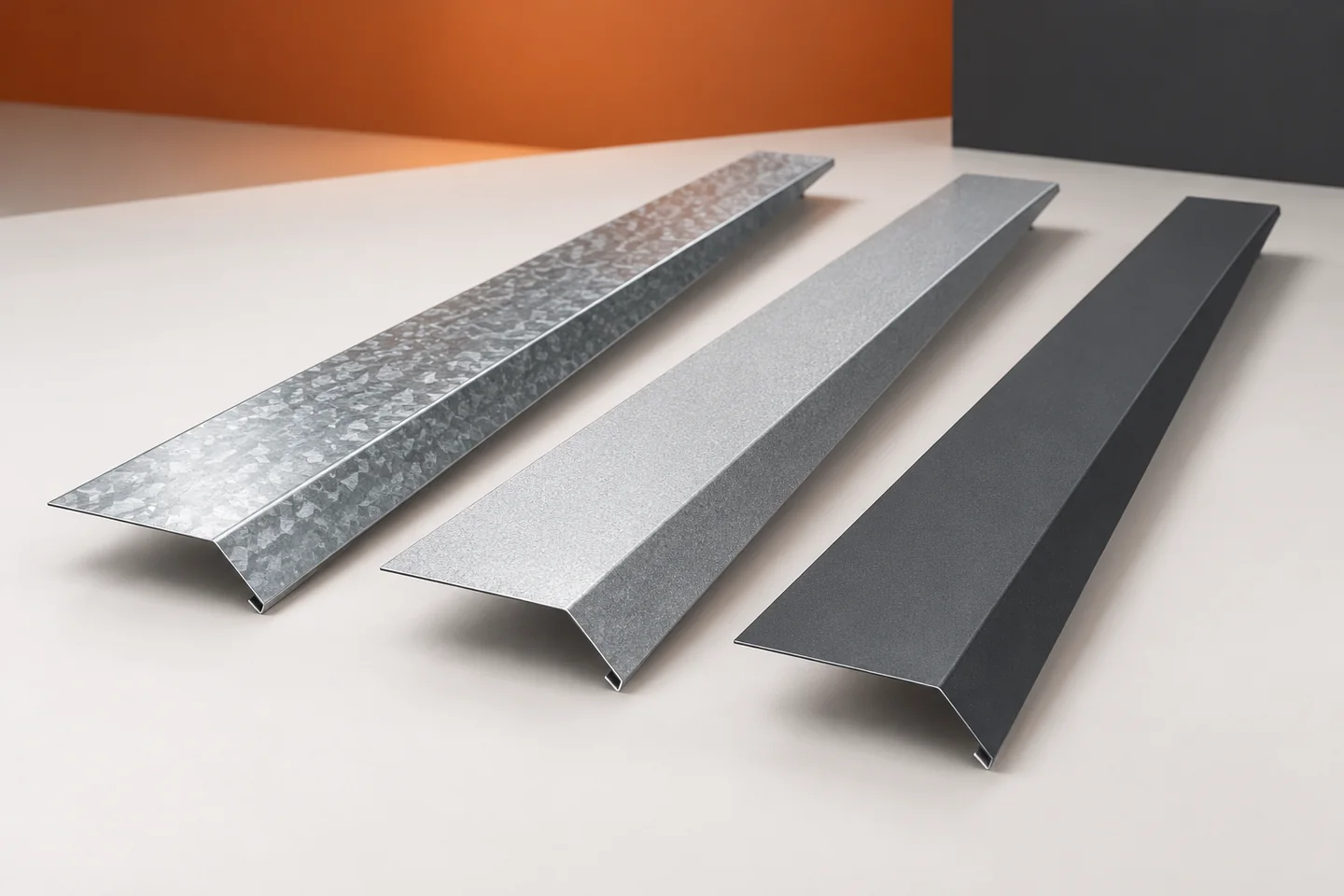
A rusty spot on a coloured flashing does not always mean that its steel core is corroding. Leftover metal filings can rust on the surface. Elsewhere, the damage really does affect the coating and the metal. Recognising the difference matters for repair. Galvanised, aluzinc and coated steel sheets should not be assessed by appearance alone. Material data and an inspection of the conditions in which they work are needed. In galvanised sheet, the steel core is protected by a zinc layer. Aluzinc sheet also has a steel core, but its metallic coating contains aluminium and zinc. It is therefore not a type of aluminium sheet. This distinction helps to read the specification of ordered flashings correctly.