Renovation and maintenance
Preparing sheet metal roofing for a fresh coat of paint
In brief
Start preparing a metal roof by assessing the substrate, not by picking a colour. Identify the existing coating, clear away dirt and locate any corrosion. Only then choose the renovation system and application conditions. Remember that paint will not fix the cause of a leak or strengthen weakened sheet metal. Begin by checking the sheets, fixings and flashings; where the metal is heavily corroded, perforated or permanently deformed, some sections may need replacing. If the roof leaks, first trace the water path and repair the detail.
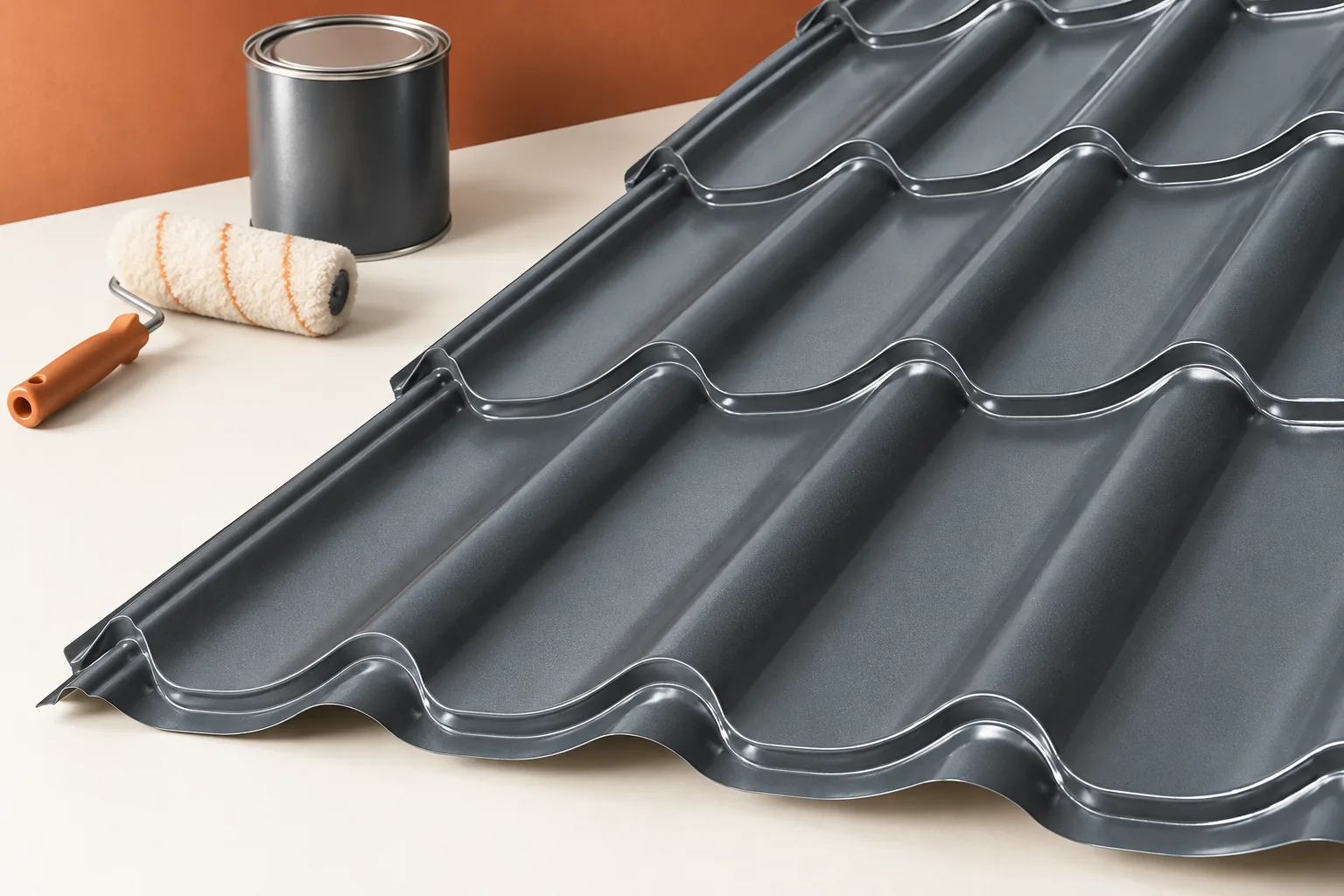
Is the roof suitable for painting at all?
First assess the condition of the sheets, fixings and flashings. Extensive corrosion, perforation or permanent deformation may require replacement of sections. Painting over such areas only conceals the problem. If the roof leaks, the path by which water enters must be established and the detail repaired before painting work.
Also check the underside of the covering if it is accessible. The surface visible from outside may look good even though the material remains damp from inside. The cause is sometimes lack of ventilation or condensation. A new coat of paint on top will not change the conditions on the other side of the sheet.
How to identify the existing coating?
Purchase documents and material markings are the most reliable. If these are missing, the renovation contractor should choose the method of identification and adhesion testing. The new paint must be compatible with the substrate. Galvanised steel may require different preparation from a surface covered with an old organic layer.
It is not enough to choose a product described generally as intended for metal. Adhesion to the old coating, the required primer and the compatibility of successive layers matter. It is safest to use a complete set of materials intended for the given substrate and to follow its instructions.
What to remove before sanding and priming?
The roof must be cleaned of leaves, dust, greasy deposits and film. Washing should be matched to the condition of the coating. An aggressive preparation may weaken it, and too strong a jet may force water under the laps. After cleaning, the surface must be thoroughly rinsed and dried.
Also prepare the gutters and drains. Residues of old paint and chemicals should not enter the garden or rainwater tank uncontrolled. The scope of protection depends on the products used and the working method. It is worth agreeing it with the contractor before washing begins, not after the façade has been soiled.

How to deal with rust and flaking paint?
Loose layers must be removed down to a stable substrate in accordance with the requirements of the renovation system. The repair boundaries should be prepared so that the new coating adheres well. In the case of corrosion, it is important to identify its depth. A thin, weakened sheet will not regain load-bearing capacity after priming.
The method of mechanical treatment must take into account the thin sheet and existing protective coatings. Tools that overheat the material or scatter hot particles should not be used without reflection. After preparation, dust and residues are removed. On a soiled surface, even a good primer will not perform as intended.
What weather conditions are needed?
Substrate temperature, humidity and time to rainfall must be within the paint’s requirements. Sheet heated by the sun can be significantly hotter than the air. Drying too quickly makes it difficult to form an even layer. Conversely, dew can appear despite the absence of rain.
Intervals between coats and full curing time must be taken into account. Completing everything in one day is not always possible. The schedule should correspond to the technology, not just the availability of the crew. Do not apply another coat solely because the previous one feels dry to the touch.
What should be protected and how should access be planned?
Cover windows, façade, gutters and installation components in accordance with the application method. When spraying, particular attention must be paid to material being carried by the wind. Work on the roof requires prepared access and fall protection. Wet or freshly painted sheet is dangerous to walk on.
Agree the painting sequence so that the completed surface is not walked on. Access routes to chimneys and equipment should be planned in advance. Dismantling and reattaching certain components may require separate work. Covering seals and movable joints with paint is not the proper way to finish a detail.
How should the roof be inspected after renovation?
Check the evenness of the surface, the terminations at flashings and the locations of previous repairs. Request a record of the products used, application dates and execution conditions. Keep information about substrate preparation. It will be needed for the next maintenance and assessment of any coating detachment.
A new paint finish does not exempt from inspections. Regularly remove dirt and monitor the locations where corrosion previously occurred. If it returns quickly, the cause may lie in moisture, damaged edges or a detailing error. In that case, the working conditions of the covering must be improved, not just another coat of paint added.
7 branches. Materials closer to your project.

- SEROCK — Dzierżenin 34 E
- BŁONIE — ul. Sochaczewska 138A
- RADOM — ul. Grobickiego 8
- ŁÓDŹ — Natolin 8
- OLSZTYN — Barczewo, ul. Prosta 9
- WROCŁAW — ul. Jerzmanowska 10C
- GORZÓW WLKP. — ul. Zielona 33/34