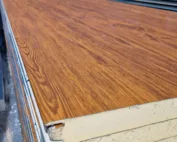
Boards in use
When does a white PIR board 100 mm in second grade suit a project?
In brief
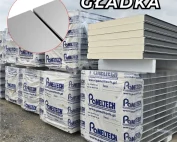
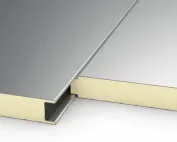
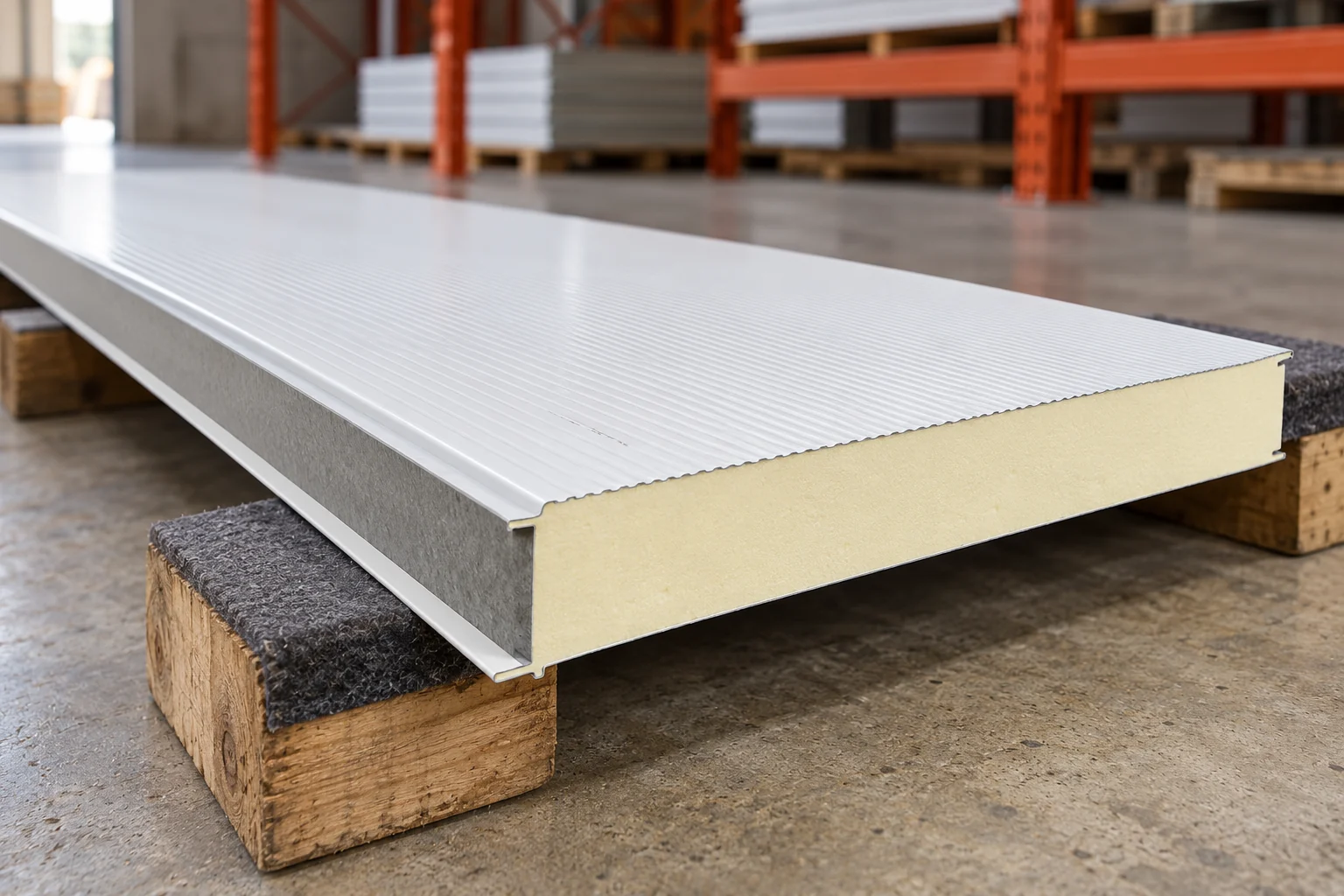
A white wall PIR board 100 mm with a length of 2480 mm can be considered for a small building. However, its exact variant and the reason for classification as second grade must be checked. The finished length does not suit every wall. This description shows how to assess such a batch. It does not confirm current stock levels or a price offer. The core, thickness, length, cover width and joint type are needed. The white colour must be specified by number and coating finish. Different whites and gloss levels can look different on one façade. Also check the colour of the inner face, the sheet thicknesses and the intended use of the coatings.
What does a full board description mean?
For second grade, the description should cover specific defects. It is not enough to state that the material is discounted. Suitability depends on the condition of the joint, the bonding and the facings. The same 100 mm dimension does not prove conformity with a previously ordered panel.
How much area does a 2480 mm long element give?
The length is 2.48 m. With a cover width of 1.00 m, one panel gives 2.48 m². Twelve pieces nominally cover 29.76 m² in this arrangement. If the module is 1.14 m, a single element has 2.8272 m² of coverage. The overall width should not replace the module in this calculation.
This is the area of full elements, before allowing for cut-offs. A wall with a door may require cuts that cannot be used elsewhere. First draw the layout, and only then compare the price per metre. The unused part of the batch increases the cost of the actual enclosure.
Does a length of 2.48 m suit the room height?
It should not be compared solely with the height from floor to ceiling. The dimension between the designed terminations and supports is needed. The plinth, the top flashing and the required clearances affect the required length. The element may turn out to be too short even though the interior has a similar height.
A horizontal arrangement is also possible if the appropriate system and design provide for it. In that case, the arrangement of vertical supports and joints matters. An additional joint should not be created at a random location just to use up a promotional batch. Every such detail has technical and cost consequences.
How do you distinguish an appearance defect from a technically significant defect?
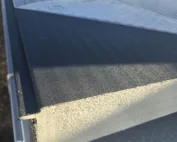
A slight shade variation or surface scratch may mean something different from sheet delamination. A crushed interlock makes proper connection difficult. Dampness, core damage and severe deformation require separate assessment. They cannot be accepted solely because the wall will be barely visible.
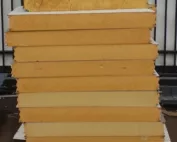
Inspect both sides and all edges. Ask for photos representing the entire batch, not just the best item. If a defect is to be repaired, establish the permitted method and the effect on use. Covering the problem with a flashing is not an automatic restoration of the panel’s properties.

Does 100 mm always mean the same thermal performance?
No. For an example family of wall PIR 100 mm, the declared U-value is 0.19 W/(m²·K). Another family may have a different result. Identification of the offered panel is needed. For second grade, it must also be established whether the nature of the defects allows the declared parameters to be used in the planned function.
Load-bearing capacity and fire requirements are checked separately. A length of 2.48 m is not confirmation of a permissible span. White colour says nothing about the reaction-to-fire class. The decision must be based on the product properties and the conditions of the entire wall.
How does this batch compare with made-to-measure production?
Calculate the usable area after cuts, the missing elements and the accessories. A ready-made batch can be advantageous if the layout fits the lengths well. If it requires many joints and a large amount of waste, the saving decreases. Add transport and any separate delivery of the supplement.
Also check the colour consistency and joints of all pieces. Connecting different families may require an intermediate solution or may be unsuitable. A made-to-measure offer is sometimes more expensive per metre but reduces the amount of cutting. The comparison should cover the cost of the complete wall, not just the discounted panel.
What should be confirmed on delivery?
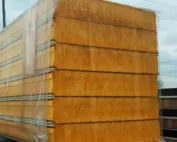
Agree the list of lengths, quantities and defects before purchase. On delivery, compare the actual batch with the description. Inspect the areas under the straps and the corners of the pack. Assess doubtful elements before installation. Once the wall is closed, access to the joints will be limited.
Keep the product identification and the agreed scope of application. Do not treat the term “second grade” as a uniform technical standard. The success of the purchase depends on the specific batch, its condition and conformity with the design. In a small project, the lack of one matching piece can be significant.
What else is worth asking about?
Will every white panel match the others in colour?
No. The colour number, gloss, texture and any batch differences must be checked. A similar verbal description does not guarantee visual conformity.
Does second grade mean only surface scratches?
There is no single catalogue of defects common to all offers. The reason for the downgrade and its effect on the application must be established for the specific batch.
7 branches. Materials closer to your project.

- SEROCK — Dzierżenin 34 E
- BŁONIE — ul. Sochaczewska 138A
- RADOM — ul. Grobickiego 8
- ŁÓDŹ — Natolin 8
- OLSZTYN — Barczewo, ul. Prosta 9
- WROCŁAW — ul. Jerzmanowska 10C
- GORZÓW WLKP. — ul. Zielona 33/34