Wool in panels
What determines the durability of an insulated wall panel with a mineral wool core?
In brief
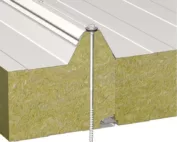
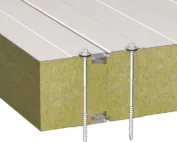
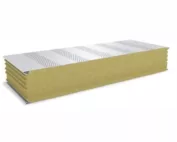
It is not possible to fairly assign a single number of years of service life to all panels with wool. Durability is determined by operating conditions, the coating and the execution of joints. What happens after building handover is also important. A well-selected panel can retain its functions for a long time if its edges remain dry and damage is noticed early. A sandwich panel combines steel facings with a wool core. The external surface is exposed to sun, water and contamination. The internal surface works under indoor conditions. The core should remain covered. The durability of the wall depends on the interaction of all these parts and the joints between panels.
Which parts of the panel age in different ways?
Fading colour does not have to mean a loss of load-bearing capacity. Conversely, barely visible delamination can be technically significant. The assessment should therefore not end with a distant photograph of the façade. Edges, corners, fixing points and areas around openings must be inspected. Different symptoms require different actions.
Why is moisture at the edge more important than a single drop?
A finished wall should limit water access to the core. Repeated dampness at the plinth or flashing may indicate a detailing error. If the mineral wool has been soaked, its condition must be assessed. It must not be assumed as a given that every panel will be fully equivalent to a new one after drying.
The lower edge requires particular attention. Water splash, lying snow and dirt can extend contact with moisture. The plinth flashing should drain water and protect the cut end. It must not be buried in soil or the surface raised without checking the effect on the detail. Such a change can worsen the operating conditions of a correctly executed wall.
How does the environment affect the steel coating?
The external environment can vary even for neighbouring buildings. Pollutants, moisture and areas sheltered from natural washing are significant. In an agricultural building, the internal atmosphere is also important. A coating selected for an ordinary warehouse does not have to be suitable for every technological process.
For repetitive pavilions, it is worth comparing the sunlit, shaded and sheltered sides. Different rates of soiling do not have to indicate a material defect. They may indicate different drying conditions. Coating selection and the cleaning plan should account for these differences. Ordering an identical colour for all façades is not enough.
What should a regular inspection cover?
Check the coating, fasteners, flashings and tightness of connections. Look for scratches down to the metal, signs of corrosion, detached seals and dents. Pay attention to areas near gates where impact is likely. The frequency of inspections should correspond to the instructions and the building’s conditions. After a severe weather event, an additional check is worthwhile.
Not every change should be painted over straight away. First establish whether it is soiling, damage to the coating or a problem in the deeper layers. Retouching must be compatible with the material. It is worth agreeing any extensive repair before work begins. A poorly chosen product can worsen the appearance and make it harder to identify the cause later.

How to clean without shortening service life?
Washing should remove deposits without damaging the coating and seals. Mild agents compatible with the instructions are selected. A strong water jet should not be directed into joint gaps. Scrubbing with an aggressive material can leave permanent scratches. After cleaning, the surface should be rinsed in accordance with the requirements of the agent used.
In rooms that are washed regularly, the type of chemicals, the temperature and the method of application must be taken into account. A suitable cladding does not mean resistance to every concentration. Joints, openings and cut edges are particularly sensitive. A change in the washing procedure should be assessed in the same way as a change in the building’s conditions of use.
When to repair and when to consider replacement?
Minor surface damage can sometimes be repaired locally. A heavily crushed panel, delamination or an uncertain condition of a wet core require a broader assessment. In a partition with a specified fire resistance, the repair must maintain conformity with the required assembly. It cannot be assessed on aesthetics alone.
It is worth keeping a simple record of inspections. Note the location, the symptom and the action taken. Across a series of similar buildings, this will help identify a recurring problem. Warranty and service life are not the same thing. The actual condition of the wall and the confirmed possibilities for its further use remain the best basis for planning.
What else is worth asking about
Does a longer warranty mean the exact service life of the panel?
No. The warranty has a defined scope and conditions. Actual durability also depends on the environment, installation, use and repairs.
Is every dent merely a visual defect?
No. Its depth and its effect on the cladding, the core and the joint must be assessed. A large deformation may require replacement of the element.
7 branches. Materials closer to your project.

- SEROCK — Dzierżenin 34 E
- BŁONIE — ul. Sochaczewska 138A
- RADOM — ul. Grobickiego 8
- ŁÓDŹ — Natolin 8
- OLSZTYN — Barczewo, ul. Prosta 9
- WROCŁAW — ul. Jerzmanowska 10C
- GORZÓW WLKP. — ul. Zielona 33/34