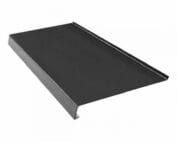
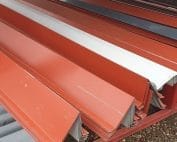
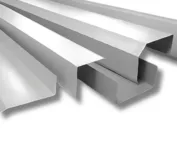
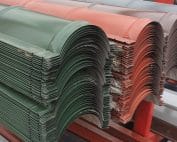
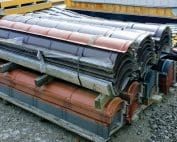
Sheet metal flashings
When standard flashings do not fit: ordering a custom folded profile
In brief
A ready-made profile makes purchasing easier if it matches the actual detail. The problem starts when it has to be bent heavily on site, joined with random strips or used to mask large gaps. Bespoke sheet metal flashings allow the cross-section to be matched to the location. However, they are not a way of avoiding measurement. A well-prepared order begins with establishing the function of the element and the reason why the standard does not fit. The mismatch may relate to the angle, the length of the leg, the width of the cover or the position of the bend. These are different problems. If the barge flashing is too low, changing only the length of the section will not improve anything. If the gutter apron has the wrong angle, cutting its end will not solve the matter either.
First check what doesn’t match
It is worth noting the missing dimension and making a cross-section of the installation point. Measuring the old flashing alone is often insufficient. The previous element may have been chosen incorrectly or may have become deformed. The reference point should be the current substrate, covering and the expected path of water drainage.
Function matters more than a similar appearance
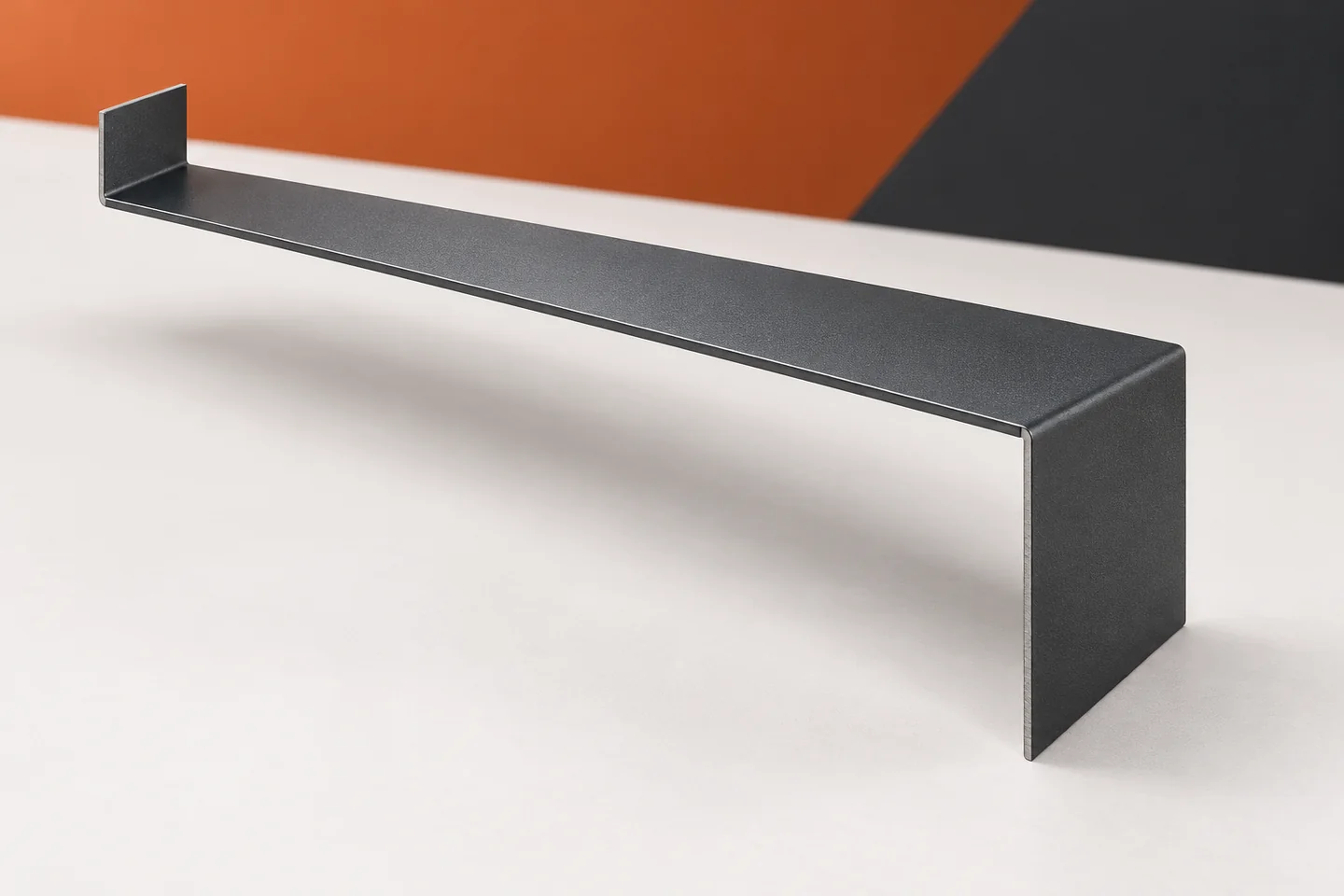
Two profiles shaped similarly to the letter L can perform different tasks. One protects a wall corner, the other forms a wall flashing. They differ in position, method of fixing and edge termination. The correct cross-section must take these conditions into account, not just the line visible from the outside.
This also applies to starter profiles. The element starting the standing seam covering has a different task than a flashing at the plinth with sandwich panels. Unusual flashings are worth describing by their place of use. The common name alone may be understood differently by the installer and the manufacturer.
Don’t copy the error from an existing part
During renovation, it is convenient to hand over the old flashing as a pattern. However, it must be stated whether it is to be copied or improved. Old water marks, bends and additional holes may show imperfections of the previous solution. A new copy will also retain its incorrect geometry.
Before ordering, check whether the roof or façade layers have changed. Insulating the wall, replacing the gutter and a different covering all affect the detail. Ridge caps, verge flashings and gutter aprons must match the current arrangement. Dimensions from before the renovation should not be adopted automatically.
The drawing should show the coating side
In an asymmetric profile, it is easy to confuse its mirror image. The drawing must therefore indicate the visible side, the bending direction and the position on the building. For coloured sheets, this matters for appearance and for using the correct side of the material. The colour specification alone does not remove this ambiguity.
The leg lengths and angles must be given, together with information on how the dimensions were measured. It is worth indicating which edges are to be folded. The manufacturer can then assess feasibility. Not every tight arrangement of bends can be achieved on any machine and with any sheet thickness.

The length of a single piece requires consideration
A longer element can reduce the number of joints. However, it will be more difficult to transport and handle. Access routes and the possibility of safe support must be taken into account. A long, thin profile can become permanently deformed before it reaches the installation site.
The order should include a breakdown into sections, taking overlaps into account. The sum of the total lengths of flashings ordered is not equal to the length of the finished eaves. Non-standard flashings should be planned together with the joints. This allows the number of joints to be reduced without making installation awkward.
Describe the material as precisely as the shape
Galvanised, aluzinc and coated sheets are not a single material category. The quotation should state the core thickness and the type of protection. For coloured surfaces, the colour, texture and gloss also matter. This allows offers for genuinely similar products to be compared.
The cost of a flashing depends on, among other things, the developed width, length, number of bends and material. A price per linear metre without the cross-section does not give the full picture. A wide profile uses more sheet than a narrow one. Additional ends and corners must also be included in the schedule before production is ordered.
A trial fit reduces the risk of repeating a batch
If a detail is repeated many times, it is worth first verifying its geometry on a single section. A sample allows the fit, the side of the coating and access to fixings to be assessed. This applies particularly to complex corners and chimney flashings. A change before the entire batch is produced is usually simpler.
Once the cross-section has been agreed, the current version of the drawing must be kept. An additional verbal change to one leg can later make delivery inspection more difficult. Acceptance includes dimensions, number of pieces and surface condition. A non-standard profile should fit the designed detail without accidental adjustment on site.
Questions and answers
Is it enough to specify the developed width of the flashing?
No. The same sheet width can produce many different cross-sections. A drawing of the legs, angles, bends and coated side is required.
Is a longer flashing always better?
No. It reduces the number of joints, but can make transport, support and installation more difficult. The length should be matched to the detail and the conditions on site.
7 branches. Materials closer to your project.

- SEROCK — Dzierżenin 34 E
- BŁONIE — ul. Sochaczewska 138A
- RADOM — ul. Grobickiego 8
- ŁÓDŹ — Natolin 8
- OLSZTYN — Barczewo, ul. Prosta 9
- WROCŁAW — ul. Jerzmanowska 10C
- GORZÓW WLKP. — ul. Zielona 33/34