Insulation materials
When should you choose a PIR board 120 × 60 cm and when a larger format?
In brief
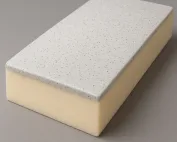
The board format affects the number of joints, the way it is handled and the amount of waste. Smaller elements can be more convenient in a tight interior. Larger ones allow a large area to be covered with fewer pieces. However, a distinction must be made between the nominal dimension and the effective coverage. A rebate on the edge can reduce the area that the board actually covers. One family of foil-faced PIR boards includes formats 600 × 1200 and 1200 × 2400 mm. Nominally these correspond to 0.72 and 2.88 m². The large board therefore has four times the rectangular area. This does not mean that every PIR is available in both sizes and all thicknesses.
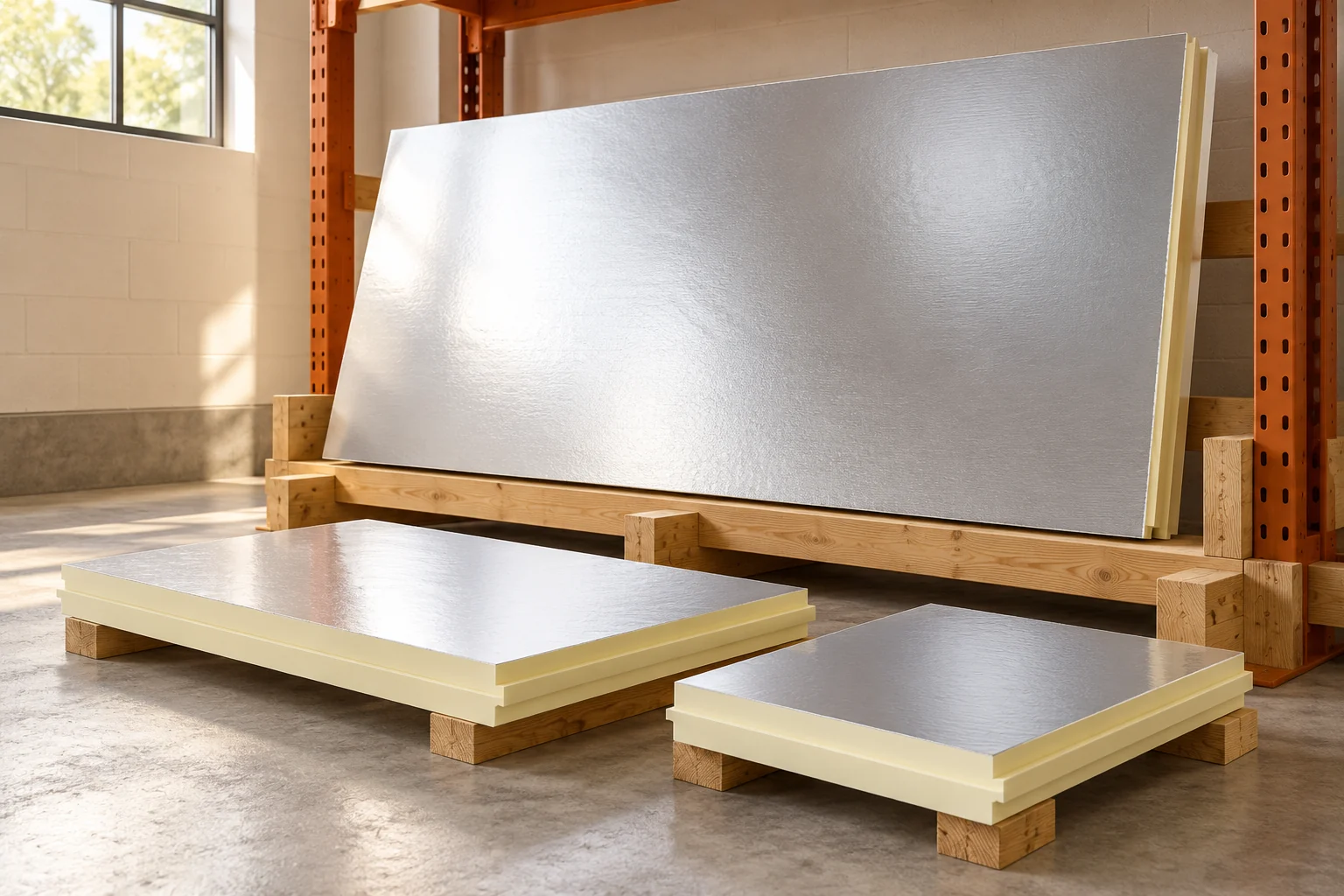
What formats can be encountered in practice?
A variant with a different facing may have a different range of dimensions. A composite board with gypsum, for example, is sometimes longer than a typical insulation board. The format must be checked for the selected product. It should not be changed in the cost estimate without re-planning the cuts and confirming the intended use.
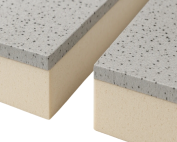
Why can the coverage be smaller than the rectangle?
At the overlapping edges, part of the dimension is involved in the joint between adjacent boards. The effective area may therefore be smaller than the product of the nominal sides. The order requires the coverage of the specific variant to be recorded. The same loss must not be automatically attributed to all types of rebate.
Also check the unit on the pack label. The stated area may be described as nominal or usable. If the information is unclear, it must be clarified before the quote. A difference of a few percent matters for the final strip of wall. Missing elements can cost more due to separate delivery.
When do smaller boards make renovation easier?
A narrow stairwell, small doors and numerous recesses argue in favour of considering the smaller format. It is easier to manoeuvre without striking the edges against the wall. It may also give a more favourable cutting layout in a room with many openings. However, this does not always mean less waste. A sketch of the surface is needed.
More elements mean more joints to make. If the facing is to form a sealed layer, the number of joints requiring inspection increases. The cost of tapes and labour may rise. The choice of a small board should therefore take into account not only the convenience of bringing it in but also how the entire area is finished.
When does a large format bring a benefit?
On an open surface, it can reduce the number of elements and joints. However, it requires space for handling, cutting and setting down. The larger format is often more susceptible to damage during manoeuvring. The installation conditions in wind must also be checked when work is carried out outdoors.
A large format is not a structural decking board just because it looks rigid. The insulation must have the support specified for the given system. It must not be laid over an opening and used as a working board. Mechanical parameters must be related to the actual function in the building element.

How do you calculate the quantity using a simple example?
Assume an area of 14.4 m². On a purely nominal calculation, this corresponds to 20 boards of 0.72 m² or 5 of 2.88 m². This is only an area balance. If the shape of the room requires cut-offs, some material will remain as waste. The milling and the required coverage can also change the number of pieces.
First, draw out the full elements and the last strips. Check whether the cut-off piece can be used elsewhere without losing the required edge detail. Not every offcut is suitable for another joint. The allowance should result from the cutting plan and working conditions, not from a single automatic percentage value.
What should be considered for delivery and storage?
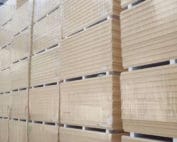
Compare the pack dimensions with the unloading space and the access route. Determine the number of people or equipment needed for safe handling. The boards must be protected from damage to the facings and edges. The storage location should comply with the instructions and provide stable support.
In a small renovation, the order of deliveries may be more important than the maximum pack size. Too much material in a confined space makes work difficult and increases the risk of damage. After receipt, compare the format, thickness and type of facing with the order. A similar appearance does not guarantee that the correct variant has been delivered.
How do you compare the price of packs in different formats?
Divide the pack price by its confirmed coverage area. Then calculate the full packs needed according to the cutting plan. For example, a requirement for 17 boards does not necessarily mean that exactly 17 pieces can be purchased. If sales are in packs of 6, the order will comprise 18. This is an adopted example of the calculation method. Check the actual number in the pack for the thickness and format, as it may vary between variants.
What else is worth asking about
Do four small boards always cover the same area as one large one?
The nominal area may be the same. However, the effective coverage depends on the edges and dimensions of the given product. The relevant data must be compared.
Does a larger format automatically reduce waste?
No. The result depends on the shape of the area and the openings. On a small, irregular surface, smaller boards may give a better cutting layout.
7 branches. Materials closer to your project.

- SEROCK — Dzierżenin 34 E
- BŁONIE — ul. Sochaczewska 138A
- RADOM — ul. Grobickiego 8
- ŁÓDŹ — Natolin 8
- OLSZTYN — Barczewo, ul. Prosta 9
- WROCŁAW — ul. Jerzmanowska 10C
- GORZÓW WLKP. — ul. Zielona 33/34