Metal roofing
When is T14 sufficient for cladding, and when is a higher profile needed?
In brief
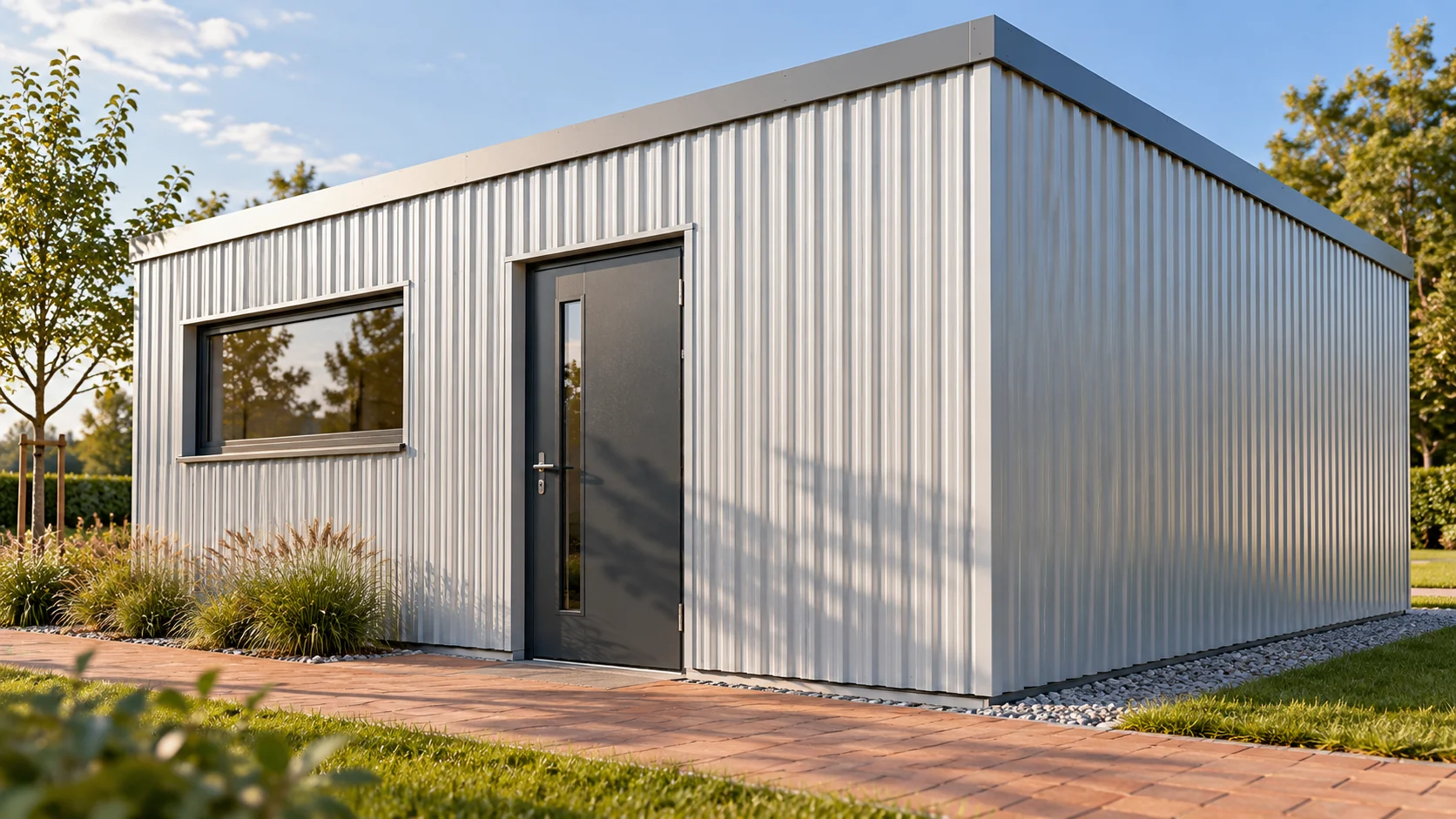
T14 can look good on a small building. The low profile gives a calm wall pattern and does not dominate over the windows. On a roof, however, more than appearance decides the choice. The section, steel thickness, support and pitch must be checked. Below we show how to assess such a material without attributing to it the capabilities of the whole group of sheets. The number in the designation refers to the height of the corrugation. In the example variant, T14 is 14 mm. It does not describe the thickness of the steel sheet or the purlin spacing. Two similarly named profiles can have a different rib width, coverage and load table. Therefore the name from the offer alone is not enough to substitute one product for another.
What does T14 mean and what does this name not say?
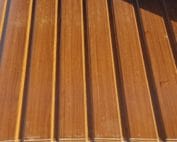
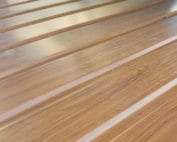
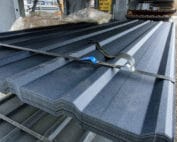
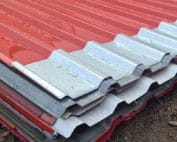
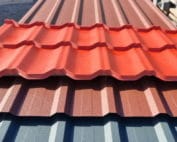
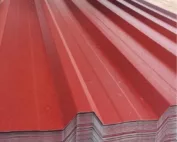
On a small pavilion the difference is visible up close too. Narrow ribs create a dense rhythm. Wider flat fields reflect light differently. It is worth viewing a sample vertically and in sunlight. A photograph against a white background shows surface undulation and coating gloss poorly.
What dimensions should be used for calculations?
One of the available variants has a cover width of 1120 mm and an overall width of 1157 mm. The difference falls on the sheet joint. These values serve here as an example of a specific section. Before purchase they must be confirmed for the chosen material.
Assume a simple wall 6.4 m long. Dividing 6.4 by 1.12 gives 5.71. Six sheet strips are therefore needed, if that is the adopted joint layout. Their total coverage is 6.72 m. The excess does not automatically mean waste to be thrown away. Part of it may go under a corner flashing. The cutting plan should account for both ends of the wall as well as the width of the last rib.
Why does one support spacing not suit every roof?
The sheet acts between supports under snow load and wind action. The steel thickness, its grade and the number of spans matter. A table for a multi-span arrangement is not automatically a table for a single field. Deflection, load-bearing capacity and fixings must be checked separately. At roof corners wind suction may determine the number of fasteners.
It is not worth copying the spacing from a neighbouring shelter. Another building may have different dimensions, height and sheltering. Nor should the sheet length be treated as a permissible span. A strip 6 m long generally requires intermediate support. The design determines its number and position.
Where does the low profile offer the most benefits?
T14 is worth considering for a façade, a rear building enclosure or a light utility structure. With a low wall height it is easier to maintain a single continuous strip without horizontal joints. Such an arrangement reduces the number of flashings. A correctly designed structure and protection of the points where the sheet meets other materials are still required.
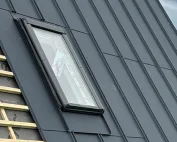
On a roof, the intended use of a specific variant applies. There are roof variants with a defined minimum pitch. These recommendations should not be transferred to any profile with a height of 14 mm. A roof over a heated space also requires a complete solution for insulation, airtightness and moisture drainage.

What difference does choosing a higher trapezoidal profile make?
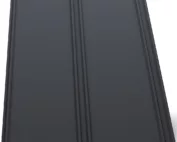
A taller profile usually offers different load-bearing capacities. This does not mean that every thin T35 will replace every thicker T14. The comparison must refer to specific tables. The surface appearance, cover width and set of flashings also change. Taller ribs can be advantageous on a roof but too pronounced on a small façade.
For two similar pavilions, different solutions can be adopted. One has a wall sheltered under a wide eaves. The other stands on an open square. The mere repetition of the building form does not allow the entire specification to be copied. In addition to loads, it is worth comparing ambient humidity and the warranty conditions of the coating.
It is worth including a corner sample in the comparison. Only on it can you see whether the closure finishes a full rib or a narrow strip. This detail affects the appearance of the repetitive façade and the possibility of evenly fixing the flashing.
How should the specification be finalised before ordering?
In the specification, record the cross-section, thickness, cover width, lengths and the side with the decorative coating. Add the colour, gloss and intended use of the sheets. The same shade on different coatings can look different. If the wall is to be uniform, it is best to specify a single batch and laying direction.
Include flashings, fastenings and the transport method in the quote. A long thin sheet is easily permanently deformed during handling. The material should arrive without being dragged over other strips. After installation, swarf must be removed. If left on the coating, it can rust and stain the finished wall.
What else is worth asking about
Is T14 suitable for every canopy?
No. The roof variant must be selected and the loads, supports and roof pitch checked. The size of the structure alone does not determine the choice.
Does a wider sheet always reduce the cost?
What counts is the coverage after joining and the fit to the building’s dimensions. A wide sheet with a lot of waste can come off worse than a narrower one.
7 branches. Materials closer to your project.

- SEROCK — Dzierżenin 34 E
- BŁONIE — ul. Sochaczewska 138A
- RADOM — ul. Grobickiego 8
- ŁÓDŹ — Natolin 8
- OLSZTYN — Barczewo, ul. Prosta 9
- WROCŁAW — ul. Jerzmanowska 10C
- GORZÓW WLKP. — ul. Zielona 33/34