Sheet metal coverings
T8 on the façade: how to use a low profile without the waviness effect?
In brief
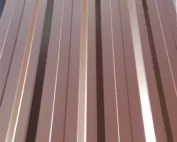
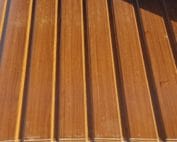
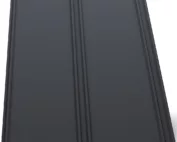
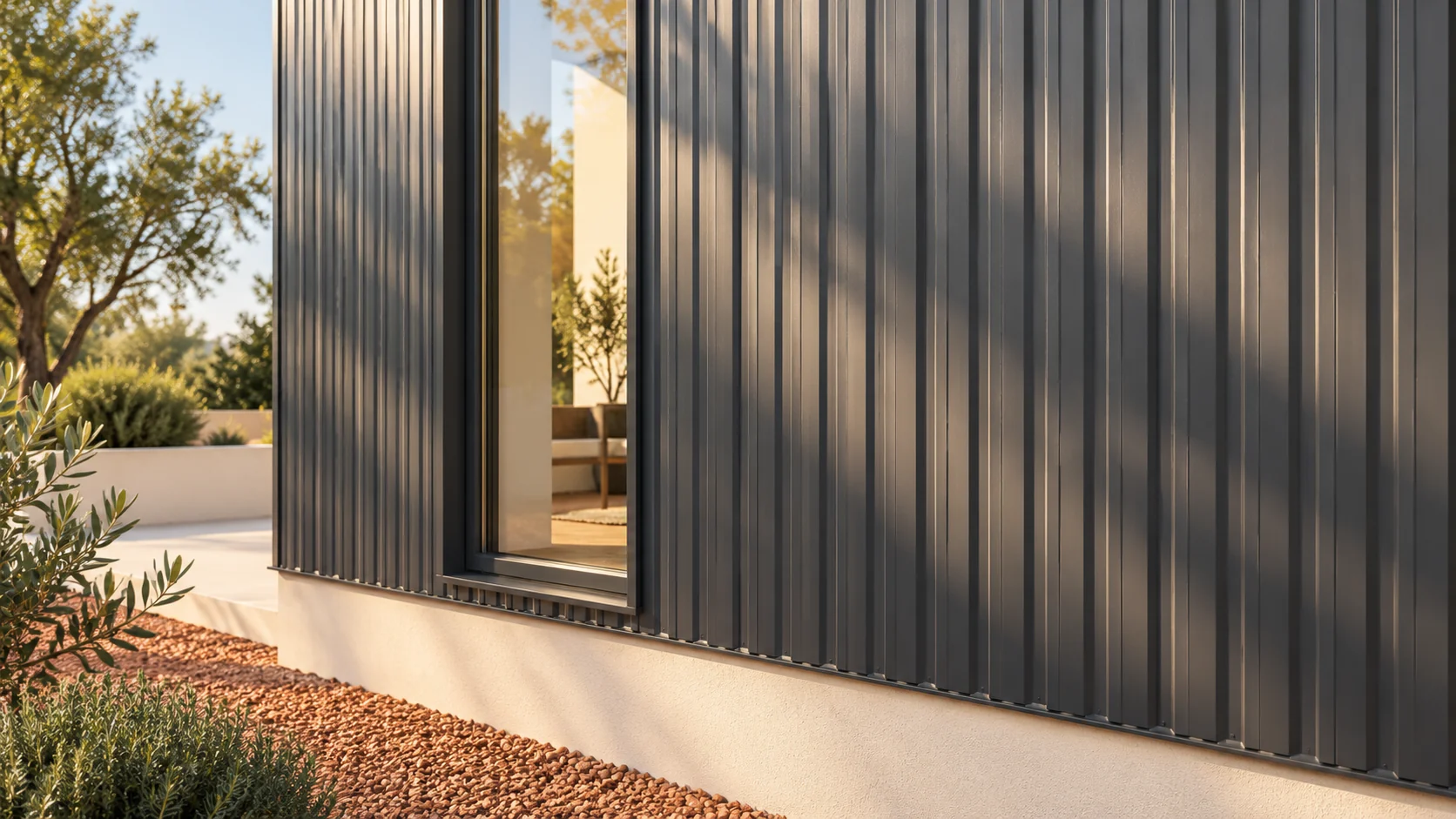
T8 has a delicate pattern and may suit soffits, gates or a small wall. However, a low profile does not hide errors in the substructure. On large areas, unevenness and movement of the sheet metal are easier to notice. It is worth starting with the scale of the surface and only then moving on to colour. Below we explain how to read the dimensions and where the limits of this material lie. The T8 designation usually refers to a low façade profile. In one variant, the height is 8 mm, the overall width is 1220 mm and the cover width is 1156 mm. Sheets are available in thicknesses of 0.5 or 0.7 mm. The recommended maximum length is 6 and 7 m respectively. This is an example product, not a common set of dimensions for the whole group.
What parameters does the example T8 have?
These figures describe the overall dimensions and the design variant. They do not specify the permissible support spacing. A long sheet still requires support in line with the loads. When purchasing, it is worth having a cross-section drawing. The name T8 alone may lead to a different product with a different edge or width.
How to calculate material for a small enclosure?
Assume a wall 4.5 m long with the described variant laid vertically. Four sheets with a cover width of 1.156 m give 4.624 m. 124 mm remains to be resolved at the ends of the field. This does not mean that four strips can be ordered straight away without checking the corners. The layout should retain a convenient fixing position for the flashings.
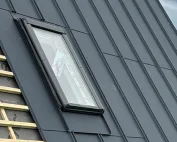
If there is a window in the wall, do not simply deduct its area from the order. The sheets may run through its height and require cutting. Only the cutting plan will show whether the resulting piece can be used. In a small building, a single non-fitting strip noticeably changes the cost of the entire façade.
Where does the waviness of flat parts come from?
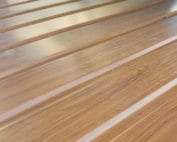
Thin sheet metal reacts to temperature and to the method of fixing. The low profile has a major influence on how visible these changes are. An uneven substructure, forced alignment or incorrect pressure can worsen the effect. Light falling at a shallow angle accentuates even slight surface deformation.
In selected systems, long 0.5 mm sheets on large areas have clearly described aesthetic limitations. These should not be ignored just because the sample looks perfect. Shorter fields and properly prepared support may be the more sensible solution. However, random expansion joints must not be added independently without defining the detail.
Where is T8 most convincing in use?
The low profile can be considered for soffits, gates, fencing and small structures. The delicate geometry combines well with narrow flashings. In such locations, the visible side and the treatment of cut edges are also important. A soffit requires the roof ventilation provided for to be maintained.
An example façade variant does not become a roof covering just because it fits on a roof slope. A roof needs a product with the appropriate intended use and conditions of use. On a new small building, you can choose T8 for the wall and a different profile for the roof. A consistent colour does not require an identical cross-section in both places.

What should be checked in the substructure and fixings?
The substrate should have the correct geometry, rigidity and protection against corrosion or damp. The support spacings and the anchoring of the entire enclosure must be assessed. A screw selected for wood is not automatically suitable for thin steel profile. Its length must match the actual layer build-up.
An uneven wall should not be straightened by pulling the sheet metal alone. This causes visible stress. Before installation, it is worth checking the diagonals and the bearing plane. A horizontal layout brings additional division lines and water drainage details. The profile direction should be determined in the façade design, not only at the first sheet.
How can the aesthetic appearance be maintained during use?
The protective film is removed within the period specified for the delivery. If left too long, it may make clean peeling difficult. After installation, the surface should be free of swarf and connector remnants. For care, use gentle methods compatible with the coating. A rough brush may leave more marks than the dirt being removed.
On a dark façade, observe both dirt and places where water is retained. Narrow gaps at flashings should retain their function. Do not seal them without understanding them. If you are planning a series of small pavilions, keep one specification for the coating and the strip layout. This will make it easier to compare the condition of individual surfaces later.
What else is worth asking about
Will a thicker T8 always look perfectly smooth?
No. Thickness matters, but the effect also depends on length, substrate, temperature and installation. The limitations of the specific variant must be taken into account.
Is the coverage equal to the sheet width?
No. In the given example, the coverage is 1156 mm and the overall width is 1220 mm. The difference is related to the connection of adjacent strips.
7 branches. Materials closer to your project.

- SEROCK — Dzierżenin 34 E
- BŁONIE — ul. Sochaczewska 138A
- RADOM — ul. Grobickiego 8
- ŁÓDŹ — Natolin 8
- OLSZTYN — Barczewo, ul. Prosta 9
- WROCŁAW — ul. Jerzmanowska 10C
- GORZÓW WLKP. — ul. Zielona 33/34