
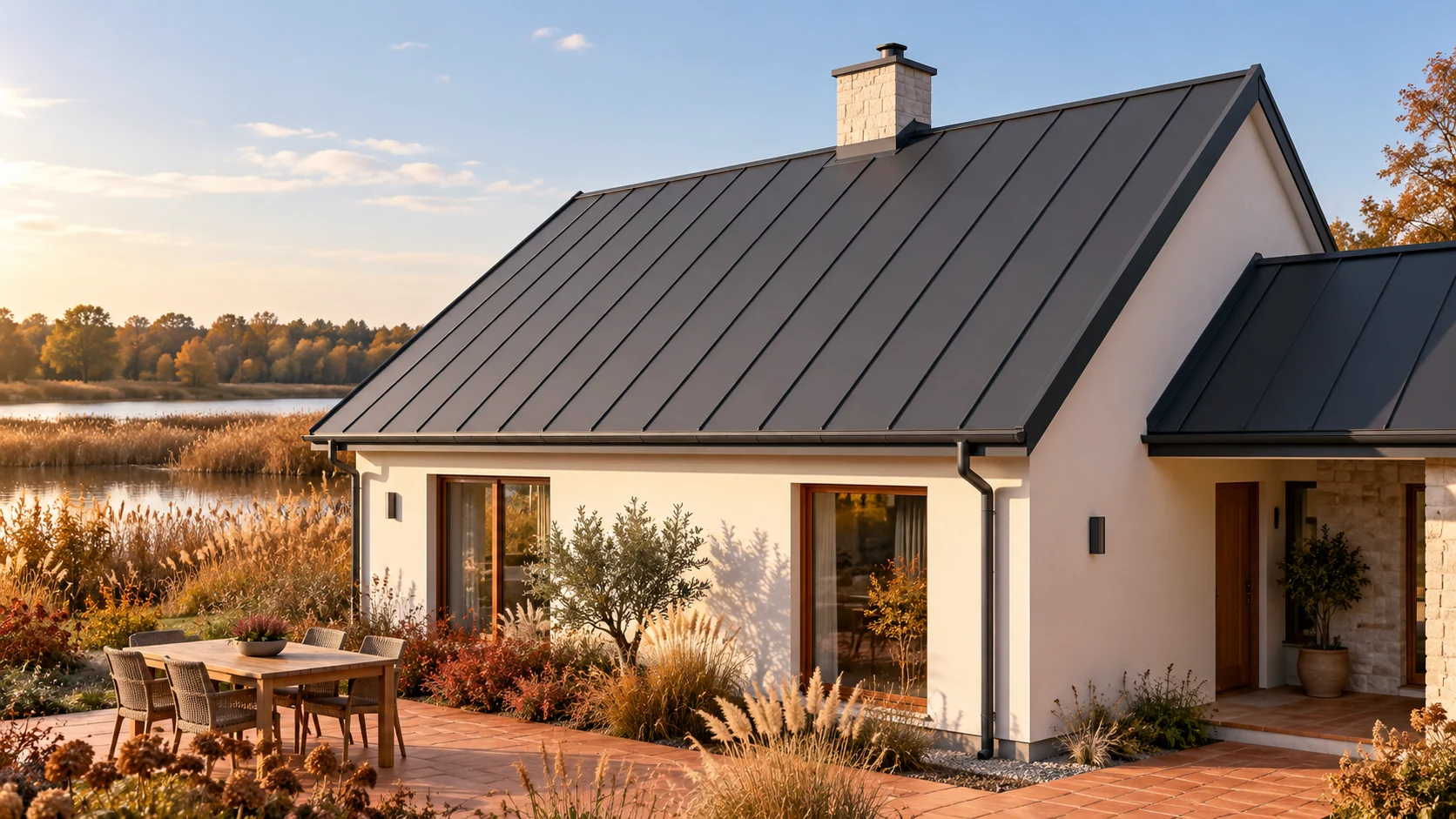
Why does standing seam shed water and what can weaken its watertightness?

In a standing seam roof, the joint is raised above the flat part of the covering. Water runs off primarily between the longitudinal lines. This is a favourable geometry, but it does not provide resistance to every error. The roof still needs the correct pitch, substrate and flashings. The areas requiring the most attention are those where the straightforward direction of run-off is interrupted. The folded edges of the sheet form the standing seam. The main surface of the roof slope sits lower than its upper part. With a correct layout, water does not stand over the full height of the joint. This does not mean, however, that it may pond freely between the strips. The roof must retain the designed direction and continuity of drainage.
By |2026-11-14T10:54:24+01:002022-09-24|Building academy|Comments Off on Why does standing seam shed water and what can weaken its watertightness?

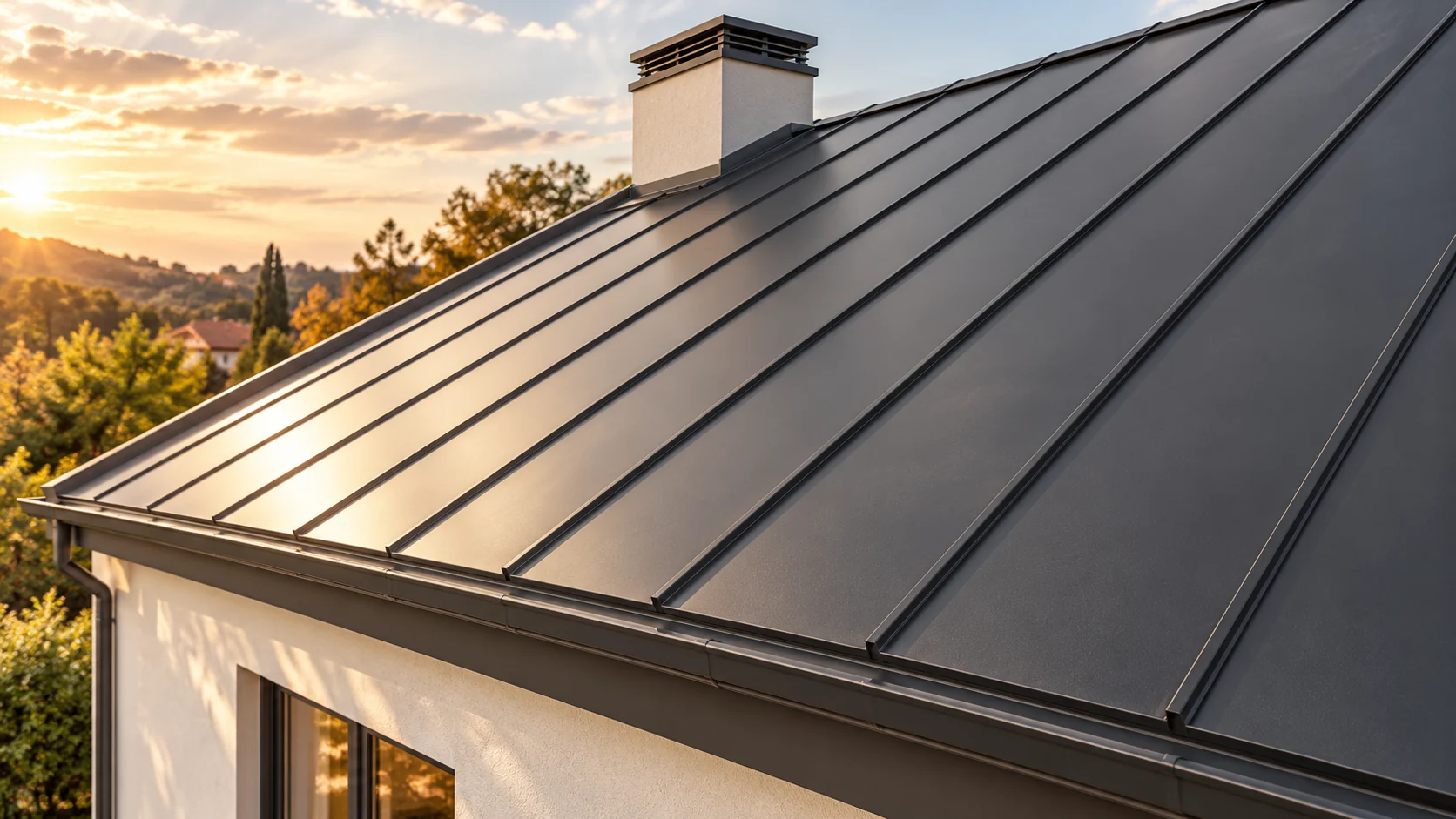
Which standing seam should you choose: single-locked, double-locked or click-fit?

A standing seam describes the way the sheet metal joint is formed. However, this name covers various solutions. A traditional seam locked on site is not the same as a factory-made click-fit panel. The differences affect the execution of details, thermal movement and the permissible pitch. The choice should not be reduced to the appearance of the vertical line on the roof slope. In traditional covering, the edges are appropriately profiled and locked into a joint. A double seam has an additional fold compared with a single seam. This changes the path that water would have to take. However, tightness also depends on the accuracy of execution, the substrate and the details used. The name alone is not a guarantee of a tight roof.

By |2026-11-14T10:54:07+01:002022-03-07|Building academy|Comments Off on Which standing seam should you choose: single-locked, double-locked or click-fit?
Back to top