Panels in use
How to choose panels for a cattle shed, pig house and poultry house?
In brief
In a livestock building, the panel operates in a different environment than in a dry warehouse. There is moisture, contamination and regular cleaning. A cattle shed, pig house and poultry house do not necessarily require the same variant. Selection begins with the conditions on both sides of the enclosure. Insulation thickness is only one of the decisions. Determine the temperature, humidity and method of ventilation. The type of livestock, stocking density and processes carried out in the building are important. Specify the cleaning agents and the conditions in which they are used. The description “agricultural” does not define the concentration of chemical agents or the frequency of cleaning. Without this information, it is difficult to select the cladding.
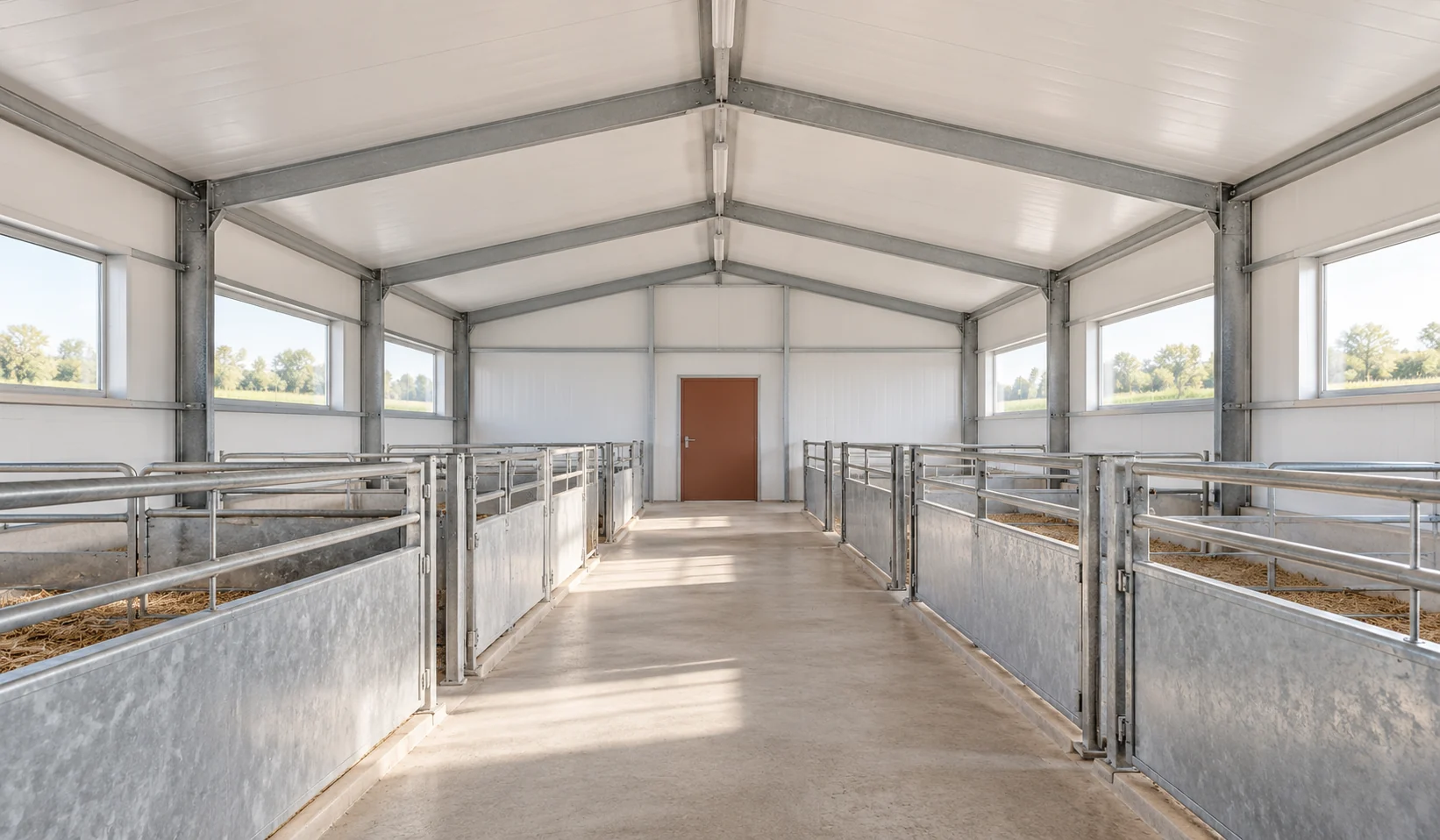
How to describe the environment inside the facility?
Periods of interruption and changes in use must also be taken into account. The building may perform differently when full of animals than after washing. Temperature and humidity variations affect surfaces and joints. It is worth describing the entire cycle, not just average conditions from a single day.
Is ordinary white steel sheet sufficient?
White colour does not mean special chemical resistance. A suitable type of coating and confirmed conditions of use are required. Two identically looking claddings may have different purposes. RAL describes colour, not resistance to the environment in a piggery or poultry house.
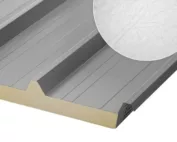
In more demanding conditions, suitable coatings or composite cladding are considered. In some roof panels, the inner layer is made of glass-fibre reinforced resin. It should not be treated as resistant to any chemical. Selection requires checking the agent, concentration, temperature and contact time.
How to choose the core and thickness?
PIR, PUR and mineral wool have different properties. The choice should take into account the thermal objective, fire requirements and construction. A low λ can reduce the thickness needed for a given resistance. However, it does not mean that every foam panel has the same parameters or range of application.
The selection of indoor temperature should be linked to the building technology. An overly simple comparison of the walls alone ignores ventilation and heat gains. In an intensively ventilated facility, energy savings require assessment of the entire system. Thicker insulation does not replace properly planned air exchange.
What is particularly important on the roof?
Check the loads, pitch and connection details. Steam and warm air can reach unsealed details. Water must not enter the core or be retained at the panel end. Fan and other equipment penetrations require suitable flashings and construction.
The weight of installations must not be transferred inadvertently to the thin inner facing. Fixing must be provided for in the design. This also applies to pipes, process lines and suspended components. The load-bearing table for the panel alone is not universal approval for any additional equipment.

How to plan washing without damaging surfaces?
Establish the approved cleaning agents and parameters. Not only the composition of the agent matters, but also its dilution, temperature and contact time. The jet should not be directed at joints in a manner inconsistent with the instructions. Tightness for normal use does not mean resistance to every pressure-washing test.
Before changing the chemistry, check compatibility with the surface and seals. An unsuitable agent can damage the detail even though the large panel area still looks good. After cleaning, inspect the areas at flashings and fasteners. Drying conditions appropriate to the usage technology must also be ensured.
How to resolve the lower part of the wall?
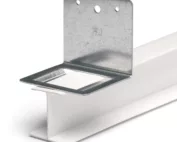
The zone at the floor is exposed to water, dirt and impacts. It requires a good connection to the plinth and edge protection. The panel should not stand with an exposed core in a wet location. Mechanical protection must have suitable fixing that does not damage the enclosure.
In transport routes, the sheet metal can easily be damaged by trolleys or equipment. Such locations should be identified before installation. A guard at the column may be more justified than replacing the entire cladding with a more expensive variant. The solution should correspond to the actual hazards at that point.
What to agree before purchasing the entire batch?
Provide a description of the environment and the expected function of the panels. Record the type of facings on both sides, the core, the thickness and the required classifications. Establish the seals, fasteners and flashings. These should not be selected only after delivery as random additions.
With several livestock buildings, do not assume identical conditions. A different operating cycle may require a different internal finish. Keep documentation of the approved variant and the maintenance rules. This will allow changes of use and later repairs to be assessed on the basis of specific data.
What else is worth asking about
Does a panel intended for a poultry house always suit a cattle shed?
This cannot be assumed without comparing conditions. Moisture, ventilation and cleaning may differ. Selection relates to a specific environment.
Does a chemically stronger facing replace ventilation?
No. Surface resistance and air exchange serve different functions. The building still requires ventilation in line with the usage technology.
7 branches. Materials closer to your project.

- SEROCK — Dzierżenin 34 E
- BŁONIE — ul. Sochaczewska 138A
- RADOM — ul. Grobickiego 8
- ŁÓDŹ — Natolin 8
- OLSZTYN — Barczewo, ul. Prosta 9
- WROCŁAW — ul. Jerzmanowska 10C
- GORZÓW WLKP. — ul. Zielona 33/34