Installation and details
Fitting gutters so rainwater reaches the outlet
In brief
Whether roof water reaches the drain depends primarily on selecting adequate gutter capacity and positioning the downpipes, not on the eaves length alone. Check the effective drained area, the roof slope layout and points of increased inflow, such as a valley outlet. The setting of the brackets, the required fall and the allowance for thermal movement also affect water capture. Before closing the eaves with soffit, verify the gutter apron detail and the discharge of the underlay so that water does not reach the façade.
How should the size and position of the drains be selected?
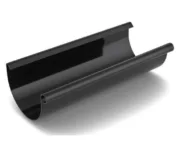
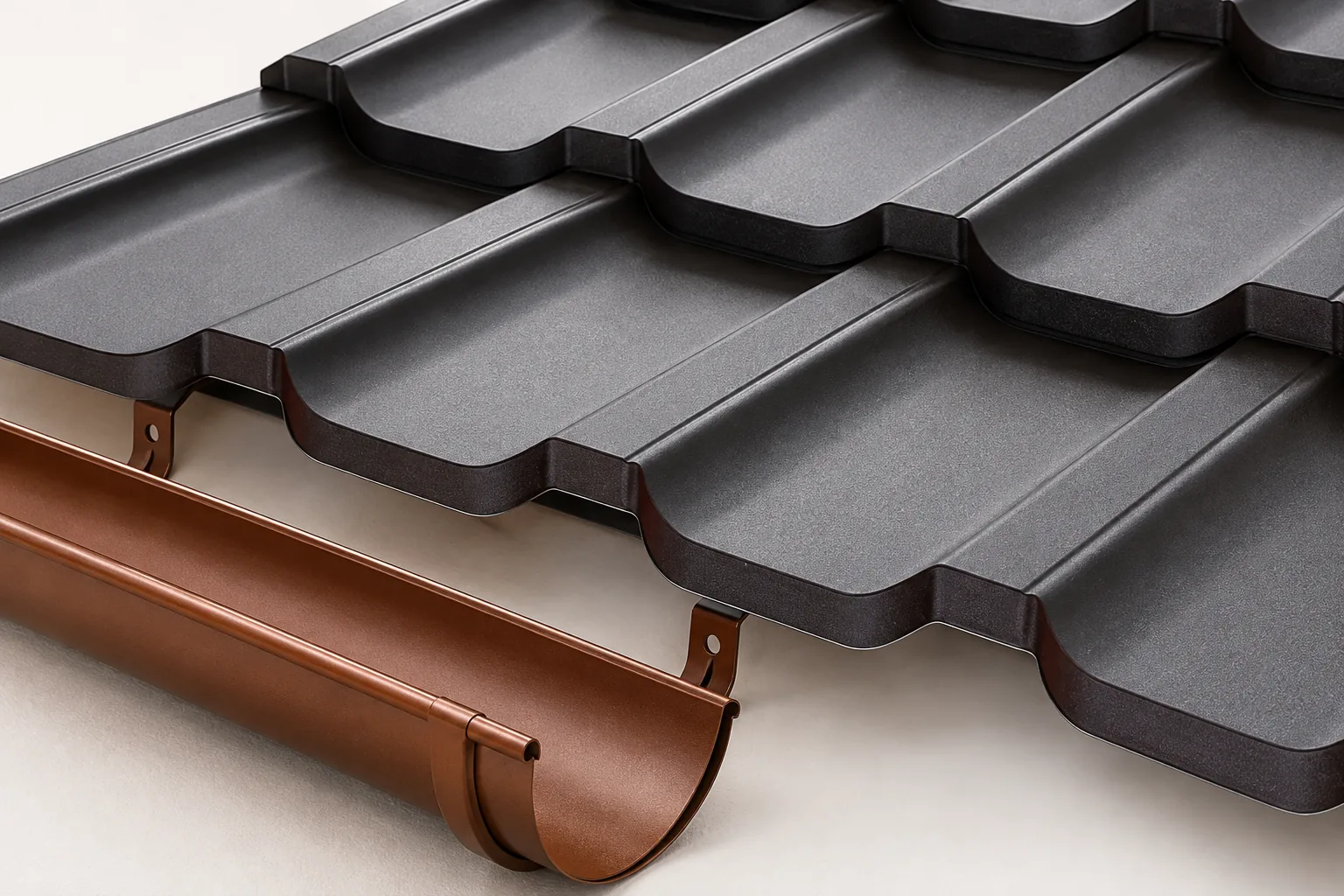
A gutter collects water from a specific part of the roof. Its selection depends on the effective drained area, the roof slope layout and the position of the downpipes. An outlet located at the end of a long gutter creates different conditions than an outlet in its middle. The length of the eaves alone is not sufficient to select the diameter.
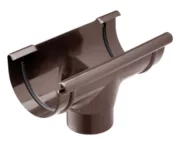
The design should account for locations with increased inflow, for example a roof valley outlet. At such a point, water may reach a short section of gutter from a large area. It must also be determined where the water will be discharged further. Hanging the pipes without a prepared water discharge does not complete the building drainage task.
How should the brackets and gutter fall be set?
The brackets define the gutter line and transfer loads to the building elements. Their type is selected according to the substrate and the stage of works. Fixing to a fascia board or to suitable structural elements is possible. The substrate must ensure reliable retention of the fasteners.
The bracket spacing and the slope result from the system instructions. Additional support may be required at outlets, corners and joints. A single value should not be assumed for all steel and plastic gutters. After installing the end brackets, the actual line of the entire section must be checked. A local dip may retain water despite a correct height difference at the ends.
Where should the gutter be positioned relative to the eaves?
Water flowing off the covering must reach the gutter even during heavy rain. A gutter positioned too low or too far away may not capture the stream. Conversely, raising it incorrectly may increase the risk of damage from sliding snow. The position is selected according to the geometry of the eaves.
The gutter apron and the method of leading out the underlay are important. Water from beneath the covering should not get behind the fascia board. This detail should be checked before closing the eaves with soffit. The gutter must also not accidentally block the air supply to the ventilated space beneath the covering.

Why must allowance be left for expansion?
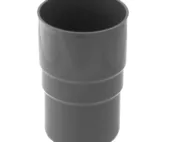
Gutter components change length under the influence of temperature. This applies to both plastics and metal, although the scale of change may differ. Connectors, outlets and clips must function in accordance with the system design. Pushing components fully in without the required gap may cause deformation or loss of tightness.
Seals should sit evenly and remain clean. If the instructions recommend a lubricant, use a product compatible with the material. Not every joint should be replaced with adhesive or silicone. In a system designed for movement, such rigid fixing can hinder compensation for changes in length. The temperature during installation can also affect the joint setting.
How should downpipes and a rainwater gully be connected?
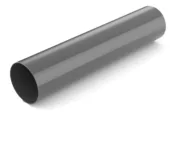
Pipes are fixed with clamps matched to the wall and the thickness of the insulation. The connector should reach the proper substrate and not hold the pipe only within the thermal insulation layer. Elbows and the offset should be arranged so that they do not impose lateral stress on the roof outlet.
At the bottom, access for cleaning should be provided. A rainwater gully or inspection opening retains some of the debris and allows the outlet to be checked. Its position must be coordinated with the final ground level. The cover must not be encased in concrete or hidden by the surface. The further pipe requires a proper fall and unobstructed drainage.
What should be checked during acceptance?
After installation is complete, waste should be removed and the outlet checked with a controlled flow of water. Joints, corners and places where water remains are observed. The test does not replace capacity selection but helps detect setting and installation errors.
It is worth checking that no element is under stress and that the hooks and clamps are securely fixed. After the first heavier rainfall, the façade and the lower ends of the pipes should be inspected again. Gutters then require periodic cleaning. A leaf guard can reduce the amount of debris but does not remove the need for inspection.
An error is easiest to correct before all flashings and soffits are fitted. It is therefore worth not postponing acceptance of the drainage until the end of construction. Photos of the hook setting and the connection to the eaves will also help with later diagnosis of any leak.
7 branches. Materials closer to your project.

- SEROCK — Dzierżenin 34 E
- BŁONIE — ul. Sochaczewska 138A
- RADOM — ul. Grobickiego 8
- ŁÓDŹ — Natolin 8
- OLSZTYN — Barczewo, ul. Prosta 9
- WROCŁAW — ul. Jerzmanowska 10C
- GORZÓW WLKP. — ul. Zielona 33/34