PIR insulation
A cold floor despite PIR? What to check with Utherm Floor LE
At a glance
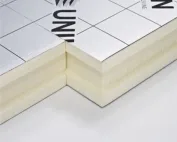
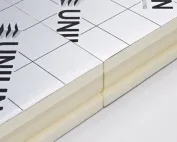
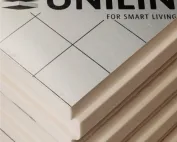
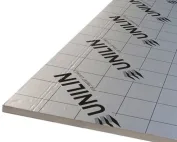
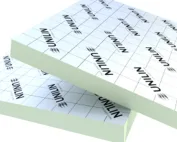
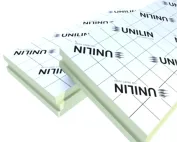
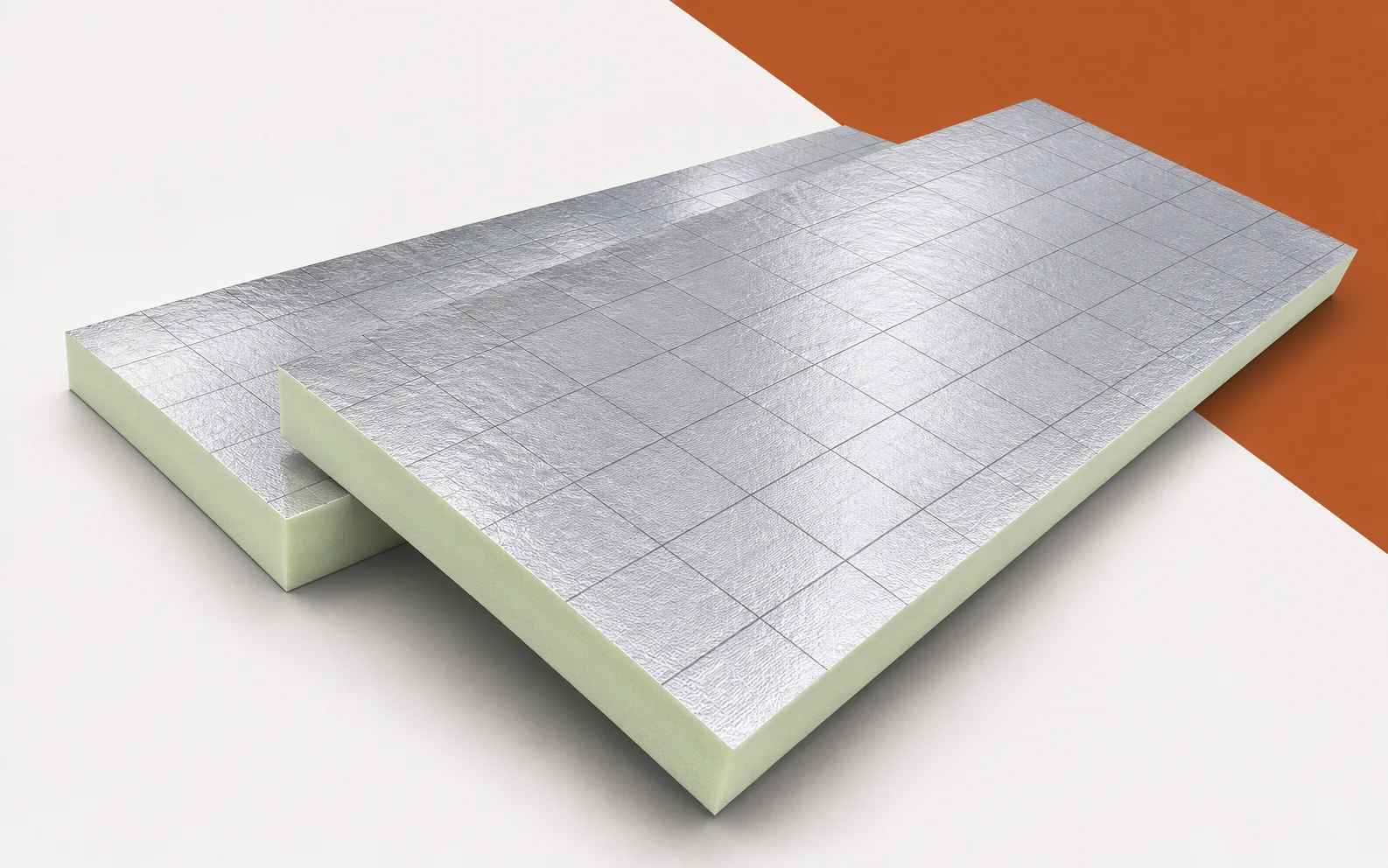
A cool sensation underfoot is not a direct measurement of the properties of Utherm Floor LE. The covering, the room temperature and the operation of the heating also influence it. An assessment should examine these factors together with the geometry of the thermal insulation at the walls. Utherm Floor LE is a PIR board intended for floors. It has a gas-tight laminate on both sides with a printed grid. The terms “polyurethane boards” and “polyurethane foam” are broader than the precise designation of the PIR product. When assessing the performance of the building element, it is worth checking the limited floor level at the doors in the solution with Utherm Floor LE. Before assessing the solution, the height of Floor LE, the screed, the services and the finished covering must be added together.
PIR Floor LE boards and the finished floor level
It is easy to confuse the functions of the components if one omits the fact that the dimension of the board itself does not show the finished floor level. A correct diagnosis should allow the necessary thermal insulation to fit without inadvertently reducing the layers above it. During the inspection, compare the cross-section from the substrate to the level of the threshold and the adjacent floor with the information on how it was constructed.
The correct thickness and reading the thermal resistance
Utherm Floor LE with a thickness of 60 mm has a declared R_D of 2.70 m²K/W and a lambda of 0.022 W/(m·K). The low conductivity is useful where floor height is limited. However, when coldness is reported, the variant actually installed and the continuity of the layer must be confirmed: the board’s declaration does not describe the entire building element or its joints.
For a correct interpretation, the thermal result must be assigned to the correct thickness of Floor LE. A similar notation does not have to mean the same thing, because a floor on the ground requires consideration of the geometry and the conditions of contact with the substrate. Such a distinction allows the influence of the board to be assessed without calling its resistance the coefficient of the entire floor. Before drawing a conclusion, ask for the catalogue data for the selected thickness and for a separate calculation of the relevant cross-section, so that the figures refer to the actual layer.
Polyurethane insulation on a prepared substrate
The symptom of a cold floor does not exempt one from assessing the support. The PIR board requires even contact with the substrate and is not intended to level out pronounced humps and depressions. During the inspection, examine the support of Floor LE in the vicinity of pipes routed below the insulation, because that is precisely where points supported only at isolated spots occur.
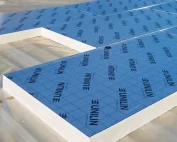
When planning and assessing the installation, it is worth levelling the surface under the Floor LE boards in the 1200 × 600 mm format. The installation rules must be checked separately, because a protruding pipe or a depression can leave a board supported at only a few points. Establishing the cause should allow uniform contact to be achieved without accidentally wedging the insulation with offcuts. When assessing the polyurethane insulation, check the condition of the substrate, the levels and the way the services are routed beneath the thermal layer before accepting the completed joint.
Heating, screed and expansion joints
In a floor with heating, the insulation limits the loss of energy towards the substrate, but it does not replace the design of the pipe spacing, the flow temperature or the balancing of the circuits. A cold sensation can therefore result from the installation, not from the board. When analysing the joints, identify the heating arrangement above Floor LE and its connection to the screed before you indicate the cause.
Before a repair is specified, the separating layer, the fixing of the pipes and the movement joints above Floor LE must be agreed. It should not be concluded from appearance alone, because PIR limits the flow towards the substrate but does not determine the output or the heating control settings. The information gathered should allow the required thermal cross-section to be maintained without disregarding the requirements of the heating part. Before specifying the repair method, check the pipe design, the thickness of the screed and the type of finish on the room side, as well as the history of previous work.
Equipment loads and footstep sounds
The PIR board is rigid, so it cannot be assumed in advance that it will by itself attenuate impact sound. If the floor is to meet acoustic requirements, an arrangement designed for that purpose is needed. In the documentation, the load from a heavy wardrobe and the requirement to limit footstep sound above the Floor LE board must be considered separately.
When reading the scope of the declaration, a distinction must be made between the assessment of heavy equipment and the acoustic function required of the floor. A conclusion going too far would be unjustified, since rigid thermal insulation does not automatically replace an impact-sound damping material. The explanation should make it possible to select the entire floor for the actual equipment and pattern of use. In case of doubt, the arrangement of the load-distributing layers and the edge detail at the walls must be checked, instead of settling for a general assurance of quality.
Insulation with polyurethane: the cost of a complete floor
It is worth preparing a cross-section from the substrate to the finished surface before purchase, including insulation, heating, screed, adhesive and covering. When assessing an offer or accepting the works, the cost of adapting the thresholds must also be taken into account if the thickness of Floor LE changes.
Before assessing quality or price, it is worth comparing the cost of the entire floor with Floor LE, including preparation and finishing. Without this, the result is difficult to compare, since a lower board price may mean lower resistance or omitted substrate work. Identifying the scope should make it possible to assess the benefit of the saved height against the price of the entire scope. Base any conclusion about costs or quality on data covering the level schedule, the levelling required and all materials above the insulation.
A case worth considering
A cold surface above Floor LE may be related to the floor edge or to the operation of the heating. The sensation of cold alone is not a lambda reading. It is worth checking the detail at the wall and the temperatures on both sides of the building component. With heating, an assessment of the circuit control is also needed. Such a diagnosis makes it possible to distinguish an insulation problem from an installation problem before deciding on demolition.
7 branches. Materials closer to your project.

- SEROCK — Dzierżenin 34 E
- BŁONIE — ul. Sochaczewska 138A
- RADOM — ul. Grobickiego 8
- ŁÓDŹ — Natolin 8
- OLSZTYN — Barczewo, ul. Prosta 9
- WROCŁAW — ul. Jerzmanowska 10C
- GORZÓW WLKP. — ul. Zielona 33/34