Steel profiles and structures
Are sigma sections always stronger? Examining a common assumption
In brief
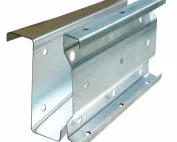
Sigma profiles attract attention thanks to their distinctive web. Several bends distinguish them from simpler C and Z sections. This is where the belief comes from that sigma must be the strongest choice. Such a conclusion goes too far. Cold-formed profiles are assessed for a specific task. Geometry can help, but the outcome is also determined by dimensions, steel, length, support and connections. A flat, thin wall has a certain susceptibility to deformation. Introducing bends changes its shape and working conditions. In sigma profiles, the middle part of the section does not lie in a single plane over the full height. This distinguishes it from the simple web of a channel. The solution allows the profile’s properties to be shaped without reducing the whole task to increasing sheet thickness.
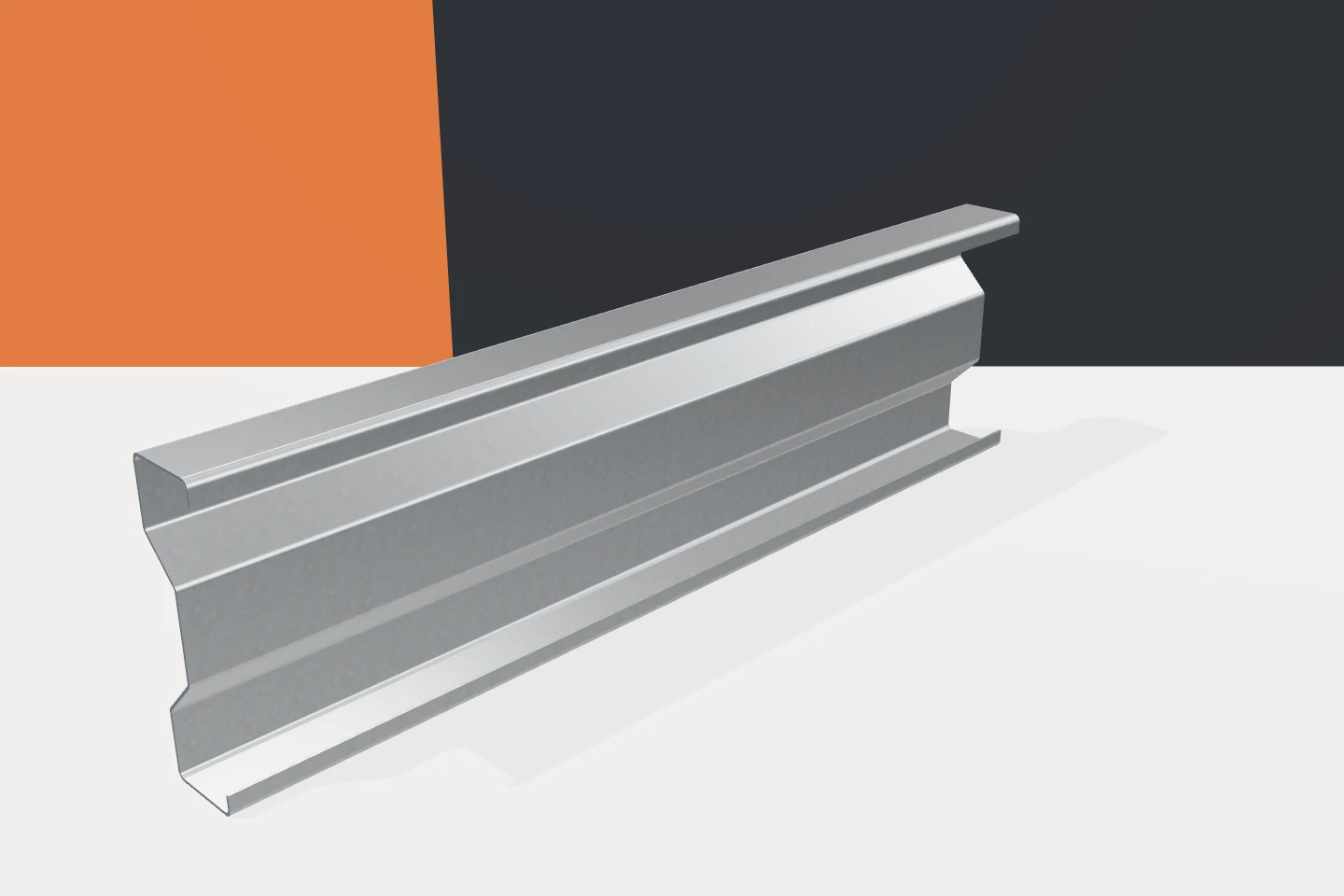
Additional bends change how the web works
However, this does not mean there are no limitations. It is still a thin-walled steel element. The behaviour of the flanges, bends and web must be checked. A tall sigma profile may have a different sensitivity to local loads than a shallow one. An accurate cross-section drawing is therefore needed for assessment. A simplified Greek letter symbol does not provide this data.
What a fair comparison means
To compare sigma with another profile, common conditions must first be established. These may be the required span, load and permissible deflection. Variants meeting these requirements are then checked. Comparing a heavy profile with a light one based solely on height can be misleading. The result depends on the assumed thickness and steel grade.
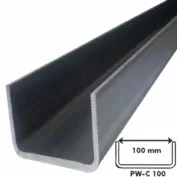
Comparing weights alone does not give the full picture either. One solution may need additional bracing, while another needs different fixings. Z-sections can work effectively in a specified lapped arrangement. Channel sections may be better suited to framing an opening. Select sigma sections for their role, rather than placing them at the top of a universal ranking of cross-sections.
Load capacity and stiffness answer different questions
Load-bearing capacity concerns the ability to transfer actions under the assumed conditions. Stiffness affects the magnitude of deformations. An element may satisfy the strength condition while deflecting excessively from the perspective of the building envelope. The design therefore does not end with checking whether the steel reaches the yield point. The serviceability of the structure must also be assessed.
This matters, for example, with sandwich panels, flashings and windows and doors. Support displacements can affect their behaviour. Cold-formed profiles are selected taking the entire system into account. Information that the steel is stronger alone does not guarantee smaller deflections. Changing the grade does not replace checking the geometry and the appropriate support scheme.
The support arrangement can change the result
The same sigma section behaves differently over different spans. Its connections to the supports and its lateral restraint also matter. An eccentric load introduces additional effects. A section used as a side rail may operate under different conditions from a roof purlin. A change of use therefore requires a fresh assessment.
It must not be assumed that screwed cladding always provides restraint against twisting. This effect depends on the type of sheathing and the fixings. Separate stabilising elements are sometimes required. Galvanised profiles are part of a structure in which every detail has a role. The absence of a small tie may matter more than the choice of a more complex section.

Connection points require separate attention
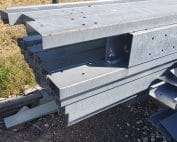
The folded web affects the available fixing planes. When preparing the drawings, the position of the holes and the contact with the supporting element must be checked. The screw must work in the intended position. It must not be moved arbitrarily onto the edge of the stiffening fold. Tool access during installation should also be taken into account. A good detail is feasible without straightening the profile.
Factory hole punching helps to maintain repeatability. However, it must be based on approved documentation. If the delivered profile does not fit the connection, the cause must be established. It may be an error in marking, orientation or the dimension of the main structure. Rework carried out immediately makes diagnosis more difficult and may weaken the element. Sigma profiles should not be fitted by trial and error.
The protective coating does not solve the structural issue
Galvanised sigma profiles combine section characteristics with surface protection. These are two separate issues. The zinc coating limits corrosion but does not replace calculations. Nor does it protect the structure against loss of load-bearing capacity in fire conditions in the manner of a fire protection system. Durability, load-bearing capacity and fire safety require appropriate verification.
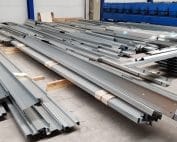
At the delivery stage, the profile must be inspected for dents and twisting. A folded web does not justify disregarding damage. As with zeds, channels and omegas, the element should retain its intended geometry. Galvanised profiles are stored so as to limit moisture and mechanical loading of the bundles. Protection begins before installation.
When sigma can be a good choice
Sigma is worth considering when the available range meets the structural requirements and offers a favourable material balance. Compatibility with the fixing details and the installation technology is also needed. In such a case, the additional folds are a useful feature. They help to achieve the properties intended by the designer. They are not decoration nor proof of superiority in every application.
The enquiry should state the full section, length, steel, coating and hole punching. If other cold-formed profiles are being considered, complete variants are compared. A good decision takes into account the cost of elements, accessories and labour. Sometimes sigma will win, sometimes a zed or a channel. The aim is a correct and economical structure, not the choice of the most complicated shape.
7 branches. Materials closer to your project.

- SEROCK — Dzierżenin 34 E
- BŁONIE — ul. Sochaczewska 138A
- RADOM — ul. Grobickiego 8
- ŁÓDŹ — Natolin 8
- OLSZTYN — Barczewo, ul. Prosta 9
- WROCŁAW — ul. Jerzmanowska 10C
- GORZÓW WLKP. — ul. Zielona 33/34