Sheet metal flashings
Staining at the eaves: is the gutter apron at fault?
In brief
Water on the fascia board or on the façade below the gutter does not always come from a leaking gutter system. The cause may be the arrangement of flashings at the eaves. Gutter aprons are intended to direct water into the gutter, but they must work together with the covering and the underlay. None of these elements works in isolation from the others. It is worth starting the inspection by establishing where the water actually flows. Most of the water runs off the outer surface of the covering. Moisture conveyed by the underlay may also appear beneath the metal sheet. Both routes must be taken into account in the eaves detail. How they connect to the gutter or are led out beyond the protective layer depends on the chosen solution.
The two water paths at the eaves
The gutter aprons should not create a ponding point at the end of the membrane. However, this point should not be corrected by randomly cutting the foil or the flashing. First, the way the layers are laid must be identified. The drainage must be deliberate and continuous along the entire inspected section.
Gutter apron and under-gutter flashing are different elements
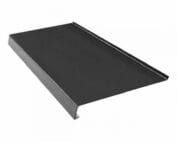
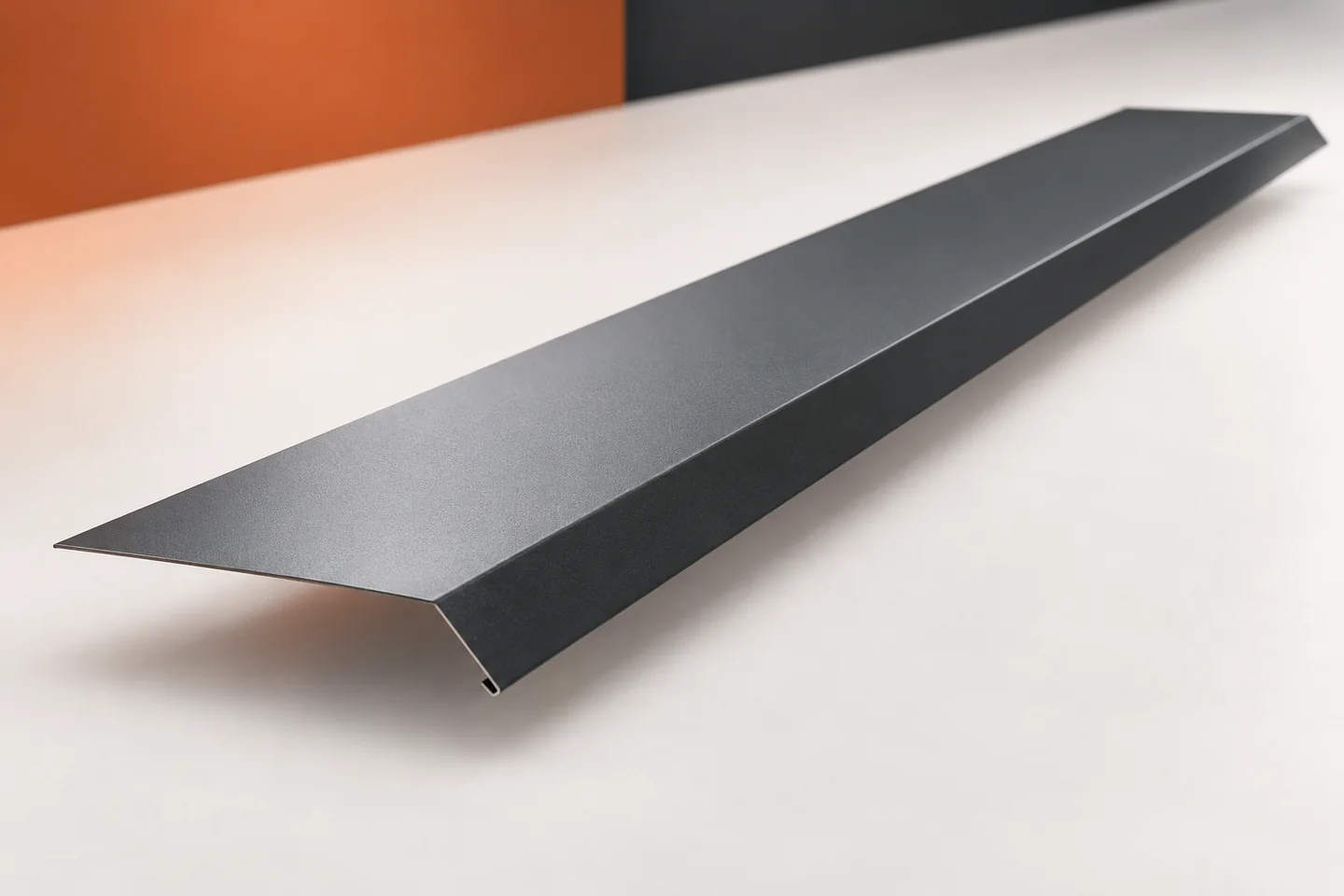
The gutter apron is located at the transition from the covering to the gutter. Its profiling helps direct the flowing water to the right place. The under-gutter flashing protects the area beneath the gutter, including the fascia board. Similar names do not mean that both profiles can be used interchangeably.
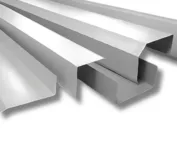
When replacing, it is worth working from the cross-section rather than the name on the order alone. The height of the leg, the projection and the edge fold change the behaviour of the detail. An incorrect flashing can look right from a distance and yet still leave a path for water behind the eaves cover.
Check the position of the gutter
Water must reach the gutter under the conditions envisaged for the roof. The position of its edge relative to the covering and the apron is significant. Excessive offset or an unsuitable height change the drainage path. The assessment is carried out together with the arrangement of the brackets and the profile of the eaves.
There is no single apron projection that is right for every roof. The pitch of the slope, the shape of the covering and the rainwater drainage solution all matter. If damp patches appeared after the gutters were replaced, it is worth comparing the new arrangement with the old detail. The gutter apron itself may have remained in its previous position.
Joints between successive sections
A long eaves usually requires several flashings to be joined. Every lap takes up part of the element’s length. Failing to allow for this when ordering sometimes leads to joints that are too short at the end of the roof slope. Gutter aprons must be planned before installation begins.
During inspection, the arrangement of laps, deformations and any sealing points are checked. Water should not get under the edge through the wrong direction of connection. The execution details must correspond to the roofing documentation. A random extra screw does not solve every leak.

Blockage or detailing error?
A clogged gutter can overflow despite a correctly laid gutter apron. Conversely, a clear gutter does not rule out seepage at the eaves. It is therefore worth separating the check into gutter drainage and runoff from the roof slope. This avoids replacing a good element because of a fault elsewhere.
Corners, junctions with the gable and outlets should also be inspected. Verge flashings should end in such a way that they do not interfere with the functioning of the eaves. If the problem recurs at only one corner, that particular junction needs to be assessed. Applying sealant along the entire length is often unnecessary.
It is worth noting whether the overflow occurs along the entire length or at a single outlet. The cause may lie in a local blockage or in the alignment of a section of gutter. Such information narrows the scope of work and allows the condition of the metal cover to be assessed separately.
Material versus surface condition
Galvanised and aluzinc sheets have metallic protection for the steel core. Coated sheets receive an additional system of organic layers. Gutter aprons can be supplied in these variants. The choice should take into account the environment, the roofing material and the sheet manufacturer’s requirements.
At the eaves it is worth removing swarf and dirt that may accumulate on the wet surface. Coating damage should be assessed before touch-up work is carried out. A deep dent that alters the water runoff requires different treatment from a minor scratch. Coloured paint will not restore the correct cross-section.
How to prepare an effective repair
A photo of the eaves cross-section and information on when the stains appear are useful for the assessment. It is worth showing the hook fixing points and the end of the membrane. If a standard profile does not fit, bespoke flashings can be based on actual measurements. The drawing should indicate the visible side.
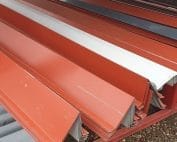
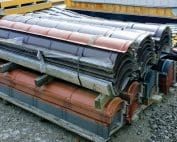
Ridge tiles, starter profiles and chimney flashings serve different purposes from gutter aprons. Names for the whole set help to organise the order, but they do not replace the eaves detail. After repair, the cleanliness of the outlet and the behaviour of the joints should be checked. Correct water flow determines effectiveness.
Questions and answers
Does the under-gutter flashing replace the gutter apron?
No. They have different positions and functions. The correct set of flashings depends on the eaves cross-section and the method of water drainage.
Why did damp patches appear after replacing the gutter?
The new gutter may sit at a different height or offset. Its relationship with the covering and the existing gutter apron must be checked.
7 branches. Materials closer to your project.

- SEROCK — Dzierżenin 34 E
- BŁONIE — ul. Sochaczewska 138A
- RADOM — ul. Grobickiego 8
- ŁÓDŹ — Natolin 8
- OLSZTYN — Barczewo, ul. Prosta 9
- WROCŁAW — ul. Jerzmanowska 10C
- GORZÓW WLKP. — ul. Zielona 33/34