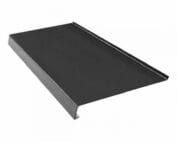
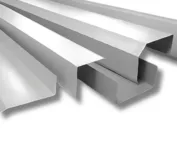
Sheet metal flashings
Damp at a metal roof ridge: leaking ridge caps or a ventilation problem?
In brief
A stain below the ridge does not yet indicate the point where water entered the roof. Precipitation may have penetrated through a poorly executed joint. Moisture can also form beneath the covering as condensation. Ridge tiles must be assessed together with the roof slope layers. Only then is it clear whether the flashing needs repair or the ventilation detail needs changing. Simply adding sealant is often a seemingly simple solution. However, it can block the airflow path. Note whether the damp patches occur after rain, during a thaw, or also on dry days. Information on wind direction is helpful. A leak visible only during rainfall from one side suggests a different point to check than drops appearing in the morning under a large part of the roof slope. These are pointers for inspection, not a ready diagnosis.
First establish when the moisture appears
Water can travel along the membrane, battens or the underside of the sheet metal. A visible stain may therefore lie far from the leak. Inspecting the ridge cap should therefore be combined with checking the adjacent joints. Flashings on a chimney located close to the ridge may also need to be checked.
What should ridge caps protect?
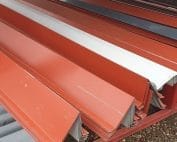
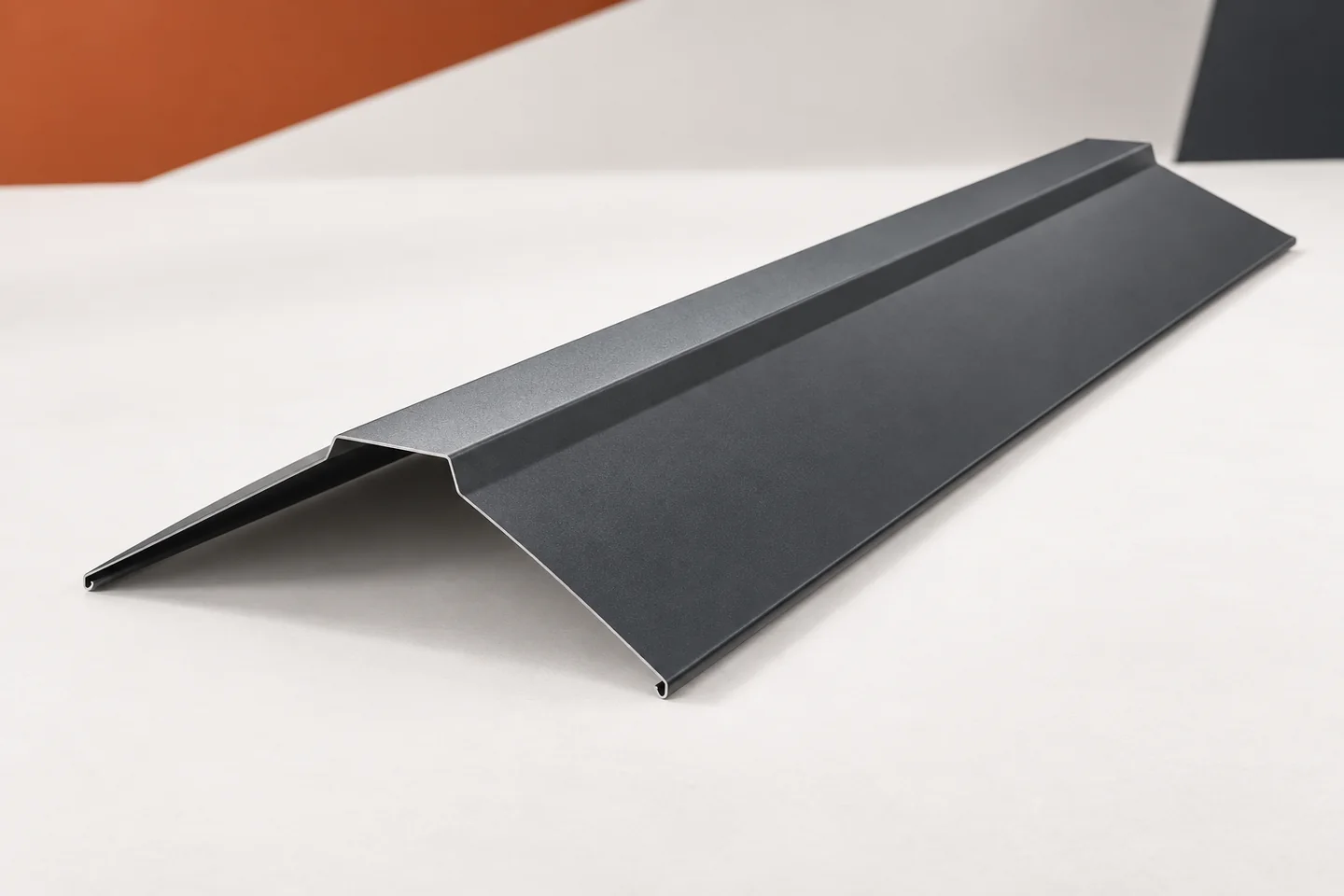
Ridge tiles cover the junction of the roof slopes at the highest part of the roof. Their arms must match the pitch of the slopes and the height of the covering profile. A flashing that is too narrow may not provide the intended coverage. This cannot be remedied by randomly tightening it with screws. It may instead deform the sheet metal.
The overlaps of successive sections and the ends of the ridge are also checked. The length of the purchased element is not the length of its coverage. When replacing, the joints must be taken into account. Ridge tiles should not be selected solely by colour and similar appearance in the catalogue.
When is a gap needed?
In a roof with a ventilated space beneath the covering, the air needs an inlet and an outlet. The ridge detail can shield the outlet from water while allowing air movement. This task is not fulfilled by any arbitrary gap left without the proper protective elements.
However, this solution must not be transferred to every roof. The ridge of a sandwich panel enclosure has its own insulation and sealing arrangement. Its requirements derive from the system design. Ridge tiles and ventilation strips are selected according to the construction of the building envelope, not according to the principle that every ridge must be open.
Sealing matched to the profile
Under popular tile-effect metal roofing and under trapezoidal steel sheet, spaces of different shapes remain. The sealing element should be intended for the given location. Its purpose may be to limit snow ingress, protect against contamination or close a specific gap.
Pressing random foam under the entire ridge tile is not a universal repair. In a ventilated assembly, this can restrict airflow. Conversely, the absence of the required sealing in a sandwich panel roof leaves the detail unfinished. The entire detail needs to be inspected.

Traces that are not worth painting over
Cracks, rust around holes and deformation at screws indicate locations requiring closer inspection. The condition of the coating, washers and substrate must be assessed. Touch-up paint may protect minor damage according to the material recommendations. However, it will not replace correct fastening or overlap.
Galvanised, aluzinc and coated steel sheets differ in their surface protection. A coloured ridge tile has a steel core and a corresponding layer structure. The selection of a new section should take this structure into account. Matching the colour number alone does not ensure matching coating or gloss.
The ridge is part of the entire water path
During the inspection, verge flashings and gutter aprons are also checked. These elements function at other locations on the roof, but they help assess the quality of the entire installation. Repeated deformation or incorrect connections may indicate a common installation error.
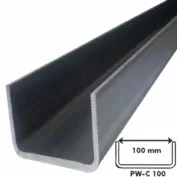
Starter profiles are details specific to the given covering or façade. They are not a substitute for ridge components. If an unusual roof pitch prevents the use of a standard solution, custom flashings may be the answer. Their cross-section must be based on measurement and the method of fixing.
What to pass on to the contractor before the repair?
Prepare photos of the leak, information about the weather and a description of the roof layers. Markings of the covering and documentation of previous repairs will also be useful. This allows the contractor to look for the cause in a specific area. Going onto the roof without preparation is not necessary to collect this data.
The scope of work should result from the inspection. Sometimes it is enough to correct a connection. In other cases, the ridge caps must be replaced, the seals restored or the ventilation cleared. After the repair, it is worth keeping photographic documentation. This will make it easier to assess the behaviour of the detail during subsequent rainfall.
Questions and answers
Does every leak at the ridge mean a faulty ridge tile?
No. The moisture may come from another joint or from vapour condensation. The flashings and the layers beneath the covering need to be inspected.
Can the entire ridge be sealed with foam?
Only with a solution intended for that specific detail. In a ventilated roof, random filling can close off the required air outlet.
7 branches. Materials closer to your project.

- SEROCK — Dzierżenin 34 E
- BŁONIE — ul. Sochaczewska 138A
- RADOM — ul. Grobickiego 8
- ŁÓDŹ — Natolin 8
- OLSZTYN — Barczewo, ul. Prosta 9
- WROCŁAW — ul. Jerzmanowska 10C
- GORZÓW WLKP. — ul. Zielona 33/34