Metal fence pickets and fences
Double-sided metal fence pickets: colour on both sides or two rows?
In brief
The word “double-sided” appears very often in offers for fence pickets. It may describe the finish of the sheet metal or the way the fence is built. These meanings are easily confused. The result can be costly: a different number of elements, an unexpected colour on the reverse, or less privacy screening. It is worth separating both decisions before measuring and quoting. Metal fence pickets can then be ordered without guesswork. In the first meaning, it is about the coating. The picket has a decorative finish on both the front and the back. When viewing the fence from the property, there is therefore no technical reverse with a different appearance. However, this does not change the number of elements needed to make a single row.
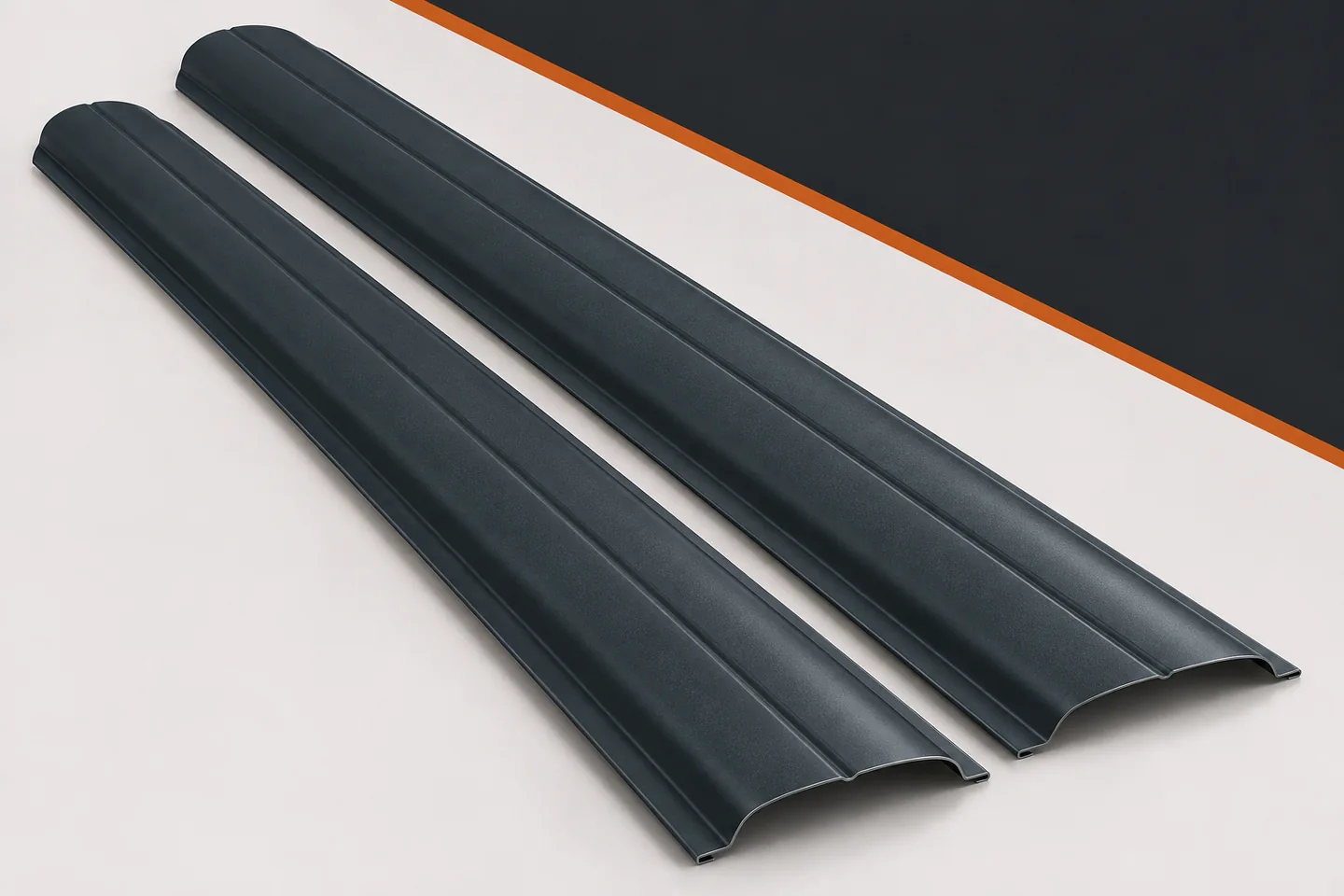
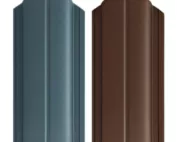
Two decorative sides of one picket
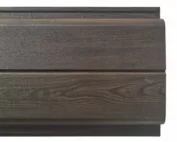
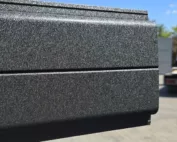
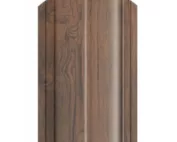
Before purchase, the exact colour and finish of both surfaces must be confirmed. The wording ‘colour on both sides’ alone does not clarify all the details. It is worth examining the back of the sample, the embossing and the folded edges. These are precisely the places that will be visible when viewed at an angle. The coating is part of the product choice, not its arrangement.
One-sided colour does not mean a bare back
On single-sided decorative pickets, the reverse may have a factory protective layer and primer. This is not the same as exposed steel. The difference concerns primarily the finish specification and the appearance. From the term ‘single-sided’ alone, it cannot be concluded that the back always remains unprotected.
Such a variant may suit a project in which the reverse is barely visible or its appearance is accepted. For a front garden fence at a house, the everyday view from the garden is worth considering. After all, the metal pickets will also be seen from the terrace, the driveway and the windows. The choice should be determined by the actual viewing positions.
Two rows mean a different bay layout
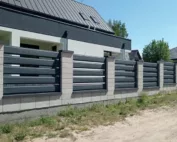
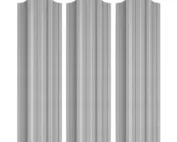
The second meaning concerns installation. The pickets are placed on both sides of the construction, often offset. The elements of one row obscure part of the gaps in the other. Such an arrangement can reduce visibility compared with a single row at the same spacings. However, it requires separate planning.
Installation in two rows does not automatically give both sides of the material colour. Different coating variants can be used, if the system and the order allow it. The quote should therefore specify the type of picket and the number of rows separately. Without this, two seemingly similar offers may cover different products.
The offset changes visibility depending on the angle
An alternating fence is best assessed on a sample set up spatially. Looking perpendicular to the front can give a different picture than walking along the street. The width of the pickets, the gap, the distance between the rows and the size of the offset all matter. A photo taken from one position does not show the full effect.
Do not promise complete opacity without checking the specific geometry. Metal fence pickets can improve garden screening, but an open arrangement remains an arrangement with gaps between the elements. The observer’s height and differences in ground level also matter. Where privacy needs are high, it is worth viewing a trial bay.

The construction must account for both rows
Additional pickets increase the number of connections and the mass of the infill. They also change the way the wind acts on the fence. It is not enough to double the shopping list and screw further elements to an arbitrary frame. You need to check whether the structure and the fixings suit the planned arrangement.
A gate or pedestrian gate requires particular attention. The weight of the leaf and its operation also affect the hinges, the guidance and the supports. Assessing the pickets alone does not settle these matters. Two rows should be part of the overall design. This also applies to the distance between the infill and the moving parts of the fittings.
The quote should separate four pieces of information
In the order, record the finish of the front, the finish of the reverse, the number of rows and the pattern of their relative position. Lengths and quantities of elements are also needed. Metal sheet pickets described in this way can be counted without interpreting abbreviations. A simple drawing showing the structure and the fixing position is a good addition.
Do not assume that a second row always means exactly twice as many pickets. The number of end elements may be changed by the geometry of the bay and the way it is finished at the posts. Both rows should be counted separately. Only their sum gives the quantity to order together with the necessary connectors and end pieces.
How to check whether the choice meets the need
If the appearance of the garden is the priority, start by assessing the reverse of the coating. If you want to limit visibility, check the arrangement of the elements in space. These are two different tasks and sometimes both must be solved at once. Metal sheet pickets with a decorative coating on both sides can work in one or two rows, depending on the system.
Before ordering, view a sample from a distance typical for the property. Pay attention to the back, the side and the connection points. Then ask for these arrangements to be recorded in the specification. A precise description allows the expected appearance to be maintained on both sides of the fence and avoids a dispute over the meaning of a single word.
7 branches. Materials closer to your project.

- SEROCK — Dzierżenin 34 E
- BŁONIE — ul. Sochaczewska 138A
- RADOM — ul. Grobickiego 8
- ŁÓDŹ — Natolin 8
- OLSZTYN — Barczewo, ul. Prosta 9
- WROCŁAW — ul. Jerzmanowska 10C
- GORZÓW WLKP. — ul. Zielona 33/34