Repair and maintenance
An autumn roof inspection before the first frost
In brief
An autumn roof inspection should be planned before frost makes safe work and the use of repair materials difficult. The owner should check the covering, flashings, gutters and signs of damp in the attic rather than wait for the first leak. The decisive factor is the weather window: an inspection carried out in advance leaves time for repair and a follow-up check. Near trees, leaves may need removing again after the main fall, so a single September check does not guarantee clear gutters in late November.
When should the autumn inspection be scheduled?
The inspection should be carried out while the weather still allows safe working and the use of the necessary repair materials. Waiting for the last dry day before frost limits the choice of date. Near trees, it may be necessary to remove leaves again after the main fall. A single check in September does not guarantee clear gutters at the end of November.
A good start is photographs of the roof surfaces and a walk around the building after rain. This shows where water overflows, which flashings look different from before and whether stains have formed on the façade. An inspection from the ground helps prepare the brief. A detailed check of places requiring access to the roof should be carried out by a specialist with safe roof access.
How to assess the roofing and flashings?
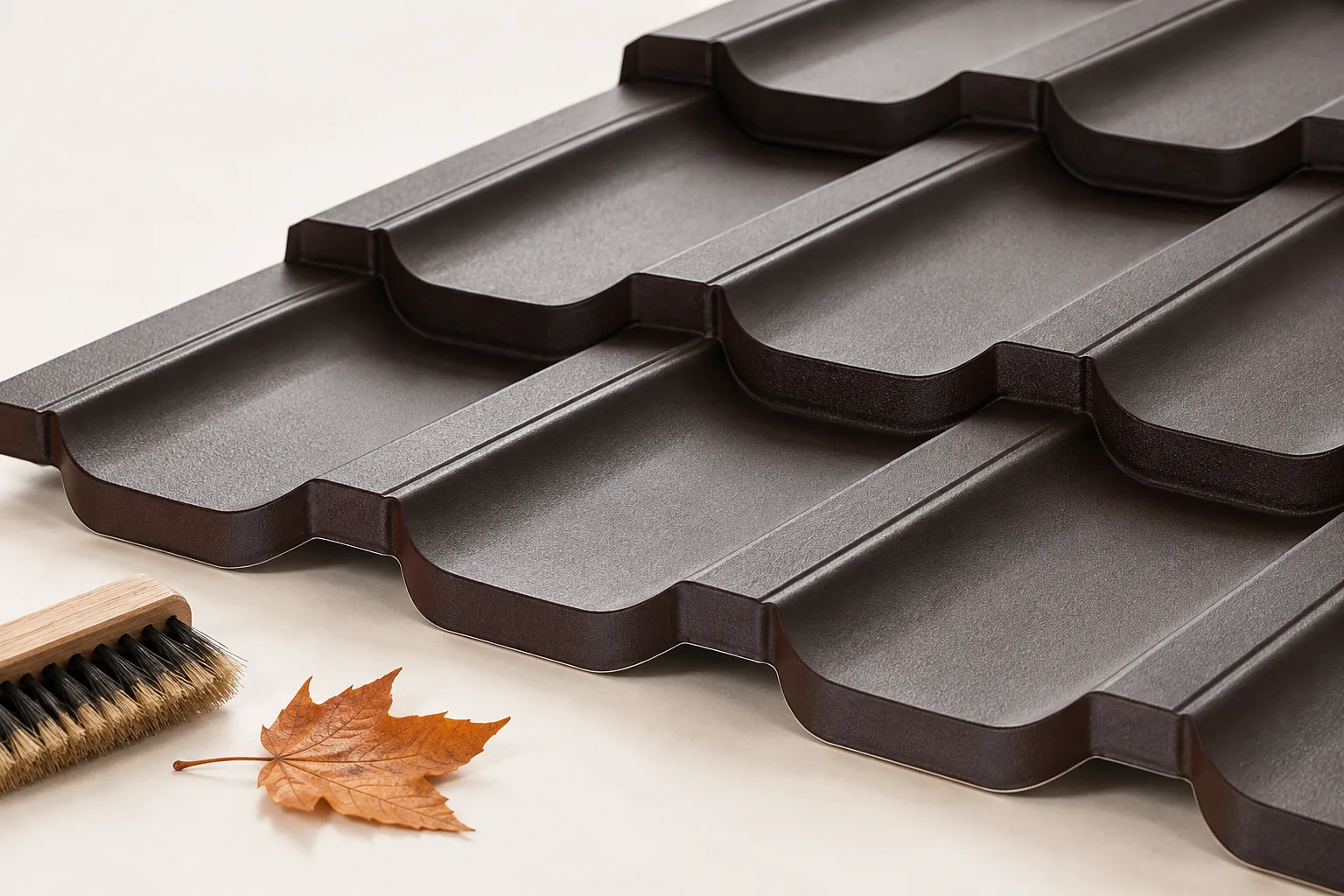
Damage to the coating, deformation of the sheets and the condition of the joints are checked. Attention should be directed to the ridge, verge flashings, valleys and flashings at the chimney. These are places where a small displacement of an element can change the path of water. Loose fragments, knocking in the wind and traces of previous repairs made with an unsuitable sealant should also be a cause for concern.
For metal roofing, the fastenings and washers are inspected. This does not mean tightening every screw as a precaution. Excessive pressure can damage the seal or deform the sheet. The condition of the joint determines whether adjustment is needed. In the event of corrosion, its source must be identified before a repair compound is selected or a decision is made to replace the element.
What to check in gutters and downpipes?
Leaves, needles and small branches can restrict drainage, especially at the outlets. After removing the debris, it is worth checking whether water reaches the downpipe and then the intended discharge point. A blockage may be in the bend or the rainwater gully even though the gutter itself looks clean. The entire run must be inspected, not just the part visible from above.
The brackets, connections and the position of the gutter relative to the eaves are also assessed. Standing water may be the result of deformation or an incorrect slope. Repair then requires correction of the support, not another cleaning. Connections intended to compensate for changes in length should also not be immobilised. The system must work in accordance with its design.

Why is it worth looking in the attic?
Traces of leakage are not always visible on the outer surface. In the attic, it is worth inspecting the timber, the area around the chimney, the windows and the service penetrations. A dark patch, wet insulation or drops on the underside of the sheet metal require investigation. The cause may be rainwater, condensation or a leak in the layer on the room side. Each case leads to a different repair.
It is worth paying attention to the smell of damp and to changes visible after overnight cooling. A suspect area should not be covered before the cause has been established. Photographs with a date and information about the weather are good diagnostic material. They make it easier to distinguish an event after rain from a problem that appears on cold, rain-free days.
What about ventilation, windows and equipment?
The inspection covers the ventilation inlets and outlets provided for in the roof structure. Leaves, dirt or incorrectly added foam can restrict airflow. The openings should not be blocked in order to “reduce draughts”. If cold air reaches the interior, the correct sealing layer must be checked rather than the ventilation of the covering being blocked.
At roof windows, the patency of the water-draining spaces and the condition of the flashings are checked. Around installations, the penetrations, fixings and places where dirt collects are inspected. Electrical devices should not be interfered with independently. Inspection of their connection to the roof should be coordinated with the person responsible for the given installation.
How to conclude the inspection with a specific list of repairs?
The result of the inspection is best recorded in a short report with photographs. It is worth separating an urgent leak from planned maintenance and observation of a minor trace. For each repair, the cause, scope and date must be established. This avoids a situation in which several teams correct the same place without checking why the problem recurs.
After the work has been carried out, the details should be inspected and the roof and gutters cleaned. If the drainage was repaired, its operation is checked. When a connection is sealed, it is observed after the next rain. An autumn inspection is worthwhile when it ends with the removal of the identified defects and an orderly plan for further maintenance, rather than merely the information that someone was on the roof.
7 branches. Materials closer to your project.

- SEROCK — Dzierżenin 34 E
- BŁONIE — ul. Sochaczewska 138A
- RADOM — ul. Grobickiego 8
- ŁÓDŹ — Natolin 8
- OLSZTYN — Barczewo, ul. Prosta 9
- WROCŁAW — ul. Jerzmanowska 10C
- GORZÓW WLKP. — ul. Zielona 33/34