Insulation and energy
Where do rigid PIR insulation boards work best?
In brief
PIR boards are rigid thermal insulation offering good insulating performance at a small thickness, useful especially where space is limited or a continuous insulation layer is needed. Before choosing, however, check the facing, edges and dimensions, as these affect the intended use and the method of joining. Compare materials intended for the same job and a similar thermal resistance, taking moisture, loads, acoustics and fire requirements into account. PIR is not a universal replacement for EPS, XPS or mineral wool, and the design of the building envelope should be left to the designer.
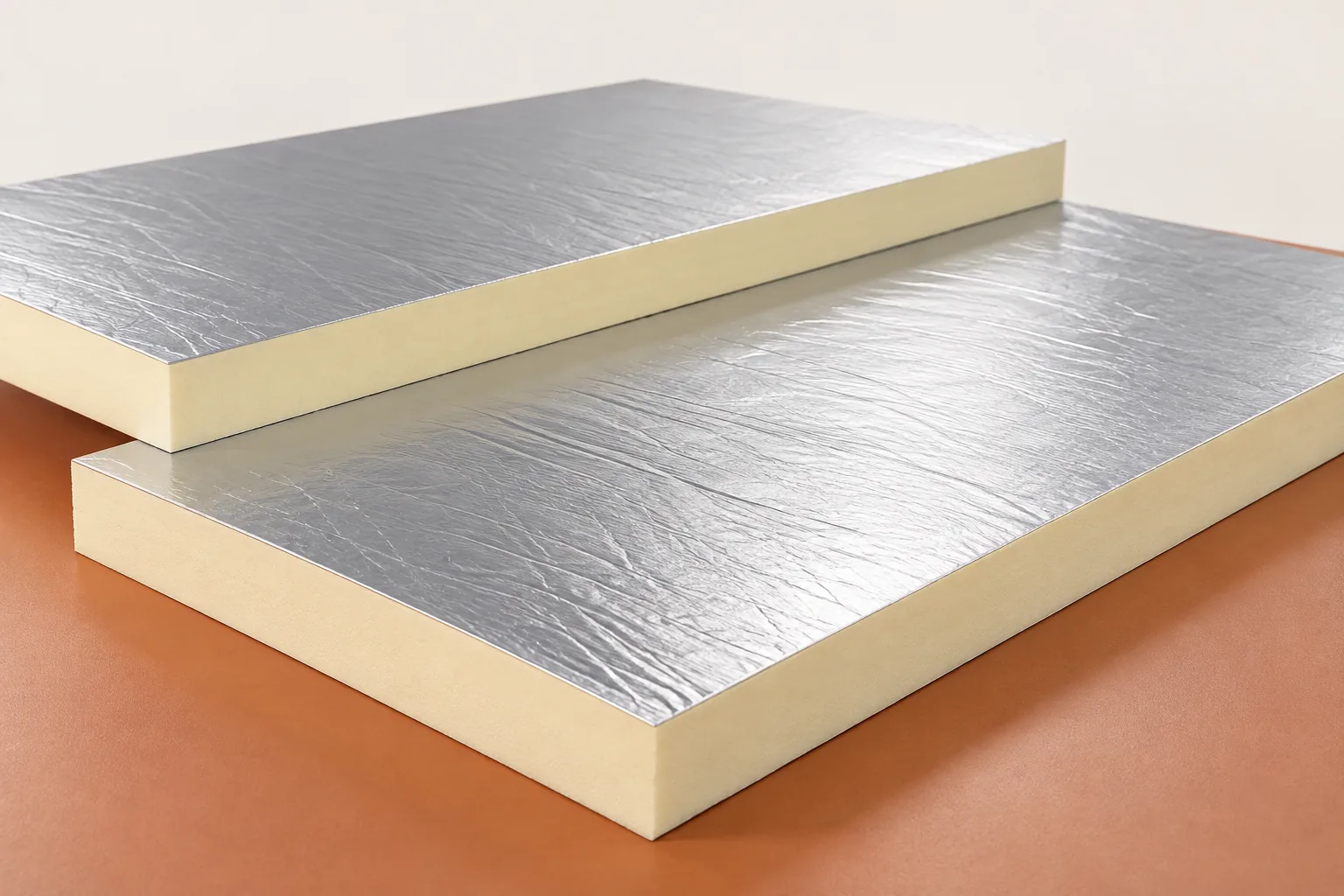
How is a PIR board constructed?
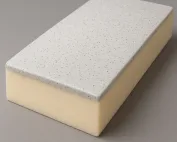
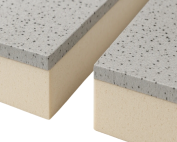
The core is rigid polyisocyanurate foam, and its surface may be covered by various facings. These influence the intended use and the method of joining the material. A panel with an aluminium facing is not the same product as any other PIR panel. Edges and dimensions may also differ.
A distinction must be made between an insulation board and a sandwich panel with metal facings. The first is an insulation layer within the assembly of a building element. The second also serves as a facing and has its own rules for support. A similar type of core does not make these products interchangeable.
Why does PIR allow a reduced thickness?
The thermal resistance of a homogeneous layer is determined by its thickness and thermal conductivity. A lower lambda allows the same resistance to be achieved with a smaller thickness. In verified data sheets for selected panels with an aluminium facing, 0.022 W/(m·K) is declared. This is not the value of every available PIR panel.
For such an example, 100 mm of insulation gives a resistance of approximately 4.55 m²K/W. The same resistance of a layer with a lambda of 0.031 requires approximately 141 mm, and at 0.040 approximately 182 mm. This is a comparison of the layers alone. It does not yet determine the coefficient of the entire roof or the final project thickness.
When is the advantage over EPS practical?
A smaller thickness is sometimes important where height is limited, at eaves details and in refurbishment. PIR can also form a continuous layer above the rafters if a suitable system has been selected. This does not mean, however, that EPS is inherently unsuitable. In many applications it is a sensible economic solution.
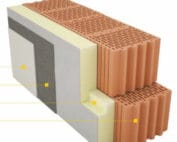
Compare materials intended for the same job and with a similar required thermal resistance. The price per square metre at identical thickness does not show the whole picture. Facings, adhesives, fixings and the other layers must also be taken into account. Not every PIR panel is suitable directly beneath any plaster.

Why does PIR not replace XPS everywhere?
XPS boards are often chosen for applications involving moisture and specific loads. Suitability is determined by the specific product documentation. A good PIR lambda value does not prove that it can be used unchanged in a system designed for XPS, for example under conditions of prolonged contact with water.
Low water absorption does not mean there is no need for waterproofing. The boards must be protected during storage and installation. Transport packaging is not full weather protection. Moist material should not simply be sealed under another layer without assessing its condition.
What does the comparison with mineral wool look like?
PIR can reduce the thickness of thermal insulation, whereas mineral wool has other advantages, including those related to fire and acoustic applications. These materials should not be treated as identical in every respect. A good roof can use different layers if such a system has been designed.
PIR is not a non-combustible material. The reaction to fire of the board itself must be distinguished from the fire resistance of the complete assembly. A metal or gypsum covering does not allow any class to be assigned to the core. When selecting, documents relating to the exact system are important, not a general safety slogan.
What do the strength parameters mean?
Data sheets may state compressive stress at a defined deformation, often at 10%. This is not the permissible permanent service load of a floor or roof. Selection must take into account the duration of the force, the load-distributing layers and the requirements of the specific application.
Similarly, the rigidity of the board does not entitle anyone to walk freely on an unfinished roof. Installation loads and point loads require proper organisation of the works. Supporting equipment or a bracket on a small section of insulation should be resolved by design, not assessed by touch alone.
How can the advantages be used without making mistakes?
Choose a board with the correct facing and documentation for the intended application. Plan sealed joints, fixings and protection against water. For insulation above the rafters, take into account the effect on the height of the covering, the flashings and the length of the fasteners. These elements are part of the solution.
PIR is particularly useful where every centimetre counts. Its thermal advantage is measurable, but it does not replace the other requirements of the assembly. The best result comes from a selection based on a design that compares complete systems and clearly defines the role of each layer.
7 branches. Materials closer to your project.

- SEROCK — Dzierżenin 34 E
- BŁONIE — ul. Sochaczewska 138A
- RADOM — ul. Grobickiego 8
- ŁÓDŹ — Natolin 8
- OLSZTYN — Barczewo, ul. Prosta 9
- WROCŁAW — ul. Jerzmanowska 10C
- GORZÓW WLKP. — ul. Zielona 33/34