Renovation and maintenance
Restoring the look of metal roofing before considering replacement
In brief
Before considering a replacement, check whether the metal roof only needs refreshing. A dull appearance and dirt often come from deposits rather than damaged sheeting. First, though, assess the technical condition, because a new colour will not fix a leak or corrosion developing underneath. A contractor should wash a small area and compare it with the rest – this shows how much of the problem is contamination. Flaking, blistering and corrosion spots need a different approach from ordinary surface film.
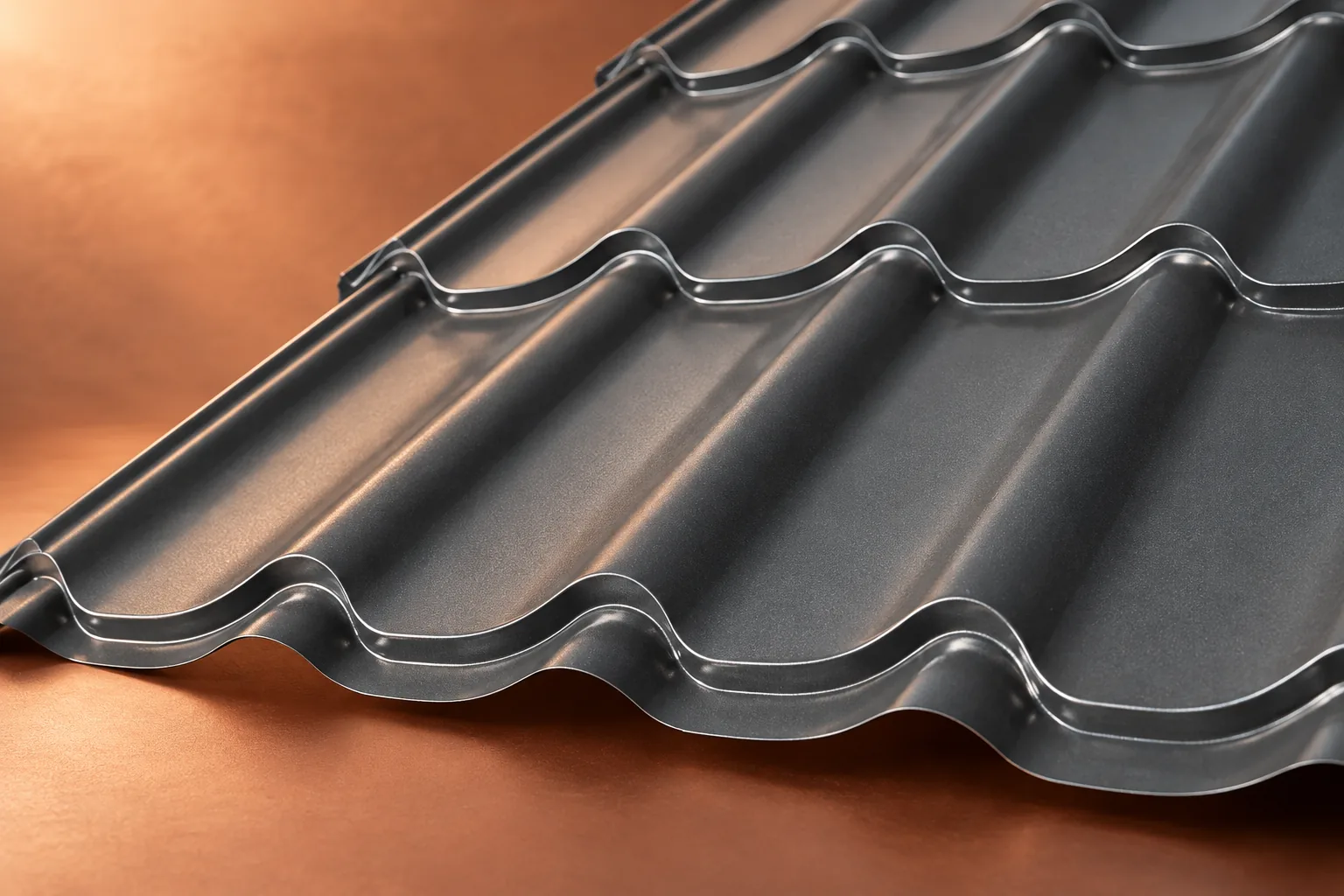
Is the problem dirt or coating wear?
Dust, soot, pollen and organic debris accumulate on the steel sheet. From a greater distance they can look like permanent discolouration. Before you plan painting, the contractor should assess a small section after gentle washing. The difference will show what proportion of the problem is due to contamination.
Peeling, blistering and corrosion spots require a different assessment than ordinary surface film. The edges and the areas around the screws must also be checked. Some damage only becomes visible up close. The inspection is best entrusted to someone who can safely reach the roof and identify the type of existing finish.
How should you wash the roof so as not to worsen its appearance?
The choice of agent and washing parameters should match the coating. An overly aggressive preparation or brush can leave marks that are harder to remove than the original dirt. On an old covering, a test on a small area is particularly important. The agent must be used at the recommended concentration and rinsed off thoroughly.
The water jet should not be directed under the laps or upwards along the joints. Doing so can force water under the covering. Washing must be combined with cleaning the gutters and roof valleys. Otherwise the rinsed-off contamination will block the outlet, and the aesthetic result will obscure the drainage problem.
Which minor repairs bring a visible improvement?
A bent side flashing, a disconnected gutter or an uneven ridge line strongly affect the appearance of the roof surface. Sometimes improving these details gives a greater effect than changing the colour. It is worth taking photos of the roof from several sides and identifying the elements most visible from the driveway and the garden.
Not every unevenness can be straightened by tightening screws. The cause may be a wavy substructure or a deformed sheet. Forcing the shape damages the coating and worsens the connections. The repair should eliminate the cause, not merely pull the steel sheet to the substrate with ever greater force.

When is a local touch-up sufficient?
Minor scratches and edge damage can be protected with a suitable repair material, if the manufacturer provides for such a method. First, the substrate is cleaned and the extent of the damage assessed. Applying paint over loose rust does not give a lasting result. A repair compound will also not replace a section of sheet that has lost its tightness.
A spot repair may differ in gloss from the old surface. Therefore, it should not be used to paint large areas without an agreed renovation system. The purpose of a minor repair compound is primarily to protect the damaged area. With a larger extent, it must be assessed whether repainting the entire roof slope is more sensible.
What needs to be established before changing the colour?
The type of new paint is selected to suit the existing coating and the condition of the substrate. Degreasing, surface preparation and a suitable primer may be required. Adhesion and compatibility of the layers are important. The description ‘roof paint’ alone does not guarantee that the product is suitable for a specific sheet metal.
Also check the warranty conditions of the covering. Renovation carried out with a different system may affect its scope. When choosing a shade, compare it with the façade and the windows and doors. Changing the roof without assessing the gutters and flashings may leave a random mixture of colours instead of an orderly appearance.
When is it better to replace damaged sections?
Extensive corrosion, permanent bends and numerous leaks may argue for replacing part of the covering. However, it must be checked whether a profile with matching geometry is available. A similar appearance does not mean a matching interlock and rib pattern. The new section may also differ in colour from the old one.
If the problem covers many places, it is worth comparing the cost of local repairs with replacing a larger roof slope. The condition of the substrate and the supporting structure should be included in the assessment. Money spent on cosmetics will be of little use if the roof soon has to be dismantled because of hidden damage.
How should the work be planned so that the result lasts longer?
First carry out a technical inspection, then repairs, and only at the end washing or surface renovation. Establish safe access, protection of the façade and a method for draining the wash water. Aesthetic work must not be allowed to damage windows, installations or the garden.
After completion, keep a description of the materials used and photos of the repairs. In subsequent seasons, check the places that previously caused problems. Remove leaves and dirt before they begin to retain moisture for long periods. Such regularity matters more than a single intensive cleaning every few years.
7 branches. Materials closer to your project.

- SEROCK — Dzierżenin 34 E
- BŁONIE — ul. Sochaczewska 138A
- RADOM — ul. Grobickiego 8
- ŁÓDŹ — Natolin 8
- OLSZTYN — Barczewo, ul. Prosta 9
- WROCŁAW — ul. Jerzmanowska 10C
- GORZÓW WLKP. — ul. Zielona 33/34