Installation and details
Roof flashings from eaves to ridge: choosing each component for its location
In brief
Metal flashings close the edges and junctions of a roof that cannot be finished with the covering alone. Rather than a generic recommendation, check the completeness of the order: whether every edge, valley, chimney and wall junction has a specific detail assigned. Take into account the roof geometry and the sheet profile. Bear in mind that flashings are not an optional extra to be omitted to reduce cost. Their role is to direct water and protect vulnerable points, especially where the roof slope changes direction and at elements projecting above the roof.
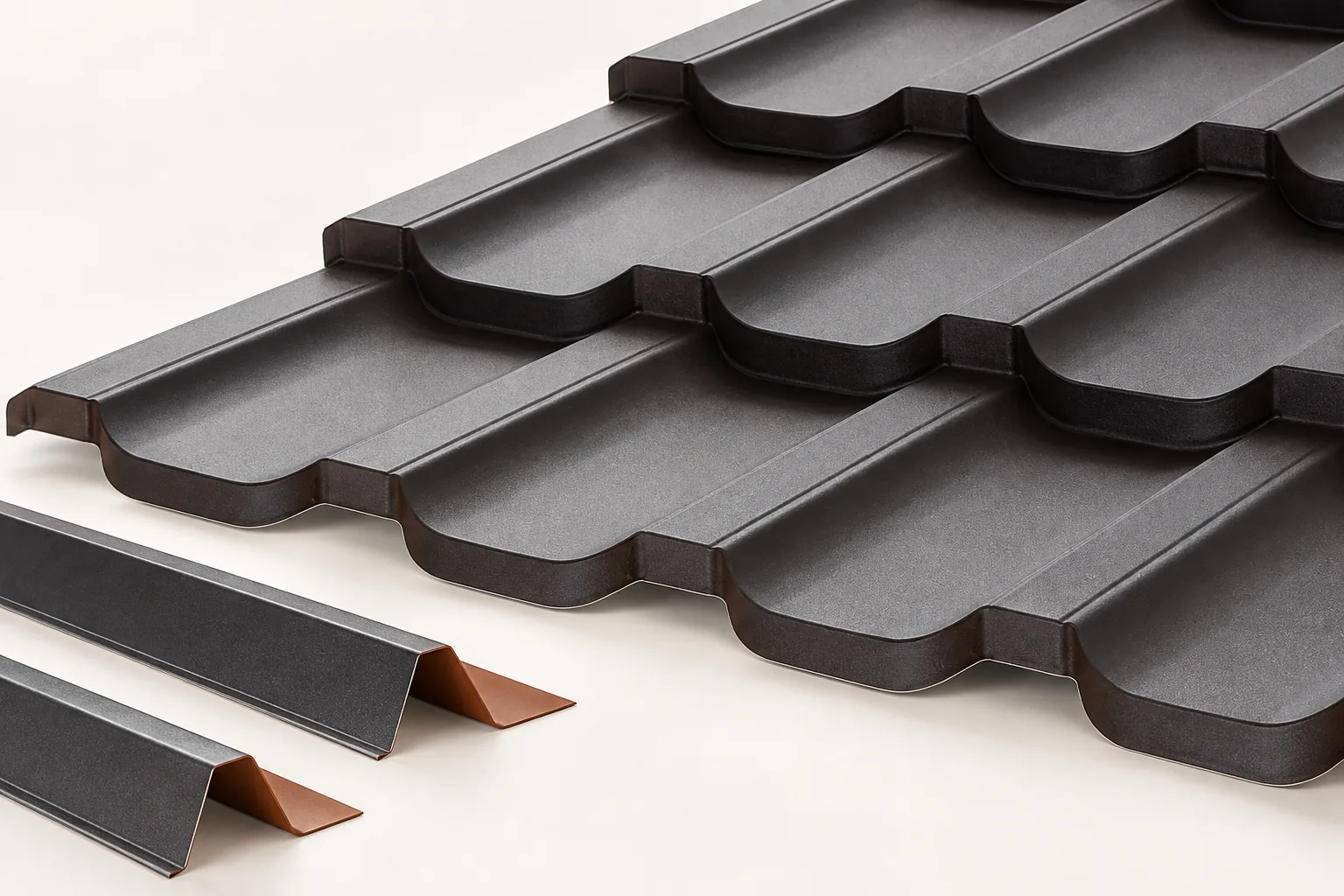
Why doesn’t the sheet alone close the roof?
The covering forms a large surface that drains precipitation. At its terminations, however, water can get under the sheet or onto the structure. Particularly sensitive are the points where the roof slope changes direction and the junctions with elements projecting above the roof. The flashing takes over the task there that a regular sheet cannot perform.
A good detail is based on shape and the sequence of layers. Sealant has a specific application, but it does not replace proper water drainage. If the flashing is laid against the direction of drainage, additional sealant can only temporarily hide the problem. The junction should still work after the materials have naturally aged.
Which flashings work at the eaves?
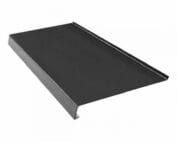
At the lower edge of the roof slope, the drainage from the covering and from the layer beneath it must be organised. The gutter apron directs water towards the gutter. The under-gutter strip protects the relevant section of the eaves. Their arrangement depends on the structure, the type of hooks and the way the membrane is brought out. Not every roof has an identical cross-section at this point.
It is worth preparing the detail before installing the first row of sheet metal. Incorrect gutter height or flashing position can cause seepage and overflow. The ventilation inlet must also be maintained. Closing the eaves with airtight tape without assessing the airflow can impair the performance of the entire roof.
What are barge boards and the ridge responsible for?
The barge flashing finishes the side edge of the roof slope and works with the covering to protect against wind-driven rain. Its width and method of fixing depend on the profile and the arrangement of the substrate. It should not be selected merely to cover a visible gap. It should have proper support and allow a correct connection with the sheet.
The ridge tile protects the junction of the roof slopes at the ridge. In a ventilated roof it must work with elements that allow air to escape. This space must not be completely filled with random foam. Protection against precipitation and ventilation flow must be resolved in a single detail.

What is needed in the roof valley?
The valley collects water from two converging roof slopes. During heavy rain, more water flows through it than across a normal roof strip. It therefore requires a carefully prepared substrate, adequate width and joints made in line with the direction of drainage. The covering sheet should not obstruct the planned channel.
Fixing points are chosen so as not to create unnecessary holes in the flow zone. The arrangement of the membrane beneath the valley is also important. Leaves and small branches can restrict drainage, so this location requires monitoring. Even a well-made flashing will not work properly once buried in debris.
How is the chimney and wall junction finished?
Water must flow around the obstacle and return to the roof slope. Chimney flashings therefore involve different tasks on the lower, side and upper sides. The upper section requires particular attention because it holds back the flowing water. The width of the chimney and the roof pitch may require additional shaping of the drainage.
The connection to the wall should account for roof movement and tightness at the upper edge. Bonding the flashing solely to the plaster surface can prove short-lived. The appropriate detail is determined by the installer for the specific substrate. The material and sealant must withstand conditions at the contact point, including the effect of temperature.
Can flashings be made from any sheet metal?
A consistent appearance is easiest to maintain when the flashings have a matching coating and colour. Material compatibility and environmental resistance are equally important. A sheet with an attractive shade but the wrong intended use may age differently from the covering. The bendability of the chosen coating must also be taken into account.
Cutting should be carried out with tools approved for the material. An overly tight bend, a damaged edge and leftover swarf impair durability. Before ordering, the developed widths, lengths and overlaps are determined. A drawing with dimensions is safer than verbally specifying a “standard barge flashing”.
How can you check that an order is complete?
Walk around the roof outline and mark every edge, valley, chimney and wall connection. Assign a specific detail to each location. Then check the effective lengths of the elements, the required overlaps and fixings. The sum of flashing lengths need not equal the sum of the raw dimensions from the plan view.
During acceptance, pay attention to the direction of drainage, the evenness of lines and the terminations. Well-made flashings are discreet yet perform a very important function. Their quality is worth assessing before the first downpour, when corrections can still be made without damage inside the building.
7 branches. Materials closer to your project.

- SEROCK — Dzierżenin 34 E
- BŁONIE — ul. Sochaczewska 138A
- RADOM — ul. Grobickiego 8
- ŁÓDŹ — Natolin 8
- OLSZTYN — Barczewo, ul. Prosta 9
- WROCŁAW — ul. Jerzmanowska 10C
- GORZÓW WLKP. — ul. Zielona 33/34