Gutters and drainage
Comparing steel and PVC rainwater gutters before you buy
In brief
First work out how much water the installation must carry away, and only then choose between steel and PVC. Performance depends on the run’s parameters and where the water is discharged, not on a more expensive coating. Also compare how each system protects its surface, copes with temperature and what it demands during installation. System completeness and the building’s conditions matter. Before buying, check specific products rather than general material categories.
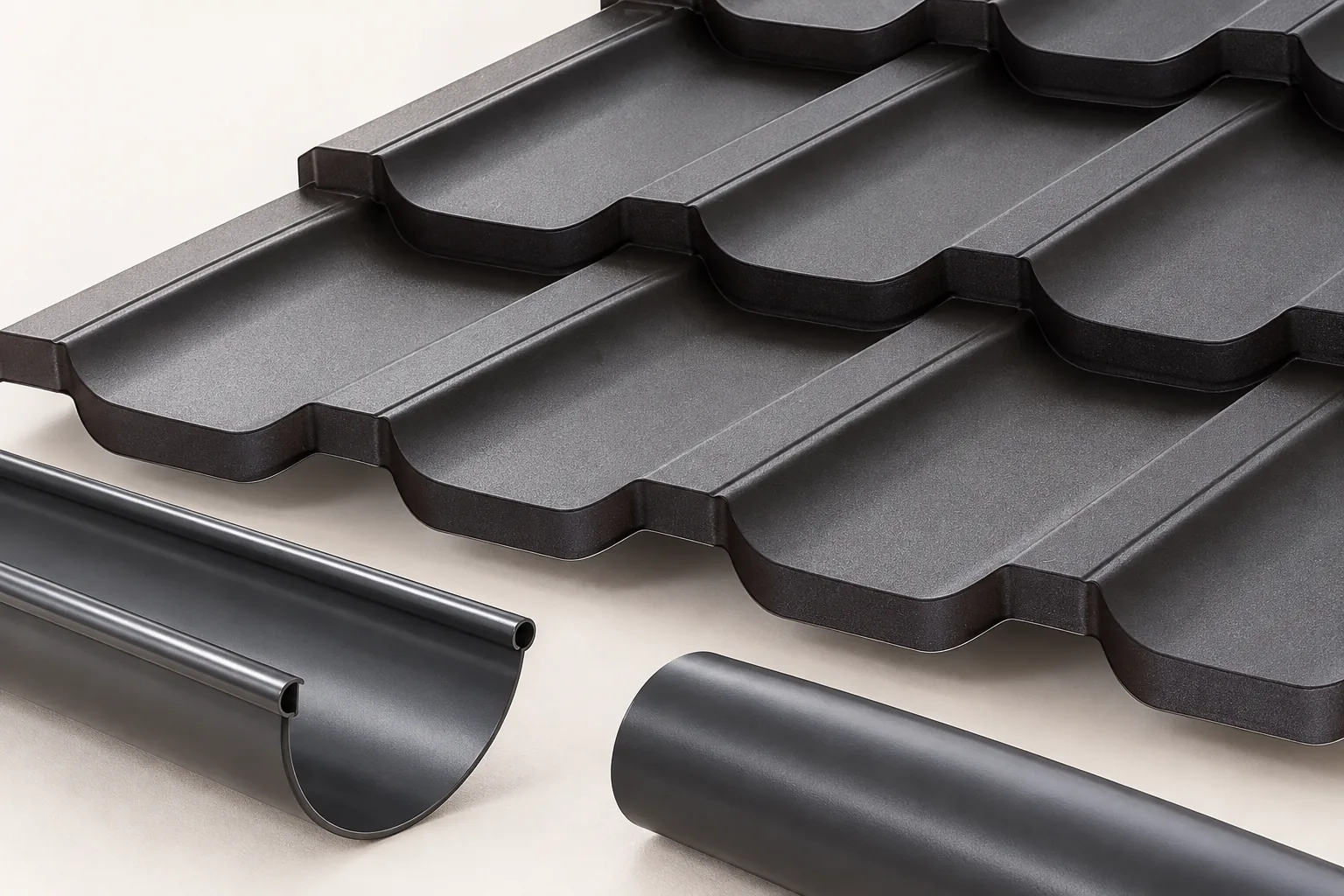
What do both solutions have in common?
Every system must collect water from a defined part of the roof and direct it to the discharge point. The gutter cross-section, run length, outlet position and downpipe diameter all matter. Two installations with the same gutter can perform differently if the outlet is positioned elsewhere.
Selection should be based on the system documentation and the roof geometry. Roof valleys can concentrate a large volume of water over a short section of eaves. The emergency overflow path must also be planned. Water should not return under the covering or flood the façade layers if the outlet becomes temporarily blocked.
What are the advantages of steel gutters?
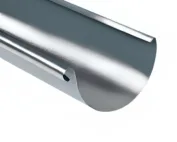
Steel gives the components rigidity, and coatings protect it from environmental exposure. A correctly selected system fits well with the roof and flashings. However, scratches and edge damage must be avoided. Corrosion protection is part of the product and should not be damaged during installation.
Steel also expands and contracts with temperature. A long run should therefore not be rigidly joined contrary to the instructions. Expansion solutions and the fastening method depend on the specific system. High rigidity does not mean resistance to every snow and ice load.
What are the advantages and limitations of PVC?
Plastic does not corrode like steel, is lightweight and easy to handle. Individual components are joined according to the intended system, often using seals. This does not mean fittings are freely interchangeable. A similar nominal dimension does not guarantee that products from different kits will fit.
PVC gutters expand and contract more with temperature, so appropriate clearances must be maintained. Installation temperature can affect the alignment of joints and the flexibility of components. The permissible conditions are given in the instructions. Fittings must not be stretched or forced in to compensate for a measurement error.

How to compare durability without oversimplifying?
Durability depends on the material, coating, installation and surroundings. A coastal location, branches rubbing against the gutter or leaves lying through the winter all affect service life. There is no basis for attributing greater longevity to every steel gutter than to every plastic gutter. Compare specific products.
Check the scope of the warranty and the availability of parts. It matters whether, after a few years, you will still be able to buy a connector, corner piece or outlet. A small difference in purchase price may matter less than the ease of replacing a damaged component. It is worth keeping the system documentation together with the roof documents.
What most often causes correctly selected gutters to fail?
Problems are caused by, among other things, incorrect positioning relative to the roof edge, the wrong fall and insufficient support. The gutter should not stop the sliding mass of snow. If the roof requires it, separate snow guards are designed. Fixing brackets to a random eaves component is risky.
Connectors must be clean and correctly closed. Seals must not be folded over or contaminated with filings. Installing ‘with extra silicone’ is not the proper way to repair poorly fitting parts. The cause of the leak must be found and eliminated while preserving the ability for thermal movement.
How do you calculate the cost of the entire system?
The price per metre of gutter is only the beginning. Brackets, end caps, outlets, corners, pipes, bends and clips are needed. Add to that the drainage connection components and labour. On a roof with numerous changes of direction, the cost of fittings can be significant despite the short total length of the eaves.
Ask for two quotations covering the same capacity and drainage layout. Do not compare a larger steel system with a smaller PVC one just because both look suitable. Also take into account the fixing to the intended eaves structure. Sometimes the type of bracket results from the stage of construction rather than from aesthetic preference.
Which variant should you choose for your own home?
Steel may suit those who want a rigid system consistent with metal roofing. PVC can be convenient where low weight and the absence of corrosion of the plastic itself matter. In both cases, components must be matched to local conditions and the installation instructions followed.
After the work is completed, check the flow and the connections. Remove leaves regularly and check the fixings, especially after strong wind. Even a well-chosen material requires efficient drainage. It is this that protects the façade and the building surroundings from the effects of overflowing water.
7 branches. Materials closer to your project.

- SEROCK — Dzierżenin 34 E
- BŁONIE — ul. Sochaczewska 138A
- RADOM — ul. Grobickiego 8
- ŁÓDŹ — Natolin 8
- OLSZTYN — Barczewo, ul. Prosta 9
- WROCŁAW — ul. Jerzmanowska 10C
- GORZÓW WLKP. — ul. Zielona 33/34