Metal pickets and fences
How much privacy does a metal picket fence provide?
In brief
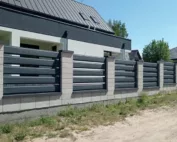
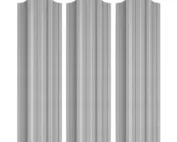
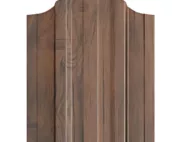
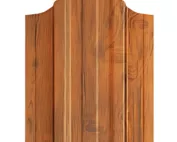
Metal fence pickets let you control the rhythm and density of the fence. As a result, you can keep a view of the surroundings or screen off part of the property more effectively. However, there is no single privacy value attached to the material itself. The result is determined by the arrangement of the elements and the viewing position. Before choosing the spacing, it is worth checking a few simple relationships. With a single row, what matters is the width visible from the front and the gap between adjacent elements. The same picket can therefore create a visually light fence or a much denser one. To assess this, a drawing of the entire section is needed. Information about the sheet width before profiling alone is not sufficient.
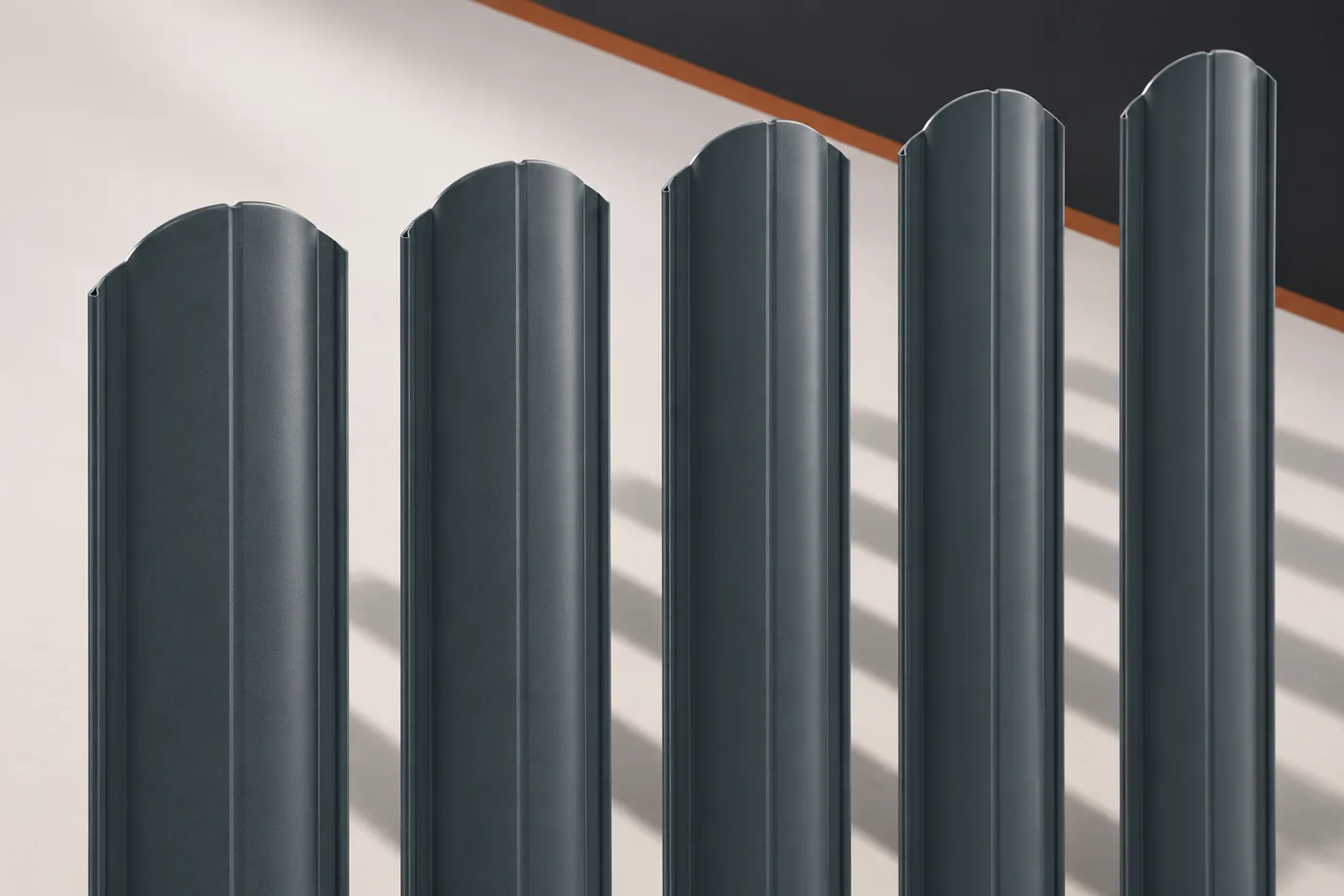
The picket width does not describe the entire gap
It is worth distinguishing the gap from the centre-to-centre spacing. The gap is the free space between the edges. The centre-to-centre spacing also includes the width of the picket. Confusing these terms gives a different appearance of the bay and a different number of elements. In the order, it is best to show the expected layout on a simple sketch with clear dimensions.
A simple calculation helps assess the openness
Let us assume, purely as an example, that the visible width of the element is 100 mm and the gap is 30 mm. The repeating module is then 130 mm. In a perpendicular view, the share of the gap alone in such a module is about 23 percent. This is a description of the geometry of one row, without posts, ends and other elements.
This result does not, however, mean that the garden is visible at exactly 23 percent from every location. It also does not describe airflow or wind load. In space, the depth of the profile and the direction of view come into play. The calculation is useful for comparing drawings, but it does not replace looking at a trial layout.
The view at an angle may be completely different
When passing by the fence, the observer constantly changes the viewing angle. In some positions the profile covers part of the gap, in others it allows a deeper view. The distance from the bay also affects the effect. A photo taken exactly head-on does not explain what will be visible from the pavement running along the property.
It is worth looking at the sheet-metal pickets from the level of the street, the gate and the most frequently used part of the garden. The difference in ground height also matters. When the pavement is higher, densifying only the lower part of the fence may not solve the problem. An assessment of the line of sight at the specific location is needed.
Two rows restrict visibility in a different way
An alternating layout allows the pickets to be placed on both sides of the supports. The offset elements can screen the gaps visible in one row. Their widths, mutual distance and offset determine the effect. The assessment of one bay should not be transferred to any other two-row layout.
Costs and construction also need to be considered. Additional elements, fixings and the load associated with denser infill all come into play. Double-sided coated pickets are not the same as two rows. The coating determines the appearance of the material. The arrangement of the pickets determines the degree of screening.

Covering a chosen spot can be more effective
However, uniform density is not always needed along the entire property boundary. The section by the terrace may require more screening than the section by the driveway. Such variation must nevertheless be thought through visually and structurally. It should result from the site plan, not from a random change in spacing during installation.
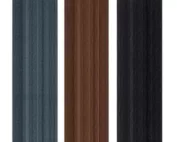
It helps to mark the places where household members most often spend time. The directions of the view from outside can then be assessed. Metal fence pickets are a flexible tool for building rhythm, but they do not replace such an analysis. The height, position and length of the screened section are just as important as the colour.
Fuller coverage also has technical consequences
Reducing the gaps changes the effect of wind on the fence. It must not be assumed that the existing posts and foundations suit every density. This is particularly important when converting an old mesh fence or a lightweight bay. The choice of pickets should go hand in hand with an assessment of the entire support system.
An additional mat, climbing plant or screen hung later also changes the conditions. A bay chosen as openwork may start to behave differently once it is covered. Privacy needs should be defined straight away. This allows the right structure to be selected without improvised additions loading the infill.
A sample in the natural location is the most useful
A few pickets set at the planned gap provide more information than a single element held in the hand. It is a good idea to view a sample from both sides and under typical lighting. For two rows, their distance apart must also be reproduced. Only then can the actual interplay of gaps and shadows be seen. Such an arrangement can also be photographed from the street and from the terrace as a reference for further decisions. Also check the extreme fields by the gate and the corner. There, a change in viewing direction may reveal a gap that is invisible in the middle of a straight section.
Sheet-metal pickets can organise the property boundary and improve comfort when using the garden. It is worth choosing them by describing a specific effect rather than promising total privacy. Record the expected spacing, height and arrangement in the design. This will make measurement, quotation and subsequent acceptance of the fence easier.
7 branches. Materials closer to your project.

- SEROCK — Dzierżenin 34 E
- BŁONIE — ul. Sochaczewska 138A
- RADOM — ul. Grobickiego 8
- ŁÓDŹ — Natolin 8
- OLSZTYN — Barczewo, ul. Prosta 9
- WROCŁAW — ul. Jerzmanowska 10C
- GORZÓW WLKP. — ul. Zielona 33/34